Your Cart is Empty


TL;DR:
- Durability reduces waste and lowers environmental impact by extending product lifespan.
- Strand-woven bamboo offers high resistance to scratches, water damage, and high traffic stresses.
- Proper manufacturing, joinery, and maintenance are key factors in ensuring bamboo’s long-term durability.
Plenty of products carry an “eco-friendly” label, but that label alone does not keep them out of the landfill. When a cutting board warps after six months or a bathroom organizer splits at the joints by year two, you end up buying a replacement, and the cycle of waste starts all over again. The real secret to owning truly sustainable products is not just the material they are made from. It is how long they last. Durability is the missing ingredient that connects style, cost savings, and genuine environmental responsibility, and bamboo happens to be one of the best case studies for getting all three right.
| Point | Details |
|---|---|
| Durability cuts waste | Long-lasting home products reduce landfill waste and replacement costs. |
| Bamboo outperforms hardwood | Properly treated bamboo resists scratches and moisture better than many hardwoods. |
| Moisture is critical | Excess humidity can weaken bamboo, so look for products with quality treatment. |
| Look for performance standards | Certified tests and indicators like Janka and ISO confirm true durability. |
| Longevity equals sustainability | Products that last protect the environment and your investment. |
When we talk about sustainable living, most conversations jump straight to recycled content or biodegradable packaging. Durability rarely gets the spotlight it deserves, even though it is arguably the most powerful lever you can pull. A product that lasts ten years instead of two eliminates four additional manufacturing cycles, four rounds of shipping emissions, and four trips to the landfill.
Durability reduces waste and lowers lifecycle environmental impact by spreading manufacturing emissions over longer use periods, which is a foundational principle of the circular economy. In plain terms: the longer you use something, the smaller its environmental footprint per year of service.
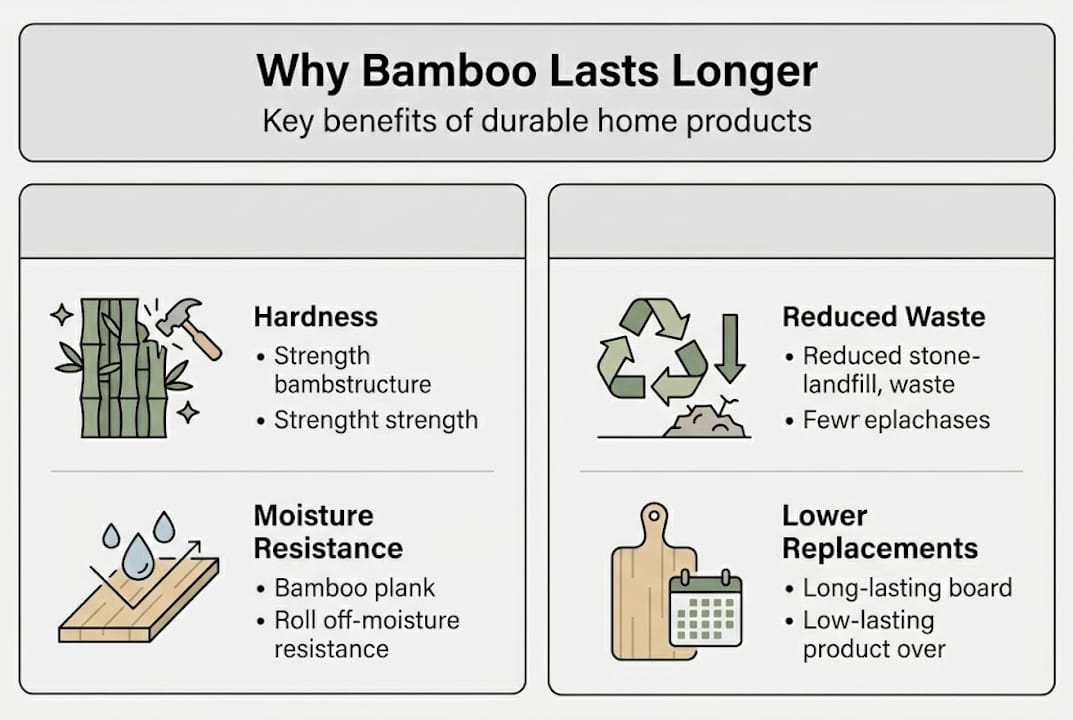
For homeowners, that translates into real savings. For commercial property managers overseeing restaurants, schools, or senior living centers, it means fewer disruptive replacements and more predictable budgets. Nobody wants to swap out bathroom dispensers mid-season or re-outfit a coffee shop kitchen every couple of years.
Here is what durable home products actually deliver:
Researchers have developed a metric called Specific Durability Performance (SDP) that combines mechanical strength, thermal resistance, chemical resistance, and carbon footprint into one score for material selection. It is a useful framework for anyone serious about investing in durable products rather than chasing the lowest sticker price.
Pro Tip: When comparing two similarly priced products, divide the cost by the expected lifespan in years. The product with the lower annual cost is almost always the better sustainability choice, even if it costs more upfront.
Pairing durability with energy efficient home products gives you a compounding effect on your environmental footprint. And if you want a broader look at what this all adds up to, exploring the benefits of sustainable products for your home is a great next step.
Not all natural materials perform equally, and bamboo earns its reputation through measurable performance, not just marketing copy. The key is understanding which type of bamboo processing you are dealing with. Strand-woven bamboo, in particular, is engineered for toughness.
A 3-year real-world test of strand-woven bamboo flooring showed high resistance to scratches, dents, and water damage, performing comparably or even better than many traditional hardwoods in high-traffic areas. That is not a small claim. Hardwoods have been the gold standard for durability in home products for centuries.
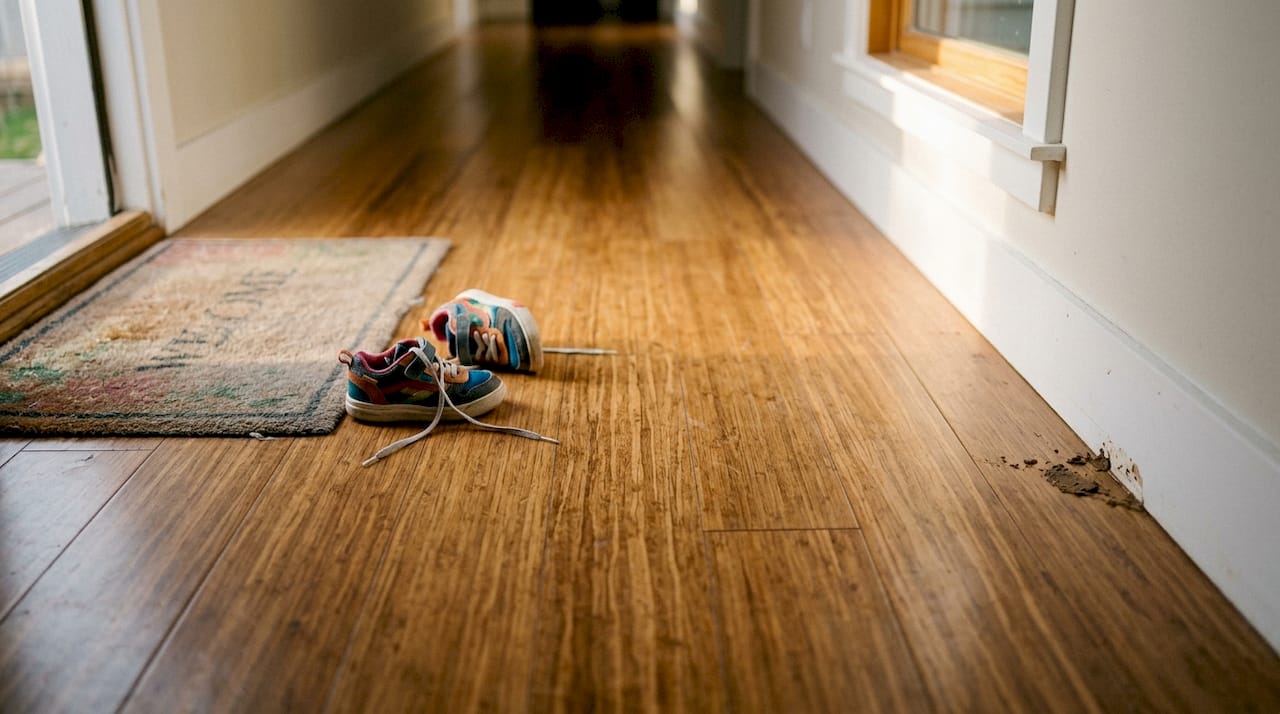
Here is how bamboo stacks up against common materials:
| Property | Strand-woven bamboo | Oak hardwood | Standard pine |
|---|---|---|---|
| Janka hardness | 3,000+ lbf | ~1,290 lbf | ~870 lbf |
| Moisture resistance | High (treated) | Moderate | Low |
| Flexural strength | ~207 MPa | ~97 MPa | ~41 MPa |
| Renewability | Harvested in 3-5 years | 50-100 years | 25-40 years |
Those numbers tell a compelling story. Thermo-hygro processing enhances bamboo’s flexural strength to around 207 MPa and improves dimensional stability, making it well-suited for flooring, furniture, and everyday décor items.
What makes bamboo especially practical for commercial settings is its combination of hardness and light weight. You get a material that can handle the daily punishment of a busy restaurant kitchen or a school hallway without the bulk and cost of hardwood alternatives.
Key performance highlights of quality bamboo products:
Pro Tip: When shopping for bamboo products, look specifically for “strand-woven” construction. It signals a manufacturing process that produces a denser, harder material compared to flat-pressed or vertical bamboo.
For a deeper look at the numbers behind bamboo’s performance, the bamboo durability data we have compiled covers moisture resistance benchmarks and real-world test results. You can also explore why so many people are choosing bamboo over hardwood for their homes and commercial spaces.
Even the best bamboo product can underperform if the wrong variables are ignored during manufacturing or daily use. Knowing what to watch for helps you make smarter choices and extend the life of what you already own.
Moisture content is the single biggest variable. Compressive strength drops dramatically as moisture content rises, falling from around 140 MPa at 0% moisture to just 45 MPa at 67% moisture content. That is a two-thirds reduction in strength. For products used in kitchens, bathrooms, or humid commercial environments, proper moisture treatment during manufacturing is non-negotiable.
Joinery is the second major factor. Furniture durability depends heavily on how pieces are joined together. Dovetail joints outperform simple glue bonds by a wide margin. ISO 7170 standards require furniture to withstand more than 20,000 use cycles, and bamboo’s fiber orientation directly affects how well it mills and maintains surface integrity over time.
Here is a practical comparison of joinery methods:
| Joinery type | Strength | Best use case |
|---|---|---|
| Dovetail joints | Very high | Drawers, cabinet frames |
| Mortise and tenon | High | Chair legs, table frames |
| Dowel joints | Moderate | Shelving, lighter furniture |
| Glue-only bonds | Low | Decorative, low-stress items |
Steps you can take to protect and extend bamboo product life:
“The lifespan of a bamboo product is not determined at the point of sale. It is determined by the quality of its processing, the precision of its joinery, and how well it is maintained in the environment where it lives.”
Understanding the full picture of bamboo material benefits and how renewable bamboo transforms home goods can help you spot quality before you buy.
Now that you know what drives durability, here is how to put that knowledge to work the next time you are shopping. The goal is to cut through eco-marketing language and focus on what actually predicts long-term performance.
Researchers have proposed the SDP indicator as a holistic tool that integrates mechanical, thermal, and chemical durability alongside carbon footprint. While you may not see an SDP score on a product page just yet, the underlying questions it asks are ones you can ask yourself right now.
Use this checklist when evaluating any bamboo product:
Pro Tip: A company that openly shares material specifications, manufacturing processes, and test results is almost always more trustworthy than one that leads only with vague “eco-friendly” language. Transparency is a durability signal in itself.
Avoid the trap of assuming a higher price automatically means better durability. Some premium-priced products rely on brand recognition rather than engineering. On the flip side, the cheapest option rarely holds up in commercial or high-use residential settings. Focus on specifications, not just price or label claims.
For a practical guide to making smarter purchasing decisions, the resource on selecting green home essentials walks through the key questions to ask before you buy.
Here is something most sustainability conversations miss entirely. The greenest product you can own is the one already sitting in your home that still works perfectly. Buying a new bamboo organizer to replace a broken plastic one is better than buying another plastic one, but keeping either one in service for a decade is better still.
We have seen this play out in real commercial settings. A restaurant that outfits its counters with quality bamboo dispensers and organizers once, and maintains them properly, spends far less over five years than one that cycles through cheaper alternatives every 18 months. The disruption alone, sourcing replacements, retraining staff on new products, managing inconsistent aesthetics, adds up to a hidden cost that never shows up on the original purchase receipt.
Long-lasting products also do something that fast-fading trends cannot: they let your space develop a consistent, intentional look. That matters whether you are designing a cozy home kitchen or managing the aesthetic of a senior living center dining room.
If you are rethinking your approach to home or commercial design, understanding what sustainable home decor means in practical terms is a good place to anchor your decisions. Durability is not a trade-off for style. It is the foundation of it.
If this guide has you thinking differently about what “sustainable” really means for your home or business, you are already ahead of most buyers. The next step is finding products that actually back up their claims with material quality, smart construction, and real-world performance.
At Cozee Bay, every bamboo product we carry is chosen with durability and function in mind, from paper towel dispensers used in busy restaurant kitchens to drawer organizers that hold up in family homes year after year. Whether you are outfitting a single room or managing a commercial property, you can shop bamboo solutions that are built to last. And if you want to compare specific options before deciding, our guide to durable bamboo options is a great place to start.
Durable home products reduce waste, require fewer replacements, and spread manufacturing emissions over a longer use period, lowering overall environmental impact.
Yes, especially strand-woven varieties. Bamboo flooring tests show high resistance to scratches, dents, and water damage, matching or outperforming many traditional hardwoods.
High moisture exposure and weak joinery are the two biggest risks. Moisture content can reduce bamboo’s compressive strength by more than half if the material is not properly treated.
Look for certifications, published material specs, and details on joinery and humidity treatment. Holistic indicators like the SDP metric integrate mechanical, thermal, and chemical durability alongside carbon impact to give a fuller picture of product quality.
Comments will be approved before showing up.