Your Cart is Empty


Every American home seeks materials that combine style, strength, and sustainability. As concern over climate change grows, bamboo stands out thanks to its astonishing growth rate—some species can shoot up to 3 feet in a single day. This remarkable advantage places bamboo at the forefront of eco-conscious choices, offering durability and beauty while minimizing environmental impact for both everyday use and modern home design.
| Point | Details |
|---|---|
| Sustainability | Bamboo is a fast-growing, renewable material that requires minimal chemical processing, making it an eco-friendly alternative to traditional wood. |
| Durability | Bamboo possesses exceptional mechanical strength and impact resistance, suitable for various household applications and reducing long-term maintenance costs. |
| Variety of Uses | Different species of bamboo, like Moso, Tonkin, and Guadua, offer unique advantages, enhancing their applicability in home products across different categories. |
| Environmental Impact | Bamboo has a significantly lower environmental footprint compared to traditional wood, contributing to reduced deforestation and land usage while providing superior performance. |
Bamboo is a remarkably versatile natural material derived from an extraordinary grass species that grows incredibly fast and regenerates without replanting. Unlike traditional wood sources, bamboo represents a sustainable alternative with unique manufacturing processes that transform raw plant stalks into functional products for modern spaces.
The production of bamboo material involves several intricate steps, starting with harvesting mature bamboo stalks at optimal growth periods. Specialized manufacturing techniques convert these raw stalks into usable formats through mechanical and chemical processing methods. Mechanical extraction involves crushing the woody bamboo stalks and using natural enzymes to break down the fibers, while chemical processes utilize sodium hydroxide and other compounds to extract cellulose more efficiently.
Bamboo’s incredible versatility allows manufacturers to create multiple product types, including textiles, construction materials, kitchenware, and decorative items. The material’s natural properties make it lightweight, strong, and resistant to moisture and bacterial growth. Key characteristics include:
Pro Tip: When selecting bamboo products, always verify the manufacturing process to ensure you’re choosing environmentally responsible options with minimal chemical processing.
By understanding bamboo’s complex transformation from plant to material, consumers can appreciate the sophisticated engineering behind these sustainable solutions for modern living spaces.
Bamboo is an incredibly diverse material with multiple species offering unique characteristics for home product manufacturing. Structural bamboo composites demonstrate remarkable variations in material properties, making certain species more suitable for specific household applications.
Among the most popular bamboo types used in home products are Moso Bamboo, Tonkin Bamboo, and Guadua Bamboo. Moso Bamboo, native to China, is particularly prized for its strength and versatility, commonly used in flooring, kitchenware, and furniture. Tonkin Bamboo, known for its exceptional flexibility, finds widespread use in decorative items and lightweight home accessories. Guadua Bamboo, prominent in South America, offers superior durability and is frequently utilized in structural elements and robust home design components.
The selection of bamboo species depends on several critical factors:
Each bamboo type brings unique advantages to home product design. For instance, Moso Bamboo’s dense fiber structure makes it ideal for cutting boards and kitchen utensils, while Guadua Bamboo’s natural resilience suits outdoor furniture and architectural elements.
Pro Tip: When purchasing bamboo products, carefully examine the specific bamboo species used, as this directly impacts the item’s performance, durability, and overall quality.
Understanding these nuanced differences helps consumers make informed choices about sustainable and high-performance home products crafted from this extraordinary natural material.
Here’s a comparison of popular bamboo species used in home products:
| Bamboo Species | Key Strengths | Typical Home Uses |
|---|---|---|
| Moso Bamboo | High density, strong | Flooring, kitchen utensils |
| Tonkin Bamboo | Flexible, smooth surface | Decorative pieces, baskets |
| Guadua Bamboo | Robust, highly durable | Outdoor furniture, supports |
Bamboo stands out as an extraordinary sustainable material, offering remarkable environmental advantages that distinguish it from traditional resources. Comprehensive fiber manufacturing studies reveal the complex ecological benefits inherent in bamboo production, highlighting its potential as a genuinely green alternative for modern consumers.
The eco-friendly properties of bamboo stem from its unique botanical characteristics. Rapid Growth is perhaps the most significant environmental advantage, with some bamboo species growing up to 3 feet per day and reaching full maturity in just 3-5 years compared to decades required for traditional timber. This extraordinary growth rate means bamboo can be harvested repeatedly without replanting, dramatically reducing deforestation and land use impacts.
Key ecological benefits of bamboo include:
Beyond its growth characteristics, bamboo offers additional environmental advantages through its manufacturing processes. Unlike synthetic materials, bamboo products require minimal chemical processing and can be transformed into functional items with significantly reduced carbon footprints. Its natural antimicrobial properties further enhance its sustainability by reducing the need for additional chemical treatments.
Pro Tip: When evaluating eco-friendly products, look for bamboo items processed through mechanical extraction methods, which minimize chemical usage and preserve the material’s natural environmental benefits.
By choosing bamboo, consumers actively participate in supporting a more sustainable and regenerative approach to material production and consumption.
Bamboo materials demonstrate exceptional durability that challenges traditional perceptions of natural materials. Advanced structural research reveals innovative void patterns that significantly enhance damage tolerance and fracture resistance, making bamboo an extraordinarily resilient material for everyday applications.

Mechanical Strength stands as a defining characteristic of bamboo products. Unlike conventional wood or synthetic materials, bamboo offers a unique combination of flexibility and rigidity. Structural connection studies highlight how bamboo’s natural cellular structure provides remarkable load-bearing capabilities, allowing it to withstand substantial stress without compromising structural integrity.
Key performance attributes of bamboo include:
The material’s performance extends beyond physical durability. Bamboo products resist moisture, bacterial growth, and environmental degradation more effectively than many alternative materials. Its natural properties mean fewer treatments are required to maintain longevity, reducing long-term maintenance costs and environmental impact.
Pro Tip: To maximize bamboo product durability, avoid prolonged exposure to direct sunlight and extreme moisture, and periodically treat surfaces with natural protective oils to maintain their structural integrity.
By understanding bamboo’s remarkable structural characteristics, consumers can confidently integrate these sustainable materials into their daily lives, knowing they’ve chosen a resilient and environmentally responsible option.
Comprehensive structural comparisons reveal bamboo’s remarkable advantages over traditional wood materials, challenging long-held perceptions about natural building resources. While conventional wood has been the standard for centuries, bamboo emerges as a superior alternative across multiple performance metrics.
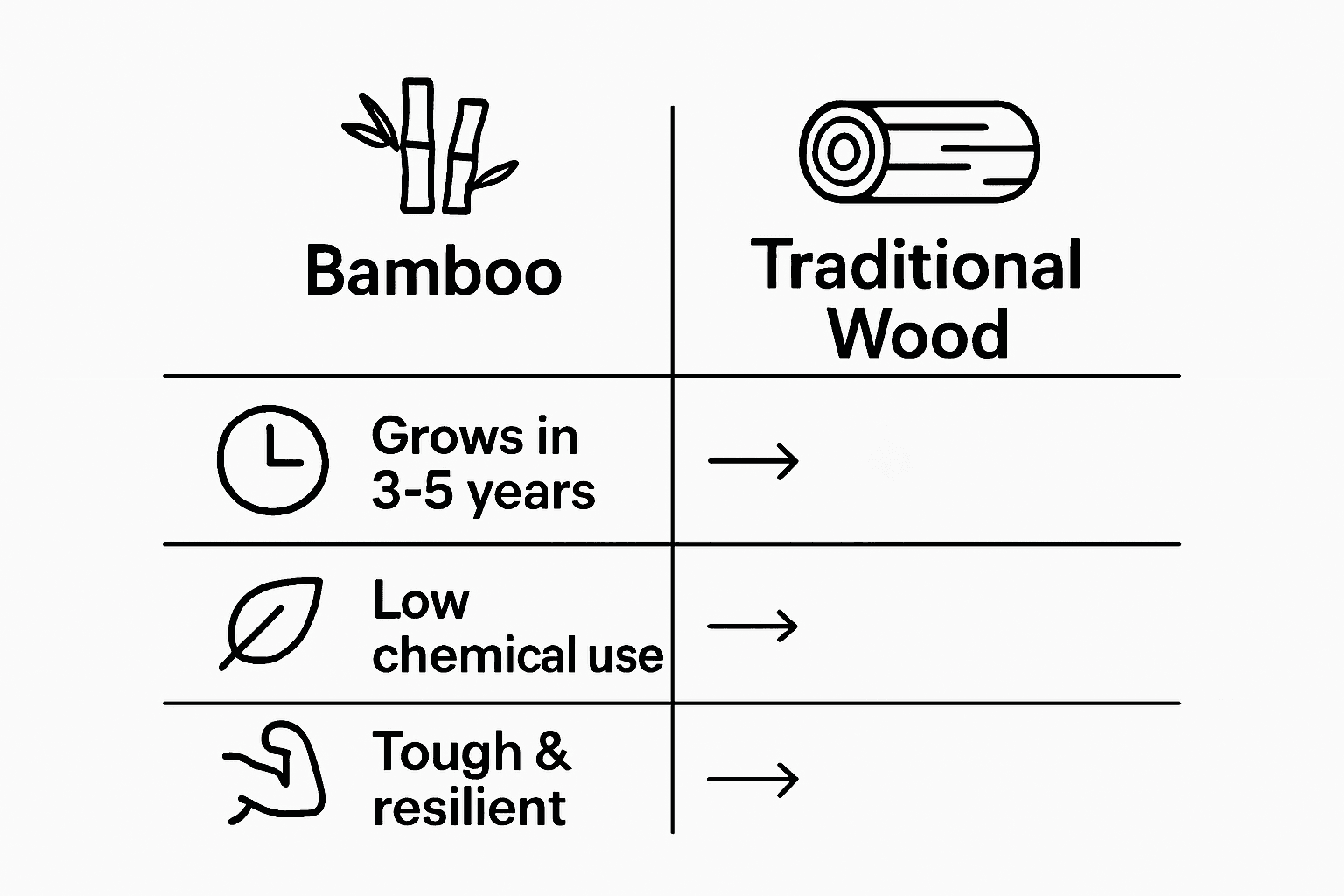
Growth Efficiency represents the most significant differentiator between bamboo and traditional wood. Traditional timber requires 20-50 years to reach harvest maturity, whereas bamboo reaches full growth in just 3-5 years. This dramatic difference means bamboo provides up to 10 times more usable material per acre annually, making it exponentially more sustainable and environmentally responsible compared to hardwood forests.
Key comparative advantages of bamboo include:
Traditional wood materials often require extensive chemical treatments, preservatives, and maintenance to maintain durability. Bamboo, by contrast, possesses inherent protective qualities that minimize additional processing. Its natural cellular structure provides remarkable strength-to-weight ratios, making it ideal for everything from construction materials to home accessories.
Pro Tip: When selecting between bamboo and traditional wood, consider the specific application’s requirements, understanding that bamboo frequently offers superior performance with lower environmental costs.
Ultimately, bamboo represents more than just an alternative material—it symbolizes a progressive approach to resource utilization, combining performance, sustainability, and aesthetic appeal in ways traditional wood cannot match.
See how bamboo and traditional wood materials differ in critical aspects:
| Attribute | Bamboo | Traditional Wood |
|---|---|---|
| Harvest Time | 3-5 years | 20-50 years |
| Tensile Strength | Higher than oak | Moderate, depends on type |
| Environmental Impact | Minimal, sustainable | High, deforestation risk |
| Pest Resistance | Natural, requires less | Needs chemical treatment |
If you value the rapid renewable growth and exceptional durability of bamboo outlined in this article you will appreciate the thoughtfully crafted offerings at Cozee Bay. Our Bamboo Paper Towel Dispenser- A Sleek Look Home or Office combines eco-friendly materials with functional innovation, perfect for anyone seeking to reduce environmental impact while adding timeless style to their space. Bamboo’s natural strength and antibacterial properties make it ideal for residential or commercial settings including restaurants, schools, and offices.
Explore our range of sustainable bamboo products at Cozee Bay today and take the first step toward a greener lifestyle. For added convenience and longevity, don’t forget to check out our Paper Towel Dispensers - Accessories | Cozee Bay® for replacements and upgrades. Embrace bamboo’s remarkable performance and join countless others who blend beauty, strength, and sustainability into everyday living. Act now to enhance your modern space with eco-conscious solutions that are designed to last.
Bamboo offers significant environmental advantages, including rapid growth with some species reaching maturity in just 3-5 years, high carbon sequestration rates, and minimal water requirements for cultivation. It also promotes soil preservation and is biodegradable at the end of its lifecycle.
Bamboo is often more durable than traditional wood due to its exceptional mechanical strength and natural resistance to moisture and bacterial growth. Its structural properties allow it to withstand substantial stress without compromising integrity, leading to lower maintenance needs.
Common types of bamboo used in home products include Moso Bamboo, Tonkin Bamboo, and Guadua Bamboo. Moso is known for its strength, Tonkin for its flexibility, and Guadua for its durability, each suited to different applications in home design.
To ensure the eco-friendliness of bamboo products, look for items that are processed using mechanical methods rather than chemical ones. Verify the specific bamboo species used, as this can impact the environmental sustainability and performance of the product.
Comments will be approved before showing up.