Your Cart is Empty


Most homeowners assume flooring durability means choosing traditional hardwood, but bamboo challenges this belief with surprising strength and sustainability. While many overlook bamboo as merely decorative, it actually offers competitive hardness ratings and natural water resistance that rival or exceed conventional timber. This article clarifies why investing in durable bamboo products delivers smart financial returns and genuine environmental benefits for eco-conscious property owners in 2026.
| Point | Details |
|---|---|
| Durability saves money | Reducing replacement frequency cuts costs and conserves resources over decades. |
| Bamboo matches hardwood strength | Janka ratings of 1,100-1,500 lbf compete directly with oak and maple. |
| Water resistance adds value | Natural fiber structure provides superior moisture protection compared to traditional woods. |
| Sustainable materials boost property worth | Buildings with eco-friendly features can increase asset value by up to 10%. |
| Smart maintenance extends lifespan | Proper care maximizes durability benefits and preserves aesthetic appeal. |
Durability in flooring and home materials means resistance to wear, denting, water damage, and the ability to maintain appearance over extended periods. For eco-conscious homeowners and commercial property managers, understanding durability prevents costly replacements and reduces environmental impact. The most reliable way to evaluate material strength is through the Janka Hardness Scale, which quantifies resistance to denting and wear.
This industry-standard benchmark measures the force required to embed a steel ball halfway into a wood sample. Higher ratings indicate harder materials that withstand daily traffic, furniture movement, and accidental impacts better. When you choose flooring or products with elevated Janka scores, you invest in longevity that pays dividends through reduced maintenance and replacement cycles.
Several factors contribute to overall material durability beyond hardness alone:
Understanding these durability components helps you make informed decisions that balance initial investment with lifecycle value. Materials that resist damage naturally require fewer repairs and replacements, directly reducing both financial costs and environmental waste. For spaces with high foot traffic or moisture exposure, durability becomes even more critical to sustainable property management.
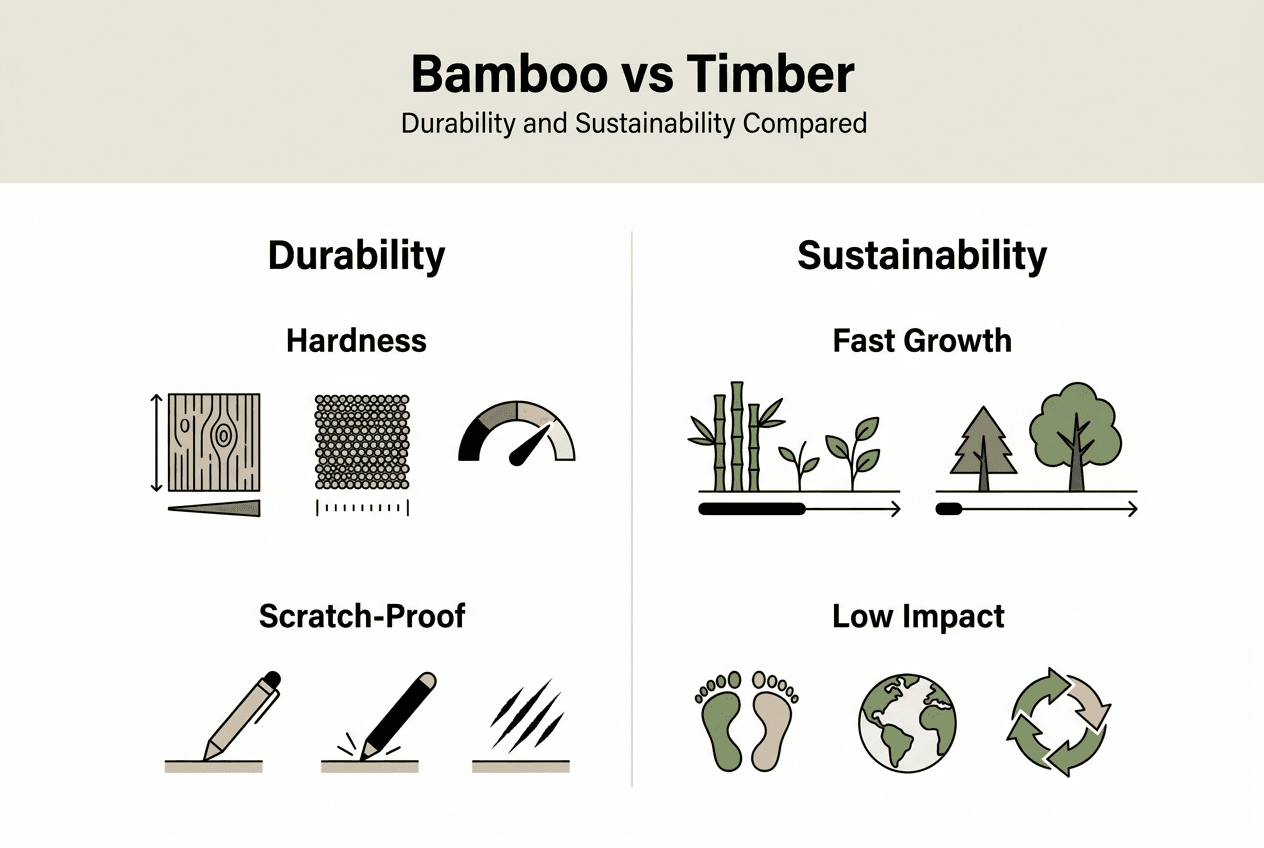
The connection between durability and sustainability often gets overlooked. When products last longer, they consume fewer raw materials over time and generate less landfill waste. This relationship makes durable materials like bamboo particularly valuable for environmentally conscious choices. By prioritizing durability from the start, you create spaces that maintain beauty and function while minimizing ecological footprint across decades of use.
Bamboo delivers exceptional durability through its unique fiber structure and impressive hardness ratings. Bamboo flooring exhibits Janka ratings from 1,100 to 1,500 lbf, placing it equal to or above many traditional hardwoods. This performance stems from bamboo’s tightly woven cellular structure, which creates natural density and resilience.
| Material | Janka Hardness Rating (lbf) | Relative Durability |
|---|---|---|
| Strand-woven bamboo | 3,000-5,000 | Extremely high |
| Standard bamboo | 1,100-1,500 | High |
| Red oak | 1,290 | Moderate-high |
| Maple | 1,450 | High |
| Pine | 690 | Low-moderate |
The data reveals bamboo competing directly with popular hardwoods while offering distinct advantages. Bamboo’s fiber composition creates natural water resistance superior to oak, making it ideal for kitchens, bathrooms, and commercial spaces where moisture exposure occurs regularly. This inherent protection reduces warping and swelling that plague traditional timber in humid environments.
Pro Tip: Select bamboo products for high-moisture areas like kitchens and bathrooms to maximize longevity while reducing maintenance demands and replacement frequency.
Beyond physical durability, bamboo offers unmatched environmental sustainability. Bamboo grass reaches harvest maturity in 3-5 years compared to hardwood trees requiring 20-120 years. This rapid growth cycle means bamboo regenerates quickly without depleting forests or damaging ecosystems. The plant also absorbs more carbon dioxide per acre than most tree species, actively contributing to climate change mitigation.
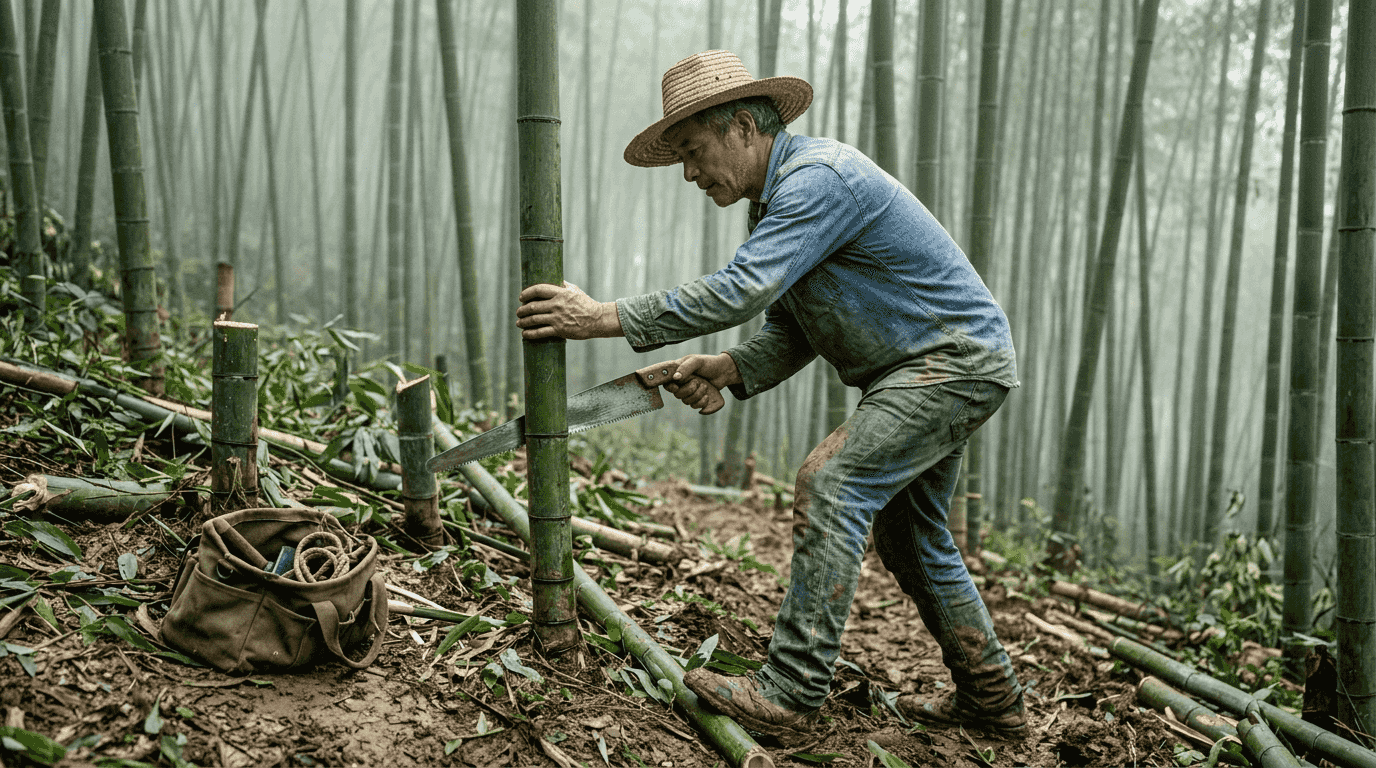
Low-impact harvesting further enhances bamboo’s eco-credentials. When cut, bamboo regrows from existing root systems without replanting, preserving soil structure and preventing erosion. This regenerative quality makes bamboo cultivation inherently sustainable, supporting continuous production without environmental degradation. For property owners seeking genuine alternatives to hardwood, bamboo delivers comparable performance with dramatically reduced ecological impact.
The combination of durability and sustainability creates exceptional value. You get materials that withstand daily wear while supporting environmental stewardship. This dual benefit explains why forward-thinking homeowners and commercial managers increasingly choose bamboo for flooring, furniture, and organizational products. The extended lifespan of quality bamboo products means fewer replacements, lower lifetime costs, and reduced resource consumption across decades of use.
While bamboo offers impressive durability, understanding how it compares to traditional timber helps you make informed material choices. Each option presents distinct advantages depending on your specific needs, budget, and environmental priorities.
| Factor | Bamboo | Timber |
|---|---|---|
| Hardness | 1,100-1,500 lbf (standard) | 690-1,450 lbf (varies by species) |
| Refinishing | Limited, 1-2 times maximum | Multiple times over lifespan |
| Water resistance | High natural resistance | Moderate, requires sealing |
| Lifespan | 20-25 years with care | 30-100+ years with refinishing |
| Maintenance | Regular cleaning, moisture control | Periodic refinishing, sealing |
Timber’s superior refinishing capability represents its most significant durability advantage. Hardwood floors can be sanded and refinished 5-10 times, effectively creating new surfaces that extend total lifespan beyond a century. Bamboo’s thinner wear layer limits refinishing to once or twice, requiring replacement sooner when surface damage accumulates.
Bamboo advantages:
Timber advantages:
Scenarios where bamboo excels include moisture-prone environments like kitchens and bathrooms. The material’s inherent water resistance outperforms most timber species without additional treatments. Bamboo’s eco-friendly profile also appeals to environmentally conscious buyers willing to accept limited refinishing in exchange for sustainability benefits.
However, prolonged moisture exposure still damages bamboo, causing warping and structural issues. Neither material tolerates standing water or persistent humidity without proper ventilation and maintenance. Understanding these limitations prevents disappointment and ensures appropriate material selection for specific spaces.
Maintenance practices significantly impact both materials’ longevity. Regular cleaning, prompt spill cleanup, and humidity control preserve appearance and structural integrity. Bamboo requires slightly more attention to moisture levels, while timber demands periodic refinishing to maintain protection. Environmental conditions like climate, foot traffic, and sun exposure affect durability regardless of material choice.
For property owners prioritizing maximum lifespan and refinishing flexibility, traditional timber remains the superior choice. Those valuing immediate water resistance, sustainability, and lower upfront costs find bamboo delivers better overall value. The decision ultimately depends on balancing durability expectations with environmental priorities and budget constraints specific to your project.
Selecting and maintaining durable bamboo products requires strategic decisions that optimize both performance and environmental impact. These practical steps help you maximize value while supporting sustainability goals.
Pro Tip: Combine durable bamboo selection with consistent maintenance practices like immediate spill cleanup and humidity monitoring to extend lifespan by 30-40% beyond average expectations.
Investing in durable sustainable materials delivers measurable financial returns beyond initial purchase savings. Buildings incorporating sustainable features achieve up to 10% higher asset values compared to conventional construction. This premium reflects growing buyer preference for eco-friendly properties and reduced operating costs from durable, low-maintenance materials.
Complementary sustainable choices amplify bamboo’s benefits throughout your space. Pair durable bamboo products with recycled metal fixtures, low-VOC paints, and energy-efficient lighting to create cohesive eco-conscious environments. These combinations enhance aesthetic appeal while demonstrating commitment to environmental stewardship that resonates with clients, tenants, and visitors.
Material selection represents just one component of sustainable design. Consider how different sustainable materials interact within your overall space planning. Natural fiber textiles, reclaimed wood accents, and bamboo organizational products create layered sustainability that improves both function and visual interest.
Viewing durability as a long-term investment strategy transforms how you approach property improvements. Upfront costs for quality bamboo products typically recover within 3-5 years through reduced replacement frequency and lower maintenance expenses. Over 20-25 year lifespans, durable materials generate substantial savings while minimizing environmental impact from manufacturing, transportation, and disposal of inferior alternatives.
The environmental benefits extend beyond individual properties. Choosing durable bamboo reduces demand for slow-growing hardwoods, supporting forest conservation and biodiversity protection. Your material decisions contribute to market signals that encourage sustainable forestry practices and responsible manufacturing. This collective impact makes individual choices meaningful in addressing broader environmental challenges facing communities worldwide.
Cozee Bay specializes in handcrafted bamboo products that combine exceptional durability with sustainable design for modern homes and commercial spaces. Our curated selection includes paper towel dispensers, organizers, and functional accessories proven in demanding environments from restaurants to senior living centers across the United States.
Explore how bamboo’s moisture resistance and durability translate into practical benefits for your space. Each product features quality construction designed to withstand daily use while maintaining aesthetic appeal. Our commitment to eco-conscious materials means you invest in solutions that support both your immediate needs and long-term environmental goals.
Discover durable bamboo home products that enhance organization and style throughout your property. Visit Cozee Bay to browse our complete collection, read detailed product specifications, and learn how sustainable bamboo solutions deliver lasting value for eco-conscious property owners in 2026.
Bamboo reaches harvest maturity in 3-5 years while hardwood trees require 20-120 years, making bamboo dramatically more renewable. The plant absorbs more carbon dioxide per acre than most tree species and regrows from existing roots without replanting, preserving ecosystems. Its competitive hardness and natural water resistance extend product lifespan, reducing replacement waste and resource consumption over decades.
Higher Janka ratings indicate materials better resist denting, scratching, and wear from daily traffic. Bamboo’s 1,100-1,500 lbf range competes directly with popular hardwoods like oak and maple for durability performance. Understanding this scale helps match flooring to your lifestyle needs, with higher ratings recommended for high-traffic commercial spaces and active households with pets or children.
Timber floors can be sanded and refinished 5-10 times throughout their lifespan, extending use beyond a century. Bamboo’s thinner wear layer limits refinishing to 1-2 times maximum, requiring eventual replacement. This difference makes proper initial care crucial for bamboo, as surface damage cannot be repeatedly corrected through refinishing like traditional hardwood floors.
Regular cleaning with pH-neutral products and soft mops preserves bamboo’s finish and appearance. Avoid prolonged moisture exposure by wiping spills immediately and maintaining indoor humidity between 30-50%. Following manufacturer care instructions, including periodic inspection for wear patterns and prompt repair of damaged areas, extends product life significantly beyond average expectations.
Comments will be approved before showing up.