Your Cart is Empty


Choosing the right eco-friendly home essentials can feel complicated when you want to combine style with sustainability. For Canadian and American homeowners and property managers, selecting materials like bamboo is a smart move for reducing environmental impact while keeping interiors beautiful. This guide reveals practical strategies for identifying durable, green products, highlights certification systems, and explores how thoughtful design and real customer feedback can help you find the best sustainable solutions for your space. Bold decision-making starts with the right material choices.
| Main Insight | Explanation |
|---|---|
| 1. Choose Sustainable Materials | Opt for materials like bamboo and recycled options that are eco-friendly and stylish. |
| 2. Assess Functionality and Design | Evaluate products based on durability, performance, and user-friendliness, not just aesthetics. |
| 3. Compare Environmental Certifications | Familiarize yourself with certifications like LEED and Energy Star to ensure true sustainability. |
| 4. Analyze Customer Reviews | Prioritize detailed user feedback to assess real product performance and sustainability claims. |
| 5. Verify Durability and Value | Invest in long-lasting products to minimize waste and ensure functionality over time. |
Sustainable home design begins with understanding the right material choices that minimize environmental impact while maximizing style and functionality. When selecting green home essentials, identifying sustainable materials requires strategic research and thoughtful evaluation.
Start by exploring eco-friendly materials that offer both performance and environmental responsibility. Sustainable materials research highlights several key categories that environmentally conscious homeowners should consider:
Your selection process should evaluate materials based on multiple criteria. Next-generation sustainable materials suggest looking beyond traditional metrics to consider thermal efficiency, durability, and overall ecological impact. This means assessing not just the material’s origin, but its entire lifecycle performance.
Consider factors like renewable sourcing, energy consumption during production, potential for recycling, and long-term environmental consequences. Bamboo, for instance, grows rapidly and requires minimal resources, making it an excellent sustainable choice for home essentials.
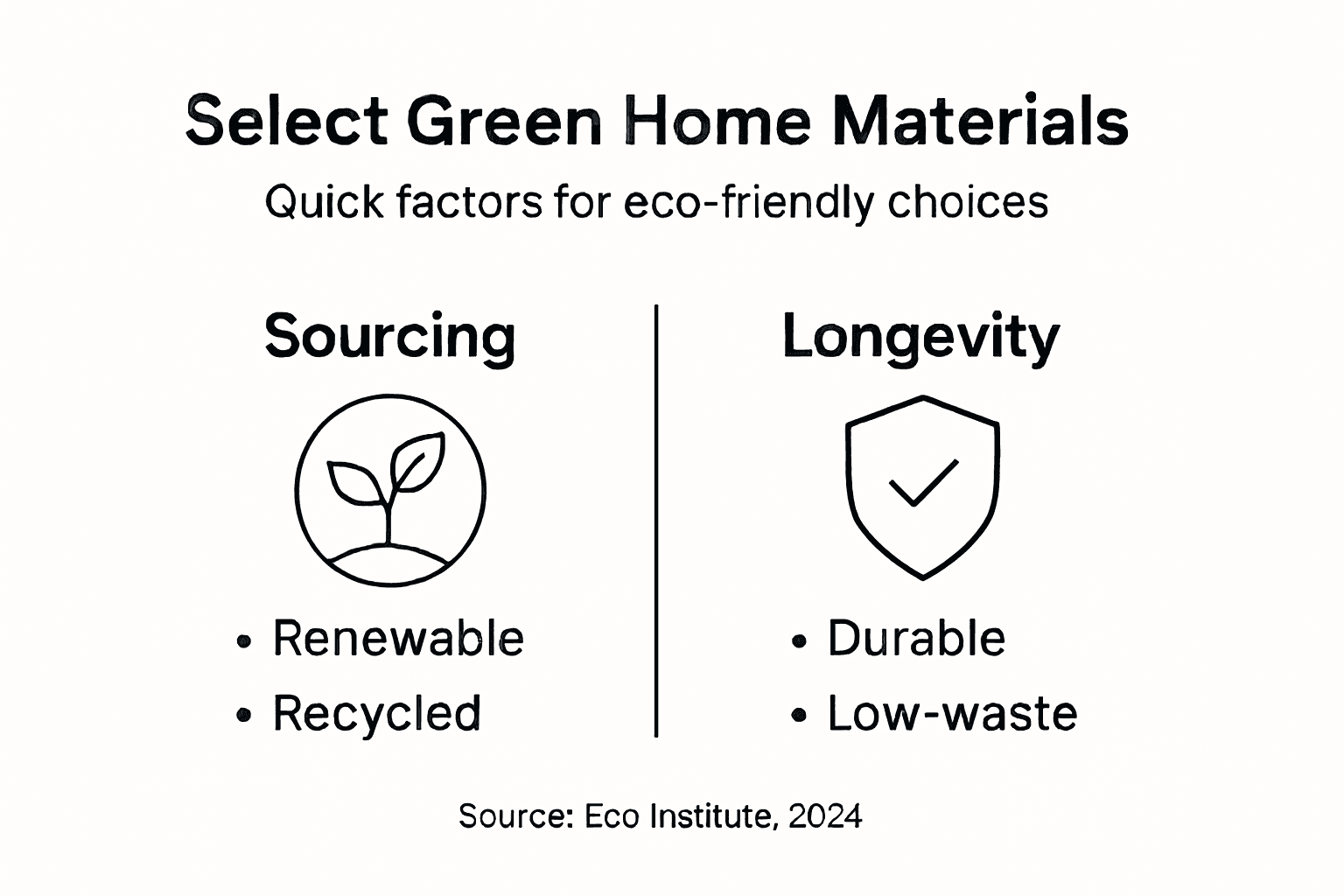
The following table summarizes key benefits and challenges of different sustainable material categories for home essentials:
| Material Category | Primary Benefit | Main Challenge |
|---|---|---|
| Natural materials | Renewable, low impact | Limited supply inconsistencies |
| Recycled materials | Waste reduction | Potential performance issues |
| Bio-based alternatives | Biodegradable options | Shorter lifespan |
| Low-impact synthetics | High durability | Complex production processes |
Pro tip: Always request material certifications and environmental impact statements from manufacturers to verify the authenticity of their sustainability claims.
Evaluating the functionality and design of green home essentials requires a strategic approach that balances ecological responsibility with practical performance. This step helps you make informed decisions that go beyond surface-level aesthetics to ensure your sustainable choices truly meet your lifestyle needs.
Green product design research emphasizes the critical importance of integrating sustainability principles early in the selection process. Key considerations for assessing product functionality include:
When examining design, sustainable furniture guidelines recommend a comprehensive evaluation that considers more than just visual appeal. Look for design elements that demonstrate:
Sustainable design is not just about appearance, but about creating products that serve both human and environmental needs effectively.
Pay close attention to the product’s entire lifecycle. A truly sustainable item should minimize waste, conserve resources, and provide long-term value without compromising on functionality or aesthetic appeal.

Pro tip: Always test product samples or request detailed specifications to ensure the item meets both your functional requirements and sustainability standards.
Navigating the world of environmental certifications requires a strategic approach to ensure your green home essentials truly meet sustainability standards. This step will help you decode the complex landscape of eco-friendly product validation and make informed choices that align with your environmental goals.
Sustainable building certification research reveals critical factors to consider when comparing environmental certifications. Key areas of evaluation include:
When diving deeper, green building certification analysis highlights several prominent certification systems to understand:
Not all certifications are created equal. The right certification depends on your specific sustainability objectives and product type.
Pay close attention to the specific criteria each certification uses. Some focus on energy performance, while others emphasize material sourcing or overall environmental impact. Look for certifications that provide transparent, measurable standards and third-party verification.
Here’s a comparison of leading environmental certifications for green home products:
| Certification | Focus Area | Typical Use Case |
|---|---|---|
| LEED | Building performance | Homes, new construction |
| Energy Star | Energy efficiency | Appliances, electronics |
| FSC | Responsible forestry | Wood furniture, lumber |
| Green Seal | Product lifecycle | Cleaning, household |
Pro tip: Always cross-reference multiple certification systems and request detailed documentation to ensure comprehensive understanding of a product’s true environmental credentials.
Understanding the real-world performance of green home essentials requires more than just manufacturer claims. This step will help you navigate customer reviews and ratings to make informed decisions that go beyond marketing promises.
Home essentials review analysis reveals critical insights into how products actually perform in everyday environments. When evaluating customer reviews, focus on these key aspects:
When diving deeper into review analysis, customer trust indices suggest looking beyond star ratings to understand:
Not all reviews are created equal. Look for detailed, balanced feedback that provides genuine insights into product performance.
Pay special attention to reviews that discuss eco-friendly attributes in depth. Seek out comments that go beyond surface-level observations and provide meaningful context about the product’s environmental impact, durability, and real-world sustainability.
Pro tip: Cross-reference reviews across multiple platforms and look for patterns in user experiences to get a more comprehensive understanding of the product’s true performance and sustainability.
Durability is the cornerstone of truly sustainable home essentials, transforming eco-friendly purchases from short-term investments to long-lasting solutions. This step will help you evaluate products that not only meet environmental standards but also provide exceptional performance over time.
Sustainable materials durability research reveals critical insights into selecting products that withstand environmental challenges while maintaining functional integrity. When assessing long-term value, consider these essential evaluation criteria:
Durability assessment guidelines suggest implementing a comprehensive evaluation approach:
True sustainability means investing in products that last, reducing waste and minimizing environmental impact through extended use.
Pay special attention to materials that demonstrate exceptional environmental resistance and minimal degradation. Look for products that combine innovative sustainable materials with proven durability, ensuring your eco-friendly choices remain functional and efficient for years to come.
Pro tip: Always request comprehensive documentation about material performance and conduct a thorough cost-per-use analysis to truly understand a product’s long-term value and sustainability.
Choosing the right green home essentials means balancing sustainability with lasting durability and elegant design. If you are seeking products that truly embody sustainable materials, material integrity, and long-term value as detailed in the article, explore Cozee Bay’s carefully crafted bamboo wood collection. Our range addresses common challenges like sustainable sourcing and functionality while enhancing your home or commercial space with natural beauty.
Discover our premium selection including eco-conscious paper towel dispensers and versatile Food Bag Storage Organizers designed to minimize waste and simplify your sustainable lifestyle. Embrace durable craftsmanship and ease of use while contributing to a greener future.

Ready to transform your home with stylish eco living essentials that align with your environmental goals? Visit Cozee Bay today and explore innovative options like our Bag Organizer with Wrap Dispenser and Trash Bag Dispensers. Take action now to invest in products that combine sustainability with high-performance design for lasting value.
To identify sustainable materials, start by researching natural, recycled, bio-based, and low-impact synthetic options. Evaluate materials based on their lifecycle performance, from sourcing to end-of-life, and request certifications to verify their sustainability claims.
When evaluating functionality, consider performance metrics such as durability, energy efficiency, and versatility. Ensure that products not only look good but also fit your lifestyle needs and are easy to maintain over time.
Compare environmental certifications by looking at focus areas such as energy efficiency, resource conservation, and material sourcing. Check for transparent criteria and third-party verification to ensure products align with your sustainability goals.
Focus on detailed customer reviews that provide insights into long-term durability and the validation of sustainability claims. Pay attention to real user experiences that discuss performance in everyday settings, rather than just star ratings.
Durability is crucial because it determines how long a product will last, reducing waste and minimizing environmental impact. Invest in durable items by checking manufacturer performance data and considering warranties or independent testing results.
To verify long-term value, assess factors like material resilience, maintenance needs, and potential for repair. Conduct a cost-per-use analysis to determine if the investment will pay off over time, ideally reducing replacement frequency by 20% or more.
Comments will be approved before showing up.