Your Cart is Empty


TL;DR:
- Plastic organizers shed microplastics and leach harmful chemicals affecting health and environment. Switching to bamboo, glass, or recycled alternatives offers safer, sustainable storage solutions. Prioritizing high-use, heat-related areas for replacement maximizes health and ecological benefits.
That innocent-looking plastic drawer organizer sitting in your kitchen might be doing more harm than you think. Most people assume plastic organizers are just a convenience item, something cheap and easy to grab at any home goods store. But these products are quietly shedding microplastic particles every single day, releasing chemicals that can interfere with your hormones and piling up in landfills for centuries. The good news is that practical, stylish, and genuinely sustainable alternatives exist right now. This article breaks down the real risks of plastic organizers and walks you through the smartest ways to replace them.
| Point | Details |
|---|---|
| Plastic organizers pose risks | Plastic organizers release microplastics and toxic chemicals, impacting health and environment. |
| Heat boosts microplastic exposure | Using plastic organizers near heat or microwaves greatly increases microplastic and leachate contamination. |
| Eco-friendly options are effective | Bamboo, glass, and recycled organizers are safe, sustainable, and style-conscious alternatives. |
| Replace high-risk organizers first | Focus on swapping organizers in kitchens or food zones to minimize risks quickly. |
| Start small, improve consistently | Gradual, pragmatic changes create lasting impact for home and business environments. |
Most of us reach for plastic organizers without a second thought. They are affordable, lightweight, and available in every size imaginable. What rarely gets discussed, though, is what these products are actually made of and what happens to them over time.
Plastic organizers are petroleum-based products, meaning they are derived from fossil fuels and engineered to be durable. That durability is exactly the problem. As noted in a breakdown of bamboo vs plastic organizers, plastic organizers contribute to environmental pollution because they are non-biodegradable and persist in landfills for centuries while contributing to microplastic pollution. A plastic organizer you toss today could still be sitting in a landfill in the year 2500.
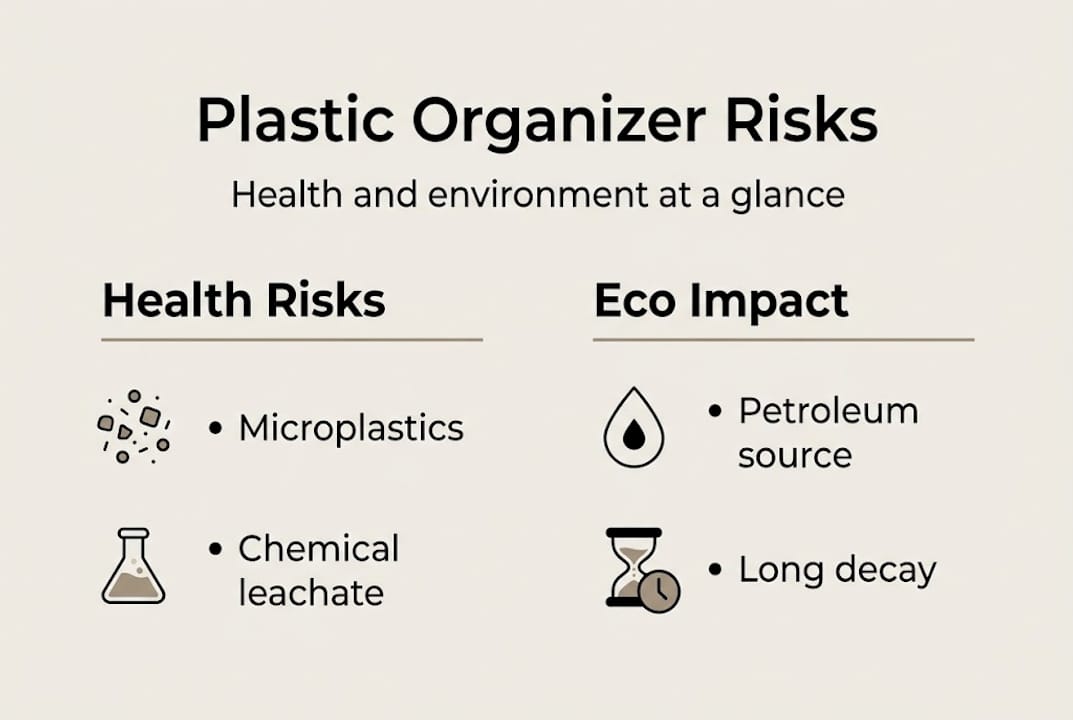
Beyond the landfill issue, plastic organizers shed tiny particles during normal, everyday use. Scratching the surface while pulling out a utensil, stacking items on top of each other, or even just wiping them down can release microplastics into your home environment. These particles are small enough to become airborne, settle on food, or get absorbed through skin contact.
The health implications are not trivial. Chemicals commonly found in plastics, including BPA (bisphenol A) and phthalates, are known endocrine disruptors. That means they can mimic or interfere with your body’s natural hormones, potentially affecting everything from metabolism to reproductive health. Ongoing exposure, even at low levels, has been linked to inflammation and oxidative stress.
Here is a quick look at the most pressing concerns with plastic organizers:
“Plastic organizers are petroleum-based, non-biodegradable, and persist in landfills for centuries while contributing to microplastic pollution.” This is not a future risk. It is happening right now in homes and workplaces everywhere.
For a deeper look at how understanding bamboo organizers can change your approach to storage, it is worth seeing how the two materials compare side by side.
Understanding the scope of microplastics sets the stage for what these invisible particles mean for daily life and business operations. You cannot see them, and you cannot smell them, but they are present in most homes and commercial kitchens that rely on plastic storage and organizing products.
Heat is the biggest accelerant. Microwave heating plastic containers releases up to 4.22 million microplastic particles per square centimeter, and freezing makes plastic more brittle, increasing shedding when the material is handled. If your workplace kitchen or home pantry uses plastic organizers near heat sources, the exposure risk goes up significantly.
Here is how microplastic exposure typically happens in daily life:
| Condition | Microplastic risk level | Recommended action |
|---|---|---|
| Room temperature use | Low to moderate | Monitor wear and replace when scratched |
| Near heat sources | High | Replace immediately with bamboo or glass |
| Freezing temperatures | Moderate to high | Avoid plastic in freezer drawers |
| Old or scratched plastic | Very high | Prioritize replacement now |
For businesses like restaurants, coffee shops, and senior living centers, the stakes are even higher. Staff and residents interact with organizers constantly, and organizing kitchen sustainably is no longer just a trend. It is a practical health decision.
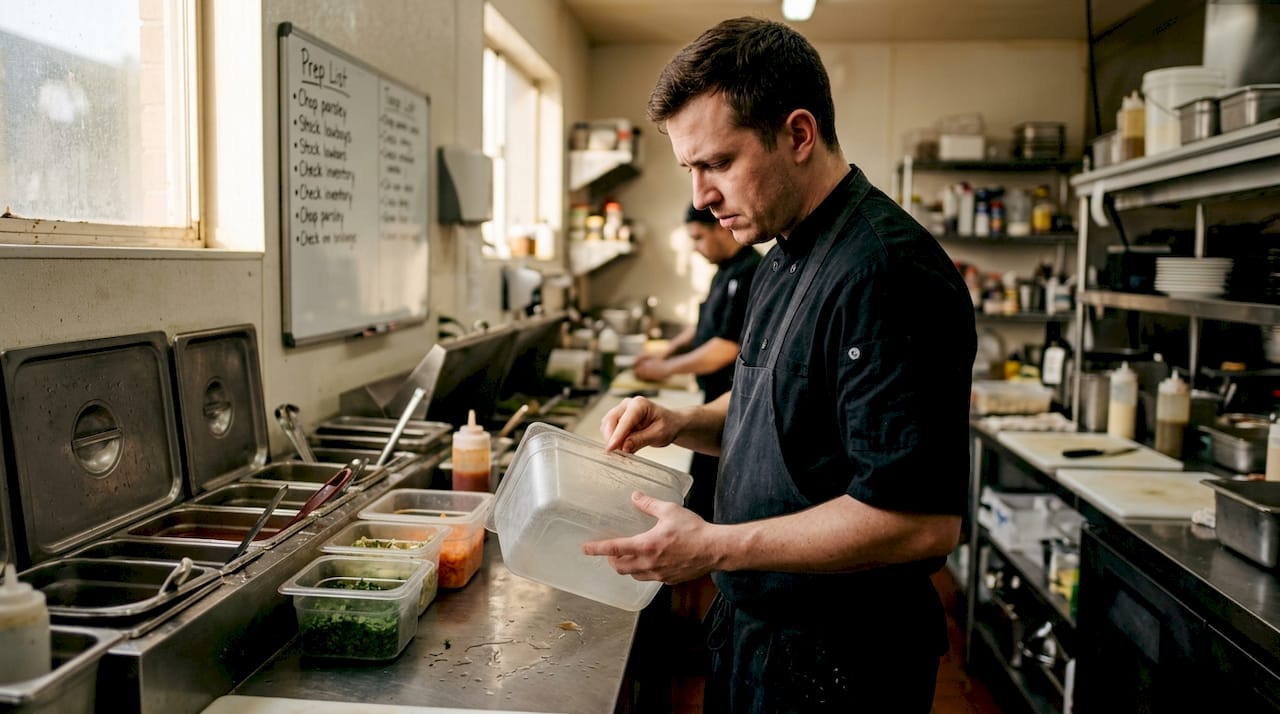
Pro Tip: Start your plastic swap in the kitchen and any area where heat is present. These are the highest-risk zones for microplastic release, and replacing them first gives you the biggest immediate benefit. A sustainable drawer organization approach helps you prioritize which areas to tackle in what order.
Expert guidance on microplastics consistently points to heat and physical stress on plastic as the main triggers for increased particle release, which is why your kitchen deserves the most attention first.
With microplastics identified as a worry, it is crucial to see how the chemicals released from plastics go far beyond just particles. They impact your biology in ways that researchers are still working to fully understand.
Plastic leachates are the chemicals that migrate out of plastic materials and into the surrounding environment, including the air, surfaces, and food near your organizers. The health risks from plastic leachates include hormone disruption, inflammation, oxidative stress, and potential links to heart disease, cancer, and endocrine issues. These are not fringe concerns. They are increasingly supported by peer-reviewed research.
Here is what the science currently points to:
| Material | Chemical leaching risk | Biodegradable | Recommended use |
|---|---|---|---|
| Plastic | High (BPA, phthalates) | No | Minimize, especially near food |
| Bamboo | Very low | Yes | Ideal for kitchen and workspace |
| Glass | Negligible | Partially | Best for food-contact storage |
| Recycled materials | Low to moderate | Varies | Good secondary option |
The science is clear enough to act on. You do not need to wait for a definitive study to make a practical change in your home or workplace.
For those looking to reduce their exposure, switching to bamboo organizers for less plastic waste is one of the most direct steps you can take. Bamboo does not leach chemicals, it is naturally antimicrobial, and it holds up well in high-traffic environments. The comparison with plastic is not even close when you look at the full picture of long-term safety.
Having established the risks, let’s turn to the best practical steps. Swapping plastic organizers for sustainable solutions does not mean sacrificing function or style. In fact, many eco-friendly options look better and last longer than their plastic counterparts.
Eco-friendly bamboo organizers are safer and reduce plastic waste dramatically, benefiting both sustainability and style. Bamboo is one of the fastest-growing plants on earth, which means it can be harvested without depleting resources the way petroleum-based plastics do. It is also naturally strong, resistant to moisture when properly treated, and visually appealing in any setting.
Here are your best alternatives to plastic organizers:
Pro Tip: You do not have to replace everything at once. Focus first on organizers that touch food or sit near heat. Then work outward to other areas of your home or business. This approach keeps the transition manageable and cost-effective. Explore eco-friendly storage ideas to find specific product types suited to each room.
When choosing a sustainable organizer, ask yourself three questions. Does it touch food or heat? How long do you need it to last? And what is the environmental cost of making and disposing of it? Bamboo checks all three boxes better than plastic in almost every scenario. Pairing it with a broader sustainable home organization plan makes the whole process feel intentional rather than overwhelming.
Here is something most sustainability conversations get wrong. People focus heavily on recycling plastic rather than stopping its use in the first place. Recycling feels productive, but most plastic organizers are not actually recyclable through standard curbside programs. They end up in landfills anyway.
The other trap is convenience. Plastic organizers are cheap and easy to find, and that convenience makes it easy to overlook the long-term costs. The real shift happens when you stop treating plastic as the default and start treating it as the exception.
What actually works is replacing the organizers that matter most first, specifically those in food-contact zones and high-traffic areas. Small, consistent changes beat a single big purchase every time. Swapping one kitchen drawer at a time using eco-friendly drawer steps is far more sustainable as a habit than buying a full set of bamboo products and losing motivation halfway through.
And for businesses, the math is even clearer. A sustainable kitchen organizing approach reduces liability, improves staff confidence in food safety, and signals to customers that you take quality seriously. That is a real competitive edge, not just a feel-good gesture.
Ready to take practical steps? You have done the hard part by understanding the risks. Now it is time to act on them, and you do not have to figure it out alone.

At Cozee Bay, we have curated a collection of handcrafted bamboo organizers designed specifically for homes, restaurants, coffee shops, schools, and senior living centers. Every product is built with sustainability, durability, and real-world function in mind. Whether you are reorganizing your kitchen drawers or outfitting a commercial space, we have options that make the transition easy and satisfying. Check out our pantry organization guide to get a step-by-step plan that works for any space. Free shipping within the contiguous U.S. and a money-back guarantee mean there is no reason to wait.
Plastic organizers can shed microplastics and leach chemicals linked to hormone disruption, inflammation, and environmental pollution, with risks increasing in warm or high-use areas.
Not all plastics carry the same risk, but heat and wear increase microplastic and chemical release significantly, so using plastics as intended and keeping them away from heat can help limit exposure.
Bamboo, glass, and recycled organizers are the top choices, as eco-friendly bamboo alternatives are safer, more sustainable, and reduce plastic waste for both homes and workplaces.
Begin with organizers in high-heat or food-contact zones, since replacing kitchen organizers reduces microplastic exposure most effectively, then gradually work through the rest of your space.
Comments will be approved before showing up.