Your Cart is Empty


Finding reliable, eco-friendly products for your home or small business can feel overwhelming with so many options available. When style and sustainability matter, durable bamboo goods offer a smart alternative to disposables. These products are designed to serve you for years, helping reduce waste and support greener living. This guide brings clarity to what makes a product truly durable, highlights common misconceptions, and shows why investing in long-lasting materials is a positive step for both your space and the environment.
| Point | Details |
|---|---|
| Understanding Durability | Durable products are designed to offer long-term utility, typically lasting three years or more, distinguishing them from disposable goods. |
| Evaluate Total Costs | Consider the total cost of ownership, including initial purchase, maintenance, and lifespan, rather than just the upfront price. |
| Sustainability Benefits | Investing in durable products can reduce waste and resource consumption, contributing positively to sustainability goals. |
| Informed Consumer Choices | Smart consumers focus on long-term value by evaluating repairability, material quality, and manufacturer practices when choosing products. |
Understanding durable products requires more than a simple definition. These are consumption goods engineered to provide useful services over an extended period, typically lasting three years or more. Durable goods differ fundamentally from disposable alternatives by offering sustained utility and long-term value.
The economic significance of durable products extends beyond their immediate purchase price. Unlike single-use items that provide momentary utility, durable goods deliver ongoing benefits through repeated use. These products impact living standards by providing consistent performance and reducing replacement frequency. Common examples include:
Several persistent misconceptions surround durable products that can mislead consumers. Economic measurement challenges arise because their value is spread across multiple years rather than consumed instantly. Many people incorrectly assume that purchasing a durable good automatically increases welfare, when in reality, the ongoing utility determines true economic value.
Durable goods require more upfront investment but deliver superior long-term value through extended, reliable use.
Consumers often misunderstand durability, conflating it with initial cost rather than understanding total lifecycle value. A higher-priced durable product might save money by reducing replacement frequency and maintaining performance standards over time.
Pro tip: When evaluating durable products, calculate the total cost of ownership by considering purchase price, maintenance expenses, and expected lifespan rather than focusing solely on upfront cost.
Durable products represent a diverse category of consumer goods designed to provide extended utility and long-term value. Consumer goods span multiple categories ranging from household appliances to transportation vehicles, each with unique characteristics and performance expectations.
The primary categories of durable products include:
Product reliability factors significantly influence consumer choices, with durability emerging as a critical purchasing criterion. Consumers increasingly prioritize goods that offer extended service life, consistent performance, and minimal maintenance requirements. These products typically feature higher upfront costs compensated by their prolonged usability and reduced replacement frequency.

To better understand the strengths of different durable product categories, here’s a comparison of their typical features:
| Category | Average Lifespan | Common Maintenance Needs | Notable Benefit |
|---|---|---|---|
| Home Appliances | 8-15 years | Occasional servicing, cleaning | Consistent household utility |
| Electronics | 3-7 years | Software updates, repairs | Enhanced connectivity |
| Furniture | 10-20 years | Refurbishing, care | Long-lasting comfort |
| Transportation | 5-20 years | Routine inspections, repairs | Reliable mobility |
| Personal Equipment | 5-15 years | Maintenance, safe storage | Specialized performance |
Durability is not just about longevity, but about maintaining performance quality throughout a product’s lifecycle.
Semi-durable goods like clothing and accessories represent an interesting subcategory, offering moderate longevity compared to traditional durable products. These items balance between disposable and long-term use, providing consumers with flexible options across different price points and quality levels.
Pro tip: When evaluating durable products, examine warranty length, material quality, and manufacturer reputation as key indicators of potential long-term performance.
Sustainable consumption strategies are increasingly critical in addressing environmental challenges. Durable goods play a pivotal role in reducing waste, minimizing resource extraction, and promoting a more responsible approach to consumption by extending product lifecycles and reducing overall environmental impact.
The key sustainability advantages of durable goods include:
Circular economy principles emphasize the importance of designing products with longevity and repairability in mind. Consumers are increasingly recognizing that sustainable alternatives within durable goods sectors can significantly contribute to environmental preservation by focusing on extended use, recyclability, and minimal environmental degradation.
Sustainability is not just about consuming less, but consuming more intelligently and efficiently.
Modern manufacturers are responding to sustainability challenges by developing products with improved durability, recyclable materials, and design strategies that support longer use cycles. This approach transforms durable goods from simple consumer items into powerful tools for environmental conservation, enabling individuals to make meaningful contributions to global sustainability efforts.
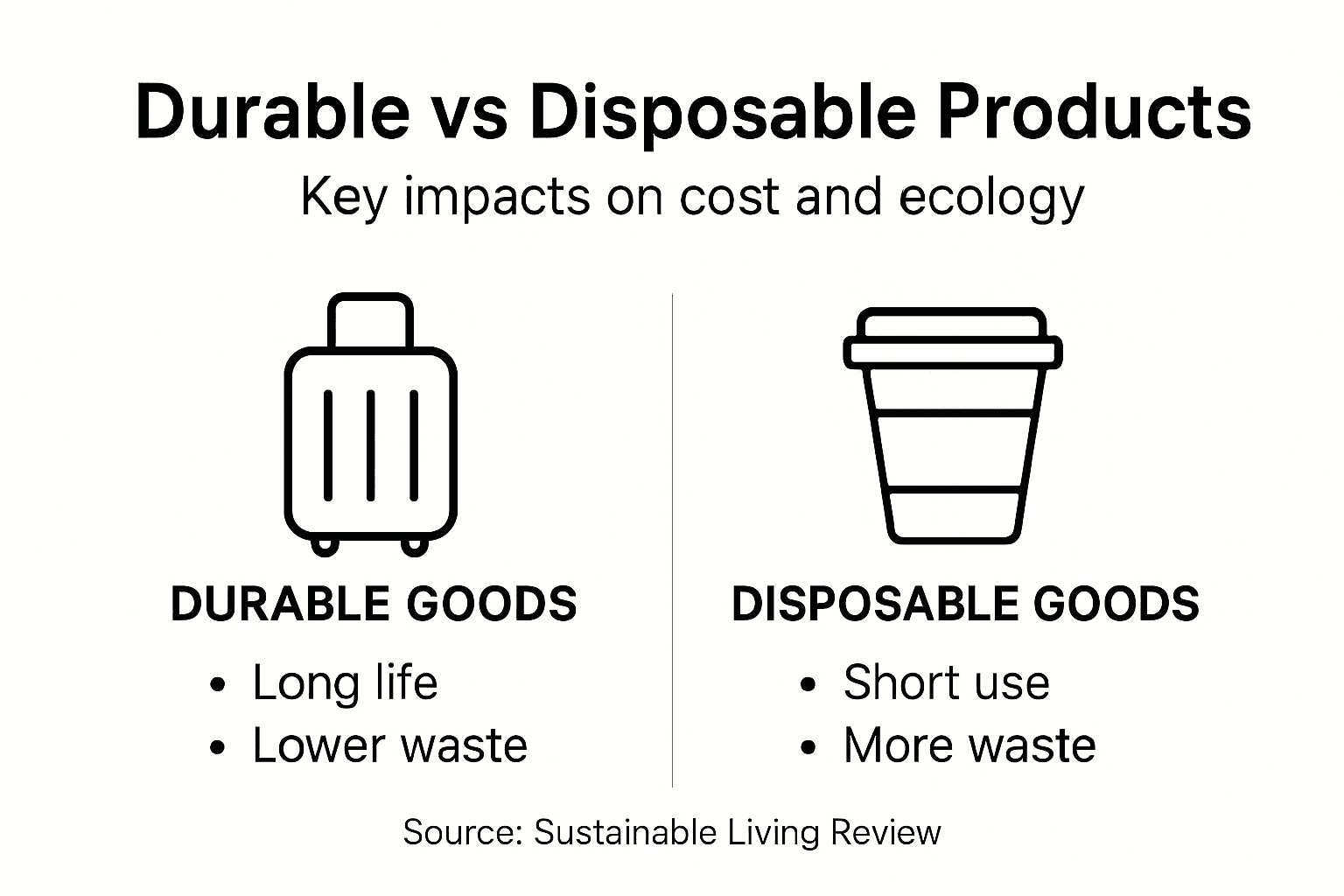
Here’s a summary of how durable goods contribute to sustainability compared to disposable alternatives:
| Aspect | Durable Goods Impact | Disposable Goods Impact |
|---|---|---|
| Waste Generation | Significantly reduced | High due to frequent disposal |
| Resource Consumption | Lower over time | Continually high |
| Lifecycle | Extended, repairable | Short, rarely repairable |
| Environmental Footprint | Lower overall | Higher, accumulates quickly |
Pro tip: When purchasing durable goods, prioritize products with clear repair policies, modular design, and manufacturer commitments to sustainable production practices.
Total cost of ownership models reveal that durable products offer substantial financial benefits beyond their initial purchase price. While these items often require a higher upfront investment, they deliver significant long-term economic advantages through reduced replacement frequency and extended utility.
Key financial benefits of investing in durable goods include:
Economic flexibility for consumers emerges as another critical advantage of durable goods. These products provide economic resilience by allowing consumers to postpone additional purchases during financial constraints while maintaining consistent utility and performance.
The true value of a durable product lies not in its price tag, but in its ability to deliver consistent performance over time.
Consumer purchasing strategies now increasingly recognize that initial cost represents only a fraction of a product’s total economic impact. Factors like energy efficiency, maintenance requirements, and longevity play crucial roles in determining the actual financial value of durable goods.
Pro tip: Calculate the total cost of ownership by considering purchase price, expected lifespan, maintenance costs, and potential resale value before making your investment decision.
Sustainable shopping strategies require careful consideration beyond surface-level product attributes. Consumers frequently make critical mistakes when selecting durable goods, often prioritizing initial price over long-term value and overlooking essential factors that determine true product quality and sustainability.
Common mistakes to avoid when choosing durable products include:
Product selection research suggests consumers must integrate comprehensive information about durability, environmental sustainability, and potential lifecycle impacts into their decision-making process. Smart alternatives involve evaluating products across multiple dimensions, ensuring that purchasing choices align with both economic and ecological considerations.
Smart consumers invest in products that offer value, not just a low price tag.
Understanding the nuanced aspects of product selection requires moving beyond simplistic purchasing criteria. This means examining factors like repairability, material sustainability, manufacturer transparency, and long-term utility potential when making investment decisions about durable goods.
Pro tip: Before purchasing, research the manufacturer’s repair policies, warranty terms, and sustainable production practices to make a truly informed decision.
The article highlights the importance of choosing durable products that provide long-term value while supporting sustainability goals. Many consumers face challenges understanding the true cost of ownership and environmental impact when making purchasing decisions. At Cozee Bay, we address these concerns by offering handcrafted bamboo products designed for durability, eco-consciousness, and stylish functionality. Our bamboo paper towel dispensers and organizers are perfect solutions for both home and commercial spaces aiming to reduce waste and enjoy reliable performance over years of use.
Explore our premium collection of sustainable bamboo products at Cozee Bay and experience the difference of quality craftsmanship paired with environmental responsibility. Don’t wait to enhance your space with products that combine innovation, repairability, and timeless design. Visit our site now to discover how investing in durable goods can save you money and support a greener planet. Start making smarter, eco-friendly choices today by browsing our curated selection of bamboo paper towel dispensers and organizers at Cozee Bay Bamboo Paper Towel Dispensers.
Durable products are consumer goods designed to provide useful services over an extended period, typically lasting three years or more. They differ from disposable items as they offer sustained utility and long-term value.
Investing in durable products usually involves a higher upfront cost but results in significant long-term savings through reduced replacement frequency, lower maintenance costs, and enhanced performance over time, which contributes to overall financial stability.
Durable goods help reduce waste, lower resource consumption, and minimize energy requirements during manufacturing. By choosing high-quality, long-lasting products, consumers can contribute to a circular economy that emphasizes sustainability and responsible consumption.
When evaluating durable products, consider their total cost of ownership, including purchase price, expected lifespan, maintenance expenses, warranty length, and the manufacturer’s reputation for reliability and sustainable practices.
Comments will be approved before showing up.