Your Cart is Empty


Biodegradable bags are made from five main material families: plant-based bioplastics like polylactic acid (PLA) and starch blends, biodegradable polyesters such as PBAT, PBS, and polycaprolactone (PCL), conventional polyethylene loaded with pro-degradant additives (oxo-biodegradable plastic), and paper or natural fibers like kraft paper and hemp. None of that guarantees the bag will actually disappear in your backyard compost bin.
Whether any of these materials break down the way the package promises depends on two things: the specific polymer and the environment it ends up in. A bio-based bag that performs beautifully in an industrial composting facility might sit almost unchanged in a landfill for years. That’s the gap most shoppers never see until they’re standing in the kitchen aisle squinting at fine print.
Here are the five material names worth knowing before you buy anything labeled “eco-friendly”:
Pro Tip: If a bag’s packaging says “biodegradable” but never mentions a certification number or a specific standard like EN 13432 or ASTM D6400, treat that claim as marketing copy, not a promise.
Biodegradable bags come from five material families, but only certified compostable products with a matching disposal system deliver on their environmental promise.
| Point | Details |
|---|---|
| Know your five materials | PLA, starch blends, PBAT/PBS/PCL, oxo-additive PE, and paper/fiber each behave differently after disposal. |
| Certification beats claims | Look for EN 13432, ASTM D6400, BPI, or OK Compost logos instead of trusting the word “biodegradable” alone. |
| Disposal route matters most | Match the material to industrial compost, home compost, or trash based on its actual certification. |
| Avoid oxo-additive films in compost | They fragment into microplastics instead of converting into biomass, contaminating organics streams. |
| Reuse when practical | A durable reusable bag often outperforms single-use compostables for shopping and produce. |
Check your municipal organics program’s rules before assuming any bag, certified or not, is welcome in your green bin.
Every biodegradable bag starts as either a plant or a petroleum molecule, and that single fact shapes everything about how it behaves later. Here’s what’s actually inside each type.
PLA is made by fermenting the sugars in corn, sugarcane, or potato starch into lactic acid, then chaining those molecules into a polymer that looks and feels like conventional plastic film. It’s fully plant-based, which is why it’s become the poster child for “corn plastic” packaging. The catch is that PLA is naturally somewhat brittle and doesn’t handle moisture or heat well on its own.
Starch-based biopolymers skip the fermentation step and use starch more directly, often as thermoplastic starch blended with other polymers for flexibility. The Umweltbundesamt classifies these alongside cellulose-based materials as core categories within the broader bioplastics family, using feedstocks like corn, wood pulp, and even miscanthus grass.
PBAT, PBS, and PCL are a different animal entirely. These are biodegradable polyesters, and here’s the surprise many shoppers miss: some of them are made from petroleum, not plants. They’re chosen not for their renewable origin but for how they behave chemically. Their molecular structure includes ester bonds that microorganisms and water can break apart relatively easily, which is why they’re prized for helping brittle PLA bend and stretch without cracking.
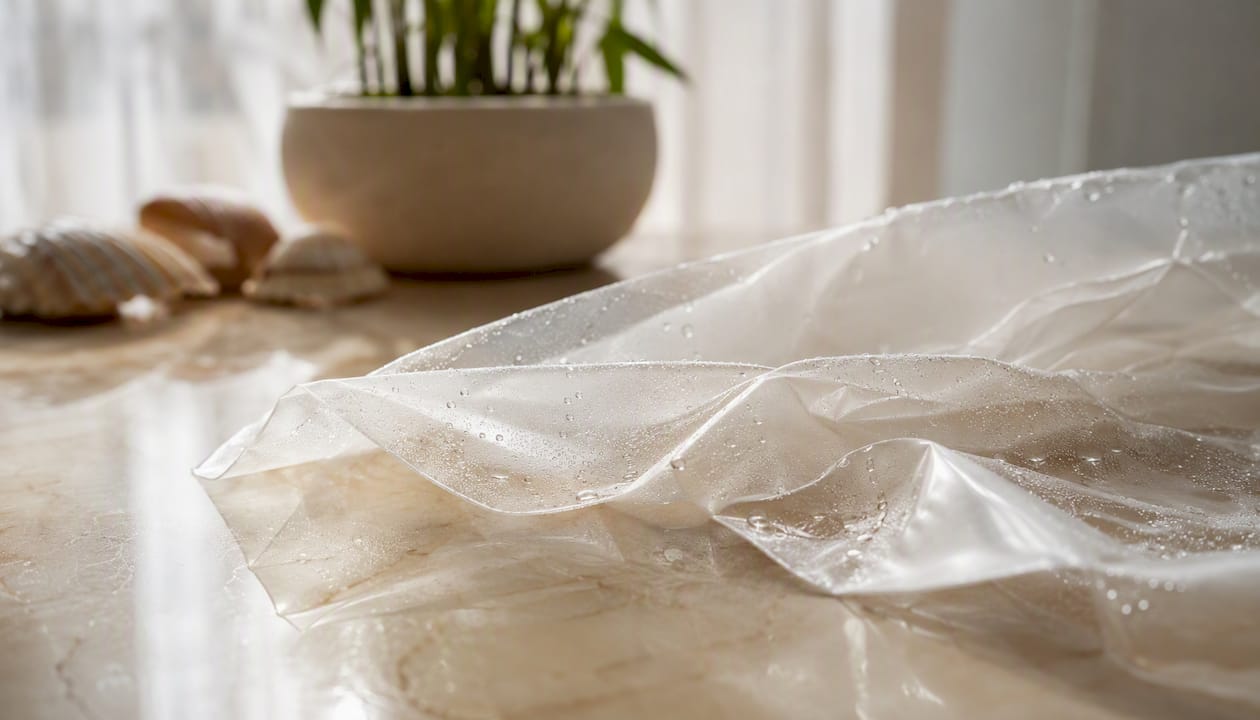
Oxo-biodegradable polyethylene is regular petroleum-based plastic with metal salts (usually cobalt or manganese) mixed in as pro-degradant additives. It’s not a new material category at all. It’s old plastic with a chemical trigger added.
Paper and natural fiber bags made from kraft paper, hemp, or cotton skip synthetic polymers altogether, relying on cellulose fiber structure for strength.
Manufacturers rarely use a single pure material. Pure PLA cracks too easily for a grocery bag, and pure starch film tears if it gets damp, so producers blend rigid and flexible polymers to get something that survives a trip home from the store. That’s a legitimate engineering trade-off, but it also means the bag in your hand might be a cocktail of two or three polymer types, not the single “plant-based” material the label implies. Some industry summaries note that bags marketed as biodegradable can be made of only 15% to 35% renewable material, with the remainder being oil-based specialty polymers added for performance.
Material composition tells you what a bag is made of. It doesn’t tell you how, or whether, it will decompose in your particular situation, and that’s where most of the confusion starts.
There are three genuinely different breakdown mechanisms at work across these materials. Microbial enzymatic breakdown is what happens to PLA and starch blends: bacteria and fungi produce enzymes that chew through the polymer chains and convert the material into carbon dioxide, water, and biomass. Hydrolytic breakdown drives much of what happens to PBAT and PBS, where water molecules attack and split the ester bonds before microbes finish the job. Oxidative fragmentation is the mechanism behind oxo-additive plastics, where oxygen and UV light cause the polymer to physically crack into smaller and smaller pieces without ever fully converting into biomass.
That last distinction matters more than almost anything else in this article.
| Material type / feedstock | Biodegradation mechanism | Typical disposal route | Certification support | Common failure mode |
|---|---|---|---|---|
| PLA (corn, sugarcane) | Microbial enzymatic | Industrial compost | ASTM D6400, EN 13432 | Won’t break down in landfill or cold home compost |
| Starch-based blends | Microbial enzymatic | Home or industrial compost | OK Compost HOME, BPI | Brittle films if not properly blended |
| PBAT / PBS / PCL | Hydrolytic + microbial | Industrial compost | EN 13432, ASTM D6400 | Slower breakdown without heat and moisture |
| Oxo-additive PE | Oxidative fragmentation | Landfill (incomplete) | Generally none recognized | Fragments into microplastics |
| Paper / natural fiber | Microbial (cellulose) | Home compost, recycling | Often uncertified but readily degradable | Weak when wet, low load capacity |
Some biopolymers, including PLA and certain polyester blends, require industrial composting conditions to hit their biodegradation targets. Industrial facilities sustain temperatures around 140°F for weeks at a time, something no backyard compost pile reliably achieves. Drop a PLA fork into your home bin and it may still look intact a year later.
Marine environments are the toughest test of all. Cold water, limited oxygen, and a scarcity of the right microbial populations mean that even certified compostable materials can persist far longer at sea than they would in a compost facility. Landfills present a related problem: they’re often anaerobic and dry, conditions that stall the microbial activity most of these materials depend on.
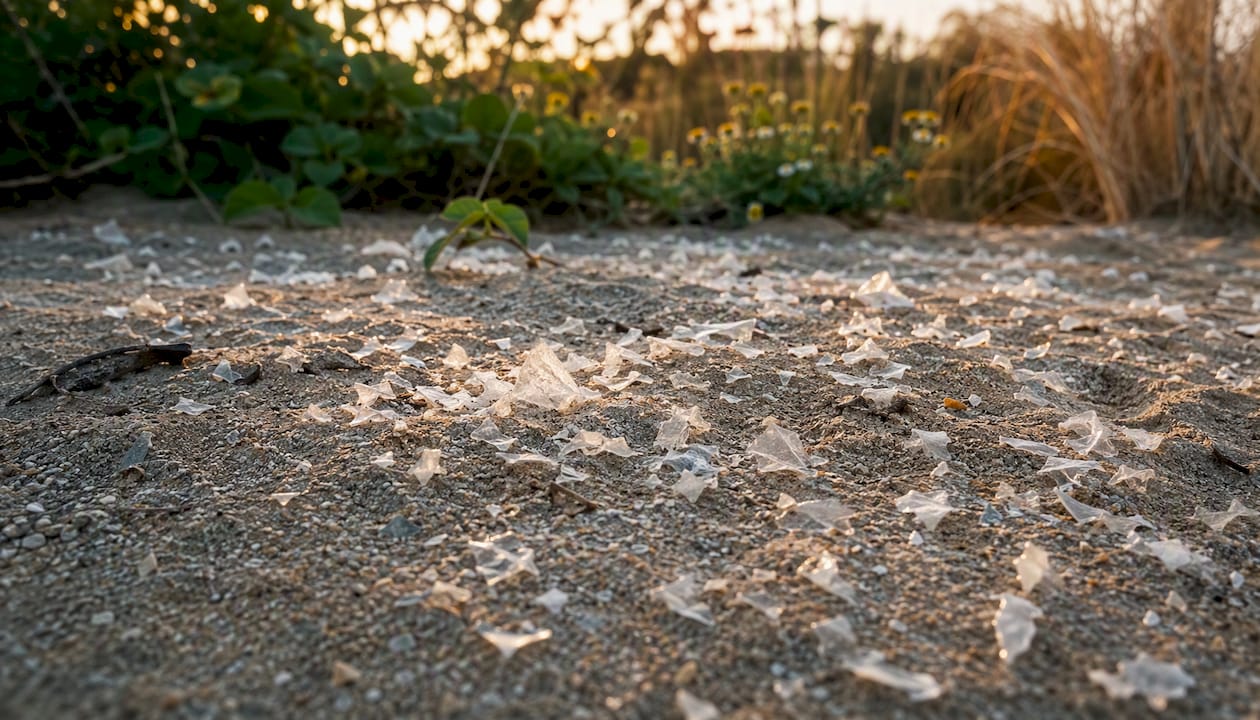
Oxo-biodegradable plastic deserves its own callout here because its failure mode is genuinely different from the others. Rather than converting into biomass, oxo-additive bags fragment into progressively smaller plastic pieces, a process that takes several years and often ends in microplastic contamination rather than true biodegradation.
These four words get used almost interchangeably in marketing, and that’s exactly the problem. Each one carries a distinct technical meaning, and mixing them up leads directly to contaminated compost bins and disappointed consumers.
Biodegradable is the loosest term of the bunch. It technically just means a material can be broken down by living organisms eventually, with no defined timeframe and no guarantee of the conditions required. A material could take fifty years and the label would still be accurate.
Compostable is a much stronger claim. It means the material breaks down through microbial activity into carbon dioxide, water, inorganic compounds, and biomass within a defined composting environment and timeframe, without leaving toxic residue behind. This is the term you want to see paired with an actual certification number.
Degradable simply means the material eventually breaks apart, chemically or physically, with no requirement that it becomes biomass or avoids toxic byproducts.
Oxo-biodegradable specifically refers to conventional plastic with additives designed to speed up fragmentation. It’s a subset of “degradable,” not a synonym for “compostable,” despite how often the two get confused at the checkout counter.
Here’s what those labels look like in the wild, and how to read them:
Our breakdown of biodegradable versus compostable terminology covers more of these labeling patterns if you want a deeper dive. The real-world cost of confusing these terms shows up at composting facilities, where oxo-additive bags mixed into organics collection contaminate the batch. Because they fragment instead of biodegrading, facility operators either have to screen them out manually or risk shipping microplastic-laced compost to farms and gardens.
Plant-based bags sound like the obvious win until you trace the material back to the farm it came from. Every material family carries a different mix of upstream costs and downstream benefits, and “biodegradable” is not automatically synonymous with “low impact.”
On the plus side, bio-based polymers draw from renewable feedstocks and generally carry a lower fossil carbon footprint than pure petroleum plastics. Bioplastic bags made from plant materials are also typically free of toxins like BPA, which matters if compost from these bags ends up on food-growing soil.
But the agricultural side of the equation is real. Growing the corn or sugarcane that feeds PLA production involves fertilizer, pesticides, water, and land, and production-stage impacts including soil compaction and erosion from farm machinery are part of the honest lifecycle picture. Feedstock grown with more environmentally conscious farming practices measurably improves that overall assessment, but not every producer sources that way, and packaging rarely tells you which.
The biggest risk isn’t a bag that’s slow to biodegrade. It’s a bag that fragments into pieces small enough to enter soil and waterways while wearing a green label the whole way down.
Oxo-additive plastics carry the sharpest risk profile here. Because they fragment rather than fully biodegrade, they can leave microplastic residue in soil and water long after the visible bag has disappeared. That’s precisely why certified compostable products, not just “biodegradable” ones, are the safer default when the goal is genuine organic recycling. Certification, though, only verifies end-of-life performance. It says nothing about how the feedstock was farmed upstream, so a certified bag can still carry a meaningful agricultural footprint.
Skip the marketing copy and look for four things instead: a named standard, a certifying body’s logo, disposal instructions printed on the package, and a material disclosure that names an actual polymer rather than a vague buzzword.
The standards that matter are ASTM D6400 for compostable plastics in the U.S. and EN 13432 for Europe, both of which require lab testing showing the material converts to biomass within a set timeframe under industrial conditions. Certifiers like BPI (Biodegradable Products Institute) and TÜV Austria’s OK Compost program license logos to products that pass these tests, so a physical seal on the packaging is your quickest visual confirmation.
Here’s your practical shopping checklist:
Pro Tip: A bag that says “compostable” without naming which composting system it’s rated for is almost certainly rated for industrial facilities only. If your city doesn’t run one, that bag is headed for the trash regardless of the label.
Our guide comparing biodegradable and compostable claims walks through more label examples if you want extra practice spotting the difference before your next grocery run.
Getting the material right doesn’t help if the bag ends up in the wrong bin. Disposal routes vary sharply by material, and getting this wrong is one of the most common ways well-intentioned shoppers accidentally contaminate a compost stream.
| Material | Recommended disposal | Never put in |
|---|---|---|
| Certified PLA / starch blends | Industrial compost collection (check local acceptance) | Standard recycling bins |
| OK Compost HOME certified films | Home compost bin | Landfill trash if compost is available |
| PBAT / PBS blends | Industrial compost, per package instructions | Home compost unless specifically certified |
| Oxo-additive PE | Trash (landfill) | Any organics or compost stream |
| Paper / hemp / kraft | Home compost, paper recycling, or trash | Plastic recycling streams |
Municipal organics programs vary widely in what they’ll accept, and EPA guidance on home composting makes clear that not every material breaking down in an industrial facility will do the same in a backyard pile. Before you assume your city’s green bin takes compostable bags, check your local program’s rules directly. This is the single most-skipped step in the entire biodegradable bag conversation.
Oxo-additive films deserve one more warning: never place them in organics collection, even when the package uses the word “degradable.” Because they fragment instead of biodegrading, they contaminate the finished compost with plastic residue that composting facilities can’t filter out.
A few special cases are worth flagging separately. Compostable bin liners for food scraps are designed for repeated contact with wet organic material and generally hold up better than thin produce bags asked to do the same job. Produce bags and shopping bags, meanwhile, are often durable enough to reuse two or three times before composting, and some retailers run take-back programs for film plastics that don’t belong in curbside recycling. Our food bag storage guide has more on keeping compostable liners usable until you’re ready to toss them.
Not every biodegradable material is suited to every job, and knowing the functional limits saves you from a torn bag of groceries on the walk home.
PLA and starch blends work best for food-waste liners and produce bags, tasks that don’t demand much tensile strength or long shelf life. Historically, oxo-additive PE was marketed for general-purpose refuse bags because it could match conventional plastic’s strength while claiming a “degradable” story, though its fragmentation issue has pushed many buyers away from it. Paper and hemp bags handle dry shopping goods well but struggle the moment moisture enters the picture.
The limitations are worth knowing before checkout, not after a bag splits open. Pure starch films can be brittle and tear under load, which is exactly why manufacturers blend them with flexible polyesters like PBAT. PLA has a relatively low heat tolerance and can soften or warp if left in a hot car. Paper bags lose most of their strength when wet, and oxo-treated films aren’t good candidates for reuse since the additive is actively working to weaken the plastic from the moment it’s manufactured.
Pro Tip: For anything heavier than produce, like wet food scraps or multiple bottles, double-bag with a certified compostable liner rather than trusting a single thin film. It’s a small habit that prevents a much bigger cleanup.
Sustainability professionals and municipal waste managers tend to converge on a short list of practical rules, and none of them require a chemistry background to follow.
Do this:
Avoid this:
Industry experts are consistent on one point: certification and correct end-of-life routing matter more for environmental benefit than the raw material choice itself. A certified compostable bag thrown in the trash delivers none of its promised benefit, and an uncertified “biodegradable” bag tossed into compost can undo the whole batch.
Buyer tip: certified compostable bags typically cost more per unit than plain plastic, but a reusable produce bag or bin liner amortizes that cost over dozens of uses instead of one. Weigh the math before assuming single-use is the greener default.
Biodegradable bags solve a real problem: single-use plastic that lingers for centuries. But solving that problem with a different single-use product still means manufacturing something, shipping it, and disposing of it after one trip to the store.
At Cozee-bay, our focus has always been on durable bamboo products built to be used for years, not weeks. That philosophy applies just as directly to bags. A reusable produce bag or a sturdy organizer that holds compostable liners in place tends to outperform any single-use bag on lifecycle impact, simply because it isn’t manufactured, shipped, and discarded over and over again.
That doesn’t mean compostable bags have no place in a sustainable kitchen. Food-waste collection genuinely benefits from a certified compostable liner that breaks down cleanly with the scraps inside it. But for produce, shopping, and general storage, a well-made reusable option usually wins the lifecycle math, even against the greenest single-use alternative on the shelf. Choosing the right material for the right job, rather than reaching for whatever says “biodegradable” on the front, is the practical version of sustainability we try to build into every product we sell.
Comments will be approved before showing up.