Your Cart is Empty


Most American shoppers are surprised to learn that products labeled as biodegradable may take years to break down and sometimes leave harmful residues behind. Understanding the difference between compostable and biodegradable materials matters for anyone aiming to reduce waste and protect the environment. This guide uncovers what each label really means and how making informed choices can help you avoid common pitfalls while supporting sustainability.
| Point | Details |
|---|---|
| Understanding Definitions | Compostable materials require specific conditions for breakdown, while biodegradable materials can decompose unpredictably. |
| Environmental Impact | Compostable items break down within 90 days without leaving toxic residues, whereas biodegradable items may leave behind harmful microplastics. |
| Consumer Awareness | Always check certifications to differentiate between compostable and biodegradable products, as mislabeling can lead to environmental harm. |
| Sustainable Practices | Selecting certified compostable products supports effective waste management and reduces ecological footprints in both homes and businesses. |
Understanding the nuanced differences between compostable and biodegradable materials is crucial for making environmentally conscious choices. While these terms are often used interchangeably, they represent distinct processes of material decomposition with significant implications for waste management and sustainability.
Biodegradable materials can break down naturally through biological processes involving microorganisms. According to the Ellen MacArthur Foundation, these materials decompose into carbon dioxide, water, and biomass over an unspecified timeframe and under varying environmental conditions. This means a biodegradable product could potentially take months or even years to fully disintegrate, depending on the specific material and surrounding ecosystem.
In contrast, compostable materials have a more structured and predictable decomposition process. Research from the University of Nebraska Medical Center reveals that compostable items break down within approximately 90 days under specific composting conditions. These materials transform completely into carbon dioxide, water, and biomass without leaving toxic residues, making them significantly more environmentally friendly.
Key differences between these material types include:
Pro Tip: Check Product Labels Carefully: When purchasing seemingly eco-friendly products, always examine certification details to understand whether an item is truly compostable or simply biodegradable, as the distinction can significantly impact your sustainability efforts.
The following table highlights the practical implications of choosing compostable versus biodegradable materials in different settings:
| Scenario | Compostable Materials Impact | Biodegradable Materials Impact |
|---|---|---|
| Home Composting | Breaks down reliably, enriches soil | May not fully degrade, slow process |
| Commercial Composting | Meets strict standards, no toxins | May leave microplastics, incomplete |
| Landfill Disposal | Lacks ideal conditions, limited effect | Breakdown is unpredictable, years possible |
| Environmental Regulation | Often certified, clear guidelines | Typically unregulated, vague claims |
The world of sustainable materials is complex, with biodegradable and compostable terms often causing confusion among environmentally conscious consumers. While these concepts might seem similar, they represent distinctly different approaches to material decomposition and waste management.

European Bioplastics highlights a critical nuance: all compostable materials are biodegradable, but not all biodegradable materials are compostable. This fundamental distinction means that compostability requires biodegradation under specific, standardized conditions within a predetermined timeframe, such as those defined by regulations like EN 13432.
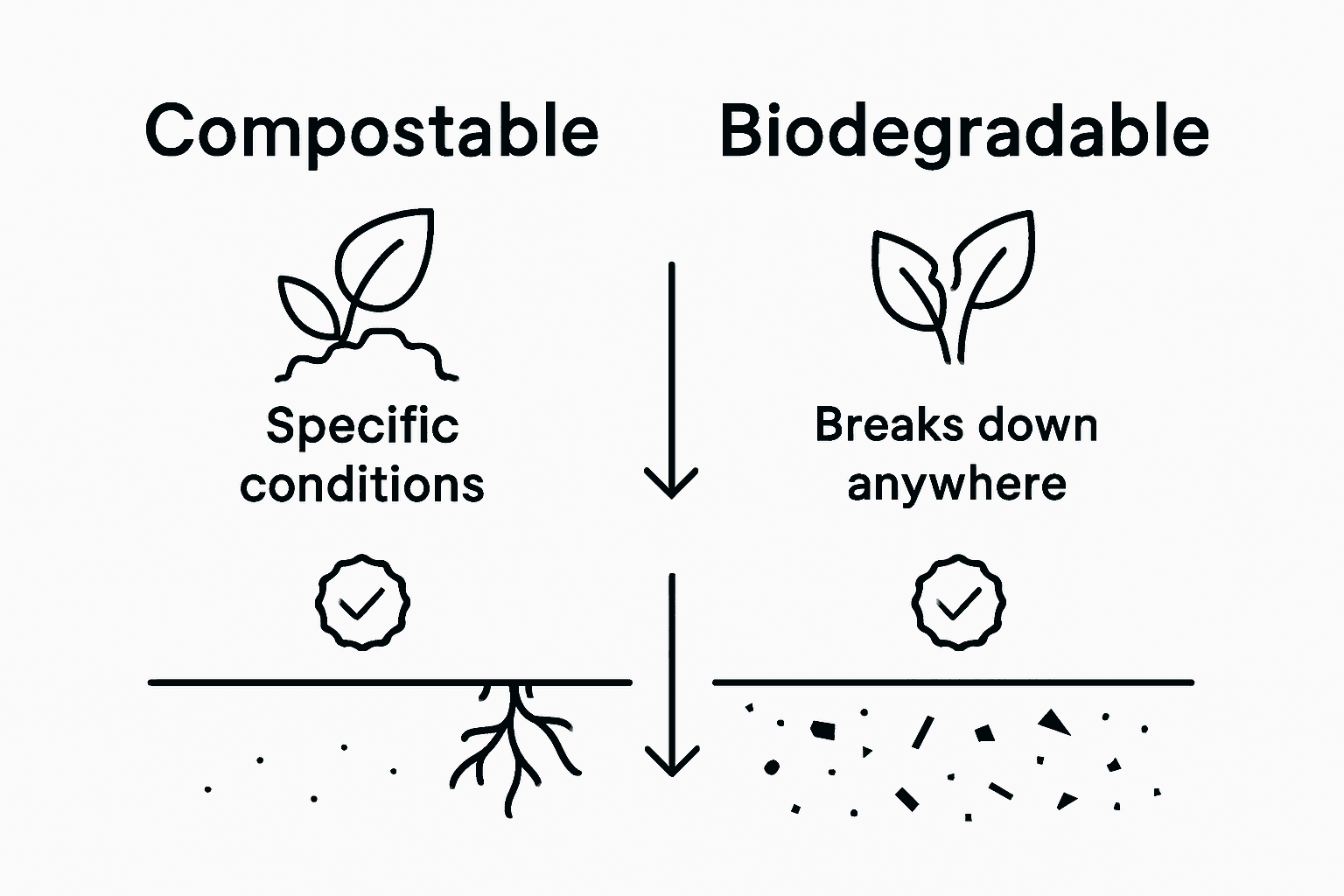
Furthermore, the composition of these materials varies significantly. Compost Connect explains that biodegradable products can be manufactured from conventional plastics with chemical additives designed to accelerate decomposition. These materials might potentially leave behind microplastic residues, which can harm environmental ecosystems. Conversely, compostable products are typically derived from plant-based materials and break down completely without generating toxic waste.
Key comparative aspects include:
Pro Tip: Material Identification Strategy: Always examine product packaging and certification labels carefully to understand the precise decomposition characteristics and environmental implications of the materials you’re considering.
Consumers navigating the world of eco-friendly products often encounter a minefield of confusing and potentially misleading environmental marketing claims. Greenwashing has become a significant challenge, with many manufacturers exploiting consumer goodwill through imprecise and strategically ambiguous labeling.
The Sustainable Packaging Coalition warns that the term ‘biodegradable’ should be avoided in marketing due to its inherent lack of precision. This vague terminology fails to specify critical details such as the exact environmental conditions, decomposition timeframe, or potential residual impacts required for genuine material breakdown.
Common misconceptions that frequently mislead consumers include:
Many products marketed as environmentally conscious rely on technical loopholes that allow them to make broad claims without substantial environmental benefits. Some manufacturers use chemical additives that technically enable biodegradation but may still leave microplastics or toxic residues in the ecosystem. These practices create a false sense of environmental responsibility while potentially causing more harm than good.
Pro Tip: Label Detective Work: Always research beyond marketing claims by checking for specific certification standards, asking manufacturers about complete decomposition details, and verifying the precise environmental conditions required for a product’s claimed biodegradability.
Navigating sustainable material choices requires a strategic approach that balances environmental responsibility with practical functionality. Eco-friendly materials are no longer a niche market but a critical consideration for both residential and commercial spaces seeking to reduce their ecological footprint.
Research from the University of Nebraska Medical Center reveals that composting can dramatically transform waste management strategies, potentially diverting 20-50% of household waste from landfills. This significant reduction not only minimizes methane emissions but also generates nutrient-rich soil amendments, creating a circular approach to resource management.
Businesses and homeowners can implement sustainable strategies through:
Compost Connect recommends that organizations prioritize certified compostable products manufactured from plant-based materials. These products ensure complete breakdown without toxic residues, demonstrating a genuine commitment to environmental stewardship. By carefully selecting materials that align with sustainable principles, both homes and businesses can meaningfully contribute to ecological preservation.
Pro Tip: Sustainable Procurement Strategy: Develop a comprehensive evaluation framework that assesses product sustainability beyond marketing claims, focusing on certifications, material origins, and complete lifecycle environmental impacts.
The landscape of sustainable materials is fraught with complex environmental and legal considerations that extend far beyond simple marketing claims. Regulatory frameworks and environmental standards play a critical role in distinguishing between truly sustainable products and those that merely appear environmentally friendly.
The Ellen MacArthur Foundation warns that mislabeling products as biodegradable can lead to significant environmental harm through improper disposal practices. This highlights the urgent need for clear, standardized definitions that prevent consumer confusion and mitigate potential ecological damage.
Key environmental and legal distinctions include:
European Bioplastics emphasizes the critical importance of meeting specific standards like EN 13432 for compostable materials. These rigorous regulations ensure that products break down completely under industrial composting conditions without introducing harmful substances into the environment, unlike many biodegradable alternatives that lack such stringent oversight.
Pro Tip: Legal Compliance Check: Develop a systematic approach to verifying environmental claims by requiring manufacturers to provide comprehensive documentation of their product’s certification, breakdown mechanisms, and independent testing results.
Here is a summary of major regulatory and environmental risks associated with improper labeling of sustainable materials:
| Risk Factor | Potential Environmental Impact | Possible Legal Consequence |
|---|---|---|
| Mislabeling as “biodegradable” | Improper disposal, pollution risk | Fines, product recalls |
| Lack of third-party certification | Unverified claims, consumer confusion | Legal disputes over false advertising |
| Incomplete decomposition | Microplastics, soil/water contamination | Penalties for misleading marketing |
Choosing truly compostable over just biodegradable materials requires careful attention to the environmental impact and proper waste management practices. If you want to avoid confusing labels and reduce the risk of microplastics and toxic residues in your home or business, switching to sustainable, plant-based solutions is essential. Cozee Bay specializes in premium bamboo products crafted to offer both style and long-lasting eco-conscious functionality that aligns with these environmental goals.

Discover how our bamboo paper towel dispensers and organizers made from natural materials provide a reliable, compostable alternative to conventional plastics. Designed for both residential and commercial spaces such as restaurants, schools, and senior living centers, Cozee Bay products promote sustainability without compromising elegance or utility. Explore our full selection to support responsible consumption today and enjoy free shipping within the contiguous U.S. Visit Cozee Bay now to make a meaningful difference with every purchase. Learn more about our sustainable approach and product details at Cozee Bay Product Range. Take control of your eco footprint by choosing bamboo solutions built for environmental integrity and functional innovation.
Compostable materials break down completely under specific composting conditions within about 90 days, while biodegradable materials can decompose naturally but may take months or years, depending on the environment.
No, not all biodegradable materials are compostable. While all compostable materials are biodegradable, they must meet certain standards and conditions to be classified as compostable.
Compostable materials break down reliably in composting systems without leaving toxic residues, enriching the soil. In contrast, biodegradable materials may leave microplastics and can degrade unpredictably, affecting their environmental impact.
To ensure a product is genuinely compostable, look for certification labels that indicate it meets industry standards, such as EN 13432. Always check for specific product details regarding decomposition conditions and potential residual impacts.
Comments will be approved before showing up.