Your Cart is Empty


The fastest path to lower utility bills is a short energy assessment followed by air sealing, a thermostat and water-heater adjustment, and one targeted upgrade you can actually afford this year. You don’t need a whole-home renovation to become your own home energy saver. You need a plan that starts small and builds.
Here’s what to do, starting today:
A home energy saver strategy works best when a quick assessment identifies problems first and cheap fixes come before costly upgrades.
| Point | Details |
|---|---|
| Assess before you spend | Run a DIY check or Home Energy Saver estimate before committing to any upgrade. |
| Air sealing comes first | Sealing leaks can cut heating and cooling costs by 10% to 20%, the highest return for the cost. |
| Stack the cheap fixes | LED swaps, power strips, and thermostat setbacks add up to real annual savings with almost no investment. |
| Prioritize by payback and safety | Rank upgrades by savings per dollar, comfort, and health or safety impact, not just sticker price. |
| Use trusted programs | Check ENERGY STAR’s rebate finder and Home Energy Score partners before hiring a contractor. |
You can’t fix what you haven’t measured. A basic self-assessment takes an afternoon; a professional audit takes an hour to four hours depending on depth, and both point you toward the same goal, finding where money is leaking out through your walls.
Start with a DIY walkthrough:
If you want a professional opinion, a certified auditor can go further, using a blower door test to measure air leakage and infrared cameras to spot missing insulation. A Home Energy Score gives you a simple 1-to-10 rating so you can compare your home against similar properties, similar to a miles-per-gallon sticker for your house.
Before you spend a dollar on new equipment, work through the fixes that cost little or nothing. These are the moves that make the biggest dent in your bill relative to effort.
Statistic Callout: Sealing uncontrolled air leaks, the gaps and cracks around windows, doors, and utility lines, can reduce heating and cooling bills by 10% to 20%, according to ENERGY STAR.
Pro Tip: Don’t try to change everything at once. Tackle one fix per week, starting with air sealing, so the habit sticks instead of fizzling out by February.
Once the free and cheap fixes are done, it’s time to think about bigger investments. Not every upgrade is worth the cost, so weigh each one against your home’s specific weak points.
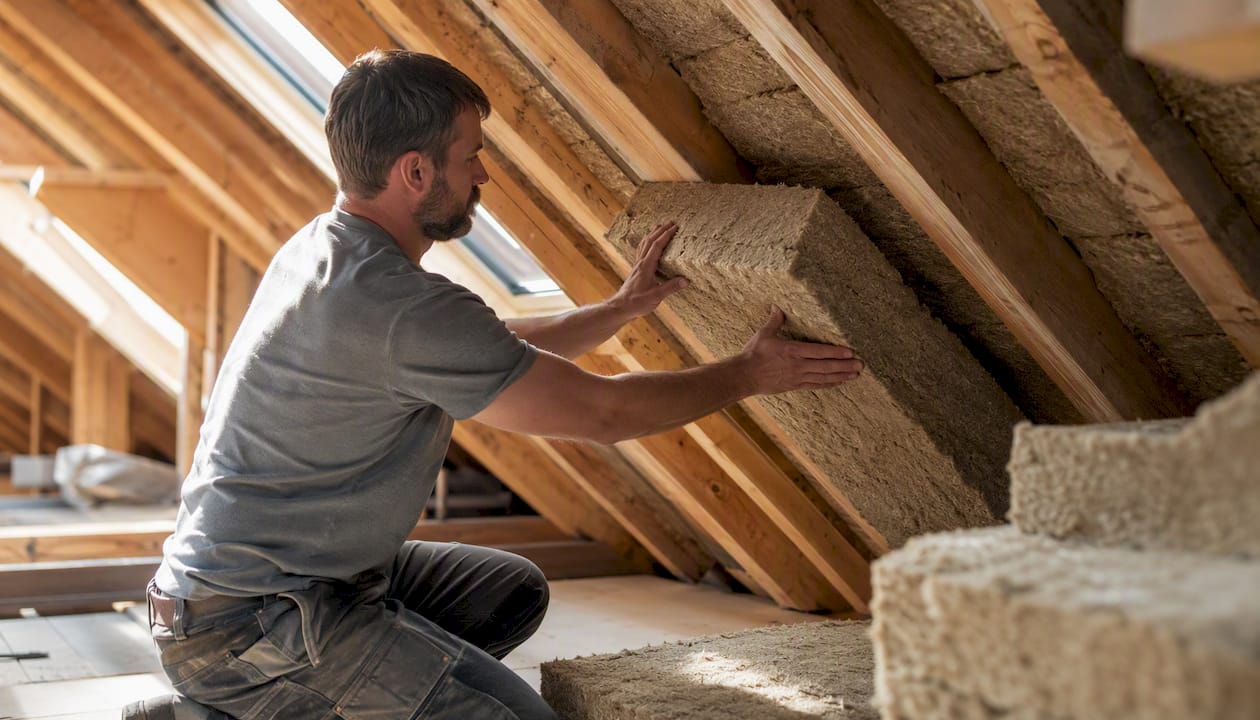
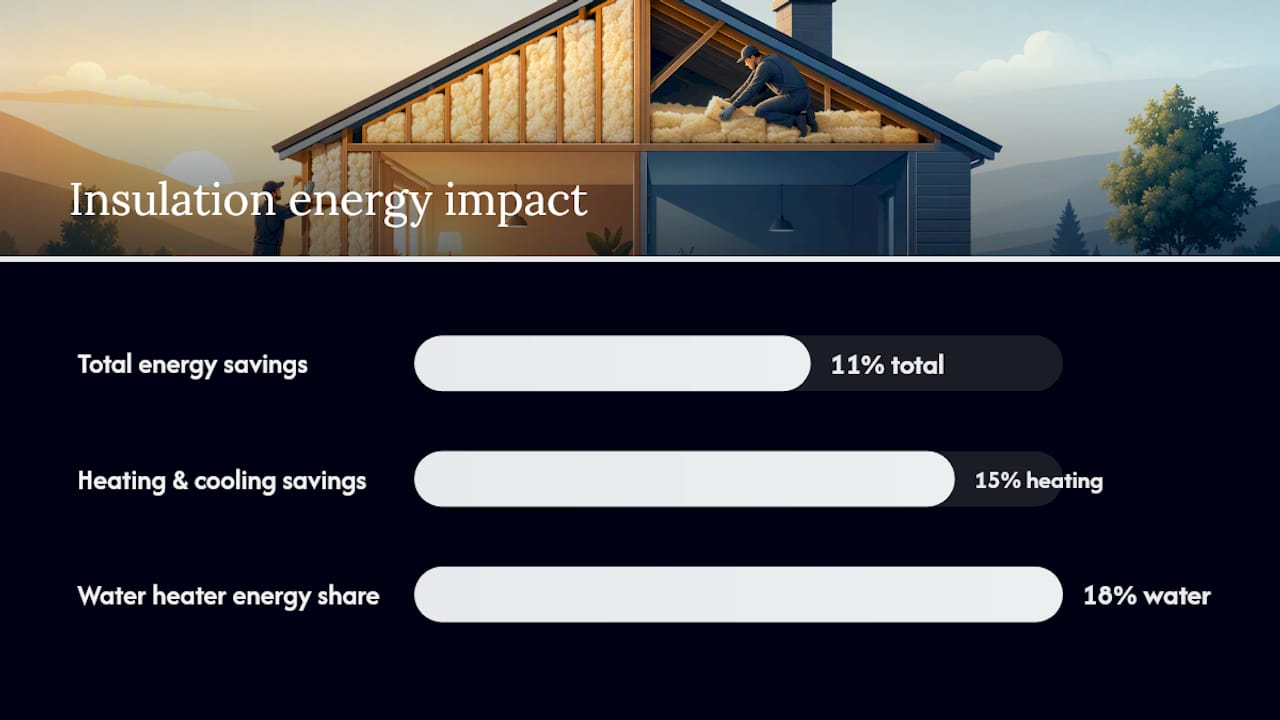
Insulation and weatherization usually top the list. The EPA estimates that sealing and insulating attics, basements, and crawlspaces saves an average of 11% on total energy costs, or roughly 15% on heating and cooling alone. If your attic insulation is thin or missing, this is where your money goes first.
Windows are trickier. Replacement can help in older homes with single-pane glass, but air sealing and adding storm windows often deliver a faster payback than a full window swap, which can take a decade or more to recoup.
HVAC systems deserve a maintenance check before a replacement decision. A poorly sized or neglected system wastes energy regardless of its efficiency rating. If your unit is over 15 years old, a heat pump upgrade is worth pricing out.
Water heaters account for around 18% of a typical home’s energy use. Insulating the tank and first few feet of pipe, plus considering a heat pump water heater, can meaningfully cut that share over time.
Pro Tip: Treat your home as one connected system. Sealing air leaks without checking ventilation can trap moisture, so pair insulation work with a look at attic and bathroom venting.
With a list of possible projects in hand, rank them using four factors: savings per dollar spent, comfort improvement, health and safety impact, and available rebates.
Pro Tip: If air sealing costs $300 and saves 15% on a $2,000 annual energy bill, that’s a payback under a year, a return most window replacements can’t match.
Money left on the table is still money. Check ENERGY STAR’s rebate finder and your utility’s website for federal, state, and local incentives before booking any upgrade.
You don’t need a blower door test to find your worst leaks. On a breezy day, hold a lit incense stick near windows, doors, outlets, and attic hatches. Smoke that wavers or gets pulled sideways marks a draft worth sealing.
Pro Tip: Photograph and log every leak you find before sealing it. If your bills don’t drop as expected after a season, that log helps a professional auditor pinpoint what a blower door test needs to catch next.
Homeowners tend to picture energy efficiency as one dramatic project, solar panels, a new furnace, gutted walls. In practice, the households that see the steadiest savings are the ones who treat it as an ongoing habit: seal something this month, swap a bulb next month, ask about a rebate the month after.
Comfort matters as much as the utility bill. A well-sealed home feels warmer in winter and cooler in summer before the savings even show up on paper. Durable, well-made products factor into that equation too, since the fixtures and organizers you choose for daily use, like a well-designed bamboo paper towel dispenser, reflect the same mindset: built to last, chosen with intention.

Start with the assessment. Then work the quick wins. The rest follows.
Energy efficiency and sustainable living go hand in hand, and the small daily choices you make around your home add up just like the energy fixes above. Cozee-bay designs handcrafted bamboo products, paper towel dispensers, food bag organizers, wrap and foil dispensers, and drawer organizers, built for homeowners who want durability and style without the waste of disposable plastic alternatives. Every product is made from a renewable material and designed to hold up in daily use, whether in your kitchen, your home office, or a commercial space.

If you’re already tightening up your home’s energy use, pairing it with lower-waste, longer-lasting products is a natural next step. Browse the full collection at Cozee-bay and see how a few thoughtful swaps can support the same goals as your energy-saving plan: less waste, more value, and a home that works better for you.
What is a home energy saver, exactly? It’s the combination of an assessment (DIY or professional) and a set of actions, from air sealing to appliance upgrades, that lowers how much energy your home consumes.
How much can air sealing actually save me? ENERGY STAR estimates 10% to 20% off heating and cooling costs after sealing uncontrolled leaks, making it one of the highest-value projects for the cost.
Is a professional energy audit worth the cost? For most homes, yes, especially if a DIY check turns up inconsistent results. A basic audit runs about an hour, while a detailed diagnostic with blower door and duct testing can take up to four hours.
What’s the difference between Home Energy Saver and Home Energy Score? Home Energy Saver is a free online modeling tool from Lawrence Berkeley National Laboratory you can use yourself. Home Energy Score is a rating, typically produced with a partner auditor, that scores your home from 1 to 10 for easy comparison.
Do smart thermostats really make a difference? Yes. Since heating and cooling make up close to half of a typical home’s energy bill, even modest automated setbacks translate into steady savings across a full year.
Comments will be approved before showing up.