Your Cart is Empty


TL;DR:
- Biodegradable materials are broken down by microorganisms into harmless natural substances like water and carbon dioxide. Degradable materials only fragment physically or chemically and may never fully convert to natural substances, risking microplastic pollution. Standards like EN 13432 and OECD 301 verify true biodegradability, while unqualified claims are often misleading.
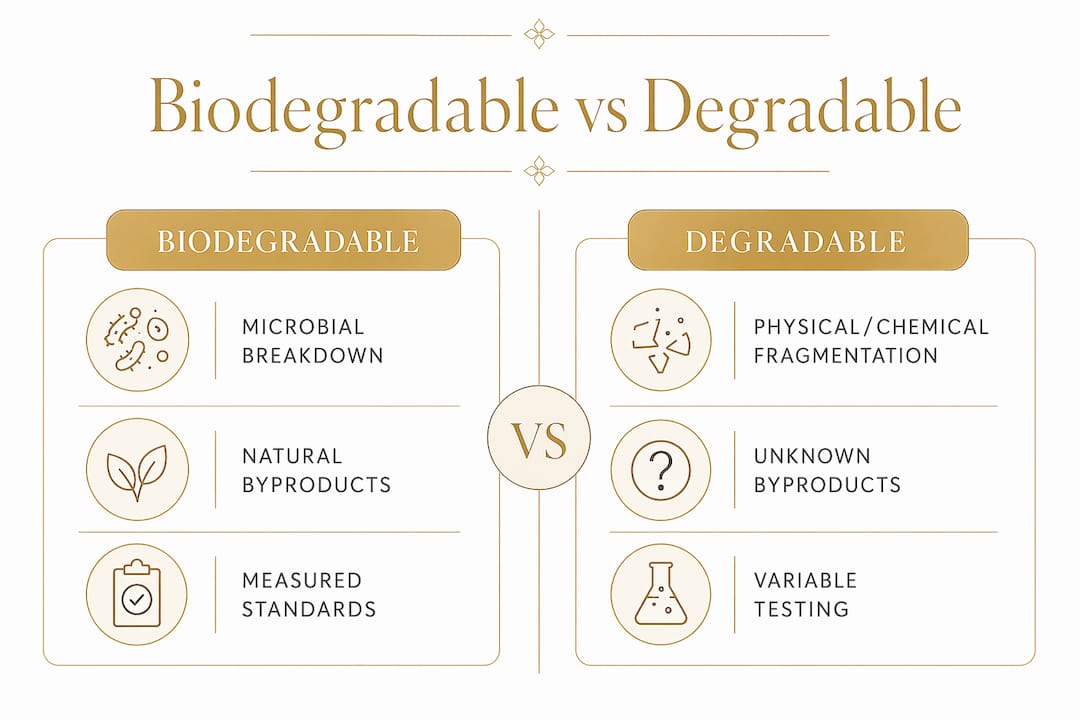
Biodegradable materials are broken down by living organisms into harmless natural substances like water, carbon dioxide, and biomass. Degradable materials, by contrast, fragment physically or chemically under heat, UV light, or oxygen, but may never fully convert into those natural substances. The difference between biodegradable and degradable is not just a labeling technicality. It determines whether a product genuinely returns to nature or simply breaks into smaller, potentially harmful pieces. Standards like OECD 301 and EN 13432 exist precisely because these terms carry very different environmental weight, and getting them confused can cost businesses credibility and consumers real environmental progress.
Biodegradation is a biological process driven by microorganisms. Bacteria, fungi, and other living organisms consume the material and convert it into water, carbon dioxide, and biomass. These end products are innocuous and cycle back into natural systems without leaving persistent residues.
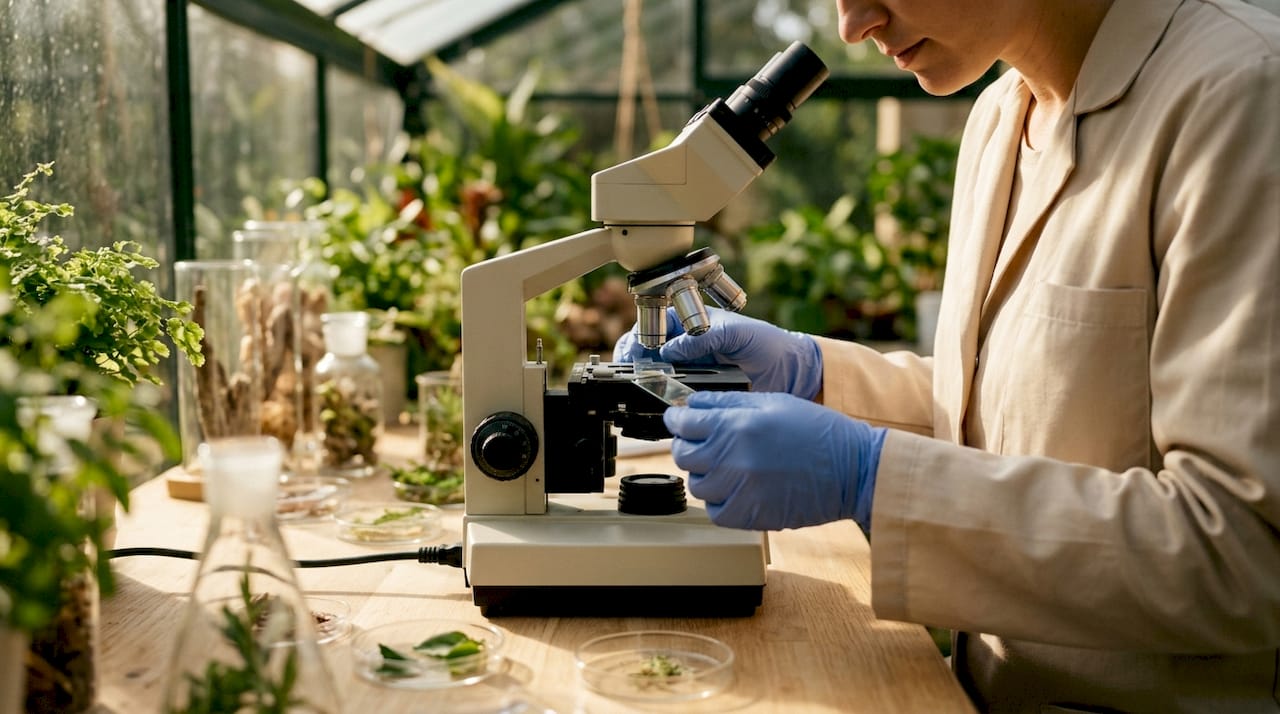
Degradation works differently. Degradable products fragment under physical or chemical forces such as heat, UV light, or oxygen exposure. The material breaks into smaller pieces, but those pieces are not necessarily consumed by microorganisms. The polymer chains may remain intact at a molecular level, just distributed across a wider area.
This distinction matters most with oxo-degradable plastics, a category that has attracted serious regulatory scrutiny. These materials are designed to fragment faster than conventional plastics, but oxo-degradable plastics lack proof of ultimate biodegradation and risk accelerating microplastic pollution. Faster fragmentation is not the same as full biological conversion. You end up with millions of tiny plastic particles instead of one large piece.
Biodegradability also depends heavily on the environment where breakdown occurs. Temperature, moisture, and microbial diversity all affect how quickly and completely a material biodegrades. A certified biodegradable bag may perform well in an industrial composting facility at 58°C but degrade very slowly in a cold, dry landfill. The material itself is only part of the equation.
Here is a quick breakdown of what drives each process:
Pro Tip: When evaluating a product labeled “degradable,” ask the supplier which specific mechanism drives breakdown and whether independent testing confirms full biological conversion, not just fragmentation.
Testing standards separate credible claims from marketing noise. The two most referenced standards for eco-friendly packaging options are OECD 301 and EN 13432, and they measure very different things.
| Standard | What it measures | Pass threshold | Conditions |
|---|---|---|---|
| OECD 301 | Ready biodegradability in aqueous medium | ~60% in 28 days | Controlled lab conditions |
| EN 13432 | Industrial compostability | 90% biodegradation in 6 months | Aerobic composting at ~58°C |
| Degradable claims | Fragmentation or chemical breakdown | No universal threshold | Varies widely by product |
EN 13432 requires at least 90% biodegradation within approximately 6 months under aerobic industrial composting, plus disintegration criteria. That is a high bar, and it is why products carrying EN 13432 certification carry genuine credibility. OECD 301 tests biodegradability in a controlled aqueous environment and requires roughly 60% breakdown within 28 days. Both standards demand documented, repeatable results.
Degradable claims, by contrast, often lack any universal testing requirement or specific timeframe. A product can legally carry a “degradable” label in many markets without passing any standardized test. That gap is where consumer confusion and misleading marketing thrive.
For businesses choosing eco-friendly packaging options, the practical rule is straightforward. If a supplier cannot name the specific standard their product is tested against, treat the claim with skepticism. Certifications like EN 13432, ASTM D6400 in the United States, or OK Compost from TÜV Austria provide third-party verification that a product meets defined biodegradation thresholds.
Pro Tip: Ask for the actual test report, not just the certification logo. Legitimate suppliers will share the document. If they hesitate, that tells you something important.
The biggest misconception is that degradable and biodegradable mean the same thing. Degradable and biodegradable are not interchangeable. Degradable describes fragmentation. Biodegradable describes biological conversion into natural matter. Mixing them up leads to real environmental harm and real regulatory consequences.
Oxo-degradable plastics are the clearest example of this confusion in action. Manufacturers marketed them as an eco-friendly alternative to conventional plastic, implying they would disappear from the environment. Regulators and scientists pushed back hard. UNEP and multiple scientific reviews have questioned whether oxo-degradables achieve full biodegradation at all, noting the microplastic risk instead.
Regulatory bodies have responded with formal rulings. The UK Advertising Standards Authority ruled in both 2019 and 2025 that unqualified biodegradable claims are misleading if the product will not biodegrade in typical consumer disposal environments. A product that biodegrades only in an industrial composting facility cannot be marketed as simply “biodegradable” without that qualification.
“High-integrity claims depend on tying wording and testing to realistic end-of-life environments.” — ASA claim substantiation guidance
For businesses, the compliance risk is real. Misleading environmental claims can trigger advertising bans, reputational damage, and growing regulatory penalties as green claims legislation tightens across the U.S. and Europe. For consumers, the practical takeaway is to look past the label and ask where and how the product actually breaks down.
A few common misconceptions worth correcting directly:
The environmental case for biodegradable materials is strong, but it comes with conditions. A 2026 Yale-led study found that substituting conventional plastics with biodegradable materials reduces ecotoxicity by up to approximately 34% by 2050. That is a meaningful gain. The same study warned that if biodegradable materials end up in landfills without composting infrastructure, greenhouse gas emissions could double compared to conventional disposal.
That finding reframes how long it takes to degrade as a secondary concern. The primary concern is where the material ends up. A biodegradable product in the right facility delivers genuine environmental benefit. The same product in a landfill may produce methane and offer no advantage over conventional plastic.
Degradable materials carry a different risk profile. Because they fragment without full biological conversion, they contribute to microplastic accumulation in soil and waterways. That accumulation affects aquatic ecosystems, enters food chains, and persists for decades. The fragmentation that makes degradable materials look like they are disappearing is actually spreading the problem.
For individuals and businesses aiming for genuine environmental gains, the practical steps are:
Businesses sourcing eco-friendly packaging options should build disposal pathway verification into their procurement process, not treat it as an afterthought. The label is the starting point, not the finish line.
Biodegradable materials deliver genuine environmental benefit only when matched to the right disposal pathway. Degradable materials fragment without full biological conversion and carry real microplastic risks.
| Point | Details |
|---|---|
| Biodegradable vs degradable | Biodegradable means biological conversion to natural matter; degradable means fragmentation only. |
| Testing standards matter | EN 13432 and OECD 301 set verifiable thresholds; unqualified degradable claims often have none. |
| Disposal pathway is critical | Even certified biodegradable materials can produce negative impacts if landfilled without composting. |
| Oxo-degradable risk | Oxo-degradable plastics fragment faster but risk creating microplastics without full biodegradation. |
| Regulatory exposure | ASA rulings in 2019 and 2025 confirm that unqualified biodegradable claims can be ruled misleading. |
I have seen well-meaning businesses slap “degradable” on their packaging and genuinely believe they were doing the right thing. The word sounds responsible. It sounds like the product disappears. The reality is that degradable without a certified standard attached to it is almost meaningless from an environmental standpoint.
The part that surprises most people is that even certified biodegradable products can fail to deliver if the disposal infrastructure is not there. You can source the most carefully certified compostable packaging available, and if your customers are tossing it in a general waste bin, it ends up in a landfill where the conditions for biodegradation simply do not exist. The certification does not travel with the product into the bin.
My honest advice: treat the label as the beginning of the research, not the end. Look for EN 13432 or ASTM D6400 certification, confirm your local composting facilities accept the material, and be skeptical of any product that uses “degradable” without naming a specific standard. Brands that are transparent about these details, including the conditions their products need to break down properly, are the ones worth trusting. The ones that lean on vague green language without documentation are the ones that will eventually face regulatory scrutiny.
The good news is that the standards exist, the certifications are accessible, and the difference between a genuine claim and a misleading one is knowable. You just have to ask the right questions.
— Cozee
Choosing between biodegradable and degradable materials is much easier when the products you buy already carry verified certifications and clear environmental credentials.

Cozee-bay specializes in eco-friendly, handcrafted bamboo products designed for both home and commercial use. Bamboo is a naturally renewable material that sidesteps many of the certification headaches associated with plastic-based packaging entirely. If you want to go deeper on how certified materials compare, Cozee-bay’s blog covers the compostable vs biodegradable distinction in detail, and the guide on biodegradable packaging impact explains how switching materials affects real-world waste reduction. Browse the full range at Cozee-bay and make your next purchase one you can actually verify.
Biodegradable materials are broken down by living organisms into natural substances like water, carbon dioxide, and biomass. Degradable materials fragment physically or chemically but may not undergo full biological conversion, potentially leaving microplastics behind.
It depends on the material and the disposal environment. Under EN 13432 industrial composting conditions, certified materials must achieve 90% biodegradation within approximately 6 months. In a landfill without those controlled conditions, the same material may take far longer or not fully biodegrade at all.
No. Oxo-degradable plastics fragment faster than conventional plastics but lack proof of full biological breakdown. Scientific reviews and UNEP have raised concerns that they accelerate microplastic pollution rather than eliminating it.
Look for EN 13432 for industrial compostability, ASTM D6400 for U.S. compostability standards, or OECD 301 results for general biodegradability. Products carrying these certifications have been tested against defined thresholds by independent bodies.
Yes. Material origin does not determine biodegradability. A biobased plastic can be just as persistent as a fossil-based one if its polymer structure does not support microbial breakdown. Disposal conditions and polymer properties are what determine whether biodegradation actually occurs.
Comments will be approved before showing up.