Your Cart is Empty


Many consumers believe biodegradable products automatically solve our plastic crisis, but the reality is far more nuanced. While these alternatives promise environmental benefits, their true impact hinges entirely on proper usage and disposal. Without understanding how biodegradability actually works and the infrastructure required to support it, well-intentioned choices can backfire. This article cuts through the confusion to reveal how biodegradable products reduce waste when managed correctly, why improper disposal creates new problems, and how to select stylish, sustainable options that genuinely benefit the planet.
| Point | Details |
|---|---|
| Disposal determines impact | Biodegradable products only deliver environmental benefits when properly disposed in industrial composting or anaerobic digestion facilities, otherwise they can worsen pollution. |
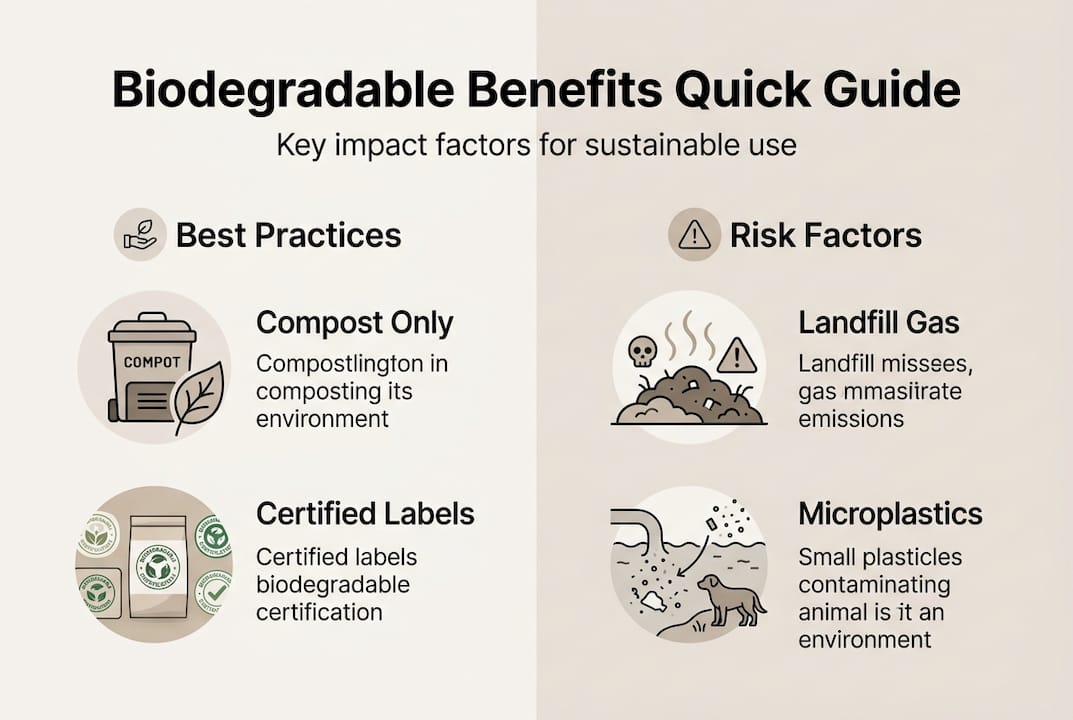
| Landfill methane risk | When biodegradable plastics end up in landfills without oxygen they decompose anaerobically and release methane, a greenhouse gas far more potent than CO2. |
| Biobased tradeoffs | Biobased plastics typically come from crops such as corn, sugarcane, or cassava and, while renewable, require significant water and land and can compete with food production or contribute to deforestation if not managed sustainably. |
| Microplastics risk | Biodegradable materials can fragment into micro and nano plastics if disposal conditions do not support complete breakdown. |
| Reduce plastic use | Reducing overall plastic use remains essential alongside choosing biodegradable products to maximize environmental benefits. |
Biodegradable products represent a promising tool in reducing our environmental footprint, but their effectiveness varies dramatically based on management practices. Research shows these materials can reduce plastic waste accumulation by up to 27% by 2050 compared to current trends, with potential reductions reaching 65% when combined with improved conventional plastic management. This substantial impact addresses two critical environmental concerns: the visible accumulation of plastic debris in ecosystems and the invisible threat of microplastic pollution infiltrating food chains and water systems.
However, the disposal method determines whether biodegradable products deliver on their environmental promise or create new problems. When these materials end up in landfills without oxygen, they decompose anaerobically and produce methane, a greenhouse gas 25 times more potent than carbon dioxide. Studies indicate that landfilling biodegradable plastics could double global plastic industry greenhouse gas emissions by 2050. This counterintuitive outcome highlights why proper end-of-life management through industrial composting or anaerobic digestion facilities is absolutely essential.
The production phase also carries environmental considerations. Bio-based biodegradable plastics typically derive from agricultural feedstocks like corn, sugarcane, or cassava. While these renewable sources avoid fossil fuel extraction, they introduce different resource demands. Biomass cultivation requires significant water inputs and agricultural land, potentially competing with food production or contributing to deforestation if not managed sustainably. Understanding these trade-offs helps consumers make genuinely informed decisions rather than assuming all biodegradable options are automatically superior.
Key environmental factors to consider:
For deeper understanding of sustainable material choices, explore biodegradable homeware materials explained to learn how different options compare.
“The environmental benefit of biodegradable plastics is not automatic. It requires deliberate infrastructure investment and consumer education to prevent these materials from becoming a new source of pollution rather than a solution.”
Biodegradability describes the process where microorganisms like bacteria and fungi break down materials into water, carbon dioxide, and biomass. This natural decomposition sounds straightforward, but the speed and completeness vary enormously depending on environmental conditions, material composition, and microbial communities present. Industrial composting facilities maintain optimal temperature, moisture, and oxygen levels that accelerate breakdown, often completing the process within months. Home composting or natural environments may take years or fail to fully decompose certain biodegradable plastics.
A concerning discovery challenges assumptions about biodegradable superiority: these materials can fragment into micro and nano plastics faster than conventional plastics in unmanaged environments. When biodegradable products break down in soil or freshwater without proper microbial communities or conditions, they may release oligomers and monomers with potential ecotoxicity. These tiny particles persist in ecosystems, potentially causing harm similar to conventional microplastics. This fragmentation risk underscores why proper disposal channels matter as much as choosing biodegradable materials in the first place.
The infrastructure gap represents perhaps the biggest challenge to realizing biodegradable benefits. Research emphasizes the need to invest in composting and anaerobic digestion facilities to process these materials correctly. Without accessible collection systems and processing plants, even the most eco-conscious consumers cannot ensure their biodegradable purchases decompose properly. Many communities lack industrial composting facilities entirely, leaving residents with no option but landfill disposal that negates environmental advantages.
Steps to ensure proper biodegradation:
Pro Tip: Check product labels for specific composting certifications like BPI or TUV Austria OK Compost. These verify the material will break down in certified facilities within specified timeframes.
Understanding the distinction between compostable and biodegradable helps avoid confusion. Learn more at compostable vs biodegradable to make informed purchasing decisions.
| Material Type | Breakdown Time (Industrial) | Breakdown Time (Home) | Microplastic Risk |
|---|---|---|---|
| PLA (Polylactic Acid) | 3-6 months | 6-24 months | Moderate if unmanaged |
| PHA (Polyhydroxyalkanoates) | 3-6 months | 3-12 months | Low |
| Starch-based | 2-4 months | 4-12 months | Moderate |
| Bamboo fiber | 4-6 months | 6-18 months | Low |
Eco-conscious consumers no longer need to sacrifice aesthetics for sustainability. Modern biodegradable products combine environmental responsibility with sophisticated design, offering options that enhance rather than compromise interior spaces. Plant-based tableware and packaging now feature sleek lines, natural textures, and refined finishes that appeal to design-focused consumers and businesses alike. From bamboo fiber serving pieces to PLA-based organizers, these products prove sustainable choices can elevate visual appeal.
Material selection directly impacts both style and environmental performance. Bamboo stands out for its rapid renewability, growing to maturity in just three to five years compared to decades for hardwoods. Its natural grain patterns and warm tones complement contemporary, minimalist, and rustic design schemes equally well. PLA derived from corn starch offers transparency and moldability similar to conventional plastics, enabling diverse product forms. PHA provides flexibility for items requiring durability and bend resistance. Each material brings distinct aesthetic qualities alongside biodegradability.

Certification labels guide consumers toward genuinely sustainable options in a marketplace crowded with greenwashing claims. Look for third-party verified compostable certifications that confirm products meet specific biodegradation standards within defined timeframes. These certifications also typically verify responsible sourcing practices, ensuring feedstock production minimizes environmental harm. Transparency about supply chains and manufacturing processes signals brands committed to authentic sustainability rather than superficial marketing.
Features of stylish biodegradable products:
Supporting brands focused on sustainable design accelerates the transition toward a circular economy. When consumer demand rewards companies investing in eco-friendly materials and ethical production, it incentivizes broader industry shifts. Your purchasing decisions signal market preferences that influence manufacturing priorities and product development directions.
Pro Tip: Consider the complete product lifecycle when evaluating style and sustainability. A beautiful biodegradable item that breaks prematurely creates more waste than a durable conventional alternative, so prioritize quality construction alongside material choice.
For comprehensive guidance on selecting attractive sustainable options, visit choosing eco-friendly home accessories and green home essentials selection for practical tips.
Purchasing certified biodegradable or compostable products forms the foundation of responsible consumption. Third-party certifications verify that materials meet specific standards for biodegradation rate and environmental safety. These labels prevent falling for vague “eco-friendly” marketing that lacks substantive backing. Certification also ensures products will actually break down in available facilities rather than persisting indefinitely despite biodegradable claims.
Usage habits significantly influence environmental impact beyond initial material choice. Prioritize reusable options whenever possible, reserving biodegradable disposables for situations where reuse proves impractical. When using biodegradable products, handle them appropriately to maximize lifespan and prevent premature disposal. Simple practices like proper storage away from moisture or heat extend usability and reduce replacement frequency.
Disposal represents the critical moment determining whether biodegradable products deliver environmental benefits or create new problems. Direct these materials to industrial composting facilities or certified anaerobic digestion systems rather than standard trash bins. Many communities offer curbside compost collection or drop-off locations for organic waste. If such infrastructure is unavailable, home composting works for certain biodegradable materials certified for backyard systems. Never place biodegradable products in recycling bins, as they contaminate conventional plastic recycling streams.
Experts emphasize that biodegradables are interim microplastic solutions, not ultimate answers. Reducing overall plastic consumption remains the most effective environmental strategy. Use biodegradable alternatives strategically while simultaneously minimizing single-use items of any material type. This holistic approach addresses waste at its source rather than simply substituting one disposable material for another.
Disposal best practices:
Common pitfalls to avoid:
Pro Tip: Create a simple disposal guide posted near waste bins listing which biodegradable products go where. Visual reminders dramatically improve sorting accuracy and reduce contamination.
| Disposal Method | GHG Impact | Microplastic Risk | Infrastructure Requirement | Best For |
|---|---|---|---|---|
| Industrial Composting | Low | Very Low | High | All certified compostable products |
| Anaerobic Digestion | Very Low | Very Low | High | Food waste and certified biodegradables |
| Home Composting | Low | Low | Low | Home-compostable certified items only |
| Landfill | Very High | High | Low | Avoid for biodegradable products |
For additional guidance on making sustainable choices across product categories, explore selecting eco-friendly products guide for comprehensive strategies.
Ready to put your knowledge into action? Cozee Bay offers a carefully curated collection of eco-friendly products that combine environmental responsibility with sophisticated design.

Our selection features handcrafted bamboo items and sustainable alternatives serving both residential and commercial needs. From paper towel dispensers used in restaurants, schools, and offices to organizers that bring order and style to any space, each product reflects our commitment to quality craftsmanship and ecological mindfulness. We provide detailed information helping you understand material sourcing, care requirements, and disposal best practices for every item.
Explore resources like our eco-friendly home accessories guide and green home essentials tips to make informed decisions aligned with your sustainability values. Shopping with Cozee Bay means supporting a circular economy while bringing beautiful, functional pieces into your environment.
Biodegradable products are items designed to break down naturally through microbial action into water, carbon dioxide, and biomass under specific environmental conditions. Unlike conventional plastics that persist for centuries, biodegradable materials decompose within months to years depending on conditions. They differ fundamentally in their end-of-life pathway, offering an alternative that potentially reduces long-term waste accumulation.
When properly managed through composting or anaerobic digestion, biodegradable products significantly reduce plastic waste accumulation and microplastic pollution in ecosystems. They lower greenhouse gas emissions compared to landfilled conventional plastics by avoiding methane production during decomposition. These materials help conserve natural resources and protect wildlife from plastic ingestion and entanglement when disposed of correctly.
Improper disposal through landfilling can actually increase greenhouse gas emissions, potentially doubling plastic industry climate impact by 2050. Without proper management, biodegradable materials may fragment into harmful micro and nano plastics faster than conventional options. The environmental benefits depend entirely on available infrastructure and informed consumer disposal habits, making education and facility access critical to avoiding unintended consequences.
Look for third-party certified compostable or biodegradable labels verifying authentic environmental claims and proper breakdown characteristics. Select products matching your aesthetic preferences and functional requirements without compromising on quality or durability. Educate yourself on local disposal infrastructure and proper handling methods to ensure products reach appropriate end-of-life facilities. Support brands demonstrating transparent sustainability commitments and ethical sourcing practices. Visit selecting eco-friendly products guide for detailed selection strategies.
Comments will be approved before showing up.