Your Cart is Empty


TL;DR:
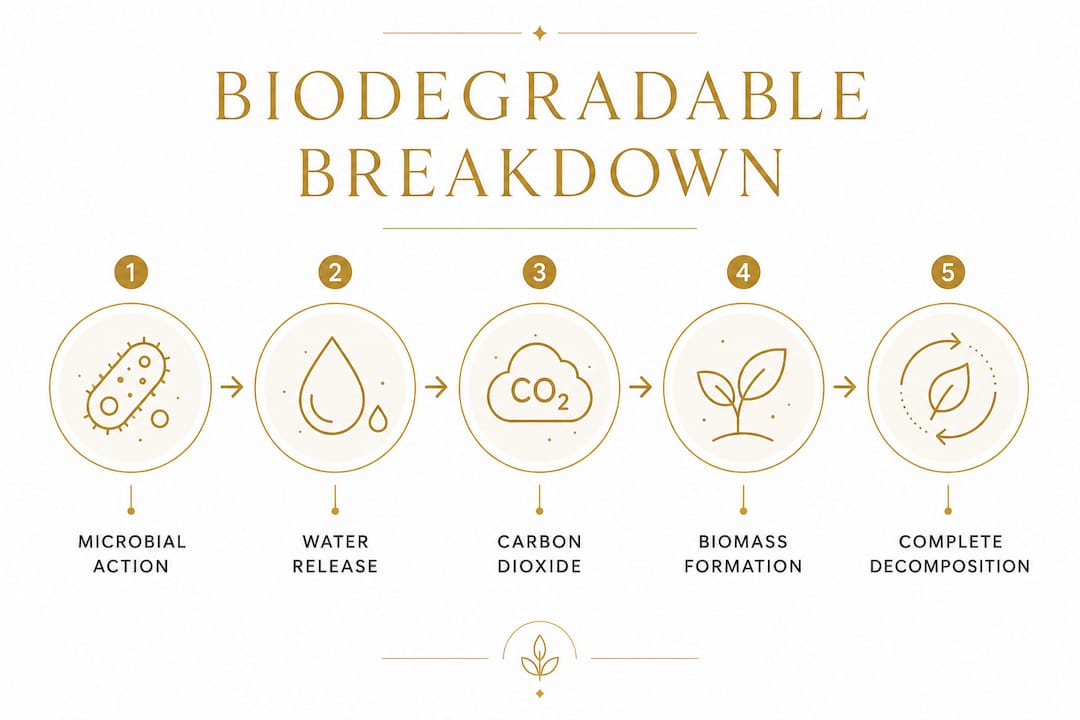
- Biodegradable materials naturally break down into water, carbon dioxide, and biomass through microbial action.
- Their environmental benefits depend highly on proper disposal infrastructure, such as industrial composting facilities.
Biodegradable materials are substances that living microorganisms can break down into water, carbon dioxide, and biomass, returning them safely to the natural environment. Unlike conventional plastics that linger for centuries, these materials complete a biological cycle. To put a number on it, EU standards require at least 90% degradation into water, minerals, and carbon dioxide within six months for a material to qualify as biodegradable. That threshold is not arbitrary. It reflects how quickly microbes can realistically process a substance before it accumulates and causes harm.
A few characteristics define whether a material truly qualifies:
Understanding the role of biodegradable materials starts here, with these fundamentals, before you can make sense of the labels on products you buy every day.
Biodegradable materials fall into two broad camps: natural and synthetic. Natural ones are the easiest to picture. Food scraps, untreated wood, cotton, cork, wool, and bamboo all biodegrade because their chemical structures are ones that microorganisms evolved to consume. Bamboo, in particular, degrades relatively quickly compared to hardwoods, which is one reason it shows up in eco-friendly home products so often.

Synthetic biodegradable materials are trickier. Biodegradable plastics include both bio-based and petroleum-based varieties, and biodegradability depends entirely on chemical structure, not origin. A plastic made from corn starch is not automatically biodegradable, and a petroleum-derived plastic can be engineered to biodegrade under the right conditions.
Common biodegradable polymers and their uses include:
| Material | Source | Biodegradable? | Common Use |
|---|---|---|---|
| Bamboo | Natural (plant) | Yes | Home products, textiles |
| Cotton (raw) | Natural (plant) | Yes | Clothing, packaging |
| Food scraps | Natural (organic) | Yes | Compost, soil amendment |
| PLA | Bio-based synthetic | Conditionally | Cups, food containers |
| PHA | Bio-based synthetic | Yes | Medical devices, packaging |
| PBS | Petroleum-based synthetic | Yes (industrial) | Agricultural films |
| PET | Petroleum-based synthetic | No | Soda bottles |
The “conditionally” next to PLA is worth pausing on. PLA biodegrades, but only under specific conditions, a point that trips up a lot of shoppers.
Biodegradation is not magic. It follows a two-stage chemical and biological process. First, hydrolysis cleaves polymer ester bonds, breaking large molecules into smaller fragments. Then, microorganisms consume those fragments and convert them into carbon dioxide, water, or methane depending on whether oxygen is present. Aerobic conditions produce CO2; anaerobic conditions, like those inside a landfill, produce methane instead.
The environmental advantages of this cycle are real, though they come with conditions attached:
The catch: Proper end-of-life infrastructure is what separates a biodegradable material that actually helps the environment from one that just carries a green label. Without industrial composting facilities or anaerobic digesters, many biodegradable materials offer little advantage over conventional plastics.
Sustainable toy brands have recognized this too. You can see biodegradable materials in action across eco-conscious product categories, from packaging to the products themselves.
This is where most people get tripped up, and honestly, the confusion is understandable given how loosely these terms get used on product labels.
Compostability is a stricter subset of biodegradability. ASTM D6400 sets the standard: a compostable plastic must fully degrade in an industrial composting facility without leaving toxic residues, at a rate comparable to yard trimmings or food scraps. Every compostable material is biodegradable, but not every biodegradable material is compostable.
Common misconceptions worth clearing up:
For a deeper look at how these two terms compare in practice, Cozee-bay’s guide on biodegradable versus compostable breaks it down clearly.
Pro Tip: When shopping for biodegradable or compostable products, look for third-party certifications like ASTM D6400 or the Seedling logo rather than relying on a “biodegradable” claim alone. A label without a standard behind it tells you almost nothing about real-world performance.
Scientists and environmental researchers are cautiously optimistic about biodegradable materials, but they are quick to flag where the marketing outpaces the science.
Marketing frequently misuses the “biodegradable” label without specifying the required environment or timeframe, which leaves consumers with unmet expectations. A product labeled biodegradable might technically degrade under precise industrial conditions that most people will never access.
Key expert warnings worth keeping in mind:
The honest takeaway from the scientific community is this: biodegradable materials represent a genuine improvement over conventional plastics, but only when matched with the right disposal infrastructure and honest labeling.
Biodegradable materials are not a perfect solution, and pretending otherwise does not help anyone make better choices. Several practical challenges limit their effectiveness in real-world settings.
Cost. Biodegradable and compostable materials typically cost more to produce than conventional plastics. That price difference gets passed to consumers and businesses, which slows adoption even when the environmental intent is there.
Performance gaps. Many biodegradable polymers have lower heat resistance, shorter shelf life, or reduced mechanical strength compared to conventional plastics. PLA, for example, softens at relatively low temperatures, making it unsuitable for hot beverages without modification.
Contamination in recycling streams. Biodegradable plastics mixed into conventional plastic recycling lower the quality of the recycled output. Sorting them out requires infrastructure and consumer education that most municipalities have not yet built.
Conditional degradation. As covered earlier, PLA persists in landfills because the conditions required for its breakdown simply do not exist there. A material that only biodegrades in one specific facility type offers limited real-world benefit if that facility is not accessible.
Land and resource use. Bio-based feedstocks like corn and sugarcane require land, water, and energy to grow. That trade-off is real, even if the end product is more environmentally friendly than petroleum-based alternatives.
Lack of standardized regulation. No single global standard governs what “biodegradable” must mean on a product label. That gap allows misleading claims to persist and makes it genuinely hard for well-intentioned shoppers to know what they are actually buying.
Recognizing these limitations is not pessimistic. It is the clearest path toward making choices that actually reduce your environmental footprint rather than just feeling like they do.
Biodegradable materials break down through microbial action into water, carbon dioxide, and biomass, but only when placed in the right environmental conditions with adequate infrastructure.
| Point | Details |
|---|---|
| Scientific definition | Biodegradable materials degrade via microorganisms into water, CO2, and biomass within a timeframe defined by EU standards as several months. |
| Natural vs. synthetic | Both natural materials like bamboo and synthetic polymers like PHA qualify as biodegradable, depending on chemical structure. |
| Compostable is stricter | Compostable materials must meet ASTM D6400, degrading fully in industrial facilities without toxic residue. |
| Infrastructure is critical | Without industrial composting or anaerobic digestion, many biodegradable plastics persist in landfills like conventional plastics. |
| Certifications over claims | Third-party standards like ASTM D6400 are more reliable than a generic “biodegradable” label when making purchasing decisions. |
Comments will be approved before showing up.