Your Cart is Empty


TL;DR:
- Reusable silicone bags require over 100 uses to be environmentally sustainable.
- Linen produce bags keep food fresh longer due to their breathability and antimicrobial properties.
- Combining silicone, linen, bamboo, glass, and steel creates an effective eco-friendly kitchen storage system.
If you’ve ever stood in the kitchen aisle staring at a wall of storage options, wondering which ones actually live up to their eco-friendly promises, you’re not alone. Choosing the right food bag storage is no longer just about keeping leftovers fresh. It’s about making choices that align with your values, reduce waste, and still hold up to the chaos of a busy kitchen or commercial facility. This guide cuts through the noise and walks you through the best sustainable food bag storage solutions available, what makes each one worth your attention, and how to decide which combination works best for your space.
| Point | Details |
|---|---|
| Choose sustainable materials | Select food bag storage based on durability, versatility, and environmental impact for long-term benefits. |
| Linen and silicone excel | Linen bags outperform for produce freshness while silicone bags handle most storage and prepping tasks. |
| Mix and match solutions | Combining bags, bamboo organizers, and glass containers gives you a flexible, efficient system. |
| Sustainability takes habit | To maximize your impact, use reusables over 100 times, clean regularly, and recycle responsibly. |
Before you invest in any storage solution, it helps to know what you’re actually evaluating. Not every product labeled “eco-friendly” delivers on that promise, and some materials require very specific conditions to be genuinely sustainable.
Prioritize reusable, durable materials. The biggest mistake people make is buying reusable bags that wear out after a few months. According to Food & Wine’s testing, reusables must exceed 100 to 112 uses to offset their production footprint compared to single-use plastic. That means durability is not optional. It’s the whole point.
Here’s what to look for when evaluating any food bag storage option:
Different materials shine in different situations. Silicone is flexible and heat-resistant, making it ideal for cooking and portable storage. Glass and stainless steel offer the best airtight seal for long-term storage. Linen excels at keeping produce fresh. Bamboo organizers tie the whole system together by keeping your drawer or pantry tidy and accessible.
For a broader look at how these principles apply throughout your home, check out this guide on eco-friendly storage organization. And if you want a deeper breakdown of what to look for specifically in food bag products, the food bag organizer guide is a great starting point.
Pro Tip: When testing a new bag type, track how many uses you get before it shows wear. If it doesn’t hit 100 uses, it likely isn’t the sustainable upgrade you were hoping for.
The balance between function and sustainability is real. A bag that’s technically eco-friendly but hard to use will end up in the back of a drawer. Choose solutions that make your kitchen routine easier, not harder.
When people think of reusable food bags, Stasher is often the first name that comes up. And for good reason. These silicone bags have built a loyal following among eco-conscious home cooks and commercial kitchen managers alike.
Stasher bags are made from platinum food-grade silicone, which is BPA-free and safe for the microwave, oven, freezer, and dishwasher. Food & Wine tested bags from 13 brands and named Stasher a top performer across categories. That kind of consistent performance across temperature extremes is rare.
What makes Stasher bags stand out:
By the numbers: Stasher bags carry a 4.7 out of 5 rating on Amazon based on tens of thousands of reviews, and users consistently report the seal holding strong after 100 or more uses.
For marinating proteins, Stasher bags are particularly effective. The flexible silicone conforms to the food, maximizing contact with the marinade. For meal preppers, the ability to go straight from freezer to microwave without transferring to another container saves real time.
There are a couple of honest caveats worth mentioning. Silicone is not biodegradable, so when a bag finally reaches the end of its life, it needs specialized recycling rather than your curbside bin. Silicone bags can also retain odors from strong foods like garlic or fish if not cleaned thoroughly. Soaking in a baking soda and warm water solution before washing usually handles this.
For more context on how silicone compares to truly compostable options, this breakdown of compostable household products offers useful perspective.
Pro Tip: Turn silicone bags inside out before washing to clean the corners and seams thoroughly. This prevents odor buildup and extends the bag’s usable life significantly.
If you’ve ever pulled a bag of lettuce out of the fridge only to find it wilted and soggy, linen produce bags might be the solution you didn’t know you needed. These simple, natural bags outperform most alternatives when it comes to keeping fresh produce in good shape.
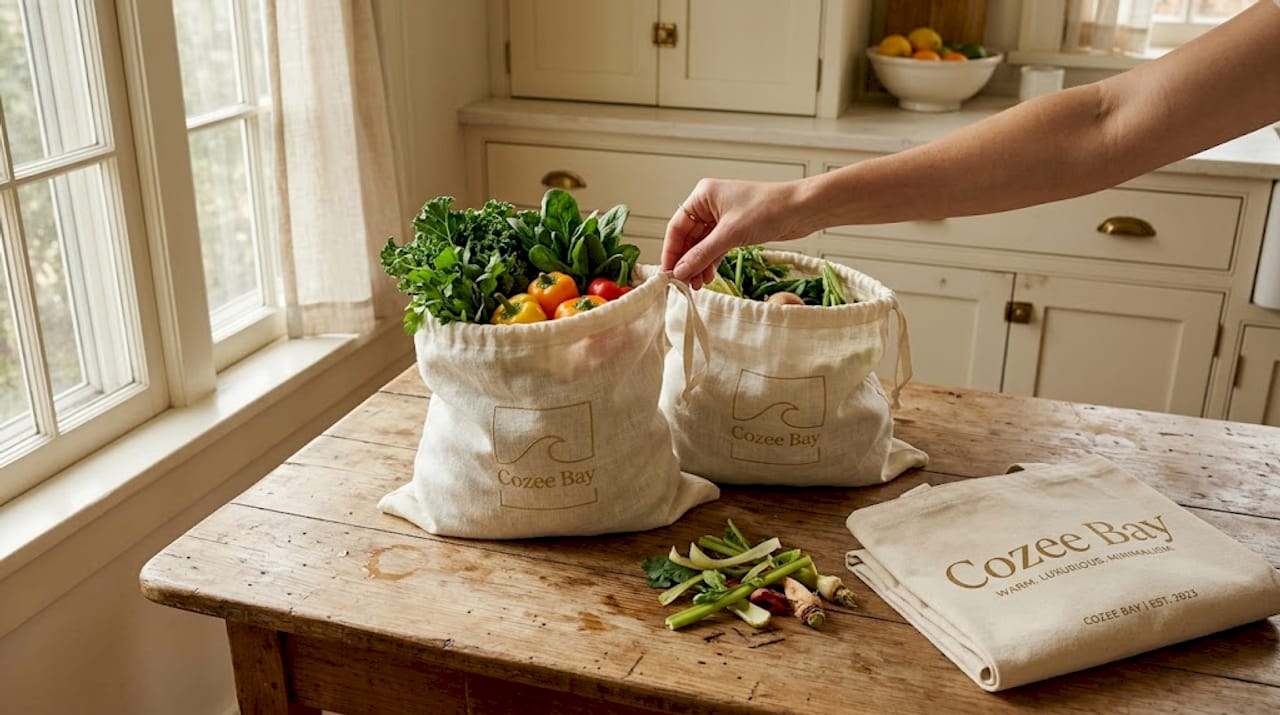
Testing by CNET found that linen bags kept produce like lettuce and peppers crisp and fresh for up to two weeks in the refrigerator, outperforming both mesh and compostable bags. The key is how linen handles moisture and airflow.
Why linen works so well for produce:
Freshness fact: In side-by-side testing, linen bags kept leafy greens and peppers fresh for two full weeks, while mesh and compostable bags showed visible wilting and moisture damage within the first week.
Linen bags do have their limits. They work best for wet or moisture-sensitive produce like greens, herbs, peppers, and cucumbers. For very dry items like onions or garlic, a mesh bag or open-air storage is a better fit. Over-drying is a real risk if you store already-dry produce in linen for too long.
To get the most out of linen bags, wash them regularly in cold water and air dry. Avoid fabric softeners, which can clog the fibers and reduce breathability. If you buy undyed, natural linen bags, they’re compostable at the end of their life, which makes them one of the most genuinely circular options available.
For inspiration on how to incorporate linen bags into a broader sustainable kitchen setup, explore these bamboo storage ideas that pair beautifully with natural fabric options.
Silicone and linen cover a lot of ground, but a complete eco-friendly kitchen storage system usually calls for a few more players. Bamboo organizers, glass containers, and stainless steel each bring something distinct to the table.
Bamboo organizers are the unsung heroes of kitchen organization. They don’t store food directly, but they keep your collection of reusable bags, wraps, and containers neatly arranged and easy to access. Bamboo is naturally antimicrobial, durable, and visually appealing in a way that plastic drawer inserts simply aren’t. A well-organized drawer means you actually use your eco-friendly products instead of defaulting to single-use options out of frustration.
Glass containers are the gold standard for airtight, long-term storage. They don’t absorb odors or stains, they’re safe for the oven and microwave, and they last for decades with proper care. The tradeoff is weight and fragility, which makes them less ideal for portable use or commercial settings with high turnover.
Stainless steel offers similar airtight benefits with better durability for commercial kitchens, school cafeterias, or senior living facilities where containers get heavy daily use.
| Material | Best for | Sustainability | Cleaning | Cost |
|---|---|---|---|---|
| Silicone | Versatile daily use, cooking | High (100+ uses) | Dishwasher safe | Moderate |
| Linen | Fresh produce storage | Very high (compostable) | Hand wash, air dry | Low |
| Bamboo | Organization, drawer storage | Very high (renewable) | Wipe clean | Low to moderate |
| Glass | Airtight long-term storage | Very high (durable) | Dishwasher safe | Moderate to high |
| Stainless steel | Commercial, heavy daily use | Very high (durable) | Dishwasher safe | High |
As Food & Wine notes, glass and stainless are the best choices for airtight long-term storage, while bamboo excels at organization. The smartest approach is mixing these materials based on what you’re storing and how often you need to access it.
For a curated look at how bamboo fits into a complete kitchen storage system, this comparison of bamboo food bag organizers is worth bookmarking. And if you’re looking to rethink your kitchen layout from the ground up, these kitchen organization ideas offer a solid framework.
Now that you know what each option brings to the table, the real question is which one fits your specific situation. Here’s a side-by-side breakdown to help you decide.
| Feature | Silicone bags | Linen produce bags | Bamboo/glass |
|---|---|---|---|
| Versatility | Very high | Moderate | Low to moderate |
| Best use | Cooking, meal prep, portable | Fresh produce | Organization, long-term storage |
| Sustainability | High (needs 100+ uses) | Very high (compostable) | Very high (durable/renewable) |
| Cleaning | Dishwasher safe | Hand wash | Wipe/dishwasher |
| End-of-life | Specialized recycling | Compostable | Recycle/compost |
| Cost | Moderate | Low | Low to high |
Situational recommendations:
“Silicone excels at marinating and sous-vide cooking but can retain odors if not cleaned thoroughly after strong-smelling foods. Linen is best for wet produce but can over-dry items that don’t need moisture regulation.”
For commercial property managers overseeing multiple kitchens or dining facilities, the stakes are higher. Consistency, food safety, and durability all matter more at scale. This guide to commercial kitchen organization addresses those specific challenges in detail.
The overlooked option in busy kitchens? A dedicated bamboo organizer for your bags and wraps. When everything has a home and is easy to grab, you actually use your sustainable products. That habit shift is where real environmental impact happens.
Here’s something most guides won’t tell you: the “best” eco-friendly food bag storage system is the one you actually use consistently, not the one with the most impressive specs.
We’ve seen plenty of people invest in a full set of silicone bags, only to default back to single-use plastic because the bags were hard to dry or awkward to store. The material matters, but the habit matters more. A bamboo organizer that keeps your bags visible and accessible can do more for your sustainability goals than any single product upgrade.
The other common mistake is treating this as an all-or-nothing decision. You don’t need to replace everything at once. Start with one category, like produce bags, and build from there. Test your linen bags for a month. Track how your produce holds up. Then add silicone bags for meal prep. Over time, you’ll land on a combination that fits your actual routine.
And don’t forget end-of-life planning. Silicone needs specialized recycling, and linen is compostable if undyed. Knowing this upfront means you won’t just toss an old bag in the trash and undo months of sustainable choices.
The goal isn’t perfection. It’s progress, repeated consistently, with products that make the right choice the easy choice.
Making the switch to sustainable food bag storage is one of the most practical steps you can take toward a greener kitchen, whether you’re managing a home pantry or a full commercial facility. The right combination of silicone bags, linen produce bags, and bamboo organizers can reduce your waste, keep food fresher, and make your kitchen genuinely easier to navigate.

At Cozee Bay, we’ve made it easy to find handcrafted, eco-friendly storage solutions that look great and actually hold up to daily use. From bamboo food bag organizers to drawer organizers and beyond, our products are built for people who care about both function and sustainability. Browse our full collection at Cozee Bay and find the pieces that make your kitchen work better for you and the planet.
Silicone bags become a genuinely sustainable choice only after 100 or more uses, so durability and consistent reuse are what make them worthwhile over single-use plastic.
Yes, linen bags outperformed both mesh and compostable bags in freshness testing, keeping lettuce and peppers crisp for up to two weeks in the refrigerator.
Absolutely. Silicone, linen, glass, and bamboo options all work in commercial settings. Just prioritize food safety ratings, ease of cleaning, and durability based on your facility’s daily demands.
Most silicone bags are dishwasher safe, but turning them inside out and hand washing with warm soapy water prevents odor buildup and extends their lifespan noticeably.
Silicone requires specialized recycling rather than curbside bins, while undyed linen bags are fully compostable, making linen the more circular option at end of life.
Comments will be approved before showing up.