Your Cart is Empty


TL;DR:
- Sustainable manufacturing reduces hospitality energy costs by 15 to 30 percent within three years.
- Implementing frameworks like lifecycle assessment and lean manufacturing provides measurable sustainability results.
- Early adoption of eco-friendly products and practices offers a competitive edge and future-proofing benefits.
Most hospitality and commercial property managers assume going green means spending more. That assumption is costing them real money. Energy efficiency upgrades in hotels deliver 15 to 30% cost reductions within three years, turning sustainability from a charity exercise into a sharp competitive edge. This article breaks down exactly what sustainable manufacturing means for your operations, which frameworks actually deliver measurable results, and how other hospitality leaders are using eco-friendly product choices to cut costs and win over guests. By the time you finish reading, you will have a clear, actionable picture of where to start and why waiting any longer is a risk you cannot afford.
| Point | Details |
|---|---|
| Clear operational ROI | Sustainable manufacturing can reduce energy and resource costs by 15–30% within a few years. |
| Data-driven frameworks | Tools like LCA, NIST models, and ASTM KPIs help measure and optimize environmental impact. |
| Sector-specific benefits | Hospitality businesses gain guest appeal, certification advantages, and resilience by going sustainable. |
| Manageable challenges | Trade-offs exist, but multi-disciplinary teams and smart data can overcome barriers and maximize ROI. |
| Actionable next steps | Eco-friendly furnishings and operational upgrades support both business efficiency and green compliance. |
With the stage set, let’s clarify exactly what sustainable manufacturing means for modern business owners.
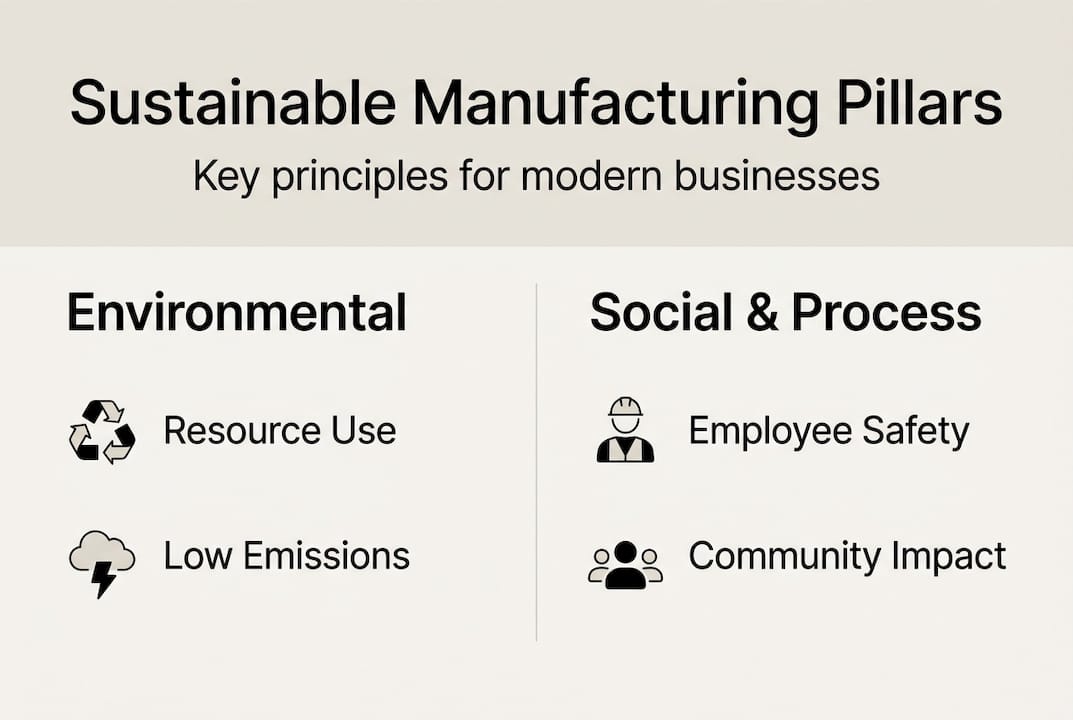
Sustainable manufacturing is not a vague feel-good concept. It is a disciplined operational approach with real financial implications. According to the EPA’s formal definition, sustainable manufacturing is the creation of manufactured products through processes that minimize negative environmental impacts, conserve energy and natural resources, are safe for employees and communities, and are economically sound.
Notice that last part: economically sound. This is not just about being kind to the planet. It is about running a smarter business.
For hospitality and commercial property managers, sustainable manufacturing touches nearly every physical asset in your building. Think about it this way:
The value here goes well beyond regulatory compliance. Sustainable manufacturing practices lead to improved worker safety, higher operational efficiency, reduced energy consumption, and better alignment with the expectations of today’s eco-conscious guests. A business traveler booking a hotel stay in 2026 is far more likely to factor in a property’s green credentials than they were a decade ago.
“Sustainable manufacturing is not a destination. It is a continuous process of measuring, improving, and choosing better inputs and methods at every stage of production and procurement.”
The main pillars to keep in mind are resource conservation, employee and community safety, minimized environmental impact, and long-term economic viability. When a product you source or specify is made under these principles, you are investing in durability and efficiency, not just optics.
Understanding the concept, it’s time to see how businesses put sustainable manufacturing into practice.
Sustainability without measurement is just marketing. The good news is there are established frameworks that give you hard numbers to work with. NIST’s sustainable process metrics cover energy use, resiliency, and ASTM-standardized KPIs, giving businesses a common language for tracking progress. And the EPA endorses lean manufacturing as a core strategy for formal sustainability integration, because eliminating waste in production directly maps to eliminating waste in your operating costs.
Here is a quick overview of the primary methods and their hospitality relevance:
| Method | What it measures | Hospitality impact | Typical ROI timeline |
|---|---|---|---|
| Lifecycle assessment (LCA) | Full environmental cost from raw material to disposal | Helps choose longer-lasting furnishings | 2 to 5 years |
| Unit process modeling | Energy/resource use per production step | Identifies high-waste supply chain links | 1 to 3 years |
| Lean manufacturing | Waste elimination in production | Lowers cost of sourced goods | 1 to 2 years |
| NIST/ASTM KPIs | Standardized sustainability benchmarks | Enables certification tracking (LEED, GSTC) | Ongoing |
When you are evaluating a product’s sustainability credentials, follow these steps:
Pro Tip: Start with unit process libraries when auditing your supply chain. Even a basic spreadsheet mapping your top 20 purchased items against their material origin, energy use in production, and disposal pathway will reveal surprising inefficiencies fast.
You can also look at sustainable building examples to see how these frameworks play out in real product choices for commercial spaces.
Now that you know the frameworks, let’s explore the measurable impact these practices deliver.
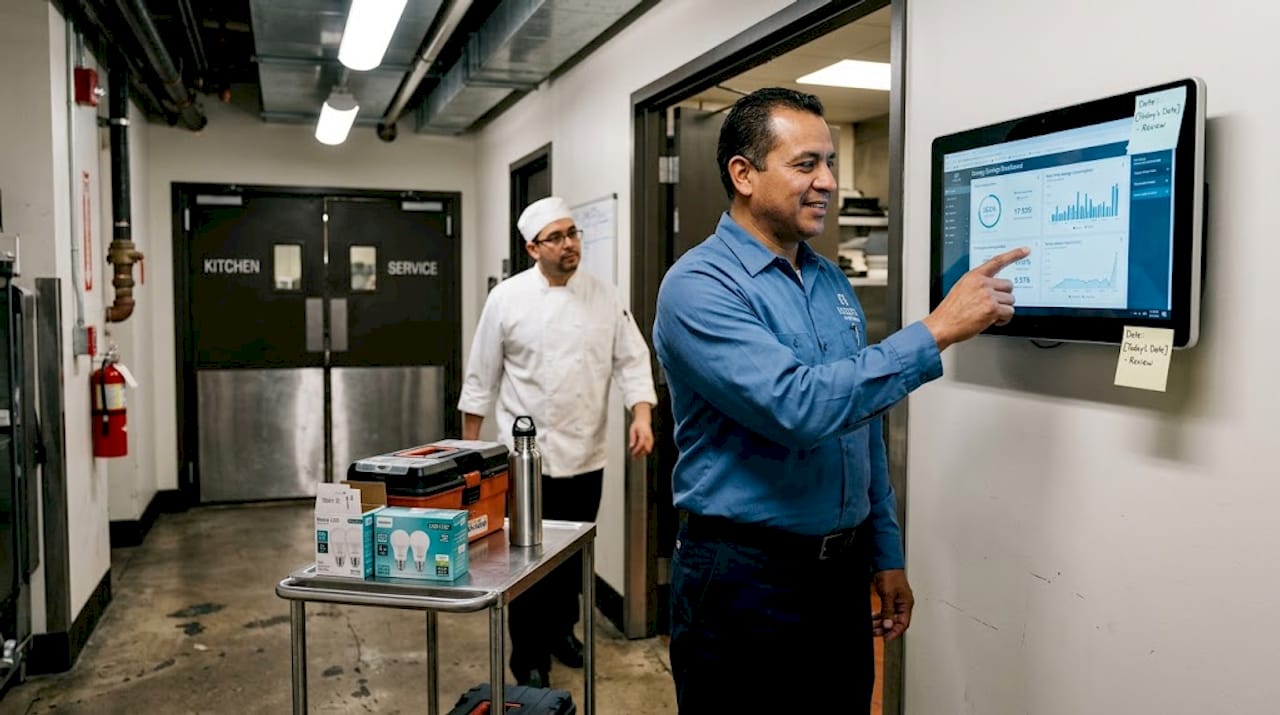
The numbers are hard to ignore. Hotels that implement targeted sustainability upgrades consistently see 15 to 30% energy cost reductions with emissions cuts of up to 40% and a return on investment within two to three years. This is not just hospitality data. In heavy manufacturing, sustainable steel upgrades produced a 32% energy cost reduction worth over $13.6 million annually, proving the model scales across industries.
Here is how those outcomes compare when you look at conventional versus sustainable manufacturing approaches in a hospitality context:
| Factor | Conventional approach | Sustainable approach |
|---|---|---|
| Energy cost trend | Increases with market rates | Reduced 15 to 30% through efficiency |
| Product lifespan | Shorter, higher replacement frequency | Longer, lower total cost of ownership |
| Guest satisfaction impact | Neutral to negative for eco-conscious guests | Positive, supports loyalty and reviews |
| Certification eligibility | Limited | Supports LEED, GSTC, and similar programs |
| Waste management costs | Higher, unmanaged | Lower, with documented reduction plans |
Across hospitality sectors, here are the outcomes properties are actually achieving:
You can also apply these same principles to kitchen and bath sustainable materials when planning renovations or upgrades in food service areas, restrooms, and guest suites. The payback periods are real, the data is there, and the properties acting on it now are pulling ahead of their competition.
With the benefits laid out, it’s crucial to understand the fine print and hidden challenges.
Not every path to sustainable manufacturing is equally accessible. A study of hotels in Egypt found a clear divide: international chain hotels adopted more sophisticated sustainability practices, while local independent hotels concentrated primarily on cost-focused basics due to resource and knowledge constraints. That gap is not unique to one geography. It shows up in commercial properties everywhere.
Here are the most common decision factors that either slow adoption or create costly missteps:
The real trade-off most managers miss is the tension between short-term productivity and long-term sustainability gains. Switching to a sustainably manufactured product line often involves a transition period where costs temporarily rise before they fall. You need to plan for that curve, not treat it as a sign that sustainability isn’t working.
“The biggest mistake in sustainable manufacturing adoption is treating it as a one-time project rather than an ongoing operational discipline.”
For bamboo office solutions and similar product categories, the trade-off is actually quite favorable: lower production emissions, renewable source material, and comparable or superior durability versus conventional alternatives. And when you consider why eco-friendly products outperform conventional ones in guest-facing environments, the case for switching gets even stronger.
Pro Tip: Multi-disciplinary teams are not optional when navigating sustainability trade-offs. Pull in your operations lead, purchasing manager, and a sustainability consultant, even part-time, to make sure no one department absorbs all the transition friction alone.
Before wrapping up, let’s share our experience-driven insights for hospitality leaders.
Here is an uncomfortable truth most sustainability guides skip: sustainable manufacturing is not primarily about saving the planet. For hospitality and commercial managers, it is about future-proofing your assets and protecting your market position. Properties that delay are not just missing cost savings. They are building a portfolio of assets that will lose value faster as guest expectations and regulatory standards tighten.
What most operators overlook is that guest demand for ESG accountability is already pricing into booking decisions. Certifications like LEED and GSTC are shifting from differentiators to baseline requirements in corporate travel procurement. And operational resilience, meaning the ability to weather supply chain disruptions with durable, locally sourced, and responsibly made products, is worth more than any single efficiency upgrade.
The lesson we keep seeing play out? Start with measurable KPIs, not aspirational statements. Pick two or three high-impact upgrades: modular furnishings, certified consumables, or sustainable decor transformation in guest-facing areas. Track the numbers. Then expand. Properties that build this discipline now will not be scrambling to catch up in two years when sustainability becomes the cost of entry, not a bonus feature.
Ready to take action? Applying sustainable manufacturing principles starts with the products you choose every day for your property.
At Cozee Bay, we specialize in handcrafted bamboo products designed to meet exactly the kind of operational and aesthetic standards that hospitality and commercial spaces require. From paper towel dispensers used in restaurants, senior living centers, and coffee shops to drawer organizers and wrap dispensers built for high-traffic environments, every product is made with sustainability at its core. Explore our full range of sustainable material options to find the right fit for your next upgrade. Free shipping within the contiguous U.S. and a money-back guarantee make it easy to get started.
Efficiency upgrades cut energy and resource costs by 15 to 30%, attract eco-conscious guests, and support certification goals like LEED and GSTC, all while improving day-to-day operational efficiency.
NIST and ASTM frameworks define the key KPIs: energy use per unit, material waste rates, lifecycle assessment scores, and emissions reduction benchmarks are the ones to track first.
Initial investment can feel significant, but most upgrades pay back within two to three years through energy savings, reduced replacement costs, and lower waste management expenses.
Local hotels often face budget limitations, knowledge gaps around certification requirements, and restricted access to verified sustainable suppliers, which tends to keep adoption at a basic level.
Using sustainably manufactured products and processes directly satisfies certification prerequisites for programs like LEED and GSTC, making it easier to qualify for credits that boost your property’s official sustainability standing.
Comments will be approved before showing up.