Your Cart is Empty


Over half of American consumers now prioritize eco-friendly products when updating their kitchens. With urban living creating tighter spaces and more waste, making sustainable choices is more than a trend—it is a responsibility. This practical guide will help you assess your real product needs, spot trustworthy certifications, and choose high-performing alternatives that make both your American kitchen and the environment better.
| Key Insight | Explanation |
|---|---|
| 1. Assess product needs first | Understand your usage patterns to pinpoint where eco-friendly alternatives can be applied. |
| 2. Identify sustainable materials | Focus on rapidly renewable and recyclable materials to ensure a minimal environmental impact. |
| 3. Compare product certifications | Utilize third-party certifications to verify genuine sustainability claims in products. |
| 4. Review user feedback carefully | Analyze detailed reviews to gauge product durability and real-world performance beyond manufacturers’ claims. |
| 5. Prioritize quality in purchases | Evaluate product attributes closely to balance performance, durability, and sustainability effectively. |
Selecting eco-friendly products starts with understanding your specific household or business requirements. Consumer trends now demonstrate a growing shift towards sustainability driven by environmental awareness and personal values. This means carefully evaluating what you actually use, how often you use it, and what sustainable alternatives might seamlessly replace your current products.
Begin by conducting a comprehensive audit of your current product inventory. Track usage frequency and identify areas where eco-friendly replacements could reduce waste and environmental impact. Look for patterns such as single-use items, disposable products, or items with excessive packaging. Consider creating a simple spreadsheet or checklist that documents each product category, current consumption levels, and potential sustainable alternatives. Pay special attention to high-use items like kitchen supplies, cleaning products, paper goods, and storage solutions.
Your assessment should balance practical needs with environmental consciousness. Not every product needs an immediate replacement research shows that thoughtful, gradual transitions often work best. Focus on items where sustainable swaps can be made without compromising functionality or dramatically increasing costs.
Pro tip: Start by replacing 2-3 high-impact products in your most frequently used spaces to build momentum and experience sustainable alternatives without overwhelming yourself.
Understanding how to identify truly sustainable materials is crucial for making environmentally responsible purchasing decisions. Sustainable products are characterized by their comprehensive lifecycle approach, focusing on minimizing environmental impact from production through disposal.
Key sustainable materials to look for include rapidly renewable resources like bamboo, cork, hemp, and recycled materials. These materials demonstrate superior environmental credentials by requiring minimal processing, regenerating quickly, or repurposing existing waste streams. Pay close attention to specific eco-friendly features such as low energy production requirements, biodegradability, durability, and minimal packaging. Assess each product’s environmental footprint by examining its manufacturing process, transportation distance, potential for reuse or recycling, and overall resource consumption.

When evaluating product sustainability, consider multiple dimensions beyond just material composition. Look for certifications like Forest Stewardship Council (FSC), Global Organic Textile Standard (GOTS), or Energy Star ratings that provide independent verification of environmental claims. These certifications help consumers distinguish genuinely sustainable products from those making unsubstantiated green marketing claims.
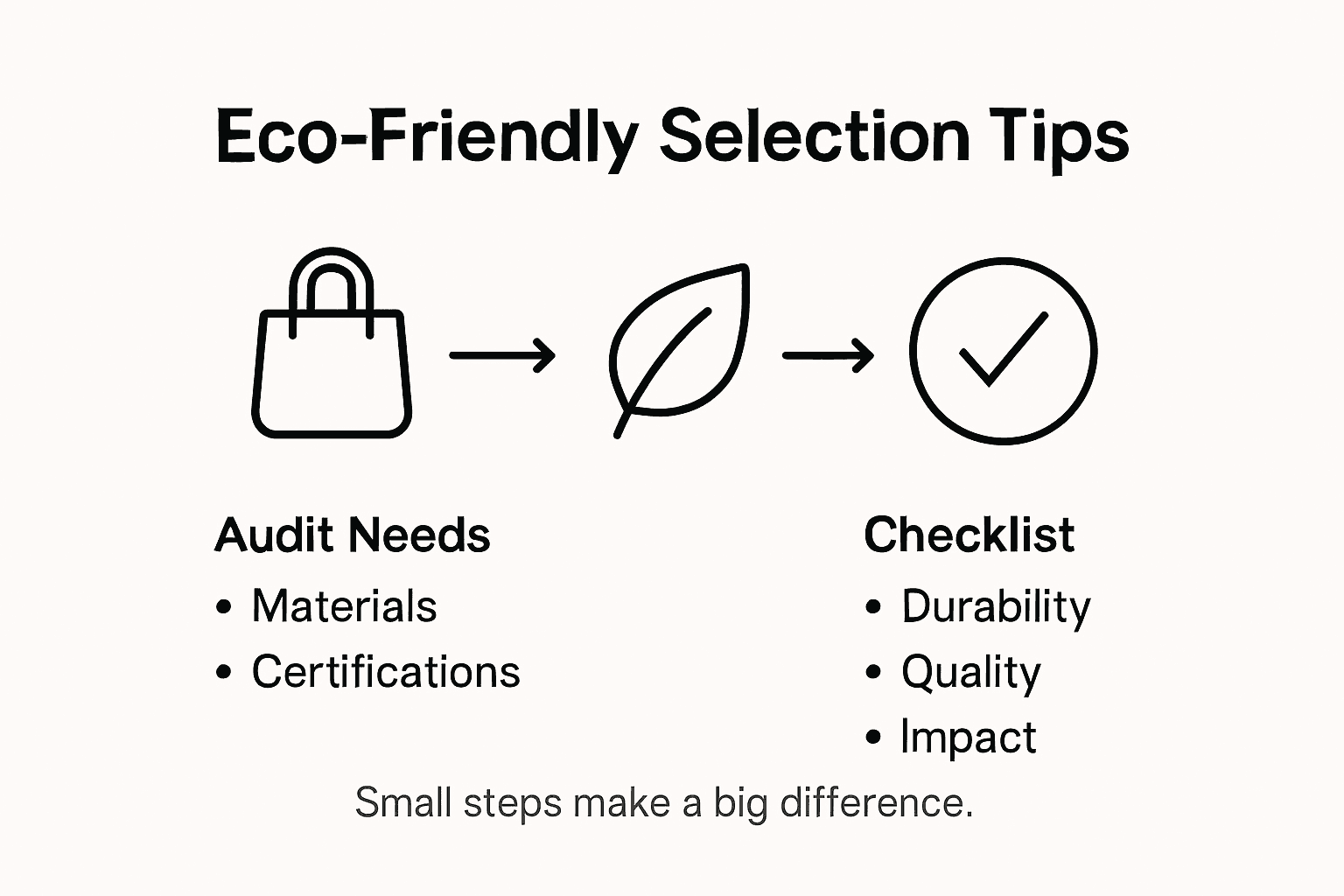
Pro tip: Create a simple checklist of sustainability criteria before shopping to quickly evaluate potential purchases and avoid greenwashing tactics.
Mastering the art of comparing product certifications is essential for making truly sustainable purchasing decisions. Third-party certifications provide critical insights into a product’s comprehensive environmental credentials, offering consumers a reliable way to verify environmental claims beyond marketing language.
When evaluating certifications, focus on multi-attribute standards that assess environmental impact across multiple dimensions. Key certifications to prioritize include Energy Star for energy efficiency, Forest Stewardship Council (FSC) for responsible forest management, Global Organic Textile Standard (GOTS) for textile sustainability, and USDA Organic for agricultural products. Look beyond a single certification by examining the specific criteria each standard covers such as carbon emissions, water usage, chemical restrictions, worker safety, and overall lifecycle assessment. Some certifications emphasize carbon neutrality while others concentrate on renewable energy or social responsibility.
Here’s a quick reference guide to common sustainable product certifications and what they verify:
| Certification | Main Focus | Key Benefits |
|---|---|---|
| Energy Star | Energy efficiency | Reduces energy consumption |
| FSC | Responsible forestry | Protects forests, supports communities |
| GOTS | Organic textiles | Ensures organic fiber content |
| USDA Organic | Organic agriculture | Limits synthetic chemicals |
Use this table to inform your purchasing decisions by checking for relevant certifications on products.
Develop a systematic approach to comparing environmental impact by creating a comparison matrix that ranks products based on their certification standards, transparency of manufacturing processes, and measurable sustainability metrics. Consider the entire product lifecycle including raw material sourcing, production methods, transportation emissions, potential for reuse or recycling, and end-of-life disposal requirements.
Pro tip: Keep a digital or physical reference guide of trusted environmental certifications to quickly cross-reference product claims during your shopping process.
Evaluating user experiences and product durability is a critical step in making sustainable purchasing decisions. Consumer perceptions of product lifetimes play a significant role in understanding long-term product value, providing insights beyond manufacturer marketing claims.
When reviewing user feedback, look beyond star ratings to analyze detailed written reviews that highlight real-world performance, potential durability issues, and long-term functionality. Pay special attention to comments about product materials, construction quality, wear and tear resistance, and actual lifespan compared to manufacturer claims. Cross reference reviews across multiple platforms including manufacturer websites, independent review sites, and consumer forums to get a comprehensive understanding of product reliability. Look for patterns in feedback such as consistent comments about material quality, performance under different conditions, and potential repair or replacement needs.
Compare durability claims by examining the specific warranty terms, manufacturer guarantees, and independent testing results. Consider factors like material composition, manufacturing process, expected lifecycle, and potential for repair or refurbishment. Seek out reviews and feedback from users who have used the product for extended periods, as their long-term experience provides more meaningful insights into true product durability and sustainability.
This summary highlights how to assess product durability when selecting sustainable goods:
| Aspect to Check | Why It Matters | What to Look For |
|---|---|---|
| User feedback | Reveals real-world lifespan | Reviews after long-term use |
| Warranty terms | Shows manufacturer confidence | Multi-year warranties preferred |
| Material quality | Affects repair and longevity | Durable, repairable construction |
Applying these checks helps ensure your sustainable choices last longer.
Pro tip: Create a personal tracking spreadsheet to log product performance, durability observations, and replacement frequency to make more informed future purchasing decisions.
Consumer purchasing decisions increasingly prioritize functional quality alongside sustainability considerations, which means carefully evaluating product attributes beyond environmental claims. Making a mindful purchase requires a holistic approach that balances performance, durability, and ecological responsibility.
Begin by conducting a comprehensive quality assessment that goes beyond surface level marketing. Examine the product’s materials, construction techniques, performance specifications, and manufacturing standards. Look for tangible indicators of quality such as precision engineering, robust material selection, and clear evidence of thoughtful design. Pay special attention to features that suggest long-term utility and resilience such as reinforced joints, high-grade materials, and innovative structural elements that enhance overall product functionality.
Prioritize purchases from manufacturers who demonstrate transparency in their production processes and provide clear documentation about product origins, materials, and sustainability credentials. Seek out certifications like Forest Stewardship Council (FSC) that not only validate environmental standards but also confirm rigorous quality control measures. Compare products across different brands, evaluating their performance metrics, warranty terms, and potential lifecycle to ensure you are making an investment that aligns with both your functional needs and environmental values.
Pro tip: Create a personal decision matrix that weights product qualities including sustainability score, expected lifespan, performance ratings, and total cost of ownership to make more informed purchasing decisions.
Selecting truly eco-friendly products requires attention to sustainable materials, durability, and responsible sourcing. The article highlights challenges like balancing functionality with environmental impact and avoiding greenwashing. At Cozee Bay, we understand these concerns and offer handcrafted bamboo products designed for long-lasting use and elegant style. Our premium Bamboo Paper Towel Dispenser - A Sleek Look Home or Office perfectly combines sustainability with practical innovation for homes and commercial spaces such as restaurants, schools, and senior living centers.

Explore our eco-conscious product range including Trash Bag Dispensers | Cozee Bay® and Plastic Wrap Dispenser With Cutter | Cozee Bay® to replace disposable plastics with renewable bamboo solutions. Now is the perfect time to upgrade to products that deliver durability and style while reducing your environmental footprint. Visit Cozee Bay today to find quality bamboo items that align with your commitment to sustainability.
Begin by conducting a comprehensive audit of your household or business product inventory. Track how often you use each item to identify single-use or disposable products that could be replaced with sustainable alternatives.
Prioritize materials like bamboo, cork, hemp, and recycled materials as they have a lower environmental impact. Create a checklist of these sustainable materials before shopping to help evaluate potential purchases quickly.
Focus on certifications such as Energy Star, Forest Stewardship Council (FSC), and Global Organic Textile Standard (GOTS) that verify environmental claims. Create a comparison matrix to evaluate products based on their certifications, transparency, and sustainability metrics.
Look for detailed reviews that discuss long-term performance and material quality beyond star ratings. Pay attention to comments about durability and compare warranty terms from multiple users to ensure the product lasts as promised.
Examine the product’s materials, construction, and performance specifications to confirm quality. Create a decision matrix that weighs sustainability, expected lifespan, and cost to guide your selection process effectively.
Comments will be approved before showing up.