Your Cart is Empty


More than 60 percent of American office workers say that eco-friendly workspaces improve their well-being and job satisfaction. In a world where environmental responsibility and employee health are major concerns, sustainable office solutions are quickly becoming a priority for every American organization seeking to gain a competitive edge. Discover how the right choices in design, materials, and technology can create healthier workplaces, save money, and build a reputation for true sustainability.
| Point | Details |
|---|---|
| Sustainable Office Design | Focus on eco-friendly materials and energy-efficient systems to create workplaces that support both environmental responsibility and employee wellness. |
| Material Selection | Choose rapidly renewable, recycled, and low-emission materials to minimize environmental impact and enhance organizational efficiency. |
| Technology Enhancement | Utilize smart technology solutions to manage energy consumption and enable paperless workflows, reducing the overall carbon footprint. |
| Biophilic Design | Integrate natural elements into office aesthetics to improve employee well-being and foster productivity through connection with nature. |
Sustainable office solutions represent a comprehensive approach to creating workspaces that minimize environmental impact while maximizing human and organizational well-being. Sustainable office design involves integrating environmentally friendly materials, energy-efficient systems, and elements that support both ecological responsibility and employee productivity.
At its core, a sustainable office solution goes beyond mere aesthetics or basic functionality. It encompasses a holistic strategy that considers the environmental footprint, employee health, and long-term organizational efficiency. This approach includes selecting renewable materials, implementing energy-saving technologies, reducing waste, and creating spaces that support employee wellness and cognitive performance. Modern sustainable offices prioritize natural lighting, indoor air quality, ergonomic furniture, and flexible work environments that adapt to changing workforce needs.
Key components of sustainable office solutions include:
Pro Tip: Start small by introducing one sustainable practice at a time, such as switching to energy-efficient LED lighting or implementing a comprehensive recycling program, to gradually transform your office environment without overwhelming your team.
Here’s a summary of how key sustainable office practices benefit both organizations and employees:
| Practice | Organizational Benefit | Employee Benefit |
|---|---|---|
| Eco-friendly Materials | Reduced environmental impact | Improved indoor air quality |
| Energy-efficient Technologies | Lower operational costs | Stable, comfortable work climate |
| Biophilic Design Elements | Enhanced company reputation | Stress reduction, higher morale |
| Waste Reduction Programs | Compliance with regulations | Sense of community responsibility |
Material selection represents one of the most critical factors in creating sustainable office environments, directly impacting both environmental performance and long-term organizational efficiency. Traditional office materials like plastics and metals often require extensive resources and energy to produce, creating significant ecological challenges that modern businesses are increasingly seeking to address.
The landscape of eco-conscious resources has dramatically expanded, offering innovative alternatives that support environmental sustainability while maintaining aesthetic and functional standards. From recycled materials to renewable resources, contemporary offices now have multiple pathways to reduce their carbon footprint. Sustainable material choices now include:
Unique eco-friendly materials like bamboo, reclaimed wood, recycled metal, and natural fabrics are transforming office design. These materials not only minimize environmental impact but also create healthier, more inspiring workspaces that support employee well-being and demonstrate corporate commitment to sustainability.

Pro Tip: Conduct a comprehensive material audit of your current office resources, identifying opportunities to gradually replace high-impact materials with sustainable alternatives, focusing on high-traffic or frequently replaced items to maximize your initial sustainability investments.
Compare the properties of common sustainable office materials:
| Material | Resource Type | Durability Level | Typical Application |
|---|---|---|---|
| Bamboo | Renewable | High | Flooring, furniture |
| Recycled Metal | Reused/Leftover | Very High | Frames, office partitions |
| Cork | Rapidly renewable | Moderate | Wall coverings, flooring |
| Reclaimed Wood | Salvaged | High | Desks, decorative wall art |
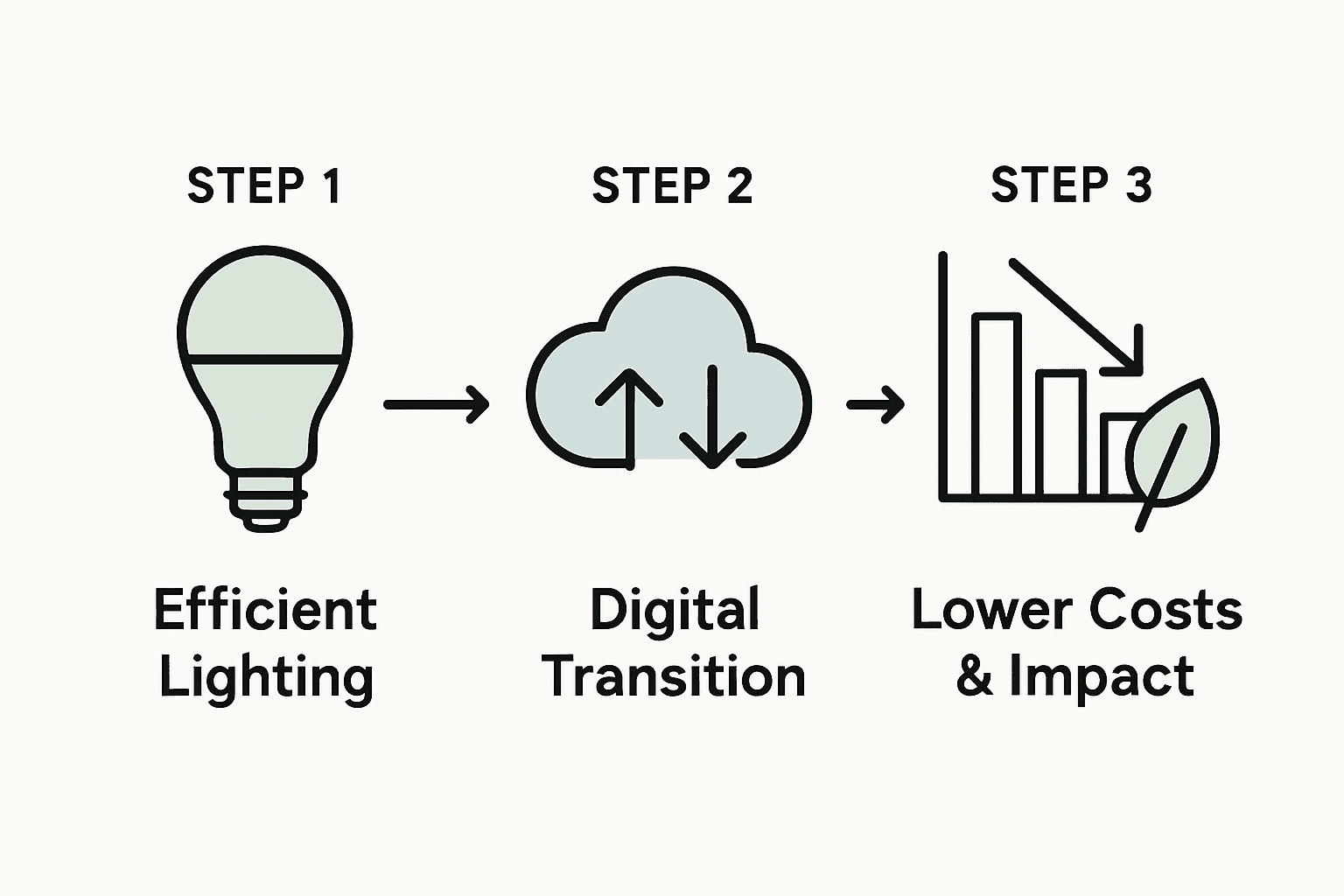
Carbon neutrality efforts increasingly highlight technology’s pivotal role in creating sustainable office environments, with input and output devices representing significant opportunities for reducing environmental impact. Modern technology offers unprecedented capabilities for minimizing energy consumption, optimizing resource utilization, and supporting comprehensive sustainability strategies.
Smart technological solutions are revolutionizing office efficiency through intelligent systems that dynamically manage energy consumption. Energy management technologies now include:
Beyond energy conservation, sustainable technology solutions encompass broader environmental considerations. Digital transformation enables paperless workflows, reduces physical infrastructure requirements, and supports remote working models that significantly decrease overall carbon footprints. Advanced technologies like artificial intelligence and machine learning can now precisely analyze and optimize organizational resource consumption, providing granular insights into potential efficiency improvements.
Pro Tip: Implement a comprehensive technology audit every 18 months, evaluating your current digital infrastructure for energy efficiency, identifying outdated equipment, and strategically replacing high-consumption devices with energy-star rated alternatives.
Interior design materials play a critical role in shaping workspace environments that support both human psychology and ecological sustainability. Biophilic design represents a transformative approach to creating work environments that deeply connect employees with natural elements, ultimately enhancing psychological well-being, productivity, and overall organizational performance.
Key elements of biophilic design incorporate strategic natural integrations that go beyond mere aesthetic considerations:
Vertical gardens and green walls have emerged as powerful design interventions, offering multiple benefits including air purification, thermal regulation, acoustic dampening, and significant psychological advantages. These natural installations create micro-environments within office spaces that reduce stress, improve cognitive function, and create a sense of connection with natural systems. By deliberately integrating organic elements, organizations can create workspaces that not only minimize environmental impact but actively support employee mental and physical health.
Pro Tip: Start your biophilic design implementation gradually by introducing potted plants, natural light optimization, and organic material textures, focusing on high-traffic areas to maximize immediate employee engagement and environmental benefits.
Sustainable design challenges represent a complex landscape of initial investments, long-term savings, and strategic organizational considerations. While upfront costs can appear prohibitive, comprehensive analysis reveals that sustainable office solutions often generate significant financial and operational benefits over time.
The economic implications of sustainable office design can be categorized across multiple dimensions:
Designers and organizational leaders must strategically evaluate material selections, prioritizing options that are easily maintained, recyclable, non-toxic, durable, and locally available. The most successful sustainable office strategies balance immediate financial considerations with long-term environmental and operational objectives, recognizing that initial investments often yield exponential returns through improved efficiency, reduced waste, and enhanced organizational resilience.
Pro Tip: Conduct a comprehensive cost-benefit analysis before implementing sustainable office solutions, calculating potential savings across energy consumption, employee productivity, and potential tax incentives to create a holistic financial perspective.
Creating a sustainable office is a vital step to reduce environmental impact while enhancing employee well-being and productivity. This article highlights important challenges like selecting eco-friendly materials and integrating biophilic design elements that support healthier indoor air quality and stress reduction. If you are looking to start small or make a meaningful change in your workspace, choosing durable and renewable products designed with sustainability in mind is essential.
Experience the perfect blend of style, function, and eco-conscious craftsmanship with Cozee Bay’s handcrafted bamboo products. Our premium bamboo paper towel dispensers and organizational tools not only reduce waste and energy consumption but also bring natural warmth and elegance to your commercial or home office environment. Discover solutions that align with your sustainability goals, enhance operational efficiency, and promote a healthier work atmosphere.
Start transforming your office today with thoughtfully designed bamboo accessories available at Cozee Bay.

Make the shift toward a greener office environment now by exploring our complete range of eco-friendly products at Cozee Bay. See how easy it is to integrate sustainable, stylish bamboo solutions that contribute to long-term savings and employee satisfaction. Visit Cozee Bay Products and take the first step to a healthier, more efficient workspace.
Sustainable office solutions refer to practices and designs that reduce environmental impact while supporting employee well-being and organizational efficiency. This includes using eco-friendly materials, energy-efficient technologies, and designs that promote wellness.
Organizations should adopt sustainable office solutions to reduce operational costs, enhance employee productivity, comply with environmental regulations, and improve their overall reputation. Long-term investments in sustainability often yield significant economic and environmental benefits.
Technology can enhance office sustainability through energy management systems, cloud-based collaboration tools, and automated controls that minimize energy consumption. Implementing smart devices can also reduce physical infrastructure needs and facilitate a paperless workflow.
Key materials include rapidly renewable resources like bamboo and cork, recycled content products, low-emission materials, and locally sourced resources. These materials help reduce the carbon footprint and contribute to healthier work environments.
Comments will be approved before showing up.