Your Cart is Empty


Over 80 percent of American shoppers now say they prefer eco-friendly products when given a choice. Environmental awareness has become far more than a passing trend. Choosing sustainable alternatives means protecting resources while reducing long-term costs for families and businesses alike. This guide sheds light on what eco-friendly products truly are, highlights their main benefits, and explains why these responsible choices are gaining momentum in every American community.
| Point | Details |
|---|---|
| Eco-Friendly Product Characteristics | Eco-friendly products focus on renewable materials, energy efficiency, and reduced waste, enhancing environmental sustainability. |
| Financial and Health Benefits | Adoption of eco-friendly products can lead to lower utility costs, improved indoor air quality, and higher property values. |
| Sustainable Material Selection | Choosing materials that are renewable and recyclable minimizes environmental impact over a product’s lifecycle. |
| Misconceptions About Cost and Performance | Eco-friendly options may have higher initial costs but deliver long-term savings and often superior performance compared to traditional products. |
Eco-friendly products represent a strategic approach to consumption that prioritizes environmental sustainability. These goods are carefully designed to minimize negative environmental impacts throughout their entire lifecycle, from initial material sourcing to final disposal. Unlike traditional products, eco-friendly alternatives focus on reducing ecological footprints through innovative design and responsible manufacturing processes.
At their core, eco-friendly products have several key characteristics that distinguish them from conventional consumer goods. These include:
Eco-friendly practices extend beyond just the product itself, encompassing a holistic approach to reducing environmental strain. This means considering every stage of a product’s existence - from raw material extraction to manufacturing, distribution, use, and eventual recycling or biodegradation. Modern consumers increasingly recognize that true sustainability requires a comprehensive perspective that goes far beyond simple marketing claims.
Pro Tip for Sustainable Shopping: Research product certifications and look for transparent manufacturing processes before making purchases. Authentic eco-friendly products will provide clear documentation about their environmental impact and sustainability credentials.
Quick Environmental Impact Check: Verify a product’s eco-credentials by examining its material sources, manufacturing process, energy efficiency, and potential for recycling or responsible disposal before making a purchase.
Eco-friendly products offer substantial advantages for both residential and commercial environments, transforming how we approach sustainability and resource management. Incorporating energy-efficient systems can dramatically reduce operational costs while creating more responsible living and working spaces.
For homeowners and businesses, the benefits of eco-friendly products extend far beyond environmental considerations:
Commercial entities particularly benefit from sustainable product adoption. By investing in eco-friendly solutions, companies can simultaneously reduce operational expenses, improve brand reputation, and contribute to broader environmental conservation efforts. These products typically offer superior performance metrics, longer lifecycles, and more efficient resource utilization compared to traditional alternatives.
Pro Tip for Sustainable Investment: Start with small, strategic eco-friendly product replacements that offer immediate returns and gradually expand your sustainable infrastructure. Calculate potential long-term savings before making significant investments.
Smart Sustainability Strategy: Prioritize eco-friendly products that provide measurable economic and environmental benefits, focusing on solutions with clear performance improvements and cost-effectiveness.
Here’s a comparison highlighting how eco-friendly products influence different areas:
| Area of Impact | Eco-Friendly Benefit | Business/Home Value |
|---|---|---|
| Operational Costs | Lowers energy and water use | Reduces utility expenses |
| Health and Well-Being | Limits chemical exposure | Improves indoor air |
| Brand/Image | Shows environmental values | Attracts eco-conscious buyers |
| Maintenance | Uses durable materials | Reduces replacement needs |
Sustainable materials represent a critical evolution in product design and manufacturing, focusing on minimizing environmental impact throughout their entire lifecycle. Sustainable products are meticulously designed to ensure no permanent environmental damage occurs from raw material extraction through final disposal. These materials go beyond traditional manufacturing approaches by integrating ecological and social considerations into every stage of production.
The key characteristics of sustainable materials include:
Specific material categories demonstrate unique sustainable attributes. Green textiles, for instance, represent a transformative approach in the fashion and manufacturing industries, replacing environmentally harmful fabrics with eco-conscious alternatives. These materials are engineered to dramatically reduce pollution, conserve natural resources, and provide innovative solutions that challenge traditional production methods.

Sustainable materials also encompass advanced technologies and innovative approaches that prioritize environmental stewardship. By selecting materials with minimal ecological impact, manufacturers and consumers can actively contribute to broader sustainability goals, reducing waste and promoting more responsible consumption patterns.
Pro Tip for Material Selection: Research the full lifecycle environmental impact of materials before purchasing, considering not just their immediate performance but their long-term ecological footprint and potential for recycling or responsible disposal.
Smart Material Strategy: Prioritize materials that offer a balance between performance, durability, and minimal environmental impact, focusing on renewable resources and low-waste production methods.
Eco-friendly products have revolutionized both residential and commercial environments, offering innovative solutions that address sustainability challenges across multiple sectors. Eco-houses demonstrate how environmentally conscious design can significantly reduce carbon footprints, incorporating advanced technologies that minimize energy consumption and maximize efficiency.
In residential spaces, sustainable products provide transformative benefits:
Commercial environments have equally compelling applications for sustainable materials. Businesses are increasingly adopting eco-friendly solutions across various sectors, including:
The integration of eco-friendly products represents more than just an environmental choice - it’s a strategic approach to reducing operational costs, enhancing brand reputation, and demonstrating corporate responsibility. By selecting sustainable alternatives, organizations and homeowners can create spaces that are both functionally superior and environmentally conscious.
Pro Tip for Sustainable Space Design: Start by conducting a comprehensive audit of your current space to identify areas where eco-friendly replacements can provide the most significant impact and immediate benefits.
Smart Implementation Strategy: Prioritize sustainable product replacements that offer measurable improvements in efficiency, durability, and environmental performance, focusing on high-use areas for maximum impact.
The distinction between eco-friendly and traditional products extends far beyond simple marketing claims, representing a fundamental shift in manufacturing philosophy and consumer consciousness. Green building materials demonstrate superior durability and significantly reduced maintenance requirements, challenging the long-held assumption that sustainable options compromise performance.
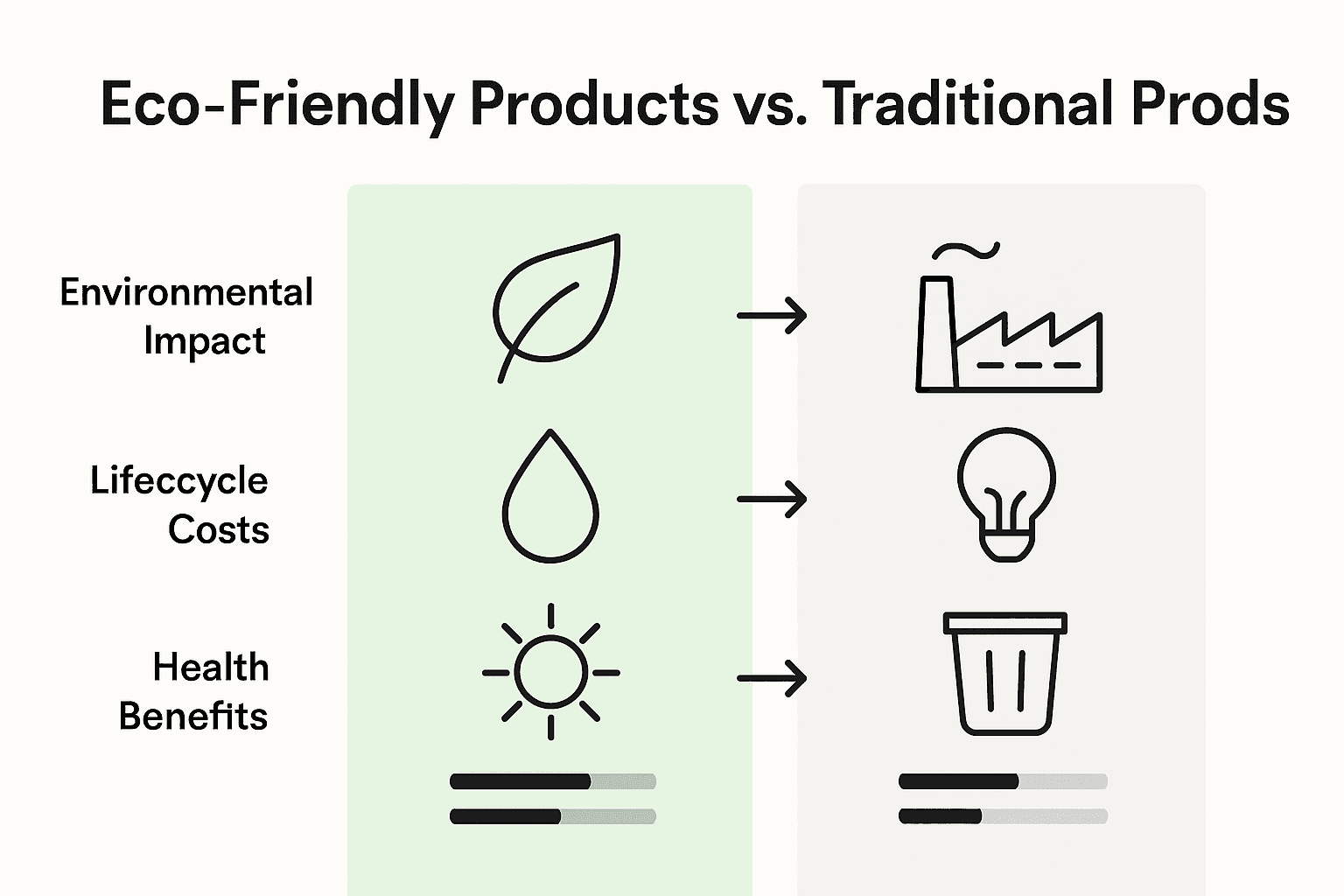
Key comparative differences between eco-friendly and traditional products include:
Environmental Impact
Eco-Friendly Products:
Traditional Products:
Performance Metrics
Eco-Friendly Products:
Traditional Products:
The economic implications of choosing eco-friendly products extend beyond immediate environmental benefits. While initial investments might appear higher, sustainable products typically offer lower long-term costs through reduced maintenance, improved durability, and decreased resource consumption. Businesses and homeowners alike are recognizing that environmental responsibility and financial prudence are not mutually exclusive.
Pro Tip for Smart Product Selection: Conduct a comprehensive lifecycle cost analysis that considers not just purchase price, but maintenance expenses, energy consumption, and potential replacement frequency when comparing eco-friendly versus traditional products.
Smart Comparison Strategy: Always evaluate products holistically by examining their total environmental and economic impact, not just their upfront cost or immediate performance characteristics.
Contrary to widespread assumptions, eco-friendly products represent a strategic investment that challenges traditional perceptions of cost and performance. Incorporating energy-efficient systems can dramatically reduce long-term expenses by cutting utility bills, demonstrating that sustainability and financial prudence are not mutually exclusive.
Common misconceptions about eco-friendly products include:
Cost Myths
Performance Misconceptions
The economic calculus of eco-friendly products goes beyond simple price comparisons. Sustainable solutions provide multifaceted value through reduced environmental impact, improved resource efficiency, and long-term cost savings. Businesses and homeowners who adopt these products are not just making an environmental statement - they’re making a smart financial decision.
Modern eco-friendly products leverage cutting-edge technologies to deliver performance that frequently surpasses traditional alternatives. The initial investment often translates into substantial savings through improved energy efficiency, reduced maintenance requirements, and longer functional lifespans.
Pro Tip for Financial Evaluation: Calculate the total cost of ownership by considering energy savings, maintenance expenses, and potential replacement costs, not just the initial purchase price.
Smart Investment Strategy: Prioritize eco-friendly products with transparent performance metrics and verifiable long-term cost benefits, focusing on solutions that demonstrate clear economic and environmental advantages.
This table summarizes the main misconceptions and realities about eco-friendly products:
| Common Myth | Actual Reality | Practical Implication |
|---|---|---|
| Always more expensive | Saves money over time | Lower total cost of ownership |
| Compromises on performance | Advanced, rigorous engineering | Outperforms traditional goods |
| Hard to find or implement | Increasing market availability | Easier sustainable choices |
Choosing sustainable products is more than a trend - it is a commitment to reducing environmental impact while enhancing your home or business. The article highlights the importance of using eco-friendly materials that minimize waste, reduce energy consumption, and promote durability. At Cozee Bay, we understand these challenges and goals, offering handcrafted bamboo products designed to combine sustainability with stylish functionality. Our bamboo paper towel dispensers and organizers are perfect for places like restaurants, schools, and senior living centers where durability and eco-consciousness matter.
Experience the benefits of premium bamboo products that align with your values and support a greener lifestyle. Explore our curated selection at Cozee Bay and discover how sustainable materials can improve both the look and efficiency of your spaces. For a deeper dive into innovative eco-friendly designs, visit our handcrafted bamboo product collection.
Upgrade your environment today with products that deliver long-term savings, durability, and a responsible footprint.
Looking for practical eco-friendly solutions crafted with care?

Shop now at Cozee Bay and join a community of conscious consumers who choose quality, style, and sustainability in every detail.
Eco-friendly products are designed to minimize negative environmental impacts throughout their entire lifecycle, from sourcing materials to disposal. They focus on using renewable or recycled materials, reducing energy consumption, and minimizing waste.
Eco-friendly products often contain fewer toxic chemicals, which can lead to improved indoor air quality and reduced exposure to harmful substances. This can contribute to better overall health for you and your family.
While some eco-friendly products may have higher upfront costs, they often save money in the long run through lower energy bills and reduced maintenance needs. Their durability can lead to fewer replacements over time.
To verify if a product is eco-friendly, research its material sources, manufacturing processes, energy efficiency, and end-of-life disposal options. Look for certifications and transparent information about its environmental impact.
Comments will be approved before showing up.