Your Cart is Empty


TL;DR:
- Switching to eco-friendly bamboo utensils requires careful consideration of life-cycle impacts, safety, and proper usage practices. Properly sourced, certified bamboo spoons that are well cared for can significantly reduce environmental footprints and plastic waste. Implementing strict procurement, handling, and disposal protocols ensures maximum sustainability benefits for homes and businesses alike.
Switching to eco-friendly kitchen utensils sounds simple enough, but the reality is messier than a drawer full of mismatched spatulas. Not all “green” products deliver on their promises, and recent life-cycle assessment research has flipped some long-held assumptions about bamboo spoons upside down. Whether you’re outfitting your home kitchen or managing procurement for a restaurant, senior living center, or school cafeteria, you deserve a clear picture of what bamboo spoons actually offer, where the pitfalls hide, and how to buy with confidence. This guide gives you exactly that.
| Point | Details |
|---|---|
| Bamboo beats plastic with reuse | Bamboo spoons surpass plastic sustainability after just two uses, making them a top choice for eco-conscious kitchens. |
| Watch out for hidden binders | Some bamboo utensils use melamine resins that can migrate into food, so certification and full ingredient disclosure are essential. |
| Proper care extends lifespan | Hand washing, drying, and occasional oiling can keep bamboo spoons safe and durable in both home and commercial environments. |
| Match product to use case | Considering operational policies and staff training is crucial for commercial settings to maximize the sustainable impact of bamboo utensils. |
Understanding whether bamboo spoons truly reduce your environmental footprint starts with the science, not the marketing copy. The good news is that recent research gives us solid, data-backed answers about bamboo vs plastic sustainability that go well beyond vague “it’s natural” claims.
A life-cycle assessment study found that reusable bamboo cutlery breaks even versus plastic after just two uses, with both disposable and reusable bamboo showing lower global warming potential under most use cases. That’s a striking result. It means even a single-use bamboo spoon, if composted correctly, can still outperform plastic over its lifetime. For a restaurant serving hundreds of guests daily, the cumulative impact is enormous.
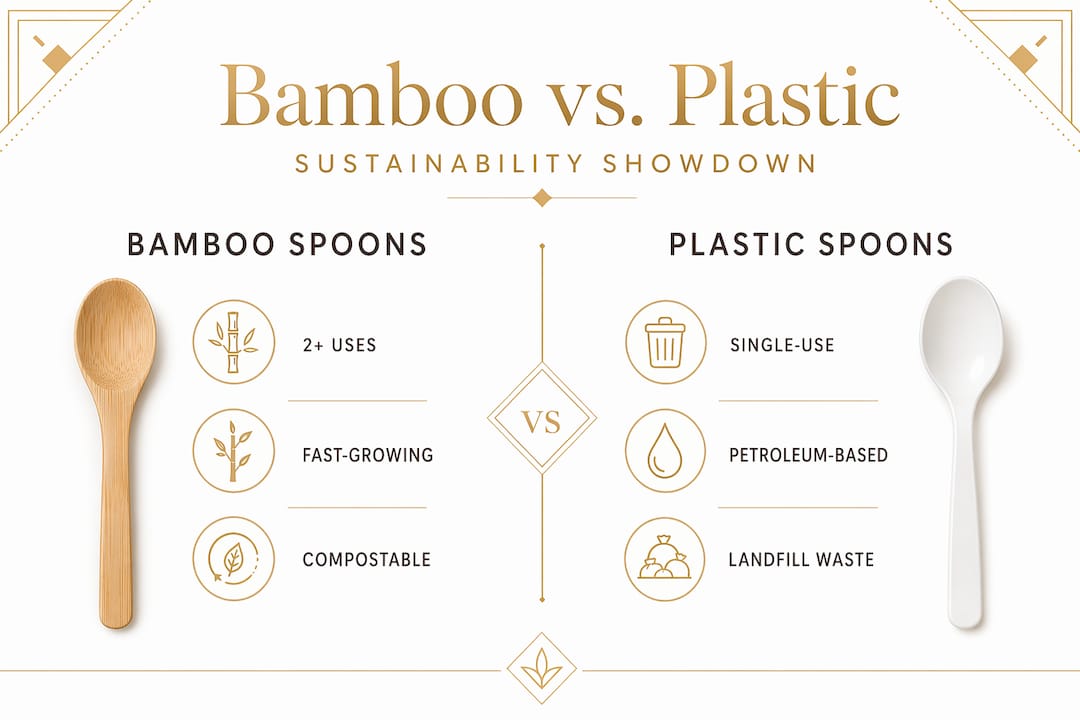
Understanding the full bamboo lifecycle explained helps put these numbers in context. Bamboo is one of the fastest-growing plants on earth, sequestering carbon as it grows and requiring no pesticides or synthetic fertilizers in most cultivation settings. Compare that to the fossil fuel extraction and heavy manufacturing that go into plastic cutlery, and the advantage becomes clear even before you factor in end-of-life disposal.
Here’s a quick comparison to keep in mind as you shop:
| Utensil type | Global warming potential | Break-even vs. plastic | Disposal options |
|---|---|---|---|
| Single-use plastic | High | Baseline | Landfill only |
| Disposable bamboo | Lower than plastic | After 1 use (compostable) | Compost or landfill |
| Reusable bamboo | Lowest | After 2 uses | Reuse, then compost |
| Stainless steel | Moderate upfront | After 50+ uses | Recycling |
A furniture lifecycle comparison across product categories confirms a consistent pattern: natural, responsibly sourced materials tend to front-load their environmental cost during manufacturing, while plastic and synthetic materials spread harm across their entire lifespan and beyond.
Real-world advantages for homes and businesses include:
For commercial property managers, the critical variable is waste management and usage policy. A restaurant that runs bamboo spoons through industrial dishwashers without a care plan is likely undermining the sustainability benefits it’s trying to capture.
Pro Tip: Maximize your sustainability impact by establishing a clear reuse and disposal protocol before you order. Even simple steps, like setting up a compost bin or training staff to separate bamboo utensils from general waste, can meaningfully lower your environmental footprint.
Understanding sustainability is only one aspect. Next, you need to know what’s actually in your bamboo spoons and how to buy safely, because not everything labeled “bamboo” is what it appears to be.
This is where many buyers, both home cooks and commercial purchasers, get tripped up. A product marketed as bamboo might actually be a composite material that includes melamine-formaldehyde resin as a binder. That distinction matters enormously for health and safety.
Melamine-formaldehyde resin, used as a binder in some bamboo composite utensils, has contaminated products above legal limits. Buyers should check for proper food-contact compliance and labeling before purchasing.
“Research into bio-based tableware found that 32% of tested products contained melamine, and 6 products were non-compliant with EU safety standards for food contact materials. These products looked identical to certified, food-safe bamboo utensils on the surface.”
If you’re buying for a school cafeteria, coffee shop, or senior living center, failing to screen for this is a compliance risk you simply cannot afford. Bamboo composition concerns are well-documented in scientific literature, and the consequences of buying the wrong product range from regulatory fines to genuine health risks for vulnerable populations.
This bamboo spoons guide outlines what genuine, food-safe bamboo products look like versus composite alternatives. Here are the most important distinctions:
Checklist: Genuine bamboo vs. composite utensils
How to buy safely as a commercial buyer: A step-by-step approach
Pro Tip: For any business purchase, always request food-contact compliance documentation and full ingredient disclosure in writing. A reputable supplier will have this ready without hesitation. If they hesitate, that’s a sign to keep looking.
Knowing how to spot quality and confirm safety, you’ll want your bamboo spoons to last. That requires understanding both what makes a well-made spoon and how to care for it properly in real kitchen conditions.
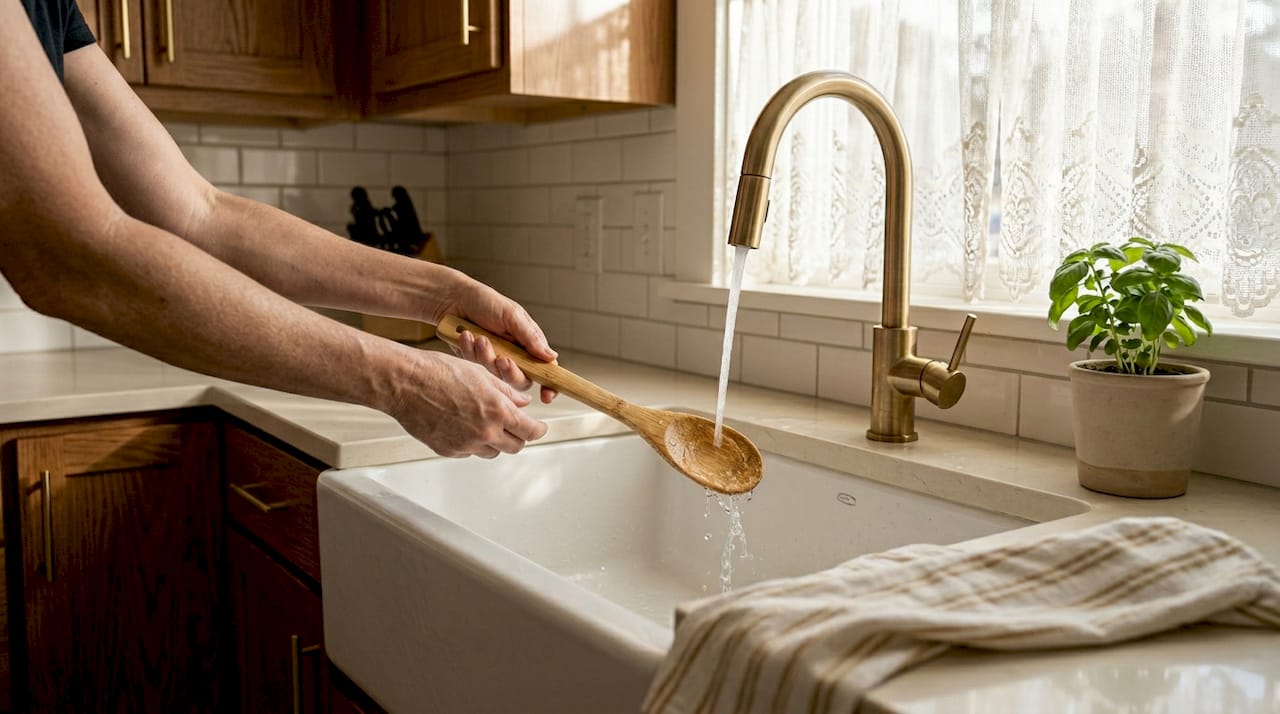
Durability in bamboo utensils is closely tied to the manufacturing process. Specifically, kiln-drying is critical for disposable bamboo utensils to prevent warping, mold, and cracking, indicating better durability over alternatives if made properly. The same principle applies to reusable spoons. Products that skip this step are far more likely to warp after the first wash or develop mold along the grain, which is not just a durability issue but a hygiene one.
For home cooks, proper care is straightforward once you know the rules. For commercial kitchens, care becomes a matter of staff training and written protocols. Both audiences benefit from understanding the same core principles.
Bamboo spoon care: Step-by-step
Explore eco-friendly bamboo uses for a broader perspective on how different bamboo products perform across kitchen and home environments. For business buyers specifically, sustainable bamboo utensils are now well-proven across hospitality and foodservice settings.
Here’s a practical look at how lifespan varies based on care routine and setting:
| Product type | Care routine | Expected lifespan (home) | Expected lifespan (commercial) |
|---|---|---|---|
| Reusable bamboo spoon | Hand wash, occasional oil | 2 to 4 years | 6 to 18 months |
| Reusable bamboo spoon | Dishwasher use | 3 to 6 months | 1 to 3 months |
| Disposable bamboo spoon | Single use, composted | One use | One use |
| Composite bamboo utensil | Hand wash | 1 to 3 years | 6 to 12 months |
The dishwasher column tells a story all on its own. High heat and harsh detergents dramatically shorten bamboo lifespan, which in turn reduces the sustainability advantage you’re paying for.
Pro Tip: For commercial kitchens, create a one-page care protocol card for bamboo utensils and post it where staff can see it. Simple visual reminders around washing stations have helped many businesses extend utensil life by months, saving money and reducing waste at the same time.
Even with the right product, pitfalls abound. Let’s cover real scenarios so you get the full value of bamboo spoons and avoid the mistakes that undermine eco efforts and budgets alike.
Operational policies in commercial spaces, including dishwasher use, recovery cycles, and waste handling, have a major impact on bamboo spoon sustainability and lifespan. This is one of the most overlooked factors in procurement decisions, and it separates businesses that actually achieve their sustainability goals from those that just feel good about buying bamboo.
Common mistakes buyers make:
A real-world scenario worth considering: Imagine two coffee shops, each buying bamboo stirring spoons for their service counter. Shop A tosses them into the commercial dishwasher with everything else, using a bleach-heavy detergent cycle. The spoons crack within three weeks, and without a compost bin on site, they go straight to landfill. Shop B hand washes theirs in a dedicated station, dries them promptly, and has a compost contract with a local facility. Shop B’s spoons last four months per batch and never enter a landfill. Same product, dramatically different environmental and financial outcome.
For property managers who want to avoid this scenario, understanding bamboo’s role in waste reduction starts with internal policy, not just purchasing. Learning why bamboo is eco-friendly at a material level helps you communicate the importance of proper care to your team.
Checklist for making the right purchase decision:
Pro Tip: For property managers, add specific language to procurement contracts requiring food-safe certified bamboo utensils with full material disclosure. This one step removes ambiguity and protects your business from compliance gaps down the road.
Let’s step back and look at what truly moves the needle for sustainable, safe kitchen choices, because most guides stop at “bamboo is better than plastic” without telling you the whole story.
The biggest misconception we see is that switching materials is enough. Buy bamboo instead of plastic, and your kitchen is automatically greener. But the real driver of eco impact is matched use, meaning the right product for the right context, backed by the right habits. A reusable bamboo spoon tossed out after one use or run through a harsh dishwasher every day isn’t saving the planet. It’s just expensive.
For businesses especially, the decisions that actually move the sustainability needle are eco-friendly product criteria: certification standards, end-user behavior, internal training, and procurement language. These factors are less exciting than product photography, but they’re where the real impact happens.
Here’s the contrarian insight that most eco-product articles will never tell you: chasing “all-natural” can actually backfire. An uncertified “pure bamboo” spoon with no documentation can pose more of a health and compliance risk than a certified composite product that’s been rigorously tested for food-contact safety. The label matters less than the verification behind it.
The best bamboo spoon for your kitchen is not the one with the most natural-sounding description. It’s the one that’s certified, matched to your workflow, and supported by team education or personal habits that keep it functioning well. Sustainability is a system, not a single purchase.
Pro Tip: Schedule a quarterly audit of your kitchenware and care protocols, not just your products. The habits and systems around your bamboo spoons often determine whether they reduce your footprint or simply replace one type of waste with another.
With these insights, you’re set to make a smarter, greener choice. And finding trusted, certified bamboo products doesn’t have to feel like another research project.

At Cozee Bay, we’ve built our entire catalog around the standard that eco-conscious home buyers and commercial property managers actually need: handcrafted bamboo products that are food-safe, stylishly designed, and backed by quality you can verify. Whether you’re outfitting a home kitchen, a school cafeteria, a senior living dining room, or a busy coffee shop counter, shop certified bamboo spoons and our broader range of sustainable bamboo solutions, all with free shipping within the contiguous U.S. and a money-back guarantee. We make it easy to choose well, buy confidently, and keep your kitchen genuinely green.
Pure bamboo spoons are generally safe for hot foods, but check the product description to confirm they contain no harmful binders or coatings. Bio-based bamboo tableware can sometimes include melamine-formaldehyde resin binders, with some products found to exceed safety limits.
Hand wash bamboo spoons with mild soap, dry them quickly, and avoid dishwashers to maximize lifespan and prevent warping. Kiln-drying and careful drying prevent warping and mold in bamboo utensils, and the same logic applies to everyday care at home or in a commercial kitchen.
Yes. When reused enough times or properly composted, bamboo spoons carry a lower global warming potential than plastic alternatives. An LCA study found reusable bamboo cutlery breaks even with plastic after just two uses, with both disposable and reusable bamboo outperforming plastic for overall sustainability.
Look for food-contact safety certifications and documentation of full product composition, especially for commercial or frequent use. Melamine migration risk in some products highlights why certification and transparent labeling are non-negotiable for any serious buyer.
Comments will be approved before showing up.