Your Cart is Empty


TL;DR:
- High-quality bamboo utensils can last 2 to 5 years with proper care, outperforming cheap options.
- Bamboo is eco-friendly due to fast growth, low carbon footprint, biodegradability, and zero microplastics.
- Always choose solid bamboo over fiber composites for safety, durability, and true environmental benefits.
Most people assume all bamboo utensils are created equal, but hand-washing extends lifespan by 142% compared to tossing them in the dishwasher, and high-quality bamboo utensils can serve your kitchen for 2 to 5 years or more. That gap between mass-market and premium bamboo is where most buyers get burned. They pick up a cheap set, it warps within months, they replace it, and suddenly bamboo feels like a disappointment rather than a solution. This guide cuts through the noise to show you what makes bamboo utensils genuinely eco-friendly, how to keep them in top shape, and how to choose pieces that look great in both your home kitchen and your commercial space.
| Point | Details |
|---|---|
| Eco benefits | Bamboo utensils are renewable, biodegradable, and release no microplastics, supporting sustainable kitchens. |
| Safety standards | Solid bamboo is naturally antibacterial and heat-resistant, while composite fibers may leach harmful chemicals. |
| Long-lasting durability | Proper care such as hand washing and oiling extends bamboo utensil lifespan up to 2-5 years or more. |
| Smart selection | Choose FSC-certified solid bamboo from trusted brands for maximum style, safety, and sustainability. |
Now that we see bamboo utensils’ surprising lifespan potential, let’s examine why they’re truly eco-friendly, because the sustainability story goes much deeper than “it’s natural.”
Bamboo grows faster than almost any plant on earth, with some species reaching full harvestable maturity in 3 to 5 years, compared to 25 to 70 years for typical hardwood trees. It requires no replanting after harvest because it regrows from its existing root system. That means the land stays intact, topsoil remains stable, and the carbon stored underground doesn’t get disrupted. For eco-conscious homeowners and property managers who care about the full supply chain of their purchases, that’s a meaningful difference.
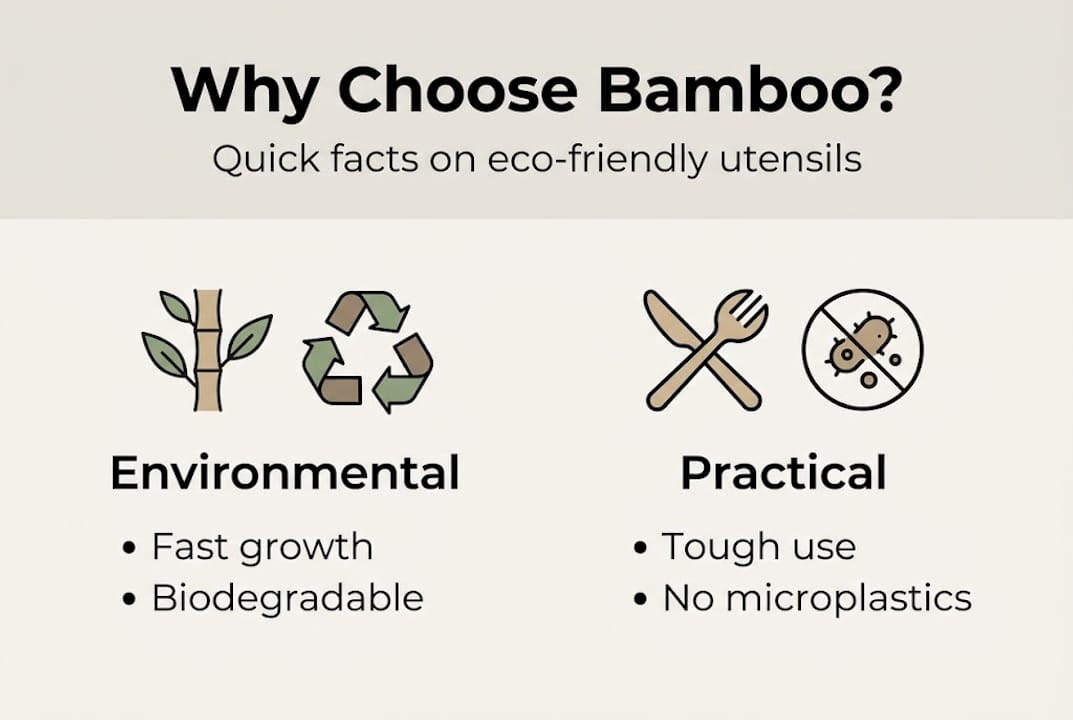
The environmental numbers are genuinely impressive. Research confirms that bamboo utensils carry a carbon footprint of just 0.4 to 0.9 kg CO2e per kg, far below the emissions associated with plastic production. Bamboo also biodegrades in 50 to 120 days under the right composting conditions, compared to hundreds of years for conventional plastic utensils sitting in a landfill. And unlike plastic, bamboo releases zero microplastics into your food or water during everyday use.
Here’s a quick look at what makes bamboo stand out:
Did you know? Bamboo utensils outperform plastic on global warming potential metrics after just two uses. Once you’ve used that bamboo spoon twice, it’s already ahead of its plastic counterpart on environmental impact.
The eco-friendly kitchen solutions angle isn’t just about reducing waste at end of life. It’s about reducing environmental damage at every stage, from growing the raw material to cooking Sunday dinner. If you’re managing a restaurant, coffee shop, or senior living facility, switching your kitchen utensils to solid bamboo is one of the most visible and substantive sustainability moves you can make. Guests notice, staff appreciate the aesthetic, and the purchasing decision genuinely reflects your values. Exploring bamboo kitchenware benefits can help you see just how wide that impact stretches across your entire kitchen setup.
Understanding eco benefits is important, but safety is just as crucial when choosing utensils, especially when you’re feeding guests, running a commercial kitchen, or cooking for your family every single day.
Here’s the good news first. Solid bamboo contains a natural antimicrobial agent called bamboo kun, which actively inhibits the growth of bacteria like E. coli. This gives bamboo utensils a natural safety advantage over plastic, which can harbor bacteria in surface scratches. Solid bamboo is also heat-resistant up to 400°F, meaning it won’t melt or warp on a hot stovetop, and it doesn’t inherently leach any chemicals into your food.
Now for the important warning. Not all bamboo products are solid bamboo. A growing category called bamboo fiber composites, often sold as bamboo dishes, cups, or utensils, is made by grinding bamboo down into a powder and binding it with resins that typically contain melamine or formaldehyde. Testing found that 32% of bamboo fiber composites leached melamine or formaldehyde above regulatory safety limits, particularly when used with hot or acidic foods.
This comparison table breaks down the key differences:
| Feature | Solid bamboo | Bamboo fiber composite |
|---|---|---|
| Antibacterial | Yes, natural bamboo kun | No natural protection |
| Heat resistance | Up to 400°F | Degrades at lower temps |
| Chemical leaching | None | Melamine/formaldehyde risk |
| Dishwasher safe | No (hand wash recommended) | Often labeled dishwasher safe, but risky |
| Safe for hot foods | Yes | Not recommended |
| Best use | Cooking and serving | Decorative only |
Pro Tip: If you’re shopping online or in a store and a bamboo product feels unusually lightweight and has a slight plastic texture, it’s likely a fiber composite. Real solid bamboo feels dense and slightly rough, with visible grain lines. Always check the product description and look for “solid bamboo” or “FSC-certified bamboo” on the label.
The bamboo vs plastic comparison gets much more nuanced once you factor in composite products. What looks eco-friendly on the shelf might not be the safe or sustainable choice it appears to be. The safest path is to stick with solid bamboo from reputable brands, avoid any product labeled “bamboo fiber” or “bamboo composite,” and check for certifications before you buy. For a deeper look at bamboo eco benefits, you’ll find that solid bamboo is in a category of its own when it comes to both health and environmental safety.
Safety matters, but maximizing value and minimizing replacements is a central concern for eco-conscious buyers, and this is where bamboo really rewards people who pay attention.
Mass-market bamboo utensils, typically the inexpensive sets sold in big-box stores, last around 8 to 14 months with daily use. High-quality solid bamboo utensils, maintained properly, can last 2 to 5 years or longer. That’s not a small gap. If you replace a cheap set twice a year, you’re generating more waste and spending more money than someone who invested once in quality bamboo and took basic care of it.
Here’s how to get the most out of your bamboo utensils:
Pro Tip: Make oiling your bamboo utensils part of a monthly kitchen reset routine. Take 10 minutes, rub each piece with a few drops of food-grade mineral oil, let it absorb for an hour, then wipe off the excess. You’ll notice the bamboo looks richer, feels smoother, and stays in great condition season after season.
How does bamboo stack up against alternatives on lifespan and sustainability? Take a look:
| Utensil material | Average lifespan | Biodegradable | Carbon footprint | Microplastic risk |
|---|---|---|---|---|
| Solid bamboo (well-cared) | 2 to 5+ years | Yes, 50 to 120 days | Low (0.4 to 0.9 kg CO2e/kg) | None |
| Mass-market bamboo | 8 to 14 months | Yes | Low to moderate | None |
| Recycled plastic | 12 to 18 months | No | Moderate | Yes |
| Silicone | 5.6 months median | No | High | Low |
| Stainless steel | 10+ years | No | High manufacturing cost | None |
For detailed guidance on keeping your bamboo pieces looking and performing their best, the bamboo product maintenance guide and organizer durability tips are worth bookmarking. A little consistent effort goes a very long way.
Having learned how to care for bamboo utensils, the next step is picking the right products and avoiding common selection mistakes that could leave you frustrated or, worse, with a product that isn’t safe.
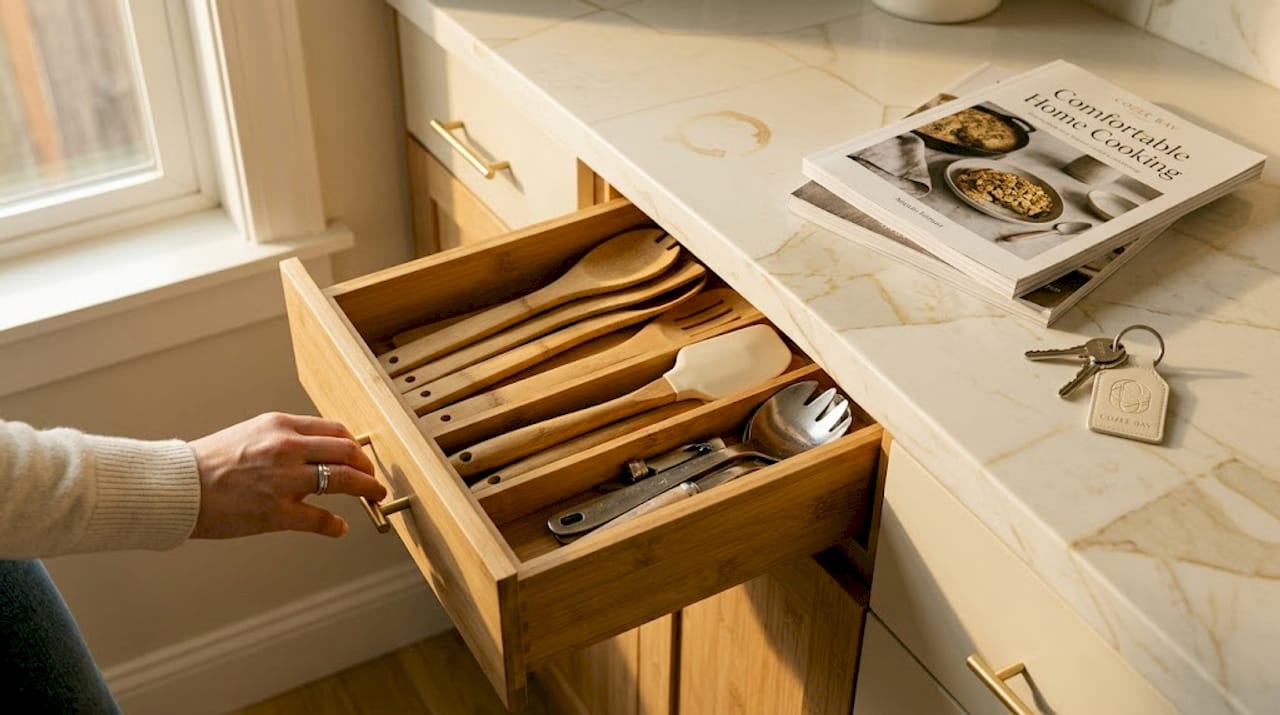
The single most important rule is this: choose solid bamboo, not fiber composite. Solid bamboo utensils are non-scratch, lightweight, and safe for non-stick cookware, which makes them one of the most kitchen-friendly options available. They won’t gouge your pans the way metal utensils can, and they won’t melt or leave residue the way plastic does at higher temperatures. For eco-conscious buyers, FSC-certified solid bamboo from reputable makers like Cuisinart and Totally Bamboo offers a reliable baseline for quality and sustainability.
That said, bamboo isn’t perfect for every kitchen scenario. If you’re dealing with high heat constantly, silicone or stainless steel might hold up better long term. The environmental trade-off is worth knowing: replacing bamboo utensils every 9 months due to poor quality can create a 2.3 times higher carbon footprint than a single long-lasting alternative. That’s the hidden cost of buying cheap.
Here’s what to look for and avoid when selecting bamboo utensils:
For commercial property managers, bamboo utensils also make a strong visual statement about your brand values. A coffee shop or restaurant displaying bamboo serving tools communicates sustainability without needing a single word on a sign. Guests see it, appreciate it, and remember it.
On the eco side, switching to solid bamboo utensils is one of the most practical steps toward reducing kitchen waste since you’re eliminating plastic utensils that would otherwise end up in landfills after just a few uses. The combination of smart selection and consistent care turns a modest kitchen upgrade into a meaningful long-term commitment.
With the practical and selection advice in hand, here’s a perspective that most bamboo guides skip entirely.
Most buyers treat bamboo utensils as a low-cost, low-stakes purchase. They grab a set, use it without much thought, watch it warp or crack within a year, and quietly conclude that bamboo is overrated. What they’re actually experiencing is the result of buying the wrong product and skipping basic care, not a failure of bamboo itself.
The real value of quality bamboo utensils only shows up over time. A $30 solid bamboo set, properly oiled and hand-washed, can outlast three rounds of cheap alternatives. You save money, you reduce packaging waste from repeat purchases, and you keep plastic out of your kitchen for years. That’s genuine return on investment, not just a feel-good choice.
Design value and eco-benefit genuinely go hand in hand here. The homeowners and commercial managers who get the most out of bamboo are the ones who treat their utensils as intentional purchases rather than throwaway items. They also tend to extend that mindset to other areas of their kitchen, from sustainable food bag organizers to thoughtful storage solutions, building a kitchen that’s cohesive, beautiful, and genuinely eco-friendly rather than just eco-adjacent.
The takeaway: don’t let a bad first experience with low-quality bamboo close the door on what high-quality, well-maintained bamboo can do for your kitchen and your environmental footprint.
Ready to take practical steps based on your improved understanding of bamboo utensils?
At Cozee Bay, we’ve built our entire product line around the idea that eco-friendly and stylish should never be a compromise. Whether you’re outfitting a home kitchen, a restaurant, a coffee shop, or a senior living facility, our curated bamboo products are designed to serve you well and look great doing it.

From bamboo paper towel dispensers to food bag organizers, wrap and foil dispensers, and drawer organizers, every product is selected with durability, sustainability, and design in mind. Browse our kitchenware advantages guide to learn more about the specific benefits of our bamboo collection. We offer free shipping within the contiguous U.S. and back every purchase with a money-back guarantee, because we want you to feel as confident in your eco-friendly choices as we do.
High-quality bamboo utensils can last 2 to 5 years or more with proper hand washing and regular oiling, while silicone utensils have a median lifespan of just 5.6 months and mass-market plastic typically falls in the 8 to 18 month range.
Yes, bamboo utensils can break down in 4 to 6 months in a home compost setup, making them one of the most genuinely biodegradable utensil options available.
Solid bamboo handles heat up to 400°F safely and without leaching, but 32% of bamboo fiber composites tested above safe limits for melamine and formaldehyde when exposed to hot or acidic foods, so always check that you’re buying solid bamboo, not a composite product.
Look for FSC-certified solid bamboo from reputable makers, which confirms responsible sourcing and material safety. Avoid any product labeled bamboo fiber, bamboo composite, or bamboo melamine.
Comments will be approved before showing up.