Your Cart is Empty


TL;DR:
- Switching to bamboo flatware is highly sustainable, with a carbon break-even point after just two uses compared to plastic. Its rapid renewability, strength, and natural aesthetics make it an eco-friendly choice for home and commercial settings. However, buyers should verify single-piece construction and FSC certification to ensure safety and quality.
Switching to eco-friendly flatware feels like the right move, but with so many options on shelves and websites, the choices can have you second-guessing every purchase. Here’s the thing most buyers don’t realize: reusable bamboo cutlery reaches carbon break-even with single-use plastic after just two meals, making it one of the fastest-payback eco choices available today. Whether you’re outfitting your home kitchen, planning a catered event, or upgrading your restaurant’s table settings, bamboo flatware delivers on both style and substance. This guide cuts through the noise and gives you clear, practical answers so you can buy with confidence.
| Point | Details |
|---|---|
| Break-even after two uses | Reusable bamboo cutlery beats plastic’s carbon impact after just two uses. |
| Choose single-piece bamboo | Opt for single-piece FSC-certified bamboo to avoid leaching risks from adhesives. |
| Disposable for volume | Disposable bamboo is best for high-volume or regulation-affected food service. |
| Simple care extends life | Hand washing and proper storage help bamboo flatware last for many meals. |
| Sustainable and stylish | Bamboo flatware offers both eco-friendly credentials and natural style for any table. |
Now that you know bamboo outperforms plastic after just two uses, let’s explore what sets it apart as a material and how it fits eco-smart lifestyles.
Bamboo is one of the fastest-growing plants on earth, and that speed is the foundation of its eco advantage. Unlike hardwood trees that take decades to mature, bamboo can be harvested in as little as three to five years. It grows without pesticides, requires very little water compared to cotton or timber, and regenerates from its own root system without replanting. That means less land disruption and lower resource costs right from the start.
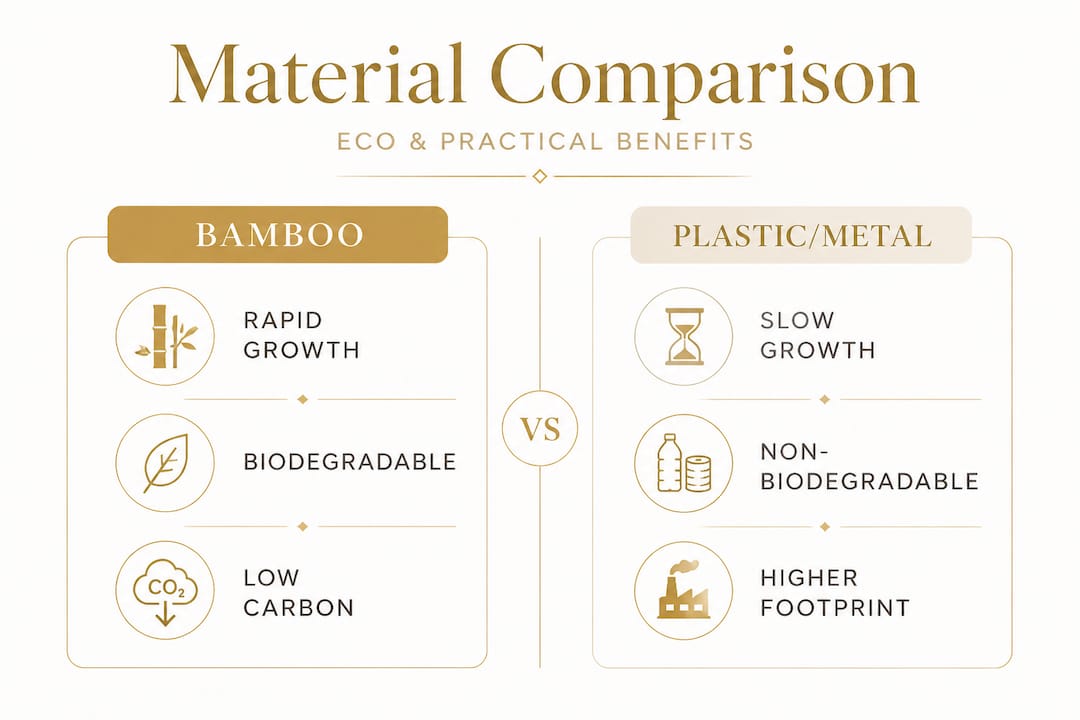
When it comes to flatware specifically, the way bamboo is processed matters just as much as the plant itself. Understanding why bamboo is eco friendly goes beyond the surface: sets made from single-piece bamboo, carved without lamination layers or synthetic adhesives, are the cleanest option you’ll find. They avoid the chemical concerns that come with pressed or layered bamboo board products. And from a strength standpoint, bamboo’s natural fiber structure gives it impressive rigidity for a lightweight material.
Here’s a quick look at what sets bamboo flatware apart from other common options:
“Bamboo isn’t just a trend in eco-friendly kitchenware. It’s a genuinely high-performing material that rewards the right buyer with durability, style, and a measurably smaller footprint.”
If you’re still exploring the full range of sustainable options, bamboo utensils for every space is a great place to dig deeper into how bamboo products translate across different rooms and settings.
After explaining what makes bamboo special, it helps to compare it head-to-head with plastic and metal to clarify its real-world strengths and limitations.
Not all flatware is created equal, and the differences between bamboo, plastic, and metal come down to more than just looks. Here’s a direct comparison across the criteria that matter most to eco-conscious buyers.

| Criteria | Bamboo | Plastic | Metal (Stainless Steel) |
|---|---|---|---|
| Carbon footprint | Very low after 2 uses | High, especially single-use | Moderate to high upfront |
| Biodegradability | Composts in months | Hundreds of years | Does not biodegrade |
| Safety | Safe when single-piece, FSC-certified | Risk of BPA and microplastics | Generally safe and inert |
| Durability | Good with proper care | Low (single-use) or moderate | Very high |
| Aesthetic | Warm, natural, elegant | Utilitarian, limited | Sleek, classic |
| Cost | Affordable for reusable sets | Cheap upfront, costly long-term | Higher upfront, long lifespan |
| Best for | Home, events, restaurants | High-volume disposal only | Everyday home, commercial fine dining |
The numbers make a clear case. Research shows that reusable bamboo cutlery reaches carbon break-even with plastic after just two uses in food delivery contexts, and disposable bamboo often carries a lower global warming potential than plastic even in single-use scenarios. That’s a significant advantage, especially for cafes and restaurants processing hundreds of covers per day.
That said, there are a few nuances worth knowing before you buy. The bamboo vs plastic comparison gets more complex when you factor in laminated bamboo products, which use adhesive layers that can introduce chemical concerns. Always look for single-piece construction and certified sourcing.
Key takeaways from the comparison:
For a deeper look at how these materials perform across your kitchen and bathroom, the bamboo vs plastic guide covers even more ground.
Pro Tip: If you’re purchasing bamboo flatware for a business, ask your supplier whether their products are FSC-certified and request documentation. A credible supplier will always have it on hand.
With the differences clear, the next step is knowing how to choose the right bamboo flatware for your personal or business needs.
Picking the right bamboo flatware isn’t one-size-fits-all. A busy restaurant processing 300 covers per night has very different requirements from a family of four looking to cut plastic out of their daily routine. Here’s how to approach the decision based on your actual situation.
Identify your use case. Reusable bamboo flatware is ideal for home kitchens, picnics, camping trips, and travel. Disposable bamboo flatware, on the other hand, suits high-volume commercial settings like cafes, food trucks, and catered events where washing isn’t practical or efficient.
Check for certifications. FSC (Forest Stewardship Council) certification tells you the bamboo was sourced from responsibly managed forests. Without it, you have no reliable way to verify the product’s eco credentials. This matters especially if you’re making purchasing decisions for a business with sustainability commitments.
Examine the construction. Single-piece bamboo is consistently the best choice. It avoids the lamination and adhesive concerns that can compromise both safety and durability. Run your fingers along edges and surfaces before buying in bulk.
Match the design to your setting. A rustic café or farm-to-table restaurant can lean into bamboo’s natural grain aesthetic with confidence. For more formal dining settings, look for cleanly finished, lightly sanded pieces that offer a polished look without sacrificing the material’s natural warmth.
Evaluate supplier ethics and packaging. An eco-conscious product shipped in layers of bubble wrap and single-use plastic loses credibility fast. Choose suppliers who package sustainably and can speak clearly about their supply chain practices.
Research confirms that reusable bamboo suits home use and picnics well, while disposable bamboo serves commercial, high-volume settings that need to comply with single-use plastic bans. And those bans are spreading. Many U.S. states and cities have enacted legislation restricting single-use plastics in food service, pushing restaurants and cafes firmly toward bamboo and other natural alternatives. Understanding bamboo for your home is a solid resource if you’re still weighing the switch from plastic in your everyday routine.
Statistic to keep in mind: Over 60 countries have introduced some form of single-use plastic regulation as of 2025, and that number continues to grow. Businesses that switch to bamboo now avoid scrambling to comply later.
For high-volume commercial needs like event catering, skewers and specialty bamboo pieces are worth sourcing in bulk. Options like bamboo skewers for bulk needs are a practical complement to a full bamboo flatware setup.
Pro Tip: When buying reusable bamboo for home use, invest in a set of six to eight pieces rather than just four. Bamboo flatware is lightweight, so storage is rarely an issue, and having extras means you’re always prepared for guests without reaching for plastic backup sets.
Once you’ve made your choice, proper care will ensure your bamboo flatware stays beautiful and eco-friendly for the long haul.
Here’s the reality: even the best bamboo flatware won’t last if you mistreat it. The good news is that caring for bamboo is simple once you know the basic rules. Follow these, and your flatware will reward you with years of reliable use.
What to do:
What to avoid:
Research backs this approach: bamboo flatware is sturdy and sustainable when properly cared for, and edge cases like certain adhesives can be avoided entirely by choosing single-piece sets. Quality matters enormously here. A well-crafted piece from a responsible source will hold up far better than a cheap, laminated alternative, even with perfect care.
For specialty pieces like bamboo centerpiece flatware, the same care rules apply. The investment in quality pays off quickly when you’re not replacing worn-out pieces every few months.
Pro Tip: Store your bamboo flatware in a dry, ventilated drawer rather than a sealed container. Airflow prevents moisture buildup between uses, which is one of the most common causes of early deterioration in bamboo kitchen items.
Most eco-friendly buyer’s guides give you the highlight reel: bamboo is fast-growing, biodegradable, and better than plastic. That’s all true. But there’s a layer of nuance that rarely makes it into those articles, and it’s the part that matters most when you’re actually shopping.
The biggest overlooked issue is the difference between laminated bamboo and single-piece bamboo. Many guides treat all bamboo flatware as equivalent, but laminated products, made by pressing bamboo strips together with adhesive, carry real risks. Certain adhesives can leach chemicals into food and drink, especially with heat exposure. This isn’t a hypothetical concern. It’s a documented issue that savvy buyers sidestep by insisting on FSC-certified, single-piece construction.
The second thing most guides skip over is the business context. Plastic bans are accelerating across the country, and many restaurant owners and cafe managers are switching to bamboo reactively, without fully vetting their suppliers. The result? A flood of low-quality bamboo products entering the market, some of which cut corners on sourcing, finish quality, and safety. When you’re buying for a commercial setting, the bamboo vs plastic pros and cons conversation needs to go beyond carbon footprint and include supplier accountability.
Here’s our honest position: bamboo flatware is genuinely excellent when you buy right. The eco story is real. The durability is real. The style is real. But “bamboo” on a label is not a guarantee of quality, and the market has enough mediocre products to make cautious shopping worthwhile. Take the extra five minutes to verify certifications, inspect construction, and understand what you’re paying for. Your table, your guests, and the planet will thank you.
Ready to make your table more sustainable? At Cozee Bay, we’ve built our catalog around the belief that eco-friendly doesn’t mean settling for less.

Every product in our selection is chosen with quality craftsmanship and genuine sustainability in mind. Whether you’re outfitting a home kitchen with elegant reusable flatware or sourcing eco-compliant pieces for a busy café, you’ll find options that look as good as they perform. We offer free shipping within the contiguous U.S., a satisfaction guarantee, and a growing blog packed with practical tips for eco-conscious living. Visit Cozee Bay to explore our full range of bamboo products and find the right fit for your home or business, without the guesswork.
Yes, bamboo flatware biodegrades much faster than petroleum-based plastics, often returning to the earth within a few months under proper composting conditions, compared to hundreds of years for plastic. This rapid biodegradability is one of bamboo’s clearest environmental advantages.
High-quality, single-piece bamboo flatware is generally safe for hot foods, but you should avoid items with lamination or adhesives that may leach chemicals under heat. Choosing FSC-certified bamboo is the most reliable way to minimize risk.
With proper care, reusable bamboo flatware can last for dozens of uses, and research confirms it reaches carbon break-even after just two meals compared to single-use plastic options.
Look for FSC certification as your primary trust signal, since FSC-certified bamboo products ensure the material was sustainably sourced and processed with safety standards in mind.
Comments will be approved before showing up.