Your Cart is Empty


Bamboo’s reputation as an eco-friendly wonder material stems from its astonishingly rapid growth, but that’s only one piece of a much larger sustainability puzzle. Understanding bamboo’s complete lifecycle from underground roots through final product reveals both impressive environmental advantages and important processing considerations. This article breaks down bamboo’s growth phases, carbon sequestration abilities, manufacturing impacts, and practical guidance for making truly sustainable bamboo purchasing decisions.
| Point | Details |
|---|---|
| Rapid regeneration | Bamboo culms reach full height in 60 days and mature groves regenerate annually without replanting through persistent rhizome systems. |
| Carbon capture advantage | Bamboo plantations absorb significantly more CO₂ than many tree stands, locking carbon in biomass and roots. |
| Processing impacts | Chemical-intensive viscose textile production can negate sustainability benefits if not carefully managed. |
| Product durability variation | Strand woven bamboo exhibits far higher hardness ratings than natural or carbonized types, affecting lifecycle performance. |
| Lifecycle assessment complexity | Overall carbon footprint depends on energy sources, supply chain distances, and end-of-life handling rather than bamboo growth alone. |
Bamboo’s growth speed defies expectations. Shoots can grow up to 2.91 feet per day, reaching full height in approximately 60 days. This explosive vertical growth happens only once per culm, as bamboo doesn’t grow wider or taller after this initial period.
Individual culms live about 10 years before dying naturally. However, these dead culms continue nourishing the colony as they decompose, returning nutrients to the soil. The real longevity champion lies underground.
Rhizome root systems persist for decades or centuries, enabling continuous shoot emergence year after year. This perennial underground network eliminates replanting needs, making bamboo harvesting fundamentally different from traditional timber forestry. Two primary rhizome types determine bamboo spread patterns:
Maturity timelines vary significantly by species. Most bamboo groves reach harvestable maturity in 3 to 5 years, though some species require up to 15 years to achieve their largest size potential. This still dramatically outpaces hardwood forests requiring 20 to 50 years before harvest.
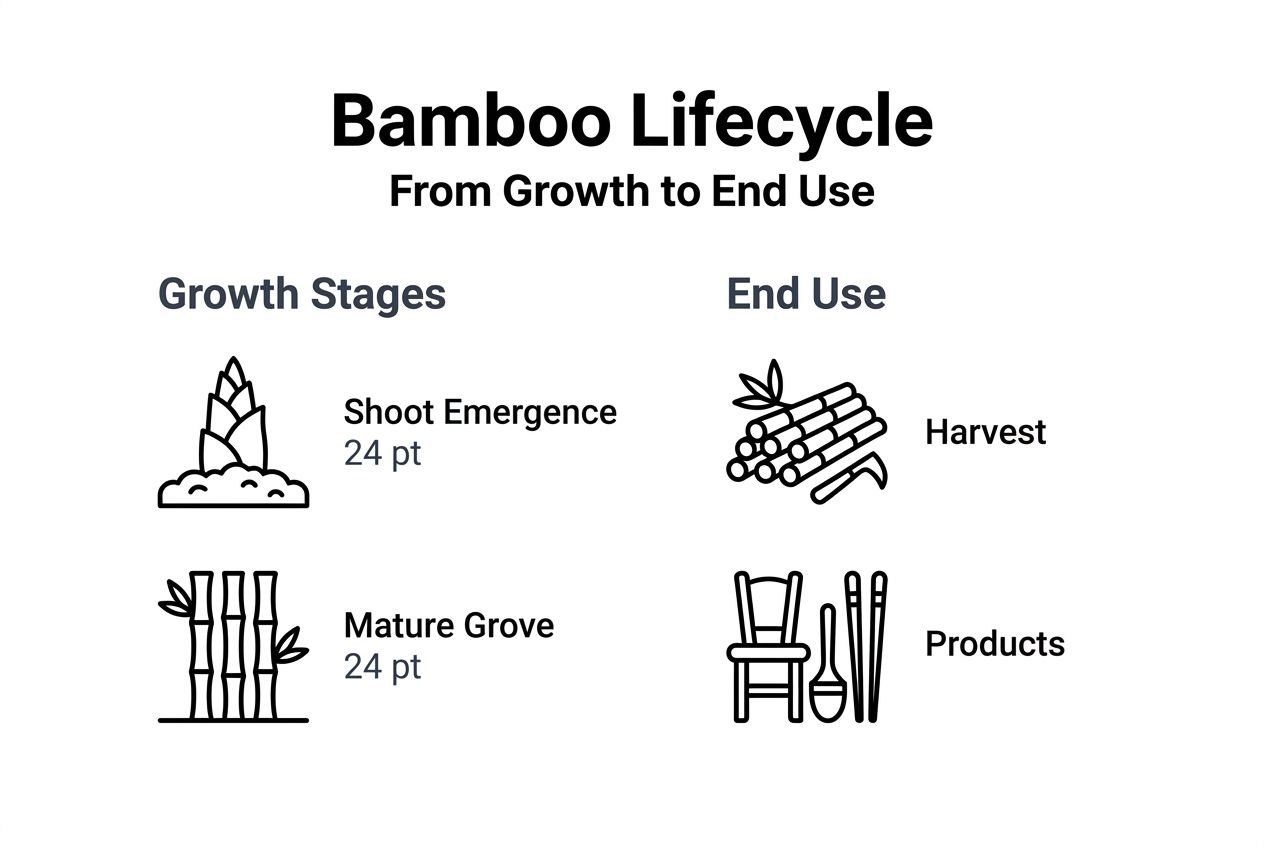
The bamboo product lifecycle begins with this biological foundation. Understanding these growth patterns clarifies why bamboo supports frequent harvesting without ecosystem degradation, a key sustainability advantage over conventional timber.
Pro Tip: When evaluating bamboo sustainability claims, ask about grove age and harvest rotation schedules. Mature groves harvested on 3 to 5 year cycles maximize both yield and ecological benefits.
Bamboo’s rapid growth rate translates directly into impressive carbon sequestration capabilities. The high biomass production means bamboo plantations absorb significantly more CO₂ than many tree stands, locking carbon in both above-ground culms and extensive underground root systems.
Life Cycle Assessments reveal nuanced carbon footprint stories. Studies show bamboo products can achieve CO₂-neutral or negative footprints depending on processing methods and energy inputs. The energy source powering manufacturing facilities dramatically affects final emissions calculations.
Consider this comparison of carbon impacts:
| Material/Process | CO₂ Emissions (kg CO₂e per functional unit) | Notes |
|---|---|---|
| Bamboo construction (renewable energy) | 15 to 25 | Minimal processing, clean energy grid |
| Bamboo construction (coal-heavy grid) | 45 to 65 | Same product, different electricity source |
| Steel framing equivalent | 120 to 180 | Higher embodied energy and emissions |
| Concrete production equivalent | 95 to 140 | Energy-intensive manufacturing |
| Recycled plastic products | 55 to 85 | Lower than virgin plastic but variable |
These figures demonstrate that bamboo’s inherent sustainability advantage can be preserved or squandered based on manufacturing choices. Using renewable electricity during processing maintains low net emissions, while coal-powered facilities significantly increase the carbon footprint.
Bamboo’s global warming potential consistently outperforms steel, concrete, and virgin plastics across most LCA scenarios. The plant’s natural carbon storage combines with lower processing energy requirements to create favorable lifecycle emissions profiles.
“The choice of energy grid represents the single largest variable factor in bamboo product carbon footprints, often exceeding the impact of transportation distances or processing method variations.”
Understanding these bamboo environmental benefits requires looking beyond growth rates to examine entire production chains. Carbon sequestration during cultivation provides an excellent foundation, but maintaining that advantage through manufacturing demands attention to energy sources and processing efficiency.
Transforming raw bamboo into consumer products involves various manufacturing approaches with vastly different sustainability implications. Textile production presents the most significant processing challenge.
Two primary methods create bamboo textiles: chemical viscose processing and mechanical bamboo linen production. The viscose method dominates commercial production despite using harsh chemicals like sodium hydroxide and carbon disulfide. This chemical-intensive approach can negate bamboo’s natural sustainability advantages unless facilities implement closed-loop chemical recovery systems.
Mechanical processing creates bamboo linen through physical crushing and natural enzymes, avoiding toxic chemicals entirely. However, this method remains less common due to higher costs and lower production speeds. The resulting fabric differs in texture and performance from viscose bamboo rayon.
Engineered bamboo products like flooring demonstrate another processing complexity. Three main types exhibit dramatically different durability characteristics:
Strand woven bamboo exhibits higher durability than natural or carbonized versions due to fiber and resin compression. Janka hardness ratings reveal substantial differences:
| Bamboo Type | Janka Hardness Rating | Scratch Resistance | Typical Lifespan |
|---|---|---|---|
| Natural bamboo flooring | 1,300 to 1,400 | Moderate | 15 to 25 years |
| Carbonized bamboo | 1,000 to 1,100 | Lower | 10 to 20 years |
| Strand woven bamboo | 3,000 to 5,000 | Excellent | 25+ years |
| Red oak (comparison) | 1,290 | Moderate | 20 to 30 years |
| Maple (comparison) | 1,450 | Moderate | 25 to 35 years |
Strand woven bamboo’s exceptional hardness comes from intensive processing using adhesive resins. This creates durability that justifies the additional manufacturing energy through extended product lifespan. The bamboo production process must balance processing intensity against final product longevity.

Pro Tip: Request transparency about adhesives and finishes used in engineered bamboo products. Low-VOC, formaldehyde-free options exist and significantly improve indoor air quality impacts over product lifespans.
Chemical treatments during manufacturing represent the primary sustainability concern across bamboo product categories. Careful evaluation of processing methods reveals which products truly deliver on bamboo’s environmental promise versus those that merely trade on the material’s green reputation.
Evaluating bamboo products requires looking beyond marketing claims to examine specific lifecycle factors. Several key considerations determine whether a bamboo product delivers genuine sustainability advantages.
Assess bamboo product sustainability using this systematic approach:
Supplier transparency serves as a crucial indicator. Companies genuinely committed to sustainability readily share information about their cultivation practices, processing methods, and lifecycle assessments. Vague or generic environmental claims without supporting data warrant skepticism.
Avoid products with high chemical processing intensity unless manufacturers demonstrate closed-loop chemical recovery. The environmental cost of toxic chemical use and disposal can easily exceed any benefits from bamboo’s rapid growth. Textile products labeled “bamboo” often mean viscose rayon, so seek specific processing method disclosures.
Energy sources matter enormously. Local supply chains and renewable energy integration maximize bamboo product sustainability in construction and manufacturing. A bamboo product manufactured using coal power in a distant country may carry higher emissions than a locally-produced alternative despite bamboo’s inherent advantages.
Pro Tip: Prioritize bamboo products from manufacturers with credible third-party LCA certifications and verified carbon-neutral claims. Look for specific emissions data rather than generic eco-friendly marketing language.
Product lifespan calculations reveal true sustainability value. A highly durable bamboo product with intensive processing but 30-year lifespan may outperform a minimally processed product requiring replacement every 5 years. Total lifecycle impacts including replacement frequency provide more accurate sustainability assessments than single-product comparisons.
Supporting manufacturers who publish detailed environmental data encourages industry-wide transparency improvements. Your purchasing decisions signal market demand for genuinely sustainable bamboo products versus greenwashed alternatives. Understanding reasons to switch to bamboo helps identify which applications offer the most significant environmental advantages.
Applying this bamboo lifecycle knowledge starts with accessing reliable information and trustworthy product sources. Cozee Bay specializes in eco-friendly bamboo products designed for both residential and commercial applications, with transparent sourcing and sustainability commitments.
Our detailed guides help you evaluate bamboo products across their complete lifecycles. Explore our bamboo product lifecycle explained article for deeper manufacturing insights, or review our eco-friendly bamboo guide for practical purchasing frameworks.

We prioritize products that balance processing efficiency with environmental responsibility, focusing on durable solutions that justify their manufacturing footprints through extended lifespans. From paper towel dispensers to organizational products, each item reflects our commitment to genuine sustainability rather than surface-level green marketing.
Bamboo culms generally live about 10 years before dying naturally, while underground rhizome systems persist for decades or even centuries, enabling continuous regrowth. Product lifespans vary widely: strand woven flooring can last 25+ years, while natural bamboo items may need replacement in 15 to 20 years depending on use intensity.
Most bamboo textiles use chemical-intensive viscose processing involving sodium hydroxide and carbon disulfide, which reduces overall sustainability unless manufacturers employ closed-loop chemical recovery. Mechanical bamboo linen methods exist as more eco-friendly alternatives but remain less common due to higher production costs. Cotton and hemp often present more sustainable textile choices when considering full lifecycle impacts.
Carbon footprint depends primarily on processing methods, manufacturing energy sources, supply chain distances, and end-of-life handling rather than bamboo growth alone. Using renewable energy and local supply chains can reduce emissions by 60% or more compared to coal-powered distant manufacturing. Chemical processing intensity and product durability also significantly affect lifecycle carbon calculations.
Properly managed bamboo harvesting doesn’t harm the environment or require replanting because the underground rhizome system remains intact and continues producing new shoots annually. Selective culm harvesting on 3 to 5 year rotations actually improves grove health by removing older culms and allowing nutrients to support new growth. This differs fundamentally from tree logging that removes entire plants.
Request specific information about cultivation practices, processing methods, energy sources, and third-party lifecycle assessments from manufacturers. Look for transparent data on chemical usage, emissions figures, and certifications from recognized environmental organizations rather than vague eco-friendly marketing language. Companies committed to sustainability readily provide detailed environmental impact documentation.
Comments will be approved before showing up.