Your Cart is Empty


TL;DR:
- Choosing a genuine, eco-friendly bamboo vase involves checking for natural materials and appropriate forms that support your space and arrangement style. These versatile vessels can be styled minimally or in creative groupings, emphasizing restraint and negative space for impactful decor. Proper care and moisture management techniques ensure durability, making bamboo vases a sustainable and elegant choice for various interiors.
Finding a vase that genuinely looks good AND aligns with your eco values is harder than it sounds. Most options land in one of two camps: beautifully designed but made from plastics and resins, or “natural” but so rustic they feel out of place in a modern room. Bamboo vases break that pattern. Lightweight, endlessly versatile, and crafted from one of the world’s fastest-growing plants, they bring warmth and texture to any space without the guilt. This guide walks you through selection criteria, seven creative arrangement ideas, a form-by-form comparison, DIY care tips, and a designer’s honest perspective on why restraint is your best styling tool.
| Point | Details |
|---|---|
| Choose authentic materials | Look for vases made from 100% natural bamboo or bamboo-seagrass blends for eco-friendly assurance. |
| Embrace negative space | Highlight the vase and arrangement using minimalist, ikebana-inspired design for maximum visual impact. |
| Match the form to the space | Pick zundo, tachizuru, or tube shapes based on your arrangement needs and setting. |
| Prioritize moisture management | Use a liner or dried arrangements to keep bamboo vessels mold-free when using water. |
| Dare to go minimal | A single well-placed stem in a striking bamboo vase creates a more memorable focal point than a crowded bouquet. |
Having a beautiful bamboo vase in mind is one thing. Knowing which one will actually work in your space, hold up over time, and support the arrangement you’re planning is another. Start with the basics before you browse.
Material authenticity matters. Not everything sold as a “bamboo vase” is 100% natural. Some products blend bamboo fiber with resins or synthetic coatings to improve durability. If pure eco credentials are your priority, look for labels that specify solid bamboo stalk or 100% natural bamboo vases that use materials like seagrass alongside bamboo wood, with no plastic fillers. Premium options today are marketed as 100% natural materials combining bamboo wood plus seagrass in natural finishes, which is exactly the transparency eco-conscious buyers deserve.
Form shapes function. Bamboo vases can be craft-engineered from bamboo stalk geometry, meaning the stalk’s natural diameter and node spacing influence the silhouette. Traditional Japanese forms like the zundo (a flat-cut tube with wide, even diameter) and tachizuru (a narrowed midsection that creates an elegant waist) remain the most widely adapted shapes for contemporary eco-interiors.
Here are the key criteria to check before buying:
Pairing your vase with the right plants and setting is just as important. Check out these bamboo plant decor ideas for inspiration on what grows and arranges beautifully alongside bamboo.
“Bamboo vases and the choice of arrangement material are inseparable. The vase form itself communicates before a single stem is placed.” — Ikebana Tool editorial team
Pro Tip: Prioritize a sealed interior if you plan to use fresh flowers regularly. If you love the aged, rustic look of raw bamboo, stick with dried botanicals or silk plants so moisture never becomes an issue.
Once you know what to look for, it’s time to get creative. These seven ideas work across residential kitchens, living rooms, hotel lobbies, coffee shops, and beyond. Each one leans into the natural character of bamboo rather than fighting it.
Bamboo vase styling is best approached through ikebana styling basics, where the focus falls on line, negative space, and proportion rather than the volume-heavy bouquets common in Western floral design. That philosophy shapes every idea below.
Minimalist single-stem tabletop. One long branch, one narrow bamboo tube, one surface. This is the most impactful arrangement for a desk, nightstand, or bathroom shelf. The visual weight comes entirely from the branch’s curve against empty space. Use dried eucalyptus or a single dried protea for a result that holds up for months without maintenance.
Grouped trio of varying heights. Cluster three bamboo tubes of different heights together on a dining table or console. Keep the stems within each tube simple, one or two per vase. The group reads as a single composition, and you can swap stems seasonally without replacing the vases. For bamboo living room decor, this trio approach creates a strong centerpiece without dominating the room.
Floor-standing statement piece. A tall zundo-form vase on a bare floor near an entryway or behind a sofa communicates confidence. Place three to five tall dried grasses or a fan of pampas stems inside. The height draws the eye upward and adds natural structure to rooms that feel low and flat.
Hanging wall vase. Bamboo tubes mounted horizontally on a wall, each holding a single dried stem, create gallery-style living art. This works beautifully in a café, spa reception, or a bedroom feature wall. The shadow play from natural light adds depth throughout the day.
Ikebana-inspired asymmetric arrangement. Use a wide zundo vase with a flat-cut top and place stems at sharply contrasting angles, one tall, one low, one forward-leaning. The open space within the arrangement is as intentional as the stems themselves. This approach rewards careful viewing and pairs naturally with a creative bamboo decor philosophy for the whole room.
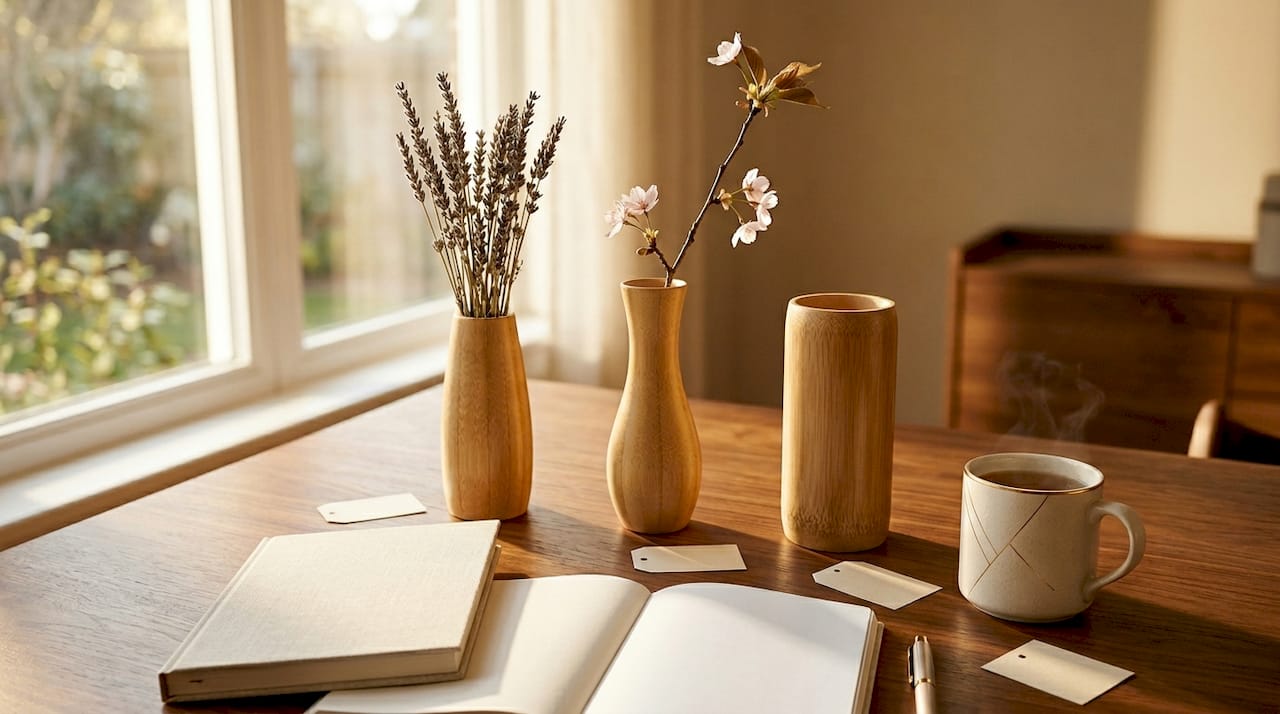
Natural fiber cluster for textural contrast. A bamboo-and-seagrass composite vase filled with cotton stems, wheat grass, or dried lavender creates a layered texture story. This works well on a kitchen counter or café bar where warmth and approachability matter. The natural fiber exterior bridges the gap between the vase and the botanical stems.
Zen corner grouping with stones and moss. Arrange two or three bamboo vases of different diameters alongside river stones and a small patch of preserved moss on a low tray. Add a single dried branch in the tallest vase. This composition works in a meditation corner, a yoga studio, or a hotel suite sitting area. The stones ground the arrangement and prevent the vases from looking like they just arrived on the shelf.
Pro Tip: Combine bamboo vases with low-profile Buddha figures or zen-inspired ceramics to create a layered, elevated display that feels curated rather than cluttered.
With inspiration in mind, you’ll want to select the right form for your specific space. The craft-engineered geometry of bamboo stalks produces four core vase forms, each with distinct strengths. Here’s a clear side-by-side look:
| Form | Opening style | Best use | Arrangement type | Maintenance level |
|---|---|---|---|---|
| Zundo | Wide, flat-cut | Centerpieces, bold displays | Multi-stem, structured | Low to medium |
| Tachizuru | Narrowed midsection | Accent pieces, shelves | Single or paired stems | Low |
| Vertical tube | Narrow, tall | Floor or entryway styling | Tall grasses, branches | Low |
| Horizontal tube | Side-facing opening | Wall art, café installs | Single stems, succulents | Very low |
A few things worth noting as you compare:
When choosing between forms, think about your sightline first. A vase you see from across the room needs height and presence. A vase on a coffee table needs to stay low so it doesn’t block conversation.
If you want to make your own, or simply keep your bamboo vase in prime shape, a few practical steps make a big difference. Bamboo is genuinely durable, but it does have one weakness: moisture.
Making a basic bamboo tube vase:
For a more in-depth walkthrough of crafting your own pieces, the DIY bamboo decor guide covers a range of projects with clear instructions.
Moisture management options at a glance:
| Method | Best for | Eco score | Ease of use | Mold risk |
|---|---|---|---|---|
| Plastic baggie liner | Fresh flowers | Medium | High | Low |
| Glass tube insert | Fresh stems, precise | High | Medium | Very low |
| Resin interior seal | Repeated fresh use | Low to medium | Low (one-time) | Very low |
| No lining (dried/silk only) | Dried, preserved plants | Very high | Very high | None |
A detailed breakdown of how to make a bamboo vase at home confirms that eco-conscious makers regularly use the simple plastic bag interior trick when fresh stems are needed. It works, it’s easy, and it keeps the exterior looking flawless.
Pro Tip: For eco-purists who love the weathered, aged look of raw bamboo, skip the water entirely and use only dried or silk plants. Let the bamboo develop its natural patina over time for a genuinely organic aesthetic.
Here’s an honest perspective most decor guides won’t give you. There is a persistent instinct in Western interior styling to fill every vase, pile on the stems, and create abundance. That instinct fights against everything that makes bamboo vases so effective.
The most impactful bamboo vase displays we see in boutique hotels, progressive cafés, and well-designed homes all share one trait: restraint. A single dried branch in a floor vase. Two stems in a grouped trio. Empty space that your eye travels through before it reaches the plant. That emptiness is not laziness. It is the point.
Ikebana, the Japanese art of flower arrangement, teaches that negative space carries as much visual weight as the stems themselves. When you give a bamboo vase room to breathe, the vase becomes part of the composition instead of just a container. You start to notice the texture of the bamboo wall, the shadow it throws, the warmth of the grain. A vase packed with stems hides all of that.
The lesson transfers directly to smart bamboo decoration at every scale, from a bathroom shelf to a hotel lobby. Less arrangement effort often produces more design impact, which is a genuinely counterintuitive idea worth sitting with.
If you have been pulling your hair out trying to make a bamboo vase look right and it keeps feeling off, try removing stems rather than adding them. Start with one. See what happens.
Ready to put these ideas into action or take your eco-interior vision further? At Cozee Bay, you’ll find a thoughtfully curated range of handcrafted bamboo products designed for both residential and commercial spaces. Whether you’re refreshing your home, designing a café corner, or updating a lobby area, bamboo decor brings natural warmth and genuine sustainability together without compromise.

Explore the full range of bamboo decor ideas on the Cozee Bay blog for room-by-room styling guides, product spotlights, and practical tips that help you build a space that looks beautiful and treads lightly on the planet. Free shipping within the contiguous U.S. and a money-back guarantee mean you can shop with confidence.
Yes, bamboo vases can hold fresh flowers if you use a sealed or lined interior, such as a glass tube insert or plastic baggie, but unmanaged moisture can lead to mold. A plastic baggie barrier inside the bamboo tube is a simple, effective solution.
Place a plastic liner or small glass tube filled with water inside the bamboo chamber rather than pouring water directly into the stalk. If mold prevention is a concern, the easiest fix is choosing dried or silk arrangements so no water enters the bamboo at all.
Bamboo vases suit single stems, dried grasses, branches, or sparse botanical arrangements where space between elements is intentional. Styling them around ikebana principles of line, negative space, and proportion consistently produces the most elegant results.
Absolutely. A basic bamboo tube vase requires only a stalk section, a saw, sandpaper, and an optional sealant. Detailed steps for cutting and shaping bamboo stalks for arrangement vases are widely accessible, and the process is beginner-friendly.
Not automatically. Many premium products qualify by using only natural materials, and 100% natural options made from bamboo wood and seagrass with natural finishes do exist. Always check product descriptions for synthetic coatings, resin fillers, or non-disclosed materials before buying.
Comments will be approved before showing up.