Your Cart is Empty


TL;DR:
- Choosing bamboo spoons promotes sustainability when they are used and maintained properly over time. They are renewable, biodegradable, and resist stains and odors, making them an eco-friendly kitchen option. Proper care, including hand washing and occasional oiling, ensures their longevity and maximizes environmental benefits.
You’ve seen bamboo spoons everywhere lately, lined up in lifestyle stores and popping up in eco-conscious kitchen roundups. But here’s the thing most people miss: grabbing a bamboo spoon off the shelf does not automatically make your kitchen greener. The real story is more nuanced, and frankly, more interesting. When you understand why bamboo spoons work, how to care for them, and how to integrate them thoughtfully, you get a kitchen tool that genuinely earns its eco reputation while looking beautiful doing it.
| Point | Details |
|---|---|
| Bamboo is genuinely sustainable | Bamboo spoons offer measurable environmental benefits when reused and properly cared for. |
| Durability drives value | High-quality bamboo utensils last for years if maintained, outperforming many disposables. |
| Care and usage matter | Hand washing and mindful storage prevent early failure, maximizing bamboo’s eco impact. |
| Style meets function | Bamboo spoons blend natural aesthetics and practicality in modern kitchens. |
| Intentional adoption is key | Sustainability comes from mindful usage, not just material choice. |
Now that we’ve set the stage, let’s explore why bamboo spoons stand out as a smart, sustainable kitchen investment.
Bamboo grows remarkably fast, reaching full maturity in three to five years compared to decades for hardwood trees. That speed alone makes it one of the most renewable materials available for kitchen products. When you pick up a bamboo spoon, you’re holding something that was harvested without destroying a forest or depleting a slow-growing resource. That’s a genuinely meaningful difference.
Beyond renewability, bamboo carries a low carbon footprint during both growth and processing. The plant naturally sequesters carbon as it grows, and the manufacturing process for bamboo utensils typically requires less energy than producing stainless steel or plastic alternatives. Exploring eco-friendly kitchen solutions can help you see how bamboo fits into a broader, mindful kitchen upgrade.
Here’s what makes bamboo spoons especially practical day to day:
The deeper sustainability case is where bamboo really shines. Research confirms that the strongest environmental case for bamboo substitution comes when products are reused sufficiently and maintained properly. In other words, buying bamboo matters far less than actually using it well and keeping it in good shape for years. That reframing changes how you should think about every bamboo item in your kitchen, including spoons. You can learn more about this in our bamboo kitchenware advantages guide.
“A bamboo spoon sitting unused in a drawer, or one tossed after a month, delivers almost no environmental benefit. The magic is in the everyday use.”
When you commit to bamboo spoons as your go-to cooking utensil rather than a novelty item, you’re making a real choice, not just a feel-good purchase.
Understanding bamboo’s strengths leads naturally to a comparison. How does it stack up against the alternatives you might already use?
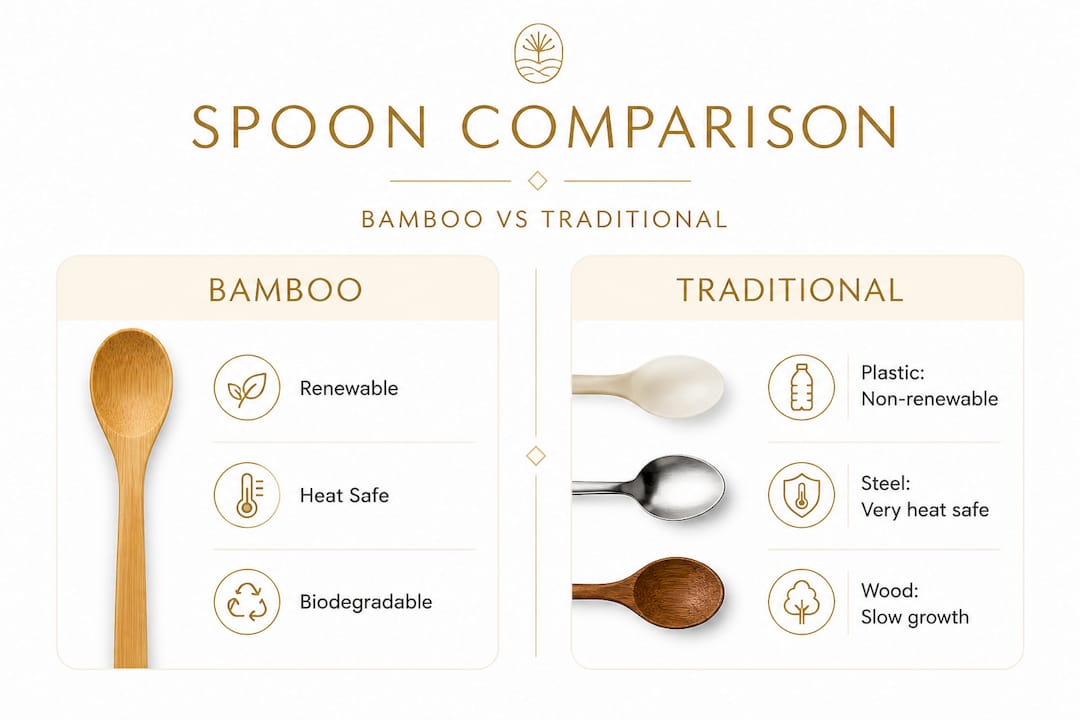
Most kitchens are a patchwork of materials: a plastic spatula here, a stainless steel ladle there, maybe an old wooden spoon passed down from a parent. Each material has trade-offs, and bamboo holds its own impressively well when you lay them all out side by side.
| Feature | Bamboo | Plastic | Stainless steel | Wood |
|---|---|---|---|---|
| Heat resistance | High | Medium | Very high | High |
| Biodegradable | Yes | No | No | Yes |
| Stain resistance | High | Low | High | Medium |
| Taste neutral | Yes | Varies | Yes | Varies |
| Dishwasher safe | No | Often yes | Yes | No |
| Eco-friendly | High | Low | Medium | Medium |
| Lifespan (maintained) | 3 to 7 years | 1 to 3 years | 10 or more years | 2 to 5 years |
Plastic spoons might seem convenient, but they degrade over time and can leach trace chemicals when exposed to high heat repeatedly. Stainless steel is durable but requires significant energy to produce and doesn’t offer the warmth or aesthetics that bamboo brings to the table, literally. Traditional wooden spoons can be beautiful, but they’re often more porous than bamboo and more prone to splitting and absorbing odors over time.
Key advantages bamboo spoons hold over the competition:
Research also backs the lifecycle advantage. Prioritizing reusable products and avoiding early failure maximizes bamboo’s sustainability benefits compared to any disposable or frequently replaced alternative. The takeaway is simple: a bamboo spoon you actually use and care for beats just about everything else on both practical and environmental grounds.
Once you’ve chosen bamboo spoons, protecting their longevity lets you experience their full value.
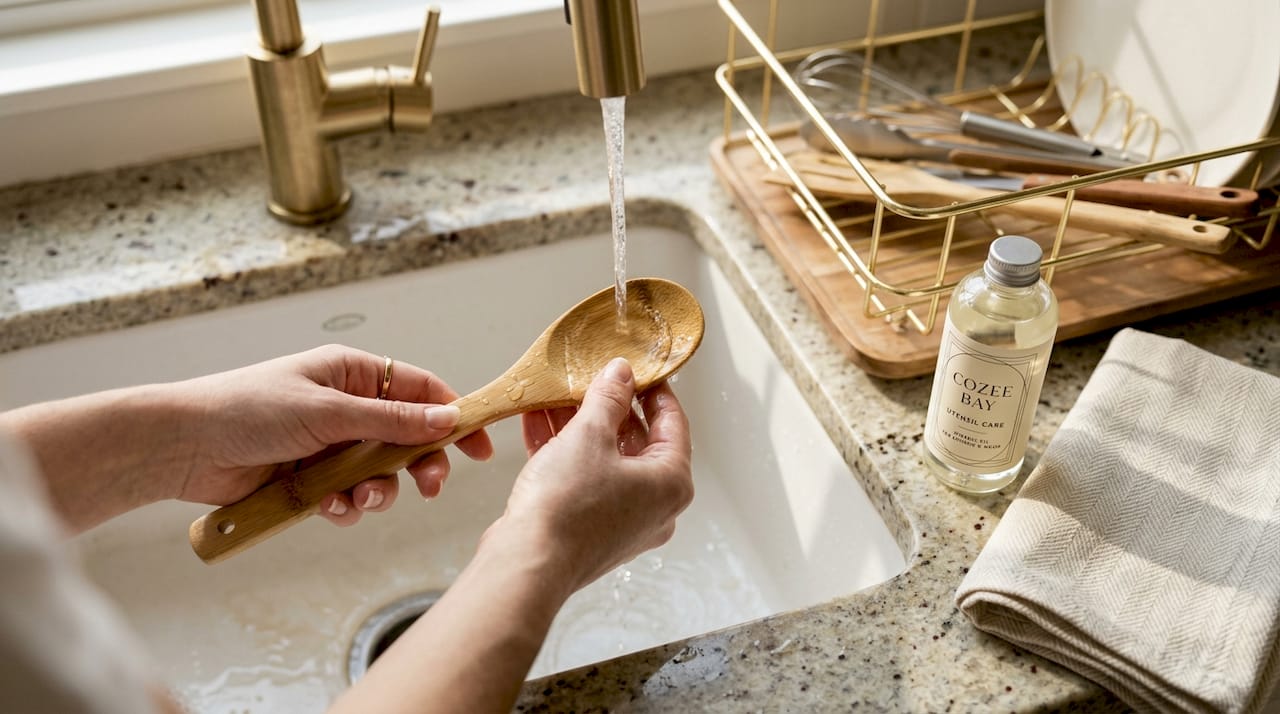
This is where a lot of people go wrong, and it’s honestly an easy fix once you know what to do. Bamboo requires a bit more intentional care than tossing everything in the dishwasher, but the routine takes almost no extra time once it becomes habit. Good care is also where the sustainability payoff really builds, because handling and care for reusable bamboo products, avoiding early failure, is key for achieving meaningful sustainability benefits.
Follow these steps to keep your bamboo spoons in top shape:
There are a few habits to break, too. Never soak bamboo spoons in water, even briefly. Never run them through the dishwasher. The high heat and prolonged moisture exposure will warp and split bamboo quickly, ending its useful life far too soon. For a more detailed routine, our guide on how to maintain bamboo utensils walks you through everything step by step.
Pro Tip: Keep a small bottle of food-grade mineral oil next to your dish rack. After you dry your bamboo spoons, it takes literally five seconds to run a few drops through the grain. Doing this consistently every couple of weeks is the single biggest thing you can do to extend their lifespan.
Bamboo spoons are not fragile, but they do reward a little attention. Treat them well and they’ll stay smooth, sturdy, and good-looking for years.
Caring for bamboo spoons is one part of the equation. Next, let’s look at creative ways to use them in beautiful, sustainable kitchen spaces.
The practical side of bamboo spoons is easy to love, but their design value is just as real. Whether you manage a busy restaurant kitchen or are upgrading your home cooking space, bamboo adds a warmth and visual consistency that plastic and metal simply can’t match. Research supports this approach, confirming that using bamboo for aesthetic enhancement aligns naturally with eco-conscious design principles.
Here are practical ways to integrate bamboo spoons and utensils across different settings:
| Setting | Bamboo integration idea | Key benefit |
|---|---|---|
| Home kitchen | Utensil crock on the counter | Accessible, attractive everyday display |
| Restaurant kitchen | Bamboo serving spoons at stations | Visual consistency, eco brand signal |
| Coffee shop | Bamboo stirrers and spoons at the bar | Sustainable guest experience |
| Senior living center | Bamboo utensils in dining settings | Warmth, safety on nonstick surfaces |
| Schools and cafeterias | Bamboo spoons for serving | Durable, non-toxic, eco-positive messaging |
For homeowners, pairing your bamboo spoons with other sustainable materials amplifies the effect. A kitchen that uses bamboo consistently, rather than mixing in random plastic pieces, feels more intentional and polished. You can find inspiration in our collection of bamboo design inspirations for eco-friendly spaces.
Pro Tip: If you manage a commercial kitchen, standardizing your serving utensils with bamboo creates a unified look that reinforces your sustainability story. Guests and customers notice these details, and they build trust in your brand values.
For anyone ready to take a broader look at what bamboo can do across the whole home, browsing top bamboo home products gives a solid overview of what works well together.
Here’s the honest part that most eco-focused articles skip over.
Buying a bamboo spoon does not make you environmentally responsible. We know that sounds blunt, but it’s worth saying clearly because the “green purchasing” trap is real. People swap their plastic utensils for bamboo ones, feel good about it, and then forget to care for them properly. The bamboo spoon ends up warped in a drawer after two months, replaced by another one, and the cycle repeats. That pattern delivers almost no sustainability benefit.
The research is unambiguous: measurable sustainability benefit with bamboo depends on repeated use and avoidance of premature product failure. It’s not about the material sitting in your cart. It’s about how many times that spoon stirs your morning oatmeal or serves your family’s dinner over the next five years.
What we’ve seen, after working with eco-conscious homeowners and commercial managers alike, is that the people who get the most out of bamboo products are the ones who approach the switch deliberately. They’re not chasing a trend. They’re building a kitchen where every tool is chosen with intention and treated with care. That shift in mindset is the real upgrade.
Think of it this way: if you’re making bamboo utensil choices based on style and sustainability, commit to the care habits that make those choices pay off. The combination of smart selection and consistent maintenance is what actually moves the needle.
Don’t let bamboo become your next short-lived impulse buy. Let it become the kitchen staple you reach for every single day.
Ready to put these ideas into practice? At Cozee Bay, we’ve built our entire collection around the belief that sustainable living should look as good as it feels.

From handcrafted bamboo paper towel dispensers used in restaurants, schools, churches, and senior living centers, to food bag organizers, wrap and foil dispensers, and drawer organizers, every product is designed to make eco-conscious living effortless and stylish. Whether you’re upgrading your home kitchen or outfitting a commercial space, you’ll find tools that balance beautiful design with genuine function. Explore the full Cozee Bay collection and take the next step in building a kitchen you’ll feel good about every day. Free shipping within the contiguous U.S. and a money-back guarantee make it easy to start.
Yes, bamboo spoons are heat resistant and do not leach chemicals, making them safe and practical for cooking with hot foods on the stovetop.
With regular oiling and hand washing, bamboo spoons can last several years, and prioritizing maintenance consistently extends their life well beyond most disposable or lower-quality alternatives.
No. It’s best to hand wash bamboo spoons because the dishwasher’s high heat and moisture will cause warping and splitting, and avoiding early failure is essential for keeping bamboo products functional long term.
Yes, bamboo spoons are renewable and biodegradable, and bamboo’s environmental advantage over plastic grows significantly the more often you reuse them over time.
Bamboo spoons resist stains and odors well, especially when washed promptly after use. Their natural density and longevity make them one of the more hygienic and low-maintenance utensil options available.
Comments will be approved before showing up.