Your Cart is Empty


Walking through aisle after aisle lined with so-called green products, many eco-conscious homeowners question what really makes something biodegradable. The promise of truly sustainable homeware is clouded by confusing terminology and a lack of clear standards. This guide brings clarity to biodegradable homeware definitions and myths, helping you spot what matters so your choices benefit both your home and the environment.
| Point | Details |
|---|---|
| Understanding Biodegradability | Biodegradable homeware requires specific conditions for effective decomposition; not all products break down in regular landfills. |
| Material Selection Matters | Prioritize products made from inherently biodegradable materials like bamboo, which degrade naturally without special conditions. |
| Certification is Key | Look for verified certifications on labels to ensure biodegradability claims are legitimate and match disposal capabilities. |
| Environmental Impact Depends on Disposal | Real benefits of biodegradable homeware depend on matching the product’s disposal method with your infrastructure, such as composting options. |
Biodegradable homeware sounds straightforward until you start reading labels. The reality is more complicated. Biodegradable homeware refers to products designed to break down naturally through the action of microorganisms like bacteria and fungi, eventually returning to the earth.
The key challenge? Biodegradation lacks universal standards. What one manufacturer calls biodegradable might require years to decompose, while another product breaks down in months. This inconsistency creates real confusion for eco-conscious shoppers trying to make informed choices.
Understanding biodegradable materials versus compostable products is essential. These terms get thrown around interchangeably, but they describe different processes. Biodegradable materials break down over undefined time periods under various conditions, while compostable items decompose into nutrient-rich soil within specific timeframes in controlled environments.
Here are misconceptions that mislead even careful consumers:
“Biodegradable means it will decompose anywhere.” Most biodegradable products require specific conditions—proper moisture, oxygen, and temperature—to break down effectively. Throwing them in a landfill won’t help.
“All biodegradable products are compostable.” Biodegradable items degrade through natural processes, but they may not produce useful compost. The distinction matters for disposal.
“Biodegradable means zero environmental impact.” These materials still consume resources during manufacturing. They’re better than conventional options, but not perfectly sustainable.
“The label tells the complete story.” Marketing claims often lack verification. Many bioplastic products marketed as biodegradable don’t actually degrade without industrial composting conditions.
Biodegradable doesn’t automatically mean eco-friendly without proper disposal methods and verified standards backing the claim.
Products made from natural materials like bamboo represent a clearer path. Bamboo-based homeware, including items like paper towel dispensers and drawer organizers, degrades predictably because the material itself is inherently biodegradable—no special additives or marketing claims needed.
When shopping, look for products certified by organizations that verify biodegradability claims. Labels matter, but certifications matter more. Check whether the product requires industrial composting or can break down in home compost systems.
Pro tip: Ask manufacturers about specific degradation timelines and required conditions before purchasing. Products with clear, measurable claims (“breaks down in 90 days in industrial composting facilities”) beat vague promises every time.
Biodegradable homeware comes in several material categories, each with distinct properties and uses. Understanding what you’re buying helps you make choices aligned with your sustainability goals. The materials fall into two main groups: those derived from renewable sources and traditional materials enhanced with biodegradable additives.
Bioplastics from renewable sources are made from plants like corn, sugarcane, and cellulose. These materials mimic conventional plastics in appearance and function but break down naturally over time. They work well for items like food storage containers, disposable serving pieces, and lightweight homeware.
Bamboo and wood-based materials offer the clearest biodegradable path. Bamboo grows rapidly, requires minimal processing, and degrades predictably without special additives. Paper towel dispensers, drawer organizers, and kitchen accessories made from bamboo represent genuinely sustainable choices because the material itself is inherently biodegradable.
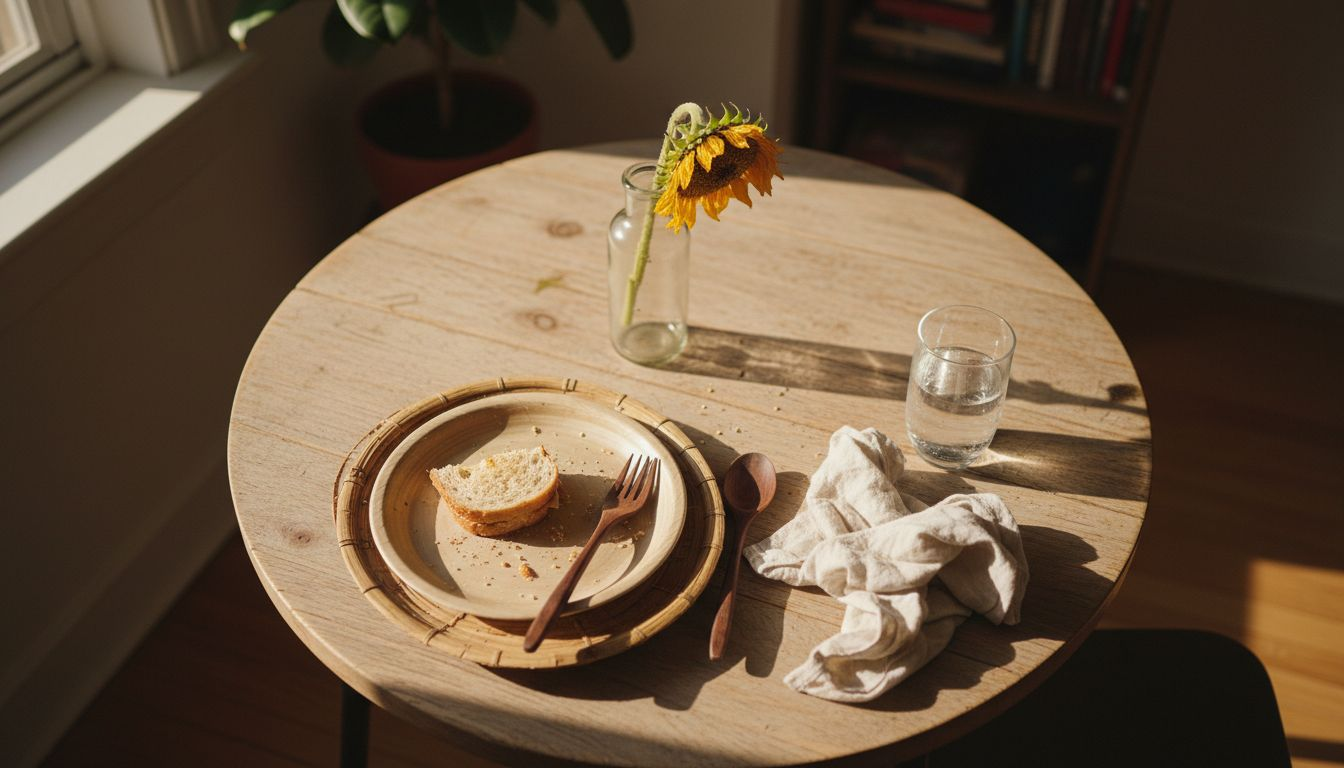
Here are the primary materials used in eco-friendly homeware:
Here’s a summary of key biodegradable materials used in homeware and their ideal disposal methods:
| Material Type | Typical Homeware Uses | Breakdown Time | Best Disposal Method |
|---|---|---|---|
| Polylactic Acid | Food containers, cups | 3-6 months | Industrial composting |
| Polyhydroxyalkanoates | Cutlery, bags | 2-6 months | Home or industrial compost |
| Starch-based Blends | Kitchen wraps, plates | 6-12 months | Home composting |
| Natural Fibers | Storage baskets, linens | 6-12 months | Home compost or landfill |
| Bamboo Composites | Drawer organizers, dispensers | 1-3 years | Soil or landfill |
Polylactic acid (PLA) comes from corn starch and breaks down in industrial composting facilities within 3-6 months
Polyhydroxyalkanoates (PHA) degrade in both industrial and home composting environments, offering flexibility in disposal
Starch-based blends combine starches with other polymers to create flexible, degradable items for kitchen use
Natural fibers like jute, cotton, and hemp provide durable, fully biodegradable options for storage and organization
Bamboo fiber composites blend bamboo with natural binders for strength while maintaining complete biodegradability
The biodegradability standards for different bioplastics vary significantly. Industrial compostable plastics require 58°C temperatures and controlled moisture for 12 weeks, while home compostable items work at cooler temperatures but take longer.
Material type matters less than disposal capability—choose items that degrade under conditions available to you.
Bamboo-based homeware products sidestep these complications entirely. There’s no special composting requirement because bamboo biodegrades naturally in soil, landfills, and home settings. This makes bamboo products from Cozee Bay a straightforward sustainable choice for homeowners.
When evaluating materials, check what certification standards the product meets. Look for certifications from recognized bodies that verify degradation claims beyond marketing language.
Pro tip: Prioritize materials that match your actual disposal options—home compostable items if you compost, or naturally biodegradable materials like bamboo if you don’t.
Biodegradable homeware doesn’t just disappear on its own. It requires specific conditions and active biological processes to break down effectively. Understanding how these products actually function helps you use them correctly and dispose of them properly.
The core mechanism involves microorganisms breaking down materials into natural elements. Bacteria and fungi produce enzymes that chemically separate the polymer chains in biodegradable products, converting them into water, carbon dioxide, and biomass. This process doesn’t happen instantly—it requires the right environment.
How microorganisms enzymatically break down materials depends on temperature, moisture, oxygen levels, and microbial presence. Home composting typically maintains cooler temperatures around 50-60°F, while industrial facilities reach 140°F or higher, accelerating decomposition significantly.
Biodegradable homeware performs differently depending on its environment:
In home compost: Slower decomposition over 6-12 months; requires active management and turning
In landfills: May persist indefinitely without oxygen and proper moisture conditions
In municipal composting: Breaks down within 3-6 months under controlled temperature and microbial conditions
In soil: Natural degradation occurs over 1-3 years depending on material type and climate
In water: Most biodegradable plastics degrade slowly; some may fragment but not fully decompose
Bamboo products sidestep these complications because they don’t rely on microorganism activity the same way. Bamboo naturally degrades through physical breakdown and fungal action in soil, working in virtually any condition without special requirements. Paper towel dispensers and drawer organizers made from bamboo begin degrading immediately when exposed to moisture and soil microbes.
Biodegradable homeware functions best when you understand its specific degradation pathway and provide appropriate disposal conditions.
Most biodegradable versus compostable products require proper disposal to achieve their intended function. Throwing them in regular trash defeats the purpose because landfill conditions don’t support degradation.
The key is matching the product to your disposal capability. If you compost, choose home compostable items. If you don’t compost, prioritize naturally biodegradable materials like bamboo that degrade in standard soil conditions.
Pro tip: Check product labeling for specific degradation conditions required, then verify you can actually provide those conditions before purchasing.
Biodegradable homeware offers real environmental advantages, but the full picture requires honest assessment. The benefits are significant when products are disposed of properly, but they diminish without appropriate infrastructure and consumer action.
Reduced landfill waste stands as the primary benefit. Traditional plastics persist for centuries, occupying valuable space in landfills. Biodegradable alternatives break down within years or decades, significantly reducing long-term landfill burden and freeing up disposal capacity.
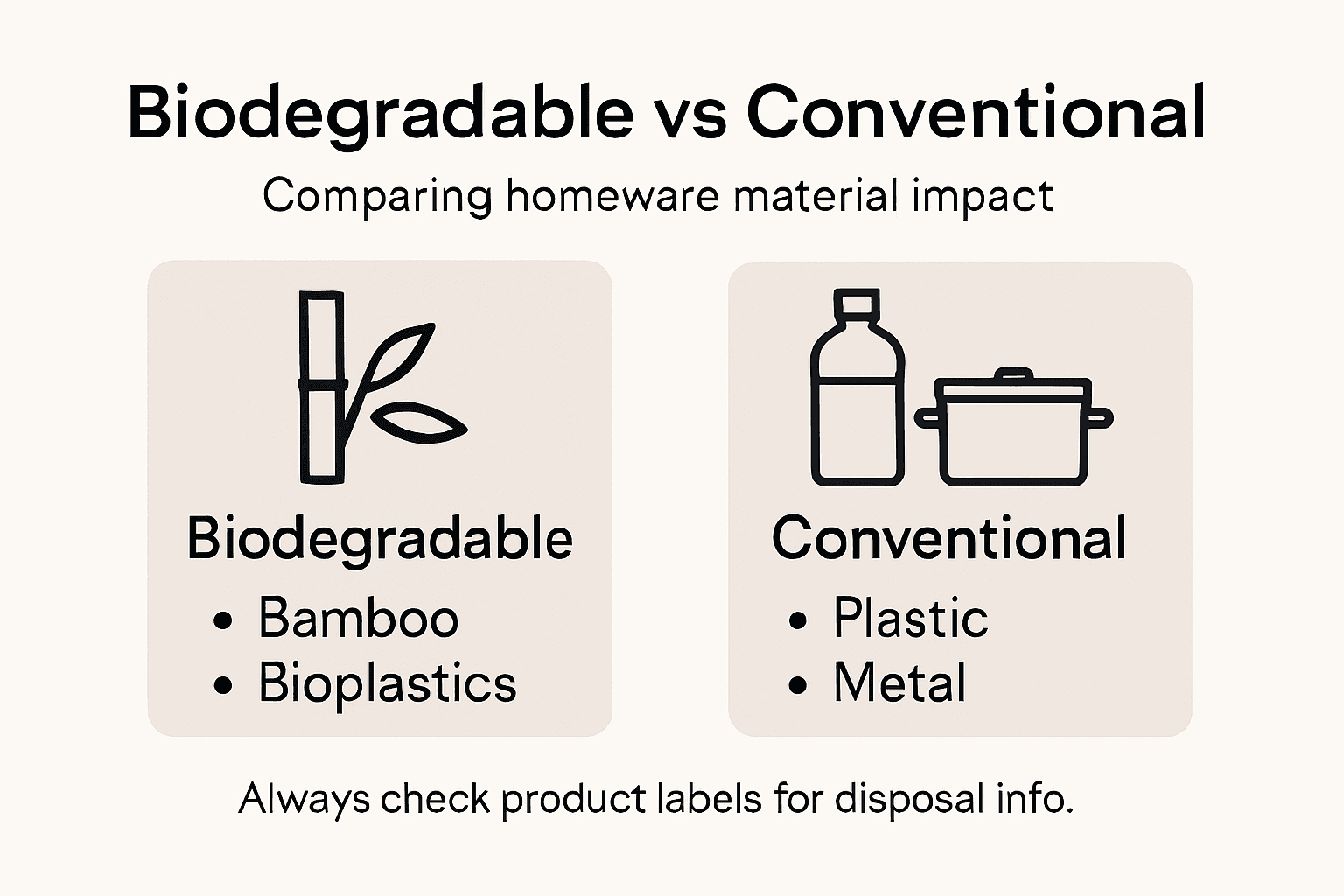
Lower greenhouse gas emissions represent another major advantage. Manufacturing biodegradable materials from renewable sources generates fewer emissions than extracting and processing petroleum for conventional plastics. Additionally, decomposition produces less methane in controlled environments compared to traditional plastic degradation in anaerobic landfills.
Biodegradable homeware delivers multiple sustainability advantages:
Reduced microplastic pollution in oceans and soil from fragmenting conventional plastics
Lower resource extraction when materials come from renewable sources like plants and bamboo
Decreased chemical leaching into groundwater from synthetic plastic additives
Support for circular economy models where materials return to soil as nutrients
Preserved wildlife habitats by reducing petroleum drilling and mining operations
However, biodegradable plastic benefits depend heavily on proper disposal infrastructure. Without access to industrial composting facilities or home composting systems, these products deliver minimal environmental advantage. They still occupy landfills indefinitely, defeating the purpose.
True environmental benefit comes from matching product type to your actual disposal capability, not just purchasing the eco-friendly label.
Bamboo products sidestep these complications entirely. Understanding environmental benefits of bamboo reveals why it stands apart—bamboo grows rapidly without pesticides, requires minimal processing, and degrades naturally in any soil condition. You don’t need special composting facilities or perfect disposal systems.
Biodegradable materials in waste streams can also contaminate conventional recycling. Many recycling facilities aren’t equipped to separate compostable plastics from standard recyclables, causing processing problems. This unintended consequence highlights why choosing truly biodegradable materials matters more than technically compostable ones.
Your purchasing decisions create real impact. Choosing products made from inherently biodegradable materials like bamboo ensures environmental benefits regardless of disposal method. These choices build market demand for sustainable homeware, encouraging manufacturers to expand eco-friendly options.
Pro tip: Prioritize biodegradable materials that degrade without special infrastructure—like bamboo—rather than relying on composting facilities that may not exist in your area.
The choice between biodegradable and conventional homeware requires understanding real trade-offs, not just environmental marketing. Both options have genuine strengths and weaknesses that affect your decision.
Conventional plastic homeware dominates the market for good reasons. It’s durable, affordable, and widely available. A conventional plastic trash bag organizer might cost $8, while a biodegradable alternative costs $15. Conventional products also perform predictably—they last decades without degrading, which matters for items you rely on daily.
But this durability becomes a liability after use. Conventional plastics persist for 400+ years in landfills, fragmenting into microplastics that contaminate soil and water. They require petroleum extraction, generating significant carbon emissions during manufacturing and transport.
Understand these practical distinctions:
To help you decide between homeware options, here’s how biodegradable, bamboo, and conventional materials compare:
| Criteria | Biodegradable Plastics | Bamboo Products | Conventional Plastics |
|---|---|---|---|
| Environmental Impact | Lower, if properly disposed | Minimal, degrades naturally | High, long-lasting pollution |
| Durability | Moderate, breaks down over years | Good, stable for daily use | Very high, lasts decades |
| Disposal Needs | Composting facility required | No special disposal needed | Landfill, rarely recycled |
| Typical Cost | 30-50% above conventional | Similar to other green products | Lowest, mass market pricing |
Durability: Conventional plastics last indefinitely; biodegradable items degrade within years to decades
Cost: Conventional products cost 30-50% less due to established manufacturing infrastructure
Performance: Conventional materials resist moisture and temperature extremes better than most biodegradable options
Disposal: Conventional plastics require landfill space; biodegradable items need proper composting or soil conditions
Manufacturing emissions: Biodegradable from renewable sources typically generates lower production emissions
The breakdown time differences between biodegradable and conventional plastics are dramatic. Conventional plastic bags persist for centuries while most biodegradable alternatives break down within 1-5 years under proper conditions. However, without those proper conditions, biodegradable products stall indefinitely, matching conventional plastic persistence.
The real comparison isn’t biodegradable versus conventional—it’s what you can actually do with each product after use.
Bamboo homeware offers a third path. Comparing compostable and biodegradable alternatives shows bamboo’s unique advantage: it doesn’t require industrial facilities or perfect conditions. Bamboo drawer organizers and paper towel dispensers degrade naturally in any soil environment, offering environmental benefits without the infrastructure burden.
Conventional products excel when longevity matters. A plastic storage container you use for 20 years represents excellent value. But once you’re done, those items create centuries of waste. Biodegradable alternatives shine when you expect shorter product lifecycles—items you’ll replace within 5-10 years.
Your decision should match your disposal reality. If your area has industrial composting, biodegradable plastics work well. If you compost at home or plan to dispose in regular trash, naturally biodegradable materials like bamboo deliver better environmental outcomes.
Pro tip: Choose biodegradable or bamboo products for items you’ll replace frequently; stick with quality conventional goods for items you’ll keep for decades.
Navigating the complexities of biodegradable homeware can be frustrating. The article highlights key challenges like inconsistent biodegradability standards and the need for specific disposal environments. You want eco-friendly products that break down naturally without relying on industrial composting or confusing labels. Bamboo homeware offers a straightforward solution since it degrades predictably in soil and everyday conditions, eliminating guesswork and ensuring genuine sustainability.

Experience the lasting benefits of premium bamboo products designed for home and commercial use at Cozee Bay. From stylish bamboo paper towel dispensers to innovative drawer organizers and trash bag holders, every item supports your goal to reduce landfill waste without sacrificing durability or appearance. Act now to bring eco-conscious functionality into your space with products that truly align with your values. Explore the full range of sustainable bamboo homeware and enjoy free shipping and a money-back guarantee by visiting Cozee Bay today.
Biodegradable homeware refers to products designed to naturally break down over time through the action of microorganisms, returning to the earth. However, the decomposition time can vary significantly depending on the material and conditions.
Biodegradable materials can break down over undefined time periods and under various conditions, while compostable materials decompose into nutrient-rich soil within specific timeframes under controlled composting environments.
Common myths include the belief that biodegradable products break down anywhere, that all biodegradable items are compostable, and that biodegradable always means zero environmental impact. Proper disposal is essential for achieving any benefits.
Biodegradable homeware requires specific conditions like moisture, oxygen, and temperature for effective breakdown. Inappropriate disposal can prevent them from decomposing properly, making it crucial to match the product with the disposal method available.
Comments will be approved before showing up.