Your Cart is Empty


Paper plates scattered across your counter, stacks tipping over, and flimsy plastic holders that crack within months create unnecessary clutter and waste. For eco-conscious homeowners and small business owners, finding a sustainable solution that combines style with function can feel overwhelming. Bamboo paper plate holders offer a renewable, durable alternative that keeps your kitchen or dining area organized while supporting your commitment to reducing environmental impact. This guide walks you through selecting, setting up, and maintaining the perfect bamboo holder for your space.
| Point | Details |
|---|---|
| Sustainable material | Bamboo offers a renewable, durable alternative to plastic holders. |
| Durability advantage | Bamboo holders withstand daily use and heavy loads without frequent replacement. |
| Space planning | Assess counter space and traffic flow to position holders where they stay organized. |
| Step by step setup | Following a guided setup maximizes lifespan and function. |
| Waste reduction impact | Choosing bamboo reduces plastic waste in homes and businesses. |
Traditional plastic holders dominate kitchen organization, but they create significant environmental problems. These petroleum-based products take centuries to decompose, filling landfills with non-biodegradable waste. Many crack or discolor within months, forcing repeated purchases that compound environmental damage. The aesthetic limitations of plastic also clash with modern eco-friendly kitchen designs, creating visual discord in spaces where homeowners invest in sustainable choices.
Bamboo is a highly sustainable material due to its fast growth and biodegradability. Unlike trees that take decades to mature, bamboo reaches harvest readiness in three to five years. This rapid regeneration makes it an exceptionally renewable resource. When a bamboo holder reaches the end of its lifespan, it decomposes naturally without releasing harmful chemicals into soil or water systems.
The durability of bamboo suits both residential and commercial environments. Restaurant owners, church event coordinators, and school cafeteria managers need holders that withstand daily use without constant replacement. Bamboo’s natural strength handles heavy loads while maintaining structural integrity. Its moisture resistance, when properly treated, prevents warping in humid kitchen environments where plastic alternatives often fail.
Choosing bamboo aligns with broader waste reduction goals. Every bamboo holder replaces multiple plastic versions over its extended lifespan. For businesses, this choice communicates environmental values to customers who increasingly prioritize sustainability. Homeowners find that bamboo accessories elevate kitchen aesthetics while supporting their eco-conscious lifestyle.
Pro Tip: Look for bamboo holders with natural finishes rather than heavy varnishes, as these maintain the material’s breathability and reduce chemical exposure in your kitchen space.
Key advantages of bamboo paper plate holders include:
For those exploring sustainable kitchen organization, understanding why switch to bamboo paper towel holders provides valuable insights into bamboo’s broader applications. The same principles that make bamboo excellent for towel dispensers apply to paper plate storage, creating cohesive eco-friendly kitchen systems.
Successful bamboo holder selection begins with thorough space assessment. Measure your available counter, shelf, or wall area precisely. Consider traffic flow in your kitchen or serving area to avoid placing holders where they might get bumped. Small kitchens benefit from vertical designs that maximize limited counter space, while commercial settings often require larger capacity models.
Plate size analysis determines which holder dimensions work best. Standard nine-inch paper plates fit most holders, but if you regularly use ten-inch or compartment plates, verify compatibility before purchasing. Some households mix sizes for different occasions, requiring adjustable or multi-tiered options. Measure your most frequently used plates and add half an inch to ensure easy loading and removal.
Eco-friendly paper plate holders reduce waste in both home and commercial kitchens. This principle extends beyond the holder itself to how you organize your entire serving station. Consider whether you need integrated storage for napkins or utensils alongside your plate holder. Some bamboo designs incorporate multiple compartments, streamlining your setup.
Deciding between holder types requires understanding your specific needs:
Bamboo finish types affect both appearance and maintenance. Natural bamboo showcases the material’s organic beauty with minimal processing. These finishes require regular oiling to prevent drying. Carbonized bamboo undergoes heat treatment that darkens the color and increases hardness, offering enhanced durability. Varnished options provide moisture protection but may limit the material’s natural breathability.
| Consideration | Options | Best For |
|---|---|---|
| Placement | Countertop, wall-mounted, freestanding | Space availability and usage frequency |
| Capacity | 20-50 plates, 50-100 plates, 100+ plates | Household size or event volume |
| Finish | Natural, carbonized, varnished | Maintenance preference and aesthetic goals |
| Features | Single tier, multi-tier, compartments | Organization complexity needs |
Gather necessary tools before installation. Wall-mounted holders require a drill, appropriate anchors for your wall type, a level, and a pencil for marking. Countertop models typically need no tools but benefit from non-slip pads to prevent sliding. Check manufacturer instructions for specific hardware requirements, as some premium bamboo holders include specialized mounting systems.
Assess your maintenance capacity honestly. Bamboo requires more care than plastic but rewards that effort with longevity and beauty. If you cannot commit to periodic oiling and gentle cleaning, choose a varnished option that reduces maintenance demands. Commercial users should factor cleaning frequency into their decision, selecting finishes that withstand daily wiping without degrading.
Evaluating bamboo holder styles starts with matching design to function. Vertical holders stack plates upright, saving horizontal space and allowing quick access from the top. This style works exceptionally well for countertops where width is limited. Horizontal holders lay plates flat, reducing tipping risk and accommodating heavier loads. Multi-tiered designs separate plate sizes or create distinct zones for clean versus used plates in buffet settings.
Compare construction quality by examining joint integrity and bamboo thickness. High-quality holders feature tight joints without gaps or wobbling. Bamboo panels should measure at least half an inch thick for adequate strength. Check for smooth edges that won’t snag paper plates or scratch surfaces. Inferior products often use thin bamboo veneers over particleboard, which defeats sustainability goals and compromises durability.
Comparing top commercial bamboo paper towel dispensers can inform good purchase decisions for paper plate holders. The evaluation criteria for dispensers, including build quality, capacity, and ease of use, directly translate to plate holder selection. Commercial-grade construction standards ensure products withstand heavy daily use.
| Feature | Basic Model | Premium Model | Commercial Model |
|---|---|---|---|
| Capacity | 20-30 plates | 40-60 plates | 80-150 plates |
| Construction | Single-tier, glued joints | Multi-tier, reinforced joints | Heavy-duty, metal hardware |
| Finish Options | Natural only | Natural or carbonized | Varnished for durability |
| Price Range | $15-25 | $30-50 | $60-120 |
| Best Use | Small households | Family homes, small events | Restaurants, large gatherings |
Follow assembly instructions methodically if your holder requires setup. Lay out all components and hardware before starting. Identify each piece according to the instruction diagram to avoid confusion. Bamboo pieces may fit tightly initially, requiring gentle pressure rather than force. Never hammer bamboo components, as this can cause splitting. If joints feel too tight, lightly sand the edges rather than forcing assembly.
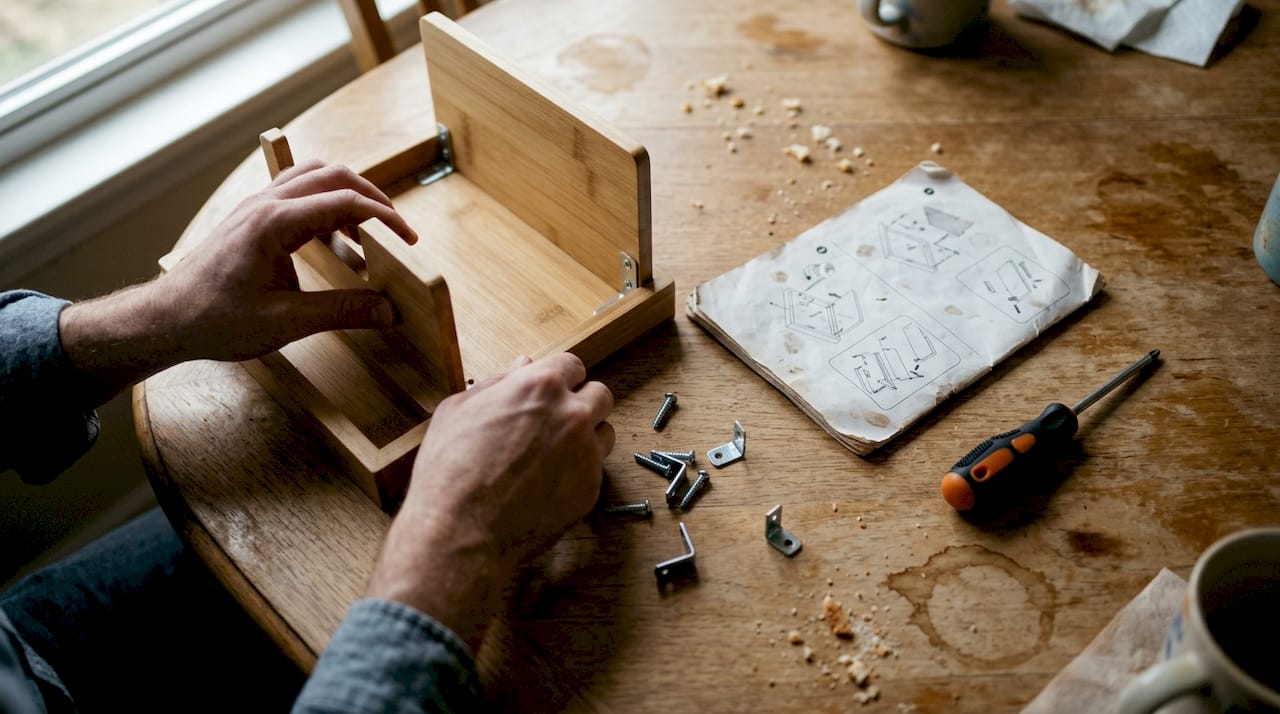
Install wall-mounted holders with precision to ensure stability. Use a stud finder to locate solid mounting points whenever possible. Mark hole positions with a level to guarantee the holder hangs straight. Drill pilot holes slightly smaller than your anchor diameter to ensure secure grip. Insert anchors flush with the wall surface before driving screws. Test the installation by gently pulling the holder before loading plates.
Countertop installation requires attention to surface protection and stability. Place non-slip pads under the holder’s base to prevent sliding during plate removal. Position the holder away from sink edges where water splashes might cause damage. Ensure adequate clearance above for easy plate access, typically six to eight inches. For commercial settings, secure countertop holders with museum putty or adhesive strips to prevent accidental displacement.
Load plates correctly to maximize capacity and maintain hygiene. Start with the largest plates at the bottom if using a vertical holder. Alternate plate orientations slightly to prevent tight stacking that makes removal difficult. Leave the top two inches empty to avoid overloading, which stresses bamboo joints. For horizontal holders, stack plates evenly to distribute weight across the base.
Pro Tip: Store your bamboo holder in a climate-controlled environment between seasonal uses to prevent moisture-related warping and extend its functional lifespan significantly.
Maintain your holder from day one to preserve bamboo’s natural qualities. Wipe down the holder weekly with a slightly damp cloth to remove dust and food particles. Apply food-safe mineral oil monthly to natural finishes, rubbing it in with a soft cloth and allowing 30 minutes to absorb. Avoid placing the holder in direct sunlight, which can fade and dry bamboo over time. Check joints quarterly for any loosening, tightening screws as needed.
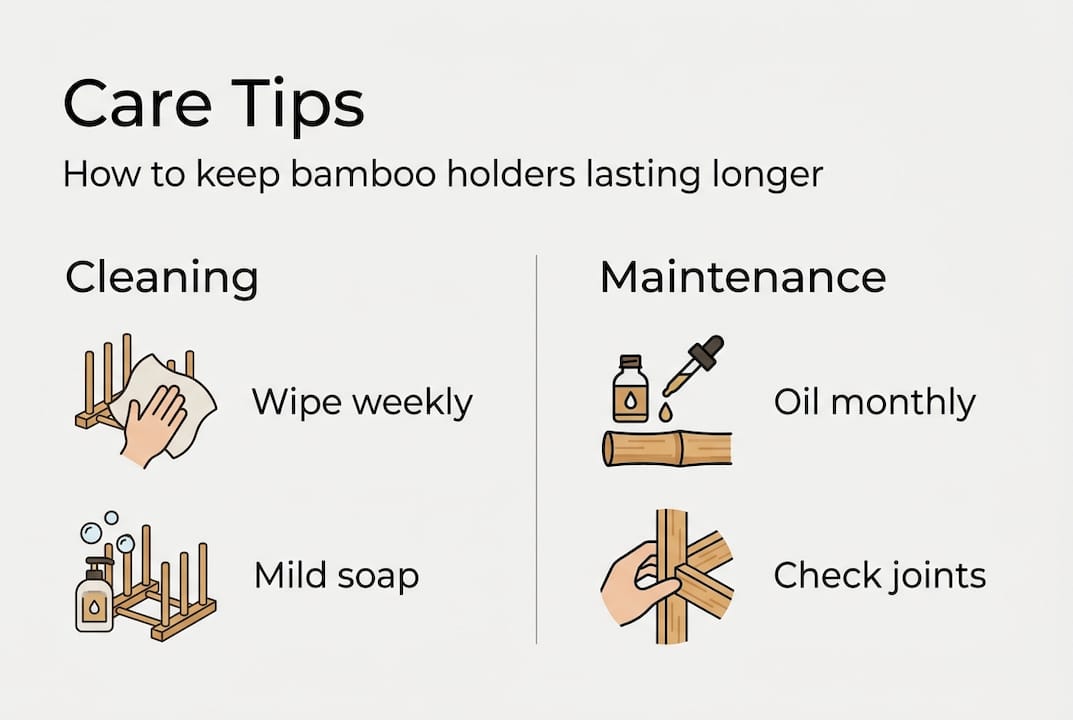
Tipping or imbalance problems typically stem from improper loading or uneven surfaces. If your holder tips when removing plates, reduce the load by 20 percent and reassess. Check that your counter or shelf sits level using a carpenter’s level. For freestanding models, adjust feet if provided or add shims under low corners. Wall-mounted holders that tilt indicate insufficient anchor support, requiring reinstallation with stronger hardware.
Moisture damage manifests as dark spots, warping, or soft areas in bamboo. Proper use and maintenance extend the lifespan of sustainable kitchen accessories. Position holders at least 12 inches from sinks and dishwashers where steam and splashes concentrate. If moisture exposure occurs, dry the area immediately with a clean towel. Apply extra oil to affected spots to restore moisture barrier. Severe warping may require professional restoration or replacement.
Overloading beyond recommended capacity stresses joints and accelerates wear. Manufacturers specify capacity limits based on structural testing. Exceeding these limits by even 25 percent can cause joint failure within months rather than years. Distribute weight evenly across the holder’s base rather than concentrating plates on one side. For multi-tiered designs, balance loads between levels to prevent top-heavy instability.
Cleaning with inappropriate products damages bamboo’s finish and structural integrity. Avoid these common mistakes:
Instead, clean with mild dish soap diluted in water, applied with a soft cloth. Rinse the cloth thoroughly and wipe again to remove soap residue. Dry immediately with a clean towel rather than air drying. For stubborn spots, create a paste from baking soda and water, apply gently, and rinse promptly.
Regular inspections catch problems before they become serious. Monthly checks should include examining joints for gaps or movement, testing stability by gently shaking the holder, inspecting the finish for dry patches or discoloration, and verifying that mounting hardware remains tight. Address any issues immediately rather than waiting for quarterly maintenance.
Seasonal adjustments account for humidity changes that affect bamboo. During dry winter months, increase oiling frequency to prevent cracking. In humid summers, ensure adequate air circulation around the holder to prevent moisture accumulation. Consider using a dehumidifier in particularly damp climates to protect all bamboo accessories.
Refinishing restores holders that show age or wear. Sand lightly with 220-grit sandpaper to remove old finish and smooth rough spots. Wipe away dust with a tack cloth. Apply food-safe bamboo oil or beeswax finish in thin coats, allowing each to dry completely before adding the next. Three coats typically provide adequate protection. This process can extend a holder’s life by several years.
After learning how to select and maintain bamboo paper plate holders, finding a trusted source for premium products becomes your next priority. Cozee Bay specializes in handcrafted bamboo accessories designed for eco-conscious homes and businesses. Each holder combines sustainable materials with thoughtful engineering that addresses real organizational challenges.

Our bamboo paper plate holders feature reinforced joints, smooth finishes, and capacities ranging from intimate family dinners to large commercial events. Whether you need a sleek countertop model for your home kitchen or a heavy-duty wall-mounted system for your restaurant, Cozee Bay offers options that match your specific requirements. Every product undergoes quality testing to ensure it meets the durability standards you expect from sustainable accessories.
Explore our full collection of bamboo kitchen organizers, from paper towel dispensers to utensil holders, creating a cohesive eco-friendly aesthetic throughout your space. We offer free shipping within the contiguous United States and back every purchase with our satisfaction guarantee. Shop top bamboo products today and take the next step toward a more organized, sustainable kitchen that reflects your environmental values without compromising on style or function.
Bamboo holders are sustainable, durable, and stylish alternatives to plastic options that crack and discolor quickly. They help reduce environmental waste by offering a biodegradable solution that lasts for years rather than months. The natural antimicrobial properties of bamboo resist bacteria growth, making these holders more hygienic for food service environments. Their elegant appearance complements eco-friendly kitchen designs while supporting your commitment to renewable materials.
Clean your bamboo holder weekly with mild soap and a soft cloth, avoiding harsh chemicals or abrasive scrubbers. Wipe away soap residue with a damp cloth and dry immediately to prevent moisture damage. Apply food-safe mineral oil monthly to natural finishes, rubbing it in thoroughly and allowing 30 minutes to absorb. Never soak bamboo or place it in dishwashers, as excessive water exposure causes warping and joint failure.
Many holders accommodate standard nine-inch paper plates, but you should verify dimensions before purchasing if you use larger sizes. Check product specifications for maximum plate diameter and stack height to ensure compatibility with your needs. Some models offer adjustable tiers or come in multiple size options, providing flexibility for households that use various plate types. Measure your most frequently used plates and add half an inch to the holder’s stated capacity for comfortable loading and removal.
Yes, bamboo holders offer the durability and eco-friendliness that commercial spaces require for daily operation. Commercial-grade models feature reinforced construction, higher capacities, and protective finishes that withstand frequent use in restaurants, cafeterias, and event venues. They enhance your business’s aesthetic appeal while supporting sustainable practices that resonate with environmentally conscious customers. Many commercial users report that bamboo holders outlast plastic alternatives by three to five years, reducing long-term replacement costs while demonstrating environmental responsibility.
Comments will be approved before showing up.