Your Cart is Empty


Finding the balance between beautiful design and environmental responsibility is a challenge in many American homes. For those aiming to create healthier spaces, choosing accessories with proven sustainability matters. With bamboo standing out for its rapid growth and minimal resource needs, you can upgrade kitchens and bathrooms while making a bold statement for eco-friendly living. This guide highlights practical steps for selecting accessories that enhance style, meet daily needs, and align with your environmental goals.
| Key Message | Explanation |
|---|---|
| 1. Define sustainability goals | Assess each room’s function and potential for sustainable changes to create measurable objectives. |
| 2. Choose eco-friendly materials | Explore materials like bamboo and recycled products that minimize environmental impact and are highly functional. |
| 3. Prioritize design features | Evaluate accessories based on functionality, durability, and waste reduction to enhance sustainability. |
| 4. Verify certifications | Check for trusted eco-certifications to ensure genuine environmental commitments in products. |
| 5. Analyze customer feedback | Review consumer experiences to understand real-world sustainability claims and product performance. |
Choosing eco-friendly home accessories starts with understanding your specific environmental objectives and individual room requirements. This crucial first step helps you make intentional, targeted decisions that align with both your sustainability vision and practical home design needs.
Begin by conducting a thorough assessment of each room’s unique function and potential for sustainable transformation. Sustainable home design principles emphasize that every space offers distinct opportunities for reducing ecological impact. Consider the following key evaluation areas:
When mapping out sustainability goals, prioritize rooms with the highest potential for meaningful change. Focus on spaces like kitchens and bathrooms, where water and energy consumption tend to be significant. Your goals might include:
Your sustainability journey begins with clear, measurable objectives that transform good intentions into concrete actions.
Pro tip: Create a simple spreadsheet tracking your sustainability goals for each room, allowing you to monitor progress and adjust strategies as you implement eco-friendly accessories.
Unlocking sustainable home design begins with understanding the most environmentally responsible materials available. Your journey into eco-friendly home accessories starts with exploring innovative, renewable options that minimize environmental impact while delivering exceptional functionality.
Bamboo sustainability offers remarkable environmental advantages across multiple dimensions of home design. As a material, bamboo distinguishes itself through extraordinary ecological properties:
When considering eco-friendly materials for home accessories, evaluate these key characteristics:
Sustainable materials are not just about environmental impact, but about creating products that harmonize with nature’s principles.
Additional top eco-friendly materials to explore include recycled plastics, organic cotton, cork, and reclaimed wood. Each material brings unique sustainability credentials that can transform your home accessories into powerful statements of environmental responsibility.
Here’s a quick summary of how popular eco-friendly materials contribute to sustainability:
| Material | Main Environmental Benefit | Common Home Uses |
|---|---|---|
| Bamboo | Rapid growth, low resources | Flooring, utensils, decor |
| Recycled Plastic | Diverts waste from landfills | Rugs, storage bins, chairs |
| Organic Cotton | No harmful chemicals used | Bedding, towels, covers |
| Cork | Renewable and biodegradable | Mats, insulation, stoppers |
| Reclaimed Wood | Reduces demand for new lumber | Shelves, tables, wall panels |
Pro tip: Research the specific processing methods of eco-friendly materials, as some manufacturing techniques can significantly alter their environmental credentials.
Transforming your home with eco-friendly accessories requires a strategic approach that balances aesthetic appeal with functional sustainability. Your goal is to select pieces that not only look great but also contribute meaningfully to your environmental objectives.
Eco-friendly home design integrates function and sustainability by focusing on accessories that deliver multiple benefits. When comparing home accessories, evaluate these critical design features:
Key comparison criteria for eco-friendly home accessories include:
Sustainable design is not about compromise, but about creating smarter solutions that enhance both your living space and the environment.
Look beyond surface-level appearances and assess each accessory’s holistic environmental impact. Consider how the item’s design contributes to energy savings, reduces waste, and supports sustainable manufacturing practices.
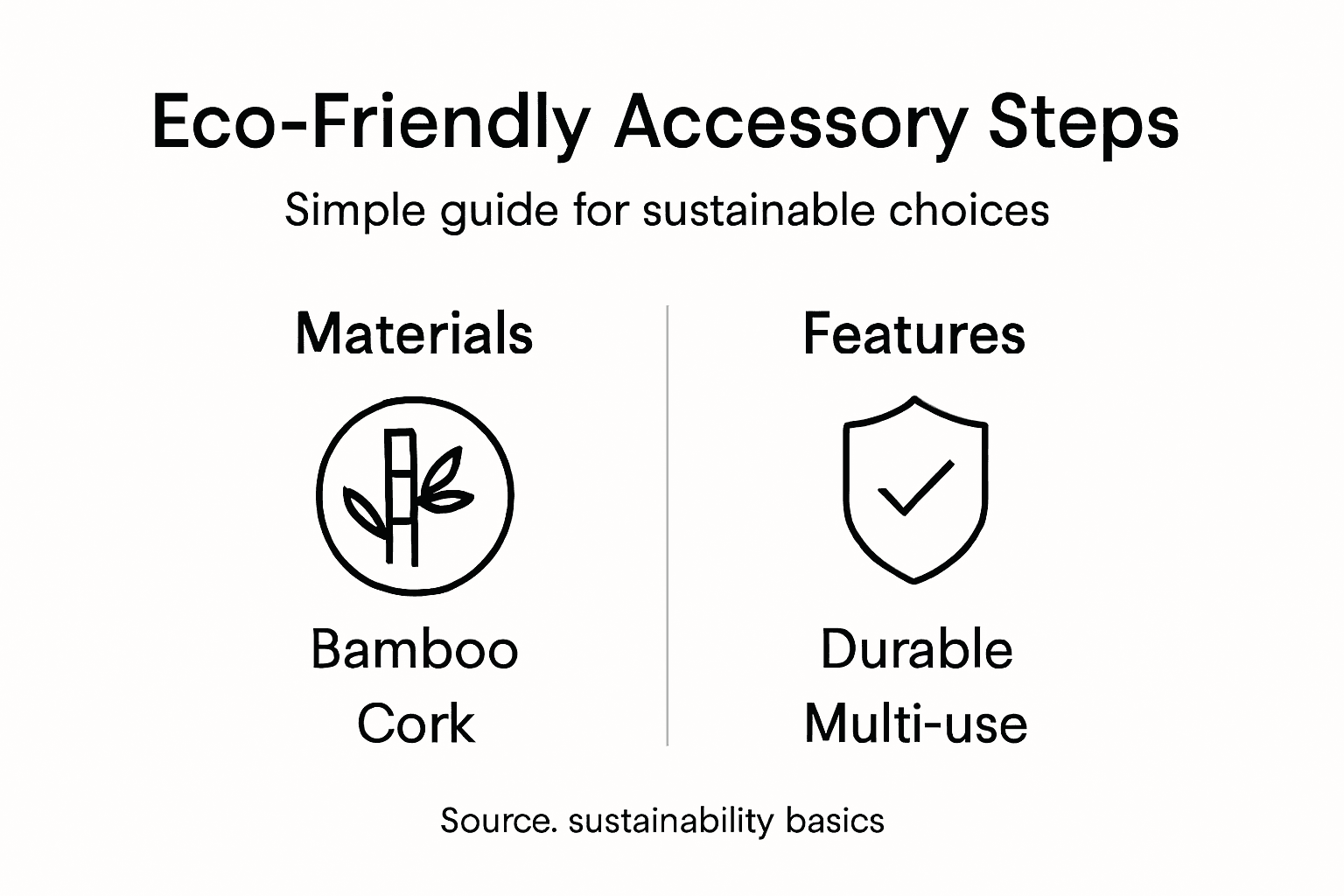
Use this table to compare accessory features that support sustainable design:
| Feature | Environmental Value | Example Accessory |
|---|---|---|
| Multi-functionality | Reduces overall consumption | Storage ottoman, folding rack |
| Energy Efficiency | Lowers energy use | LED lamp, smart power strip |
| Durability | Extends product lifespan | Stainless steel holder |
| Minimal Waste | Easier recycling or reuse | Glass jars, metal trays |
Pro tip: Create a comparison spreadsheet that scores potential accessories across multiple sustainability metrics to make more informed purchasing decisions.
Navigating the world of eco-friendly home accessories requires a discerning eye and the ability to validate sustainability claims through credible certifications. Your mission is to become an informed consumer who can distinguish genuine environmental commitments from misleading marketing tactics.
Sustainability certifications verify product credentials and provide critical insights into a product’s true environmental impact. Understanding these certifications helps you make intelligent purchasing decisions:
Key steps for reviewing product certifications include:
Not all certifications are created equal - depth of standards matters more than the label itself.
Beyond certifications, assess product quality through additional lenses such as material durability, manufacturing transparency, and long-term environmental impact. Pay attention to detailed product descriptions that provide clear evidence of sustainable practices.
Pro tip: Create a personal checklist of trusted certifications and cross-reference it with each potential eco-friendly accessory to streamline your decision-making process.
Customer reviews transform abstract sustainability claims into real-world insights, providing crucial context about eco-friendly home accessories’ actual performance and environmental impact. Your goal is to leverage collective consumer experience to make smarter, more informed purchasing decisions.
Consumer awareness drives sustainable product selection by highlighting authentic environmental credentials beyond marketing promises. When evaluating customer feedback, focus on these critical aspects:
Key strategies for analyzing customer feedback effectively:
Customer experiences reveal the true story behind sustainable product claims.
Pay special attention to reviewers who demonstrate deep environmental knowledge and provide nuanced, thoughtful commentary about the product’s ecological characteristics. Ignore generic or emotionally charged reviews that lack substantive information.
Pro tip: Create a weighted scoring system that prioritizes reviews discussing specific sustainability metrics over generic positive or negative feedback.
Choosing sustainable home accessories can feel overwhelming when trying to balance environmental goals with practical design and durability. This article highlights key challenges like selecting renewable materials, validating certifications, and ensuring functional style that fits your space. If you are ready to reduce plastic waste, promote resource efficiency, and embrace long-lasting eco-friendly products, Cozee Bay has the perfect bamboo accessories to support your vision.

Explore our collection starting with the elegant Bamboo Paper Towel Dispenser- A Sleek Look Home or Office designed to combine sustainability with style and functionality. Alongside, discover smart organization solutions such as Trash Bag Dispensers and essential Paper Towel Dispensers - Accessories | Cozee Bay® crafted to minimize waste and support your eco-friendly lifestyle.
Make your commitment to a greener home a reality today. Visit Cozee Bay to find durable, stylish bamboo products that align with your sustainability goals and enjoy free shipping across the contiguous U.S.
Choosing eco-friendly home accessories begins with identifying your sustainability goals and room needs. Assess each room’s function and its potential for sustainable transformation, then create a list of specific objectives, such as reducing single-use plastics or minimizing water waste.
To evaluate the sustainability of materials, look for their renewable source potential, production energy requirements, and durability. For instance, consider options like bamboo or recycled plastics that offer environmental benefits while still being functional for your home.
Eco-friendly home accessories should include multi-functionality, energy efficiency, and durability. For example, choose a storage ottoman that serves as both seating and space-saving storage, allowing you to reduce overall consumption in your home.
Certifications are critical as they verify the sustainability claims of a product. Always look for trusted third-party verification to ensure the product meets stringent environmental standards, which can guide you in making informed purchasing decisions.
Customer feedback can provide valuable insights into the real-world performance and ecological impact of eco-friendly accessories. Read detailed reviews and note any recurring themes that discuss sustainability features or product limitations to make better choices.
Comments will be approved before showing up.