Your Cart is Empty


Finding eco-friendly solutions often feels like a maze for commercial property managers and restaurant owners who want to minimize environmental impact. With traditional plastics lasting centuries and contributing to global pollution, biodegradable materials offer a powerful alternative that naturally breaks down into simple elements through microbial processes. Exploring sustainable options like bamboo can help create stylish spaces while supporting worldwide efforts to reduce waste and promote genuine environmental responsibility.
| Point | Details |
|---|---|
| Biodegradable materials reduce environmental impact | They decompose naturally, minimizing long-term pollution compared to traditional plastics. |
| Diverse applications are available | These materials can be used across various industries including packaging, agriculture, and medical sectors. |
| Performance varies across products | Different biodegradable materials have unique decomposition rates and require specific environmental conditions to break down effectively. |
| Regulatory standards are evolving | Businesses must stay updated on guidelines for biodegradable materials to ensure compliance and optimal usage. |
Biodegradable materials represent innovative solutions designed to break down naturally in the environment through biological processes. These substances are engineered or naturally occurring compounds that can be decomposed by microorganisms like bacteria into basic elemental components such as water, gases, and biomass. Biodegradable polymers play a critical role in sustainable material development, offering environmentally responsible alternatives to traditional synthetic products.
At their core, biodegradable materials function through complex microbial interactions. Microorganisms release specialized enzymes that systematically break down molecular structures, transforming complex compounds into simpler organic elements. Unlike traditional plastics that persist in ecosystems for hundreds of years, these advanced materials can decompose within weeks or months, significantly reducing environmental contamination. Breaking down biodegradable substances occurs through precise enzymatic processes where bacteria essentially consume and metabolize the material’s chemical structure.
Biodegradable materials encompass diverse categories including natural polymers like cellulose and synthetic polymers engineered with specific decomposition characteristics. These materials are strategically developed with functional groups such as esters, amides, and ethers that enable efficient biological breakdown. Commercial applications range from packaging and disposable products to agricultural mulch films and medical implants, demonstrating the versatility of biodegradable technologies in addressing environmental sustainability challenges.
Pro tip: When selecting biodegradable materials, verify their specific decomposition standards and confirm they match your intended environmental conditions for optimal sustainable performance.
Biodegradable materials represent a diverse range of substances capable of naturally decomposing, offering sustainable alternatives across multiple industries. Biodegradable polymers primarily fall into two fundamental categories: those derived from biomass (agro-polymers) and biopolyesters generated through microbial or synthetic processes. Natural polymers include essential biological compounds such as proteins, polysaccharides, nucleic acids, and lipids, while synthetic variants encompass advanced materials engineered for specific environmental applications.
The spectrum of biodegradable materials spans numerous organic and synthetic sources, with prominent examples including bioplastics derived from renewable resources like corn starch and sugarcane. Natural fibers such as cotton, jute, and hemp provide biodegradable textile alternatives, while wood-based products like paper and cardboard offer environmentally conscious packaging solutions. Sustainable material innovations have also introduced synthetic biodegradable polymers like polylactic acid (PLA) and polyhydroxyalkanoates (PHA), which demonstrate remarkable decomposition capabilities across agricultural, medical, and industrial contexts.
Commercial applications of biodegradable materials continue to expand, reflecting growing environmental consciousness and technological advancements. These materials are strategically utilized in packaging, construction, agriculture, medical devices, and consumer products. Renewable resources like bamboo and advanced synthetic polymers offer unprecedented opportunities for creating environmentally responsible solutions that minimize waste and reduce long-term ecological impact. By leveraging innovative design and material science, manufacturers can develop products that seamlessly integrate sustainability with performance and functionality.
Here is a comparison of key biodegradable material categories and their typical commercial uses:
| Material Category | Example Materials | Common Applications |
|---|---|---|
| Natural Polymers | Cellulose, proteins, starch | Paper, textiles, food wrap |
| Synthetic Biopolyesters | PLA, PHA | Packaging, utensils, implants |
| Natural Fibers | Cotton, jute, hemp | Clothing, bags, home goods |
| Wood-Based Products | Paper, cardboard | Cartons, containers, boxes |
Pro tip: When exploring biodegradable material options, prioritize understanding the specific decomposition timeline and environmental conditions required for optimal breakdown to ensure maximum sustainability effectiveness.
Biodegradable materials operate through a sophisticated biological breakdown process driven by microorganisms and their specialized enzymatic capabilities. Enzymatic degradation mechanisms involve microbes releasing specific enzymes that systematically deconstruct polymer structures into smaller molecular components. These enzymes act as biological catalysts, breaking chemical bonds and transforming complex materials into simpler organic compounds that can be easily reabsorbed into natural ecosystems.
The decomposition process depends critically on environmental conditions such as temperature, moisture, oxygen levels, and microbial diversity. Different biodegradable materials require unique metabolic pathways and specific microbial populations to facilitate complete breakdown. Some polymers decompose rapidly in industrial composting facilities with controlled temperature and humidity, while others may take significantly longer in ambient environmental conditions. The complexity of this process means that not all biodegradable materials will break down equally quickly or completely in every setting.
Microorganisms play a pivotal role in biodegradation by consuming and metabolizing material components for energy. Bacteria, fungi, and other microbes essentially digest these materials, converting complex molecular structures into water, carbon dioxide, biomass, and other simple organic compounds. This natural recycling process transforms potentially problematic waste materials into nutrients that can be reintegrated into ecological systems, representing a critical mechanism for sustainable waste management and environmental preservation.
Pro tip: Research the specific decomposition requirements of biodegradable materials before disposal to ensure optimal environmental breakdown and minimize potential ecological disruption.
Biodegradable materials offer transformative advantages for commercial environments, addressing critical sustainability challenges while delivering exceptional functional performance. Biopolymer packaging solutions enable businesses to dramatically reduce plastic waste, mitigate microplastic pollution, and demonstrate meaningful environmental responsibility. These innovative materials provide mechanical properties comparable to traditional plastics, ensuring commercial spaces can maintain high-performance standards while simultaneously advancing ecological objectives.
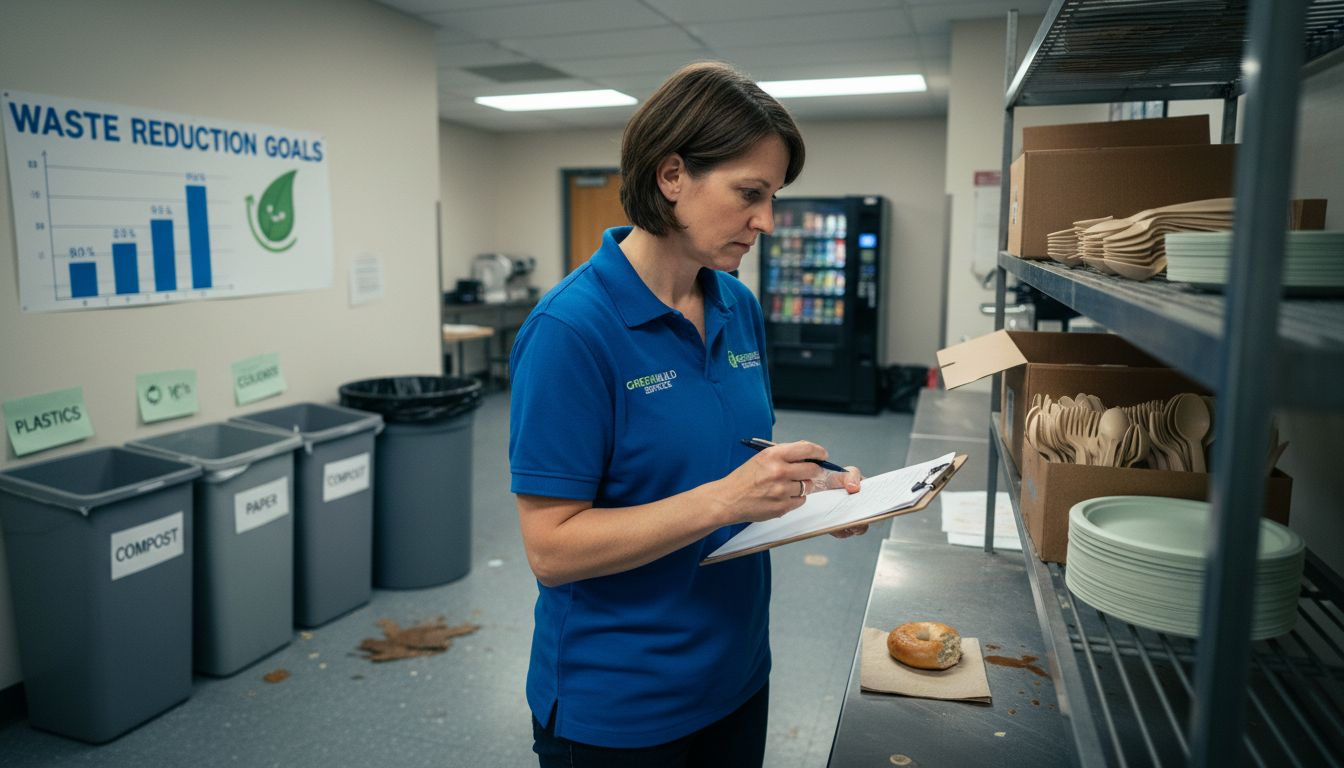
Commercial enterprises benefit from biodegradable materials through multiple strategic dimensions. Waste reduction represents a primary advantage, as these materials can be composted or recycled, supporting circular economy principles. Businesses implementing biodegradable solutions can significantly decrease their carbon footprint, enhance brand reputation, and appeal to environmentally conscious consumers and clients. The versatility of biodegradable materials extends across diverse commercial applications, including packaging, disposable products, interior design elements, and operational infrastructure, offering comprehensive sustainability solutions.
Economic incentives complement the environmental benefits of biodegradable materials in commercial spaces. Companies adopting these technologies often experience reduced waste management costs, potential tax incentives, and improved market positioning. By integrating biodegradable materials, businesses signal their commitment to innovative sustainability practices, potentially attracting environmentally aware customers, investors, and talent. The long-term economic and reputational advantages of embracing biodegradable technologies can create significant competitive differentiation in increasingly environmentally sensitive markets.
Pro tip: Conduct a comprehensive sustainability audit to identify specific opportunities for integrating biodegradable materials that align with your commercial space’s operational requirements and environmental goals.
Biodegradable materials present complex challenges that extend beyond their environmental promises, requiring careful consideration of potential risks and regulatory frameworks. Life cycle assessments reveal significant nuances in environmental impact, including potential risks of incomplete degradation, toxicity concerns, and the need for sophisticated waste management infrastructure. These considerations underscore the importance of a comprehensive approach to implementing biodegradable technologies that goes far beyond simple material substitution.
Regulatory landscapes surrounding biodegradable materials continue to evolve, presenting both opportunities and significant challenges for businesses and manufacturers. Governments and environmental agencies are developing increasingly sophisticated standards to address potential environmental contamination risks, toxicity concerns, and the complex dynamics of material decomposition. Businesses must navigate an intricate regulatory environment that requires detailed documentation, rigorous testing protocols, and ongoing compliance with emerging environmental guidelines. The economic implications of these regulatory frameworks can be substantial, potentially requiring significant investments in research, testing, and infrastructure adaptation.
Scientists and environmental experts emphasize that biodegradable materials are not a universal solution, but rather a nuanced approach to sustainability. Biodegradable plastic challenges include variability in degradation processes, potential formation of micro- and nanoplastics, and potential leachate toxicity that could impact aquatic ecosystems. These complexities demand a holistic approach that considers not just the material’s initial environmental promise, but its entire lifecycle, from production through final decomposition, including potential unintended environmental consequences.
Pro tip: Conduct comprehensive third-party environmental impact assessments and maintain ongoing monitoring to understand the full environmental profile of biodegradable materials in your specific application.
Biodegradable and conventional materials represent distinctly different approaches to product design, environmental sustainability, and resource utilization. Comparative sustainability analyses reveal complex trade-offs between bio-based and fossil-based materials, challenging simplistic assumptions about environmental superiority. Conventional materials typically derive from petroleum-based sources with established manufacturing infrastructure, while biodegradable alternatives emerge from renewable biological sources, offering potential greenhouse gas reduction and decreased reliance on finite fossil resources.
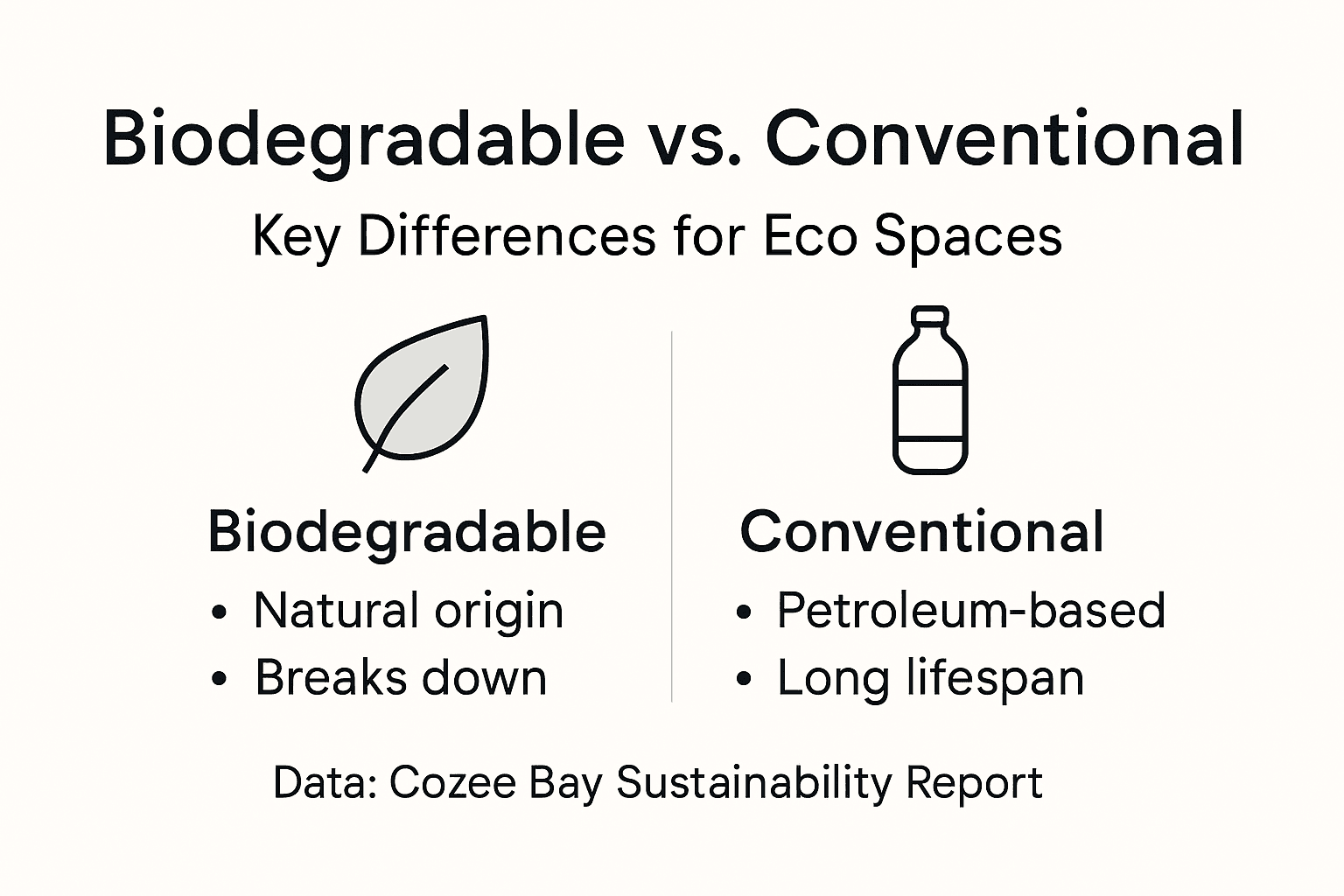
Key differences extend beyond material origin to performance characteristics, environmental impact, and lifecycle considerations. Conventional plastics demonstrate consistent mechanical properties, predictable manufacturing costs, and extensive industrial experience. Biodegradable alternatives, by contrast, present more nuanced performance profiles with potential variability in strength, durability, and decomposition rates. Environmental trade-offs include land-use changes associated with biomass cultivation, higher initial production costs for biodegradable materials, and the complex dynamics of waste management and material breakdown.
This table outlines a side-by-side comparison of biodegradable versus conventional materials:
| Aspect | Biodegradable Materials | Conventional Materials |
|---|---|---|
| Source | Renewable (biomass, plants) | Petroleum-based, non-renewable |
| End-of-Life Impact | Breaks down into natural elements | Persists for centuries, pollution |
| Relative Cost | Often higher initial cost | Lower, stable manufacturing cost |
| Waste Management | Composting, recycling possible | Landfill, incineration common |
The selection between biodegradable and conventional materials requires a holistic assessment considering specific application requirements, environmental context, and long-term sustainability goals. No universal solution exists that categorically supersedes alternative approaches. Businesses must carefully evaluate factors including material performance, carbon footprint, waste management infrastructure, production scalability, and economic feasibility. Emerging technologies and ongoing research continue to narrow performance gaps, suggesting that biodegradable materials will increasingly become competitive with conventional alternatives across multiple industrial sectors.
Pro tip: Conduct comprehensive lifecycle assessments that evaluate both environmental and economic factors when comparing biodegradable and conventional material options for your specific application.
The article highlights the challenges of selecting truly biodegradable materials that meet both environmental and functional demands in commercial and residential settings. You want eco-conscious products that break down responsibly without sacrificing style or durability. At Cozee Bay, we understand the importance of reducing plastic waste and promoting sustainable materials like bamboo, which is naturally renewable and engineered for lasting use. Our handcrafted bamboo paper towel dispensers and organizers align perfectly with the article’s emphasis on material biodegradability, environmental impact, and commercial applicability.
Make your eco-friendly space stand out with solutions designed for optimal sustainability and functionality. With products trusted in restaurants, schools, and senior living centers, Cozee Bay offers stylish options that contribute to lowering your carbon footprint and minimizing plastic waste. Discover how natural and renewable bamboo can complement your green initiatives while serving your daily operational needs.
Elevate your commitment to sustainability today with our premium bamboo products available at Cozee Bay.
Take the first step toward responsible waste management and eco-conscious living by exploring our collection of bamboo paper towel dispensers, food bag organizers, and more.
Explore Sustainable Bamboo Solutions
Shop Handcrafted Bamboo Paper Towel Dispensers
Visit Cozee Bay for Eco-Friendly Home and Commercial Products
Improve your space with natural, biodegradable alternatives that respect the environment and exceed your performance expectations.
Why wait? Start your journey to sustainability now.

Biodegradable materials are substances that break down naturally in the environment through biological processes, primarily by the action of microorganisms. They decompose into basic elements like water, carbon dioxide, and biomass, unlike conventional plastics that can last for hundreds of years.
Commercial biodegradable materials include natural polymers like cellulose, synthetic biopolymers such as polylactic acid (PLA) and polyhydroxyalkanoates (PHA), as well as natural fibers like cotton and jute. These materials are used in a variety of applications including packaging, disposable products, and textiles.
Yes, biodegradable materials come with certain risks, such as the potential for incomplete degradation and environmental toxicity. It is crucial to understand the specific environmental conditions required for each material to ensure that they break down effectively and do not cause ecological harm.
Biodegradable materials are derived from renewable resources and typically break down into natural elements, reducing long-term pollution. In contrast, conventional plastics are petroleum-based and can persist in the environment for centuries. However, biodegradable options may have higher initial costs and varying performance characteristics compared to traditional plastics.
Comments will be approved before showing up.