Your Cart is Empty


The word “compostable” is everywhere right now, printed on bags, sponges, and packaging with equal confidence. But not every product that claims to be compostable actually breaks down the way you’d expect, and choosing the wrong ones can leave you feeling like you’ve been tricked. Knowing what to look for, from certifications to composting infrastructure, is the real starting point. This guide walks you through the best compostable picks for your kitchen, bathroom, and beyond, so every swap you make actually counts. Look for BPI or TUV certification as your first filter for reliability.
| Point | Details |
|---|---|
| Check certifications | Always look for BPI or TUV labeling to avoid greenwashing and ensure compostability. |
| Start in the kitchen | Switch to compostable bags and cleaning cloths in your kitchen for the biggest waste reduction. |
| Prioritize reusables | Choose durable reusables where possible; they usually outperform single-use compostables. |
| Match with local composting | Use home- or commercially-compostable products according to your area’s available infrastructure. |
| Track your impact | Monitor your waste reduction and adjust product choices to maximize environmental benefits. |
Before you add anything to your cart, you need a simple framework for sorting real compostable products from clever marketing. The good news is that a few key signals make this much easier than it sounds.
What to look for on the label:
Greenwashing is rampant in this space. Phrases like “plant-based,” “natural,” or “eco-friendly” carry no legal or scientific weight on their own. Always pair those claims with a certification number you can verify.
Pro Tip: Before buying a new compostable product, search its brand name plus “BPI certified” or “TUV certified” online. If nothing comes up, that’s your answer. You can also use how to select eco-friendly products as a broader checklist.
The kitchen generates more compostable waste than any other room in your home, which makes it the best place to start your swap. Here are the products worth your attention.
Top compostable kitchen picks:
Durable reusables often outperform single-use compostables in both cost and environmental impact over time. A Swedish dishcloth, for example, replaces dozens of paper towels and still composts at end of life. For a full rundown of eco-friendly kitchen items, check our curated checklist.
Pro Tip: Use reusable compostables like cellulose sponges and bamboo cloths for everyday cleaning. Save single-use compostable bags and cutlery for situations where reusables aren’t practical, like packing lunches or hosting a crowd. This approach, covered in detail in our kitchen organizing with compostables guide, stretches your budget and your impact.
The bathroom is the second biggest source of single-use plastic in most homes, and it’s also where some of the most exciting compostable swaps are happening right now.
Products worth switching:
Don’t overlook the packaging. A compostable product wrapped in layers of plastic film is a contradiction. Look for brands that use paper, cardboard, or certified compostable packaging throughout. Our guide to eco-friendly bathroom essentials covers the best options in more detail.
Switching from synthetic cleaning cloths to certified compostable alternatives removes a consistent source of microplastic pollution from your home’s water output, one load of laundry at a time.
For broader inspiration on reducing your home’s footprint room by room, our eco-friendly home tips resource is a solid next read.
Beyond cleaning, many everyday paper and packaging items are making composting easier than ever. These are the products that often get overlooked but add up to a meaningful reduction in landfill waste.
Pair compostable goods with your area’s collection system to get the full environmental benefit. Many cities now offer curbside organics pickup that accepts commercially compostable items. Retailers and brands are also responding to demand, with sustainable ecommerce practices becoming a baseline expectation rather than a bonus. For more on paper product choices, see our guide to sustainable paper towels and our breakdown of biodegradable homeware materials.
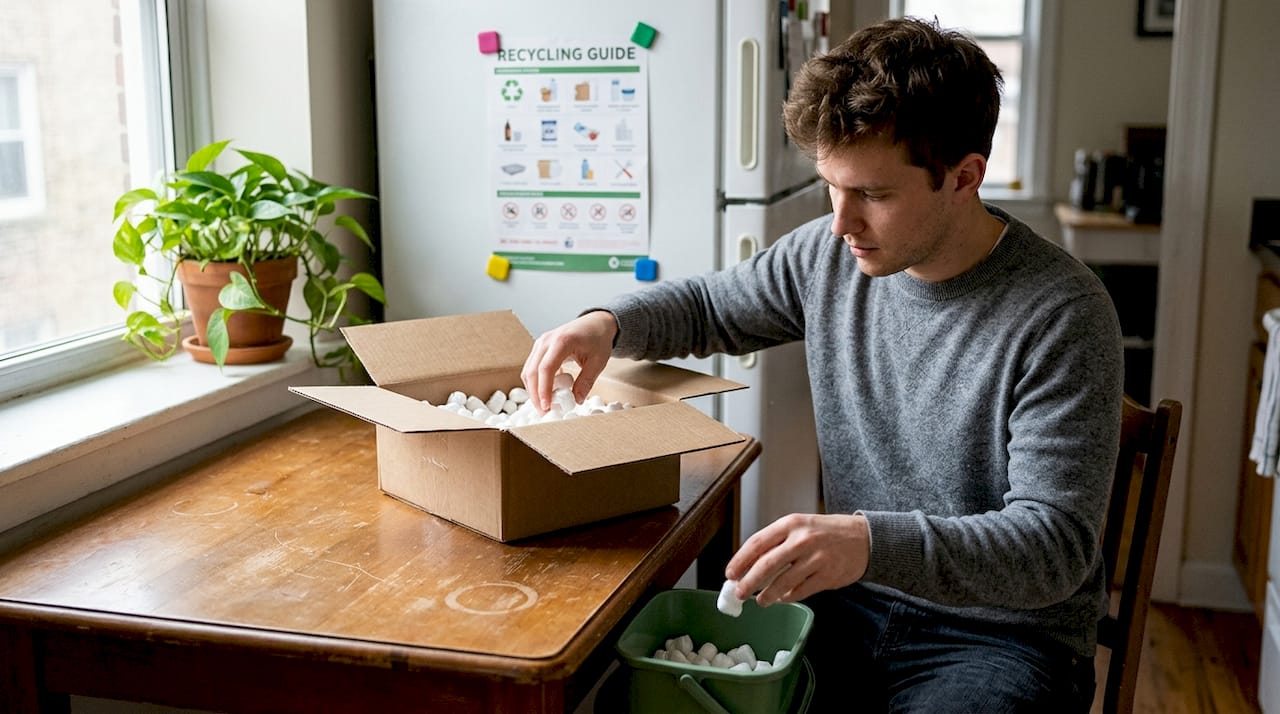
To make selection simpler, here’s a quick side-by-side comparison of the top compostable options.
| Product | Compost type | Reusable? | Durability | Relative cost |
|---|---|---|---|---|
| Cellulose sponge | Home | No | Medium | Low |
| Bamboo cloth towel | Home | Yes | High | Medium |
| Compostable trash bag | Home/Commercial | No | Medium | Low |
| Bamboo toothbrush | Home (handle) | No | High | Low |
| Compostable wipes | Commercial | No | Low | Medium |
| Cornstarch packing peanuts | Home | No | Low | Low |
| Compostable coffee filter | Home | No | Low | Very low |
| Compostable cutlery | Commercial | No | Medium | Low |
Statistic callout: Up to 30% of household waste by weight can be diverted from landfills when you consistently use certified compostable products alongside a home or community composting system.
The table makes one thing clear: reusable items like bamboo cloth towels deliver the best combination of durability and end-of-life compostability. Empirical tests favor durable reusables for most high-frequency household tasks. For a broader guide on selecting green home essentials, we’ve put together a resource that covers every room.
Picking the right products is just step one. Daily routines make the real impact, and a gradual approach works far better than a dramatic overhaul.
Practical steps to get started:
Small, consistent habits compound over time. Replacing one product category per month means your home could be running almost entirely on compostable essentials within a year. Our greener home tips resource has more ideas for keeping the momentum going.
If this guide has you thinking about the bigger picture of sustainable living, you’re in the right place. At Cozee Bay, we’ve built our entire catalog around products that are both functional and kind to the planet.

From handcrafted bamboo paper towel dispensers to food bag organizers and wrap and foil dispensers, every product we carry is designed to replace single-use plastic with something that lasts. Our eco-friendly product checklist is a great starting point if you want a room-by-room plan for greening your home. Browse Cozee Bay’s eco-friendly essentials to find curated picks that pair beautifully with the compostable swaps you’ve just read about. Free shipping within the contiguous U.S. and a money-back guarantee mean there’s no risk in trying something new.
BPI or TUV certification means the product has passed strict, third-party standards for compostability, confirming it breaks down properly under the right conditions. It’s the most reliable signal that a compostable claim is legitimate.
Some products carry a home compostable certification, but many others require the higher temperatures of a commercial facility. Always check the label for which type of composting is required before you toss it in your backyard bin.
Look for official certification logos and specific certification codes from BPI or TUV on the packaging. Avoid greenwashing by skipping any product that uses vague terms like “natural” or “eco” without a verifiable certification number.
For most everyday household tasks, durable reusable items carry a greater environmental benefit than single-use compostables because they reduce production demand over time. The best approach combines both: reusables for regular use and certified compostables for situations where reusables aren’t practical.
Comments will be approved before showing up.