Your Cart is Empty


Eco-friendly packaging is packaging engineered to minimize net environmental harm across its entire life cycle, from raw material extraction through disposal or recovery, and verified where possible by a Life Cycle Assessment (LCA). It has nothing to do with picking “the green material” off a shelf. It’s a balancing act between sourcing, performance, and what happens to that box or wrapper once it leaves your customer’s hands.
TL;DR:
- Recycled paper and cardboard provide significant environmental benefits due to lower water and air pollution compared to virgin fiber, making them a default choice.
- Lightweighting packaging reduces costs and emissions, but oversized or damaged shipments can negate the environmental gains.
- Verify claims of compostability and biodegradability with clear standards and consider local end-of-life infrastructure to avoid greenwashing.
- Conduct a full life cycle assessment before large-scale packaging redesigns to measure impacts on carbon emissions, water use, and waste generation.
- Focus on supply chain infrastructure, package sizing, and durability rather than material choice alone for true sustainability improvements.
The Sustainable Packaging Coalition frames sustainable packaging as a systems question, not a shopping list. It tracks impact through five stages: sourcing, manufacturing, distribution, use, and end-of-life. Miss any one of those stages, and your “sustainable” swap can quietly cause more harm than the material it replaced.
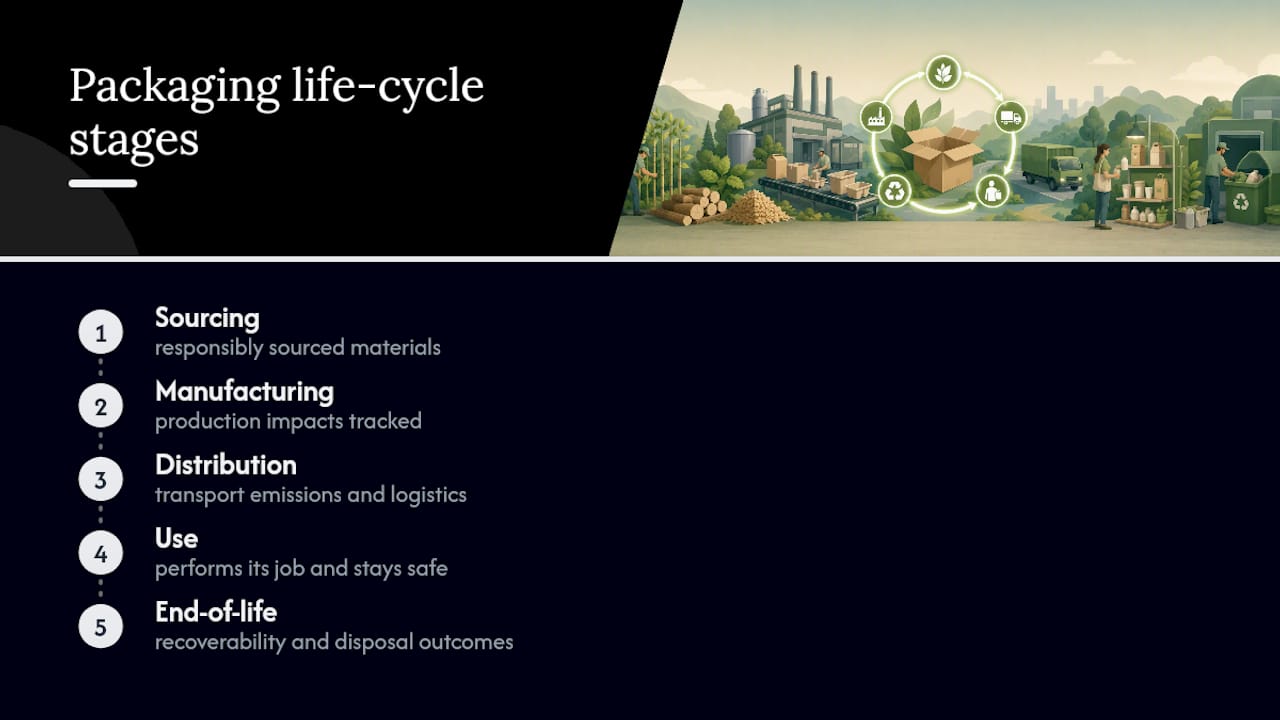
Here’s the part most guides skip: there’s no universally green material. A compostable mailer sent to a region with no industrial composting facility just becomes landfill with better marketing. A recycled plastic clamshell shipped somewhere without curbside recycling access has the same fate. Regional end-of-life infrastructure changes the outcome of every material decision you make, which is exactly why the EPA’s sustainable packaging guidance ties packaging design directly to recoverability and economic recovery value, not just what the box is made from.
This is where an LCA earns its keep. A Life Cycle Assessment quantifies environmental impact across carbon emissions, water use, waste generation, and toxicity, and it’s the tool that catches a counterintuitive truth: sometimes a heavier, “natural” material generates more transport emissions than a lightweight recycled plastic alternative. According to Supply Chain 247’s definition of sustainable packaging, packaging must be sourced responsibly, perform its job, stay safe for its use, and be recoverable at end-of-life. All four, together.
Sustainable packaging isn’t a feel-good add-on. It changes what ends up in landfills, what your shipping costs look like, and how customers judge your brand at checkout.
Start with the material math. Recycling paper generates far less air pollution and consumes far less water than producing paper from virgin fiber, according to the EPA. That’s not a rounding error. It’s one of the clearest environmental wins available in packaging, and it’s why recycled-content paper and cardboard remain a default recommendation for anyone starting a sustainability push.
Then there’s the business case, and it’s stronger than most owners assume. Lightweighting, using less material to do the same protective job, cuts material costs and shipping weight simultaneously. Fewer void-fill inches per box means more boxes per pallet and lower freight bills. That’s pure operational upside before you even factor in the marketing benefit.
Consumer trust follows naturally, but only when claims are backed by real evidence rather than a green leaf icon slapped on the label. Compliance requirements are tightening too, particularly around recyclability labeling and compostability standards, so getting ahead of the paperwork now saves a scramble later. For hospitality businesses specifically, restaurant packaging expectations have shifted enough that sustainable choices now influence repeat visits, not just first impressions.
Every material in this space comes with an asterisk. Knowing the asterisk is what separates a smart procurement decision from a marketing-driven mistake.
Pro Tip: Before you commit to a “compostable” supplier, ask them one question: home compostable or industrial only? If they can’t answer immediately, they don’t actually know, and neither will your customer.
The SPC’s SMART framework gives you five checkpoints for any packaging decision, and it works whether you’re redesigning a single SKU or overhauling an entire product line:
Commissioning a full LCA makes sense once you’re locking in a packaging redesign at scale, not for every small decision. CarbonBright’s research on LCA-driven packaging points out that swapping materials without measuring full life-cycle impact can backfire, since a lightweight recycled plastic mailer sometimes beats a bulky paper alternative once transport emissions enter the equation.
| Metric to measure | What it tells you |
|---|---|
| Climate impact (CO2e) | Emissions across sourcing, production, and transport |
| Water use | Water consumed in material production and processing |
| Waste generation | Volume ending up in landfill versus recovery streams |
| Toxicity | Chemical safety for people and ecosystems |
Right-sizing deserves special attention here. Oversized boxes drive up void-fill use and shipping cube costs, while undersized packaging risks product damage, and a damaged shipment carries a far bigger environmental cost than almost any material choice you could have made instead.
Packaging claims are only as good as the standard behind them, and most shoppers never check that standard.
Labels that claim compostability without naming a standard or specifying home versus industrial conditions are frequently misleading, and that gap between claim and reality is one of the most common forms of accidental greenwashing. Local recovery infrastructure decides whether any of these claims mean anything for your specific customer, which is why clear end-of-life instructions on the package itself matter as much as the certification stamp. Read the full breakdown of compostable packaging standards before you make a claim you can’t back up.
Switching packaging without a plan is how well-intentioned companies end up with a warehouse of unusable inventory. Work through this sequence instead:
Pro Tip: Ask suppliers for their LCA data before their price sheet. A supplier who can’t produce lifecycle numbers usually can’t back up their sustainability claims either, no matter how confidently they’re delivered.
Operational changes like this rarely happen in isolation. Practical sustainable business operations tips cover the broader shifts, staffing, logistics, waste tracking, that make a packaging pilot easier to sustain past the first quarter. For a full walkthrough tailored to packaging specifically, Cozee-bay’s buying and switching guide covers the same territory in more depth.
Not every improvement requires a supplier overhaul. Some of the highest-impact changes cost nothing but attention:
Bamboo is a fast-renewing material with a naturally long product lifespan, which matters more than most sustainability conversations acknowledge. A dispenser that lasts a decade eliminates far more disposable material from the waste stream than any single packaging swap could. That’s the lens Cozee-bay applies to product design: durability and material sourcing carry as much weight as what happens at the end of a product’s life. Readers evaluating any bamboo-based accessory should apply the same LCA-minded questions covered above, sourcing, durability, and recoverability, rather than trusting a “natural material” label at face value.
Most sustainability advice treats material choice as the whole game. It isn’t. The research consistently points to transport emissions and product-protection failure as bigger levers than the material itself, meaning a company obsessing over recycled content while shipping oversized boxes with excess void fill is optimizing the wrong variable entirely.
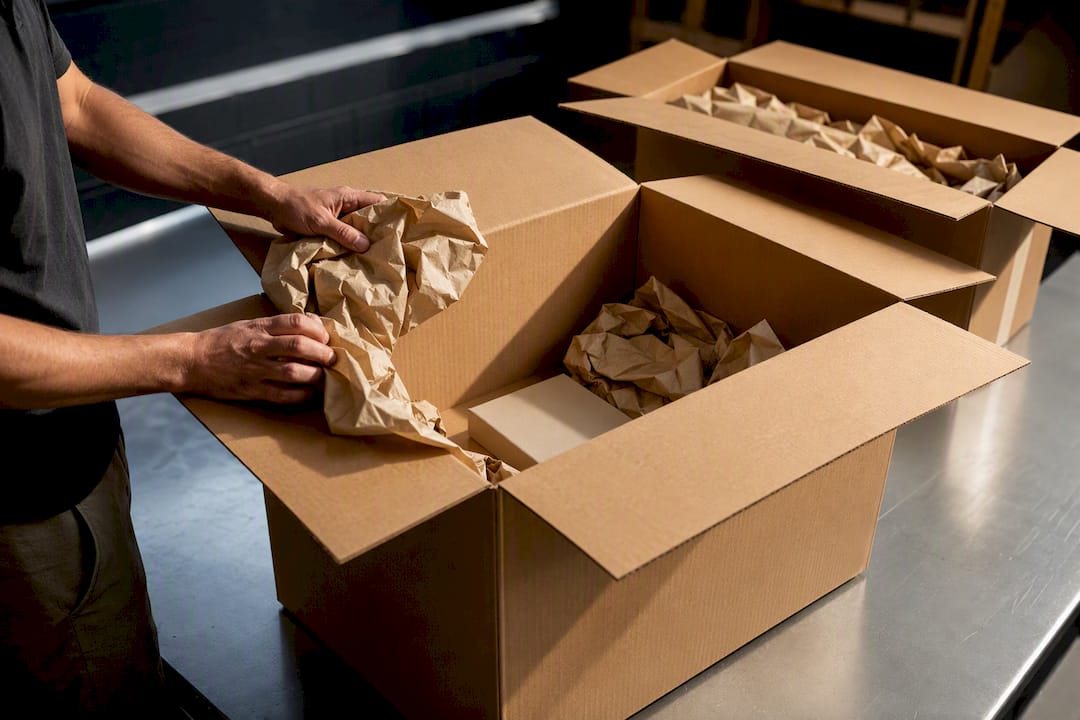
The conventional advice, “switch to X material and you’re sustainable”, skips the two questions that actually determine impact: does your regional infrastructure support this material’s end-of-life claim, and have you right-sized the package before worrying about what it’s made from? A perfectly recyclable box that’s twice the size it needs to be still loses to a smaller box made of a slightly less ideal material.
If you’re evaluating packaging for the first time, start with measurement, not material. Map your current shipping damage rates and box-to-product size ratios before you touch a single supplier contract. That’s where the real waste usually hides, and it’s the fix most companies skip because a material swap feels more like “doing something” than a spreadsheet exercise does.
— Cozee
Sustainable packaging strategy shouldn’t stop at the shipping box. Every disposable paper towel roll a household or business burns through is packaging waste too, just the kind nobody puts on a sustainability audit. Cozee-bay’s handcrafted bamboo paper towel dispensers cut down on single-use waste the same way a refillable mailer program does: by replacing constant disposal with something built to last.

Restaurants, churches, coffee shops, and senior living centers already use Cozee-bay dispensers to reduce paper waste without sacrificing convenience, since the design fits multiple towel fold types and major brands without a hardware overhaul. If your business is already auditing packaging for reduction opportunities, extend that same thinking to paper towel use on-site. Browse the current bamboo dispenser collection and see which model fits your space before your next supply order goes out.
Cross-check any packaging claim against the EPA’s sustainable packaging guidance, FSC certification standards, and ASTM D6400 or EN 13432 for compostability specifics.
Comments will be approved before showing up.