Your Cart is Empty


Choosing the right packaging can feel like a balancing act for every American restaurant owner committed to sustainability. The shift toward sustainable food packaging is no longer limited to just meeting eco-conscious expectations. Instead, it is about adopting materials and practices that truly reduce environmental impact while maintaining food safety and quality. This guide reveals practical solutions that help restaurants embrace greener packaging, strengthen brand identity, and satisfy today’s demand for responsible business choices.
| Point | Details |
|---|---|
| Sustainable packaging is essential for restaurants | Adopting sustainable packaging minimizes environmental impacts while enhancing product quality and safety. |
| Material selection and lifecycle consideration are vital | Restaurants should focus on recyclable, biodegradable, or compostable materials and consider their entire lifecycle for sustainability. |
| Sustainable packaging enhances brand image | By implementing eco-friendly packaging, restaurants can improve customer trust and differentiate themselves in the market. |
| Financial benefits and government incentives exist | Restaurants transitioning to sustainable packaging may benefit from tax breaks, grants, and reduced waste management costs. |
Sustainable packaging for restaurants represents a strategic approach to food service materials that minimizes environmental impact while maintaining product quality and safety. At its core, this concept goes far beyond simply selecting eco-friendly containers. Sustainable food packaging encompasses a comprehensive strategy that considers the entire lifecycle of packaging materials.
The definition of sustainable packaging involves several key components that restaurants must understand:
Restaurants adopting sustainable packaging are not just making an ecological statement but implementing a holistic approach to food system sustainability. This means selecting materials that reduce resource consumption, lower emissions, and support broader environmental conservation efforts.
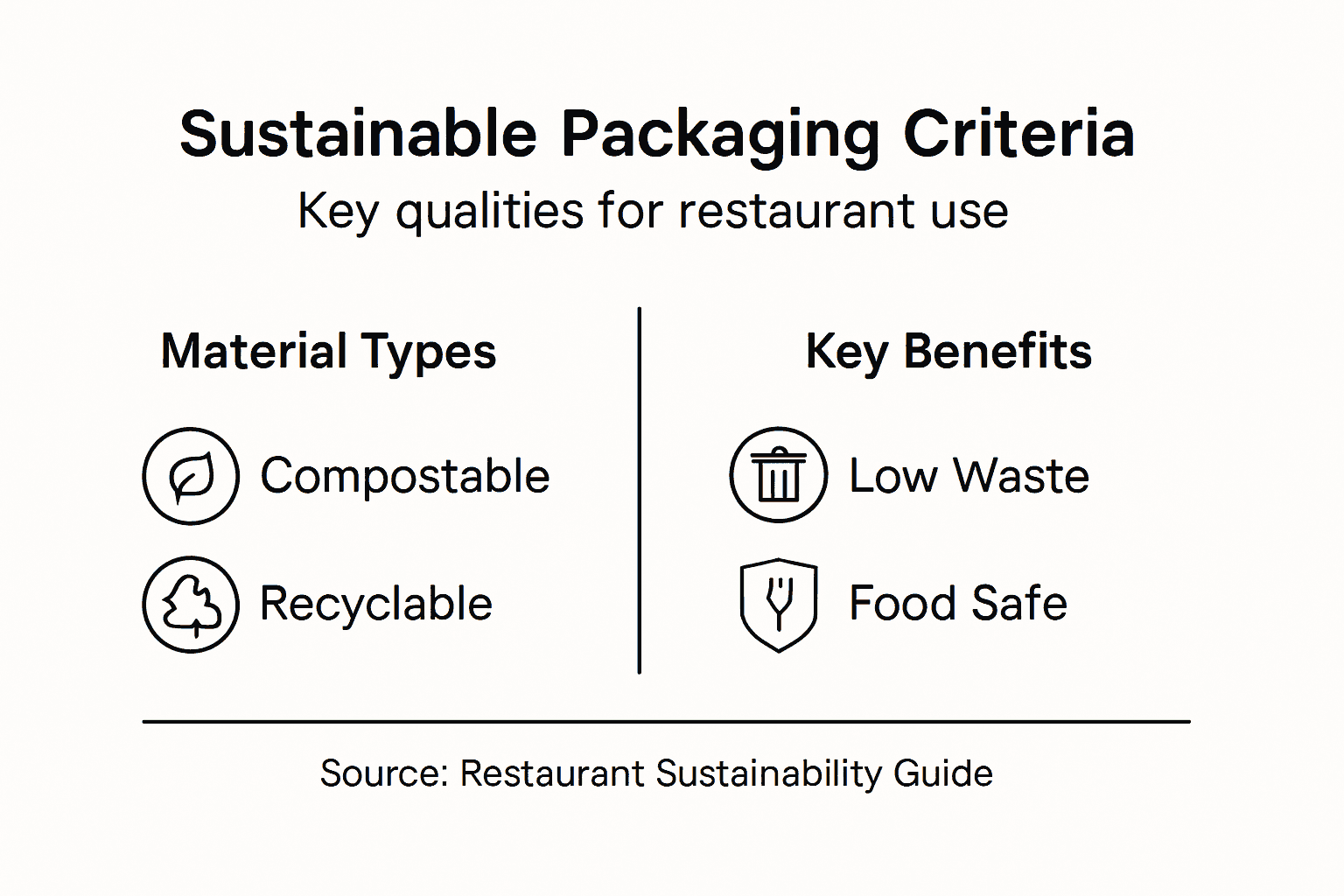
The criteria for sustainable restaurant packaging extend beyond simple recyclability. They require a nuanced understanding of material sourcing, production processes, potential for reuse, and ultimate disposal methods. Innovative restaurants are now looking at packaging as a strategic tool for reducing their overall environmental footprint.
Pro tip: Start by conducting a comprehensive audit of your current packaging materials to identify opportunities for sustainable alternatives and gradual implementation.
Restaurants are increasingly exploring innovative sustainable packaging materials that balance environmental responsibility with practical food service requirements. These materials represent a significant shift from traditional single-use packaging, offering solutions that minimize ecological impact while maintaining product quality and safety.
The most prevalent sustainable packaging materials include:
Sustainable food packaging materials are engineered to meet rigorous performance standards while supporting environmental conservation. These innovative solutions provide comparable barrier properties to traditional plastics, ensuring food remains fresh and protected during transportation and storage.

Modern sustainable packaging goes beyond material selection. Restaurants must consider the entire lifecycle of packaging, from raw material sourcing to final disposal. This holistic approach involves selecting materials that not only reduce waste but also minimize carbon emissions and support circular economy principles.
Here is a summary comparing sustainable packaging materials and their impact on restaurant operations:
| Material Type | Environmental Benefit | Durability for Food Service | Disposal Method |
|---|---|---|---|
| Paper-Based Products | Low carbon footprint | Moderate | Compost or recycle |
| Biodegradable Plastics | Reduces plastic pollution | Good for moist foods | Industrial composting |
| Plant-Based Polymers | Renewable resource use | Suitable for hot/cold items | Biodegrade, some recyclable |
| Bio-Nanocomposites | Advanced recycling options | High barrier properties | Specialized recycling |
| Compostable Containers | Full decomposition | Good structural stability | Commercial composting |
Pro tip: Test multiple sustainable packaging materials with your specific menu items to find the most effective and cost-efficient solution for your restaurant.
Restaurants today are discovering that sustainable packaging strategies represent far more than an environmental choice - they’re a powerful branding opportunity. By visibly demonstrating commitment to ecological responsibility, restaurants can transform packaging from a mere functional necessity into a meaningful statement about their values and corporate identity.
Key ways sustainable packaging elevates brand perception include:
Brand equity through sustainability has become increasingly critical in today’s marketplace. Modern consumers don’t just purchase products - they invest in brands that reflect their personal beliefs and environmental consciousness. Sustainable packaging serves as a tangible representation of a restaurant’s broader commitment to social responsibility.
By strategically implementing sustainable packaging, restaurants can transform an operational choice into a powerful marketing narrative. This approach goes beyond mere ecological considerations, becoming a sophisticated communication tool that resonates with increasingly discerning and environmentally conscious customers.
Pro tip: Develop a clear narrative around your sustainable packaging choices to effectively communicate your environmental commitment to customers.
Restaurants exploring sustainable packaging are discovering significant financial benefits beyond environmental considerations. Government incentives for sustainable practices provide compelling economic reasons to transition toward eco-friendly packaging solutions.
Key financial advantages include:
Policy incentives for sustainable packaging have become increasingly sophisticated. These mechanisms help restaurants offset initial investments in eco-friendly technologies, creating a more attractive financial landscape for sustainable transformation.
Beyond direct financial incentives, restaurants can realize long-term economic benefits through reduced waste, improved brand reputation, and alignment with emerging regulatory requirements. The initial investment in sustainable packaging often yields significant returns through operational efficiencies and enhanced market positioning.
Pro tip: Consult local economic development offices to explore specific sustainable packaging incentives available in your region.
Sustainable packaging represents a critical strategy for restaurants seeking to minimize their ecological footprint. Sustainable packaging waste management has emerged as a powerful approach to reducing environmental degradation through strategic material selection and disposal practices.
Key environmental impact considerations include:
Packaging waste management strategies have become increasingly sophisticated, supporting national and international sustainability targets. Restaurants can now leverage technological innovations and policy frameworks to create more environmentally responsible packaging solutions.
Compliance with evolving environmental regulations requires a proactive approach. Forward-thinking restaurants are not just meeting minimum requirements but setting new industry standards for sustainable packaging practices, demonstrating leadership in environmental stewardship.
Pro tip: Conduct a comprehensive waste audit to identify specific opportunities for reducing packaging environmental impact in your restaurant.
Restaurants embarking on sustainable packaging initiatives must navigate a complex landscape of challenges. Sustainable packaging transitions require strategic planning and understanding of potential obstacles that can derail environmental efforts.
Key challenges restaurants frequently encounter include:
Green packaging challenges demand comprehensive strategies that go beyond simple material substitution. Successful transitions require proactive investment in research, employee education, and clear communication with stakeholders.
Navigating these challenges requires a holistic approach. Restaurants must balance environmental aspirations with practical considerations, understanding that sustainable packaging is an evolutionary process requiring continuous learning, adaptation, and commitment to long-term sustainability goals.
For restaurants planning the switch, here are some common pitfalls and recommended solutions:
| Challenge | Impact on Operations | Recommended Solution |
|---|---|---|
| Higher Material Costs | Increased expenses | Gradual implementation plan |
| Supply Chain Issues | Stock unpredictability | Develop backup suppliers |
| Packaging Performance | Food safety concerns | Test rigorously with menu items |
| Evolving Regulations | Compliance uncertainty | Monitor legal updates |
| Customer Acceptance | Brand reputation risk | Communicate sustainability goals |
Pro tip: Develop a phased implementation strategy that allows gradual sustainable packaging integration while maintaining operational efficiency.
Choosing sustainable packaging is just the first step toward reducing your restaurant’s environmental footprint. The challenges of transitioning to eco-friendly materials, managing waste, and enhancing brand image require durable and stylish products that align with your sustainability goals. At Cozee Bay, we specialize in handcrafted bamboo solutions designed to seamlessly support restaurants committed to reducing plastic waste and embracing circular economy principles.
Discover how our premium bamboo paper towel dispensers and organizers can help you achieve:

Take the next step toward a greener restaurant today by exploring our full range of bamboo products at Cozee Bay. Enhance your sustainable packaging strategy with stylish, functional items that reinforce your commitment to the environment. Visit Cozee Bay’s landing page now and join the movement for responsible food service solutions.
Sustainable packaging helps reduce plastic waste, lower carbon emissions, improve recycling rates, divert waste from landfills, and conserve resources through the use of eco-friendly materials.
Sustainable packaging can elevate a restaurant’s brand image by demonstrating a commitment to environmental responsibility, distinguishing it from competitors, building consumer trust, and aligning with customers’ sustainability values.
Restaurants should evaluate the materials’ environmental impact, recyclability, biodegradability, suitability for food safety, and the potential for reuse within a circular economy framework.
Common challenges include higher material costs, supply chain disruptions, concerns over packaging performance, evolving regulatory compliance, and customer acceptance of new packaging designs.
Comments will be approved before showing up.