Your Cart is Empty


Bamboo vases, countertop dispensers, and small organizers cover almost every display need in a home or business, and the right choice depends on where the piece will live and how much moisture it will face. A narrow vase suits a dining table centerpiece, a sealed laminated dispenser suits a busy café counter, and a lightly oiled organizer suits a dry bathroom vanity. The sections below break down room-specific ideas, material tradeoffs, styling tips, care steps, and what to check before you buy.
TL;DR:
- Laminated bamboo offers better durability and moisture resistance than solid Moso bamboo, making it ideal for high-humidity environments.
- Sealed or lacquered finishes are essential for bamboo used in bathrooms and kitchens to prevent cracking and water damage.
- Proper care involves hand-washing, immediate drying, and regular oiling with food-grade mineral oil to maintain appearance and prevent swelling.
- Accurate measurements and confirmation of construction type are necessary to ensure bamboo pieces fit well and withstand regular use.
- Commercial-grade bamboo is built to last five to ten years with basic care, justifying its higher initial cost over disposable plastic alternatives.
Choosing between a freestanding vase and a wall-mounted piece comes down to counter space and traffic. A kitchen that fights for every inch of prep surface usually does better with a mounted dispenser; a dining room with room to spare can afford a tabletop cluster. Here’s how bamboo containers fit into the spaces you actually use every day.
Freestanding pieces move easily between rooms and work well for renters or anyone who rearranges often. Wall-mounted versions free up counter space permanently, which matters more in commercial kitchens and small apartment bathrooms than almost anywhere else. If you want more layout inspiration before committing to a piece, bamboo vase design ideas for the home walk through several room setups in more detail.
Not all bamboo homewares are built the same way, and the construction method matters more than most buyers expect. Solid Moso bamboo poles look rustic and organic, while laminated (also called strand-woven) bamboo is engineered by compressing and gluing bamboo strips into a dense, plank-like material. Laminated bamboo tends to hold its shape better under temperature and humidity swings, which is why most commercial-grade dispensers and organizers use it.
Hardness backs this up: Moso laminated bamboo tests at roughly 1,380 lbf on the Janka scale, close to red oak’s 1,290 lbf, so it holds up to daily handling in a busy kitchen or restaurant without denting easily.
Finish options and when to use them:
Pro Tip: If you’re buying for a restaurant, school, or senior living center, ask whether the piece is laminated and sealed on all sides, not just the visible surface. Unsealed undersides are where moisture damage usually starts.
Bamboo pairs naturally with butcher block counters, stone backsplashes, and matte black fixtures because the warm grain softens harder materials without competing with them. Placement matters as much as the piece itself.
Pro Tip: In a commercial kitchen, mount dispensers at a consistent height across every station. It looks more polished during health inspections and keeps staff from hunting for supplies during a rush.
For more room-specific pairings, bamboo plant decoration ideas for stylish homes covers additional combinations across living spaces.
Bamboo homewares reward a little routine care and punish neglect quickly, so the habits below matter more than any one-time treatment.
Common maintenance mistakes like dishwasher use and cooking-oil conditioning are the leading cause of premature failure in bamboo homewares, which makes this routine worth sticking to rather than skipping. For a deeper walkthrough of conditioning schedules, see bamboo product care tips for lasting beauty.
A few measurements and questions upfront save you from a return or a piece that never quite fits your space.
Turning an existing bamboo piece into something new doesn’t require much beyond a light touch and the right tools. Start with what you already own before buying anything new.
Repurpose a dispenser housing. An older bamboo paper towel dispenser with a worn finish can become a plant vase once you sand the surface lightly and reseal it with mineral oil. The wide base that once held a towel roll works well for a short, bushy plant.
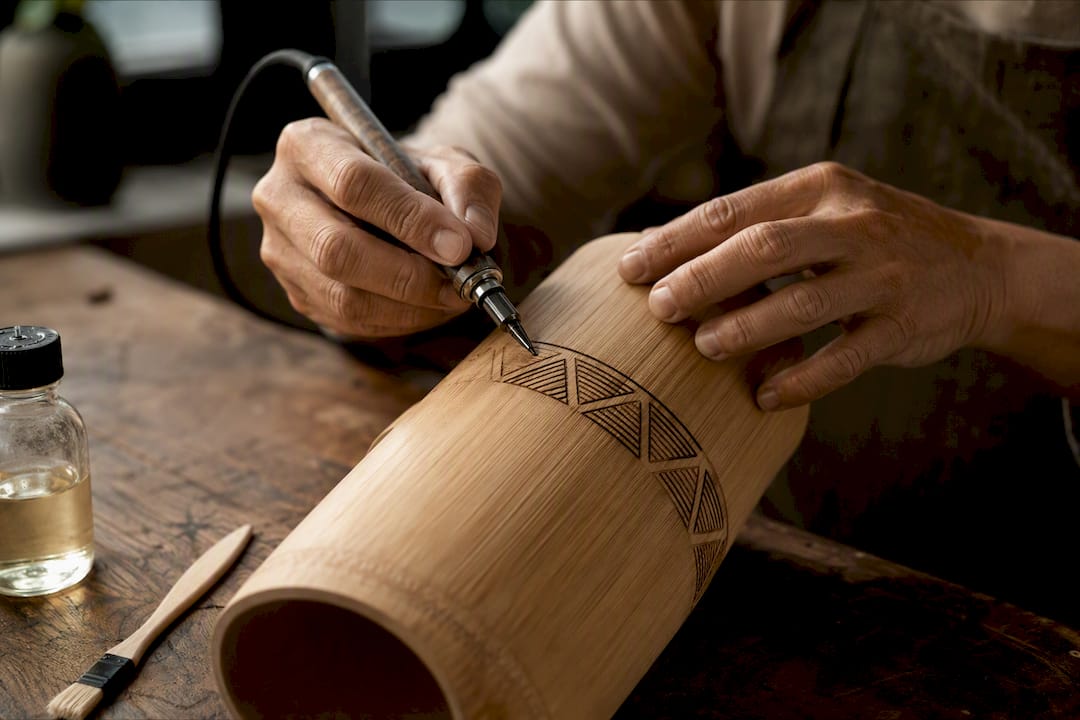
Add texture with wood burning. A simple wood-burning tool lets you etch a geometric pattern or a monogram into an unfinished bamboo vase before oiling it. Keep the design shallow so you don’t compromise the wall thickness.
Layer stain for depth. Applying a lighter oil to the base and a slightly darker one near the rim creates a two-tone gradient effect that reads as intentional rather than accidental.
Group mismatched pieces. Three different bamboo vessels, unified with the same finish, look like a coordinated set even if they started as separate purchases. This is an easy way to upcycle bamboo pieces you already have instead of buying a matched set outright. For step-by-step conditioning guidance that supports any of these projects, how to maintain bamboo products naturally covers the oils and tools worth keeping on hand.
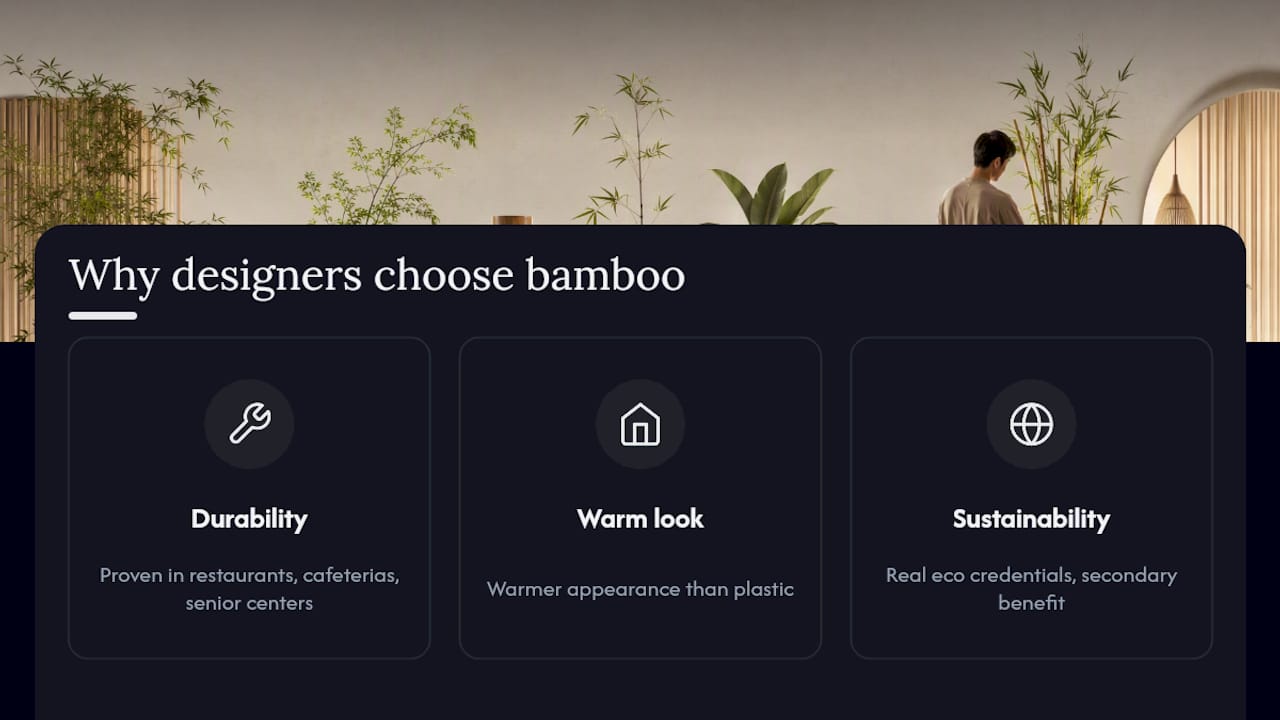
Cozee has spent years watching bamboo get filed under “sustainable alternative” instead of “good material, full stop.” That undersells it. Our dispensers have shown up in restaurant kitchens, school cafeterias, and senior living centers, environments that punish weak materials fast, and the pieces that survive daily commercial handling do it because laminated bamboo construction holds up, not because anyone was being kind to the planet.
The honest opinion here: bamboo’s eco credentials are real, but they’re not why a busy café should choose it over plastic. Durability and a warmer look are the actual reasons, and sustainability is the bonus.
— Cozee
Every piece Cozee Bay sells is handcrafted from laminated bamboo, backed by a money-back guarantee, and shipped free across the contiguous United States. That combination is hard to find once you start comparing mass-produced plastic organizers against something built to last five to ten years with basic care.

If a hallway or entryway redesign is next on your list, these hallway makeover ideas pair well with the bamboo styling tips above. When you’re ready to see the pieces themselves, browse the bamboo vase collection for full product photos, exact dimensions, and notes on which items are already in use in restaurants and senior living centers today.
Comments will be approved before showing up.