Your Cart is Empty


TL;DR:
- Compostable packaging fully breaks down into safe, nutrient-rich compost under specific conditions.
- Certification labels like BPI or TÜV certify that packaging meets strict standards for compostability.
- Proper environmental impact depends on local composting infrastructure and consumer disposal practices.
Not all eco-friendly packaging is created equal, and if you’ve ever stood in a store squinting at labels like ‘biodegradable,’ ‘compostable,’ or ‘plant-based,’ you’re not alone. These terms get tossed around so freely that they’ve lost much of their meaning. Here’s the thing: compostable packaging breaks down into compost, water, CO2, and biomass through microbial action under specific conditions, leaving zero toxic residues or microplastics. That’s a very different promise from simply ‘biodegradable.’ This guide cuts through the noise so you can make smarter choices for your home, your business, and the planet.
| Point | Details |
|---|---|
| Strict standards matter | Only certified compostable packaging will reliably break down without toxic residue or microplastics if processed correctly. |
| Industrial vs home compost | Most compostable packaging needs industrial composting; home compostable must state so on the label. |
| Watch for greenwashing | Verify certification marks to avoid misleading claims and ensure real sustainability impact. |
| Complement not replacement | Compostable packaging is part of a bigger picture—pair with reduction, reuse, and recycling for best results. |
Compostable packaging isn’t just a feel-good label. It’s a material category with a precise scientific definition. When something is certified compostable, it means microbes can fully consume it under the right conditions, turning it into nutrient-rich compost rather than a pile of plastic fragments.
Here’s what separates compostable from regular or even biodegradable packaging: the standard is stricter, the outcome is cleaner, and the timeline is defined. Lab standards require 90% biodegradation within 180 days and full disintegration within 12 weeks. Biodegradable packaging, by contrast, has no regulated timeline and no requirement to avoid microplastics.
The process works like this: microorganisms, including bacteria and fungi, break down the material’s molecular structure. Heat, moisture, and oxygen accelerate this process. The result is a stable, soil-enriching end product rather than a persistent pollutant.
“Compostable packaging is designed to fully break down into compost, water, CO2, and biomass through microbial action under specific controlled conditions, without leaving toxic residues or microplastics.”
Here are the key facts you should know:
Understanding the difference between compostable and biodegradable packaging is the first step toward making genuinely sustainable choices, not just greener-sounding ones.
Now that you know what compostable packaging is, it’s essential to understand how to recognize authentic products by their certifications. Without a recognized certification mark, any ‘compostable’ claim on a package is just marketing copy.
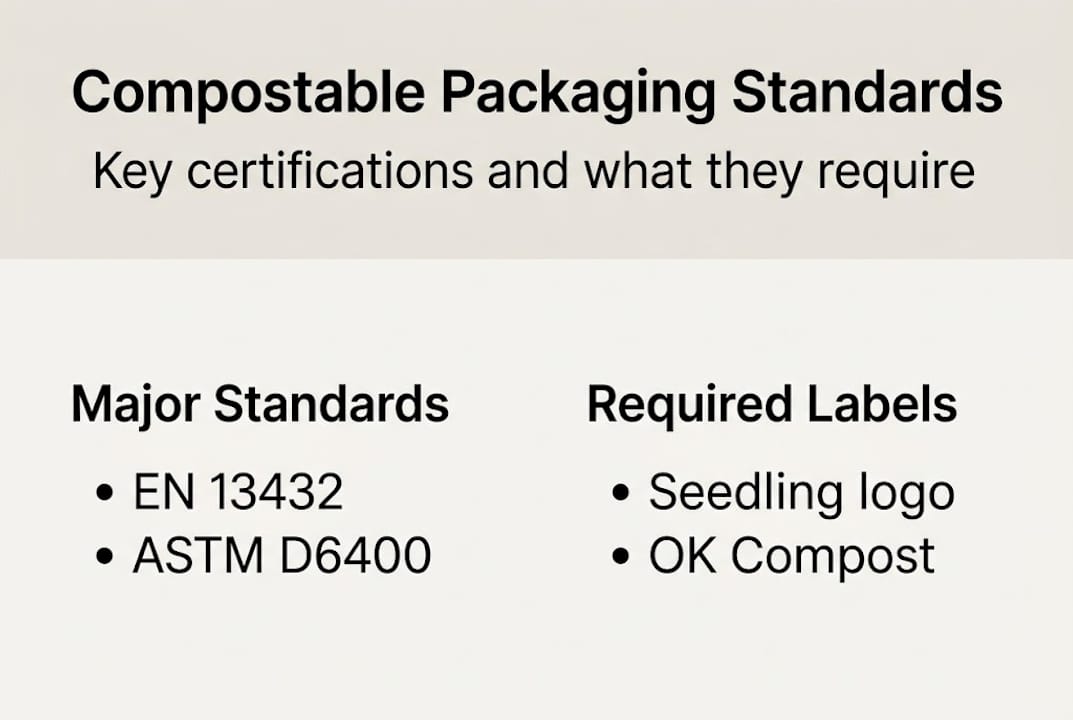
Two major standards govern compostable packaging globally:
| Standard | Region | Biodegradation Requirement | Disintegration | Additional Rules |
|---|---|---|---|---|
| EN 13432 | Europe | 90% in 6 months | 90% in 12 weeks | Low heavy metals, no ecotoxicity |
| ASTM D6400/D6868 | United States | Similar thresholds | Similar thresholds | Applies to industrial composting |
These standards don’t just test the base material. They require that the entire product complies, including inks, adhesives, and coatings. A compostable bag with a non-compostable ink layer doesn’t pass.
The most trusted certification labels you’ll encounter include:
Greenwashing is real, and it’s everywhere. Phrases like ‘eco-friendly,’ ‘natural,’ or even ‘biodegradable’ carry no legal weight. Only a recognized certification mark guarantees the product has been independently tested.
Pro Tip: When sourcing packaging for your small business, always ask suppliers for the specific certification number, not just the logo. Legitimate certifications are traceable and verifiable through the certifying body’s database.
If you want to stock your space with genuinely certified options, browsing top compostable products is a great starting point for both home and commercial use.
Understanding the label is just one part. Knowing where and how compostable packaging breaks down is key for real-world impact. This is where a lot of well-meaning consumers get tripped up.
Not all compostable packaging breaks down the same way in every environment. The conditions matter enormously.
Industrial composting takes place in large, managed facilities. Temperatures reach 55 to 60°C with 50 to 60% humidity, creating the ideal environment for fast, reliable breakdown. Most certified compostable packaging is designed specifically for these conditions.
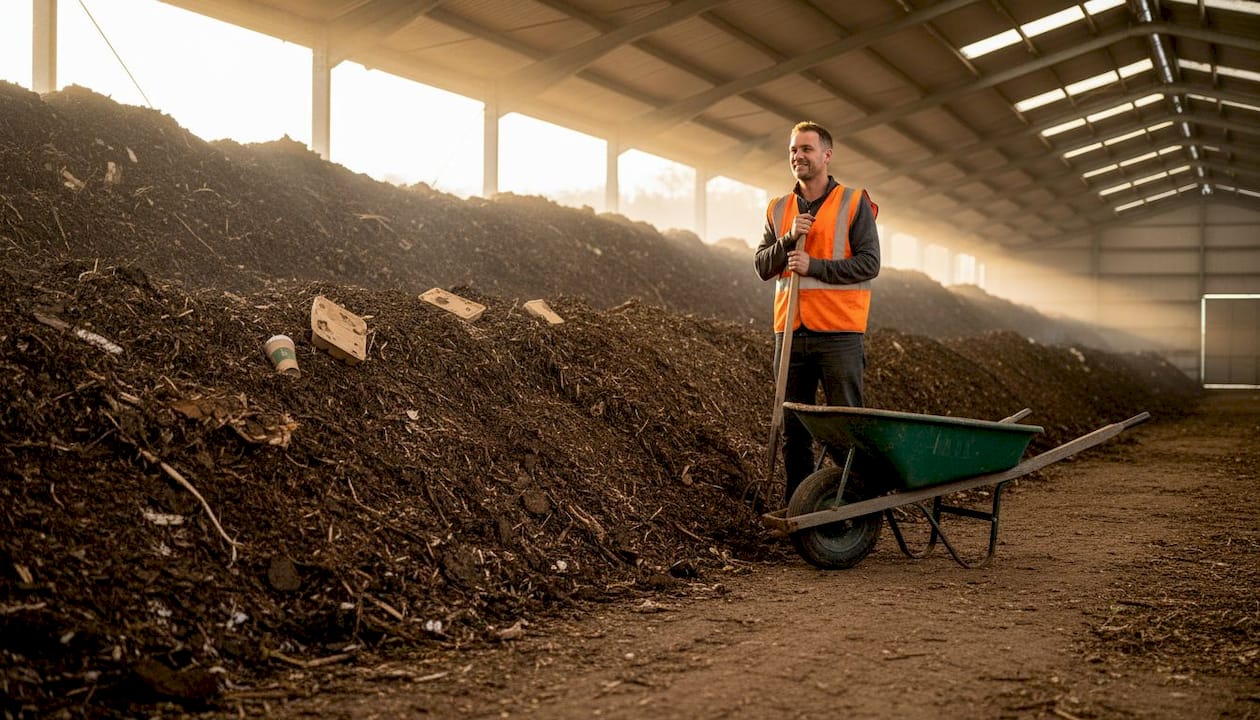
Home composting is cooler (typically 20 to 30°C), less controlled, and far more variable. Unless packaging is specifically certified for home composting, it may sit in your backyard bin for years without fully breaking down.
Here’s a side-by-side comparison:
| Factor | Industrial composting | Home composting |
|---|---|---|
| Temperature | 55 to 60°C | 20 to 30°C |
| Humidity | 50 to 60% | Variable |
| Breakdown speed | Weeks | Months to years |
| Reliability | High | Low (unless home-certified) |
| Packaging suitability | Most certified compostables | Only home-certified materials |
Here’s what happens when compostable packaging ends up in the wrong place:
Pro Tip: Before switching your business packaging to compostable materials, check whether your local municipality offers industrial composting pickup. If not, prioritize home-certified options or explore a kitchen composting guide to set up your own system.
Matching your packaging choice to your available composting infrastructure is the single most important decision you can make for real environmental impact.
Knowing how compostable packaging disintegrates in theory is useful, but let’s get practical. A closer look at its real benefits and challenges will help you decide whether it’s the right fit for your situation.
The genuine benefits:
But the limitations are just as real, and ignoring them leads to poor decisions.
The honest challenges:
For small businesses, the calculus depends on your local composting access and your customers’ habits. A restaurant with municipal composting pickup gets far more value from compostable takeout containers than a retailer shipping products to areas without composting infrastructure.
Pro Tip: Pair compostable packaging with clear on-pack disposal instructions. Customers who don’t know how to dispose of it correctly will toss it in the trash, erasing the environmental benefit entirely. You can also check out sustainable packaging benefits for restaurants and an eco-friendly home checklist for more practical guidance.
Let’s step outside the marketing for an honest look at what compostable packaging can and can’t do. At Cozee Bay, we see a lot of buyers treat ‘compostable’ as a guilt-free pass, a way to keep consuming without changing habits. That’s understandable, but it’s not the full picture.
Lab standards consistently exceed real-world performance, and without proper collection, sorting, and composting infrastructure, even the best-certified packaging ends up in a landfill. Certification matters enormously, but so does consumer education and local policy.
The brands and households making the biggest difference aren’t just swapping plastic for compostables. They’re combining compostable materials with genuine reduction, reuse, and recycling strategies. Compostable packaging works best for unavoidable single-use situations, particularly food-contact packaging that can’t be easily recycled.
If your community doesn’t have industrial composting access, pushing for biodegradable product choices and reduction first is often the smarter environmental move. Compostables are a powerful tool, but only one in the toolkit.
If this guide has you feeling more confident about navigating compostable packaging, you’re already ahead of most shoppers and business owners. Finding trusted, certified options doesn’t have to be overwhelming.

At Cozee Bay, we curate eco-conscious products with sustainability and function in mind, from bamboo paper towel dispensers to kitchen organizers that support a low-waste lifestyle. Whether you’re outfitting a home kitchen or a commercial space, we make it easy to shop with intention. Explore our compostable product recommendations for vetted picks that pair well with a genuine composting routine. Every small, informed choice adds up to real change.
Look for certification marks like BPI, TÜV OK Compost, or Seedling, which require rigorous independent lab testing across the entire product, including inks and adhesives. A logo without a traceable certification number is a red flag.
Only packaging specifically marked ‘home compostable’ will reliably break down in a backyard bin. Most certified compostable packaging requires the higher temperatures of industrial facilities to fully disintegrate within the defined timeline.
Certified compostable packaging is generally the safer choice because it must meet strict standards for complete breakdown without leaving microplastics or toxic residues. Biodegradable has no regulated timeline or outcome requirement.
In a landfill, compostable packaging rarely composts because there’s no oxygen or managed heat. It may instead contribute to methane emissions as it slowly degrades anaerobically, which is why proper sorting into compost streams is so important.
Comments will be approved before showing up.