Your Cart is Empty


TL;DR:
- Implementing eco-friendly packaging starts with auditing current materials, verifying certifications, and testing protective performance through pilots. Using certified, recyclable, or compostable materials and designing right-sized, mono-material packages helps reduce waste and costs while satisfying regulatory and consumer demands. Communicating clear disposal instructions reinforces sustainability efforts and builds customer trust.
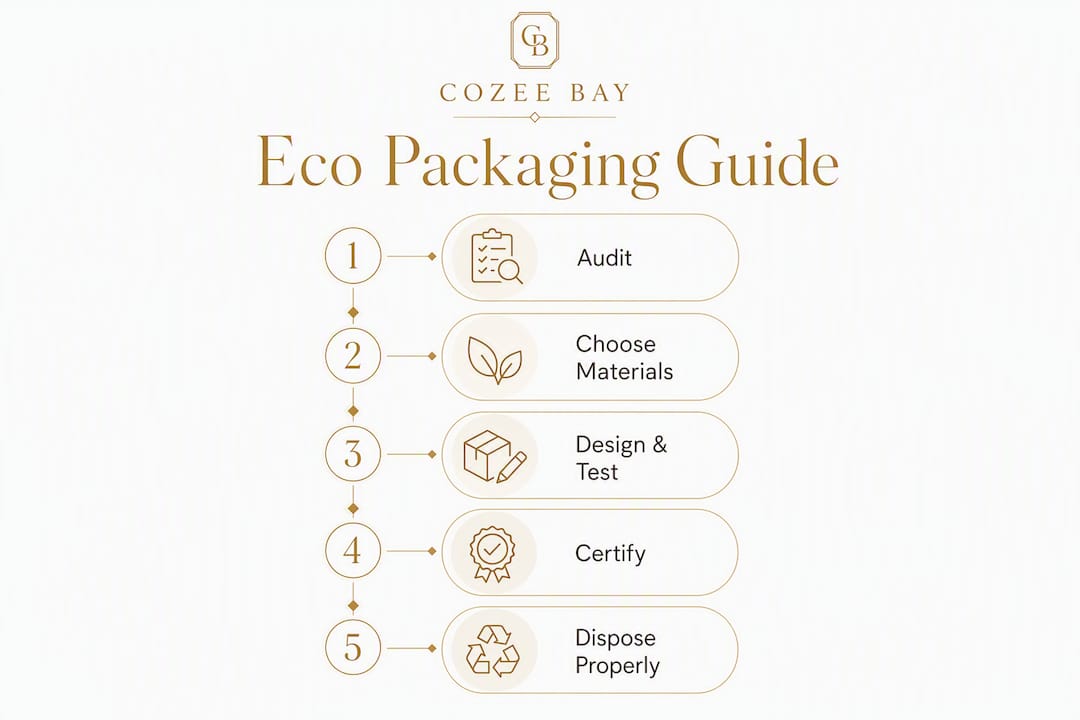
Eco friendly packaging is packaging designed to minimize environmental harm across its full lifecycle while still protecting the product inside. If you’re trying to figure out where to start, here are the three things to do first: audit your current materials and box sizes, check that any “eco” label carries a real certification (FSC, BPI, or ASTM D6400), and run a pilot on a single SKU before committing to a full switch. EcoEnclose recommends benchmarking your existing packaging before selecting alternatives, because right-sizing alone often cuts both waste and shipping costs.
TL;DR — three actions to take right now:
Sustainable packaging reduces landfill pressure, cuts carbon emissions, and builds the kind of customer trust that keeps people coming back. Over 60% of consumers say sustainable packaging influences their purchase decisions, which makes it a genuine business differentiator, not just a feel-good choice.
Plastic waste is the most visible problem. Millions of tonnes enter landfills annually, and some plastics take hundreds of years to break down, releasing microplastics into waterways and harming wildlife. Beyond the environmental toll, regulations are tightening: state-level bans on single-use plastics are already in effect across California, New York, and Maine, and federal packaging waste rules are moving forward. Businesses that switch now avoid scrambling to comply later.
The commercial upside is real too. Right-sizing packaging reduces dimensional weight charges from carriers like UPS and FedEx. Recyclable materials often cost less per unit at scale. And sustainability in e-commerce is increasingly what separates brands that earn repeat customers from those that don’t.
Business advantages at a glance:
Common barriers:
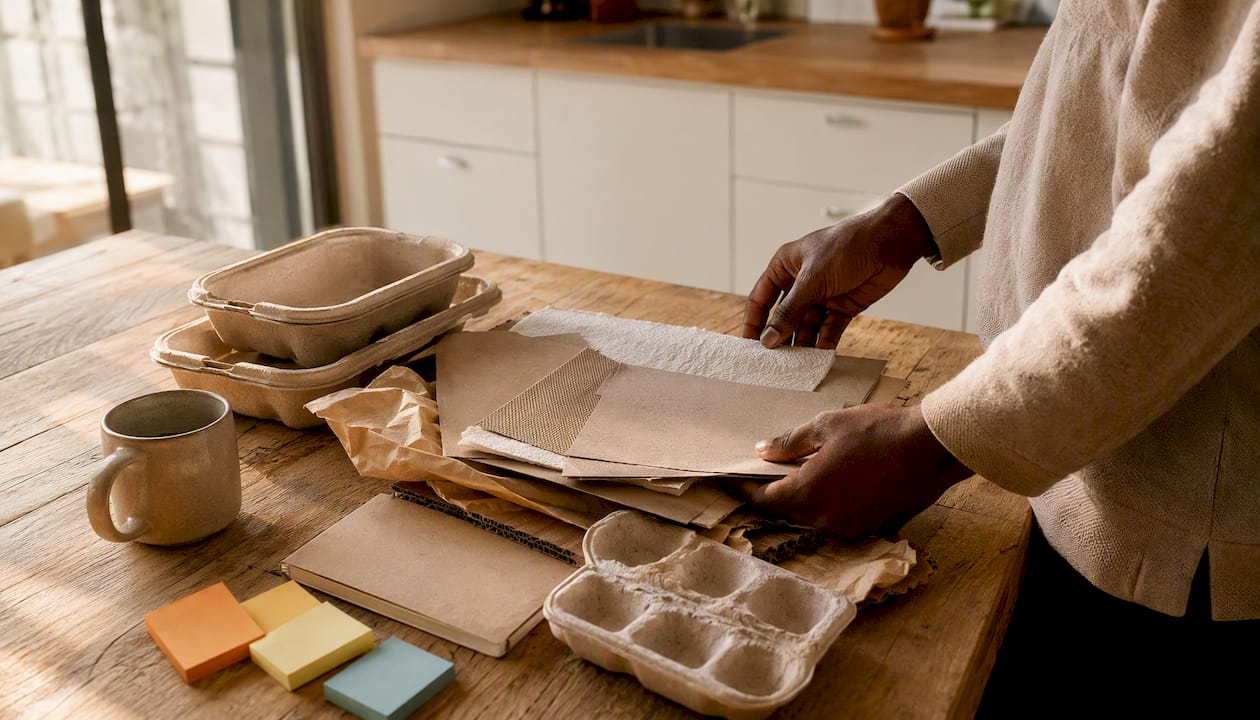
The core material families worth considering are recycled paperboard, corrugated cardboard, kraft paper, molded pulp, compostable bioplastics, bamboo, glass, and metal. Each has a clear best use and a specific end-of-life path in the U.S.
| Material | Best Uses | Key Pros | Key Cons | U.S. End-of-Life |
|---|---|---|---|---|
| Recycled paperboard | Folding cartons, secondary packaging | Lightweight, printable, widely available | Moisture-sensitive | Curbside recycle |
| Corrugated cardboard | Shipping boxes, mailers | Strong, cushioning, high recycled content | Bulky | Curbside recycle |
| Kraft paper | Void fill, wrapping, mailers | Biodegradable, recyclable, low cost | Limited moisture resistance | Curbside recycle |
| Molded pulp | Inserts, trays, cushioning | Replaces foam, often reusable | Heavier than foam | Recycle or compost (local rules vary) |
| Compostable bioplastics | Liners, pouches, film | Breaks down under composting conditions | Requires commercial compost | Commercial compost only |
| Bamboo | Dispensers, organizers, rigid packaging | Renewable, durable, premium aesthetic | Limited U.S. curbside options | Compost or landfill |
| Glass | Jars, bottles | Infinitely recyclable, premium feel | Heavy, higher shipping cost | Curbside recycle |
| Metal (aluminum, steel) | Cans, tins | High recycled content, durable | Energy-intensive to produce | Curbside recycle |
A few special cases worth noting:
As a practical rule: choose mono-materials wherever possible, and prefer post-consumer recycled content when curbside recycling is available in your delivery area. Mixing materials (say, a paperboard sleeve over a plastic tray) creates recycling contamination that defeats the purpose.
Sustainable design must not sacrifice protection. Start by right-sizing, then test before you commit. A box that’s two inches too large for a bamboo dispenser wastes filler material, adds dimensional weight charges, and increases the chance of product movement during transit.
Key design rules to follow:
When switching from foam or air pillows to paper-based void fill, the packing pattern needs to change. Paper-based fill compresses differently than foam under transit stress, so you may need to adjust how you position the product in the box and consider a slightly different box profile to maintain the same protection level.
Pro Tip: When switching to paper void fill, run a drop test from at least 36 inches on a hard surface before finalizing your box size. A product that survived foam cushioning may need a snugger fit or a different paper fill density to pass the same test.
When to use compostable liners: products with oily or moist surfaces that would degrade a plain paper interior. When thin barrier films are defensible: when no paper-based barrier meets your product’s shelf-life or safety requirements. Document your reasoning so your claims stay specific and verifiable.
Not all eco claims are equal. The ones worth trusting carry specific, verifiable certifications with documented chain-of-custody. Narrow, verifiable claims like “recyclable paperboard carton, no plastic window” are far more useful to consumers than a sweeping “eco-friendly” badge.
Certifications to look for:
Red flags to watch for:
You can also check local curbside recycling rules at your municipal website or through the How2Recycle program, which labels packaging with specific disposal instructions verified for U.S. infrastructure.
A stepwise transition reduces risk and builds customer confidence. Auditing current packaging and running pilots before a full rollout is the approach recommended by packaging specialists, and it’s the one that actually sticks.
Supplier conversation checklist:
Single-SKU pilot timeline:
Disposal depends on the material and your local rules. The default priority is: reuse first, then recycle, then compost where infrastructure exists.
For mixed-material packaging, separate components before recycling. Pull a paperboard sleeve off a plastic tray. Peel a plastic window off a paper carton. Laminated or waxed boards (shiny interior coating) generally cannot be recycled curbside and should go in the trash unless your local facility accepts them.
Pro Tip: Type your zip code into Earth911.com or your city’s municipal website to find exactly which materials your local facility accepts. When in doubt between recycling and composting, recycle, since contaminating a compost stream with non-compostable materials causes more harm than a clean recyclable going to landfill.
For a bamboo paper towel dispenser, the right packaging solution balances moisture resistance, protective performance, and a premium unboxing experience that matches the product’s aesthetic. A recommended approach: a right-sized corrugated outer carton with post-consumer recycled content, kraft paper void fill or a custom molded pulp insert, and a paperboard sleeve with FSC certification and specific material claims printed clearly.
Why those choices? Corrugated cardboard absorbs transit shock well, which matters when dispensers ship to restaurants, senior living centers, schools, and coffee shops where handling is less controlled than residential delivery. Kraft void fill or molded pulp eliminates foam, keeps the interior recyclable, and signals quality to the customer opening the box. Right-sizing the carton to the dispenser’s actual dimensions avoids dimensional weight surcharges and reduces filler use.
For eco-friendly dispensers in commercial settings, the label on the outer carton should read something like: “Recyclable corrugated carton, kraft paper fill, FSC-certified paperboard sleeve, no plastic window.” That level of specificity helps customers dispose correctly and protects the brand from greenwashing claims.
Packaging that tells the customer exactly what it’s made of and how to recycle it is not just honest — it’s the kind of detail that turns a one-time buyer into a repeat customer.
Cozee-bay encourages inserting first-hand testing data, customer satisfaction notes, or durability test results here as they become available, to strengthen the E-E-A-T signal for this section.
Eco friendly packaging works when you choose certified materials, right-size your boxes, test for protection, and communicate disposal instructions clearly to your customers.
| Point | Details |
|---|---|
| Audit before switching | Measure current box sizes and list all materials before selecting alternatives. |
| Verify certifications | Look for FSC, BPI, or ASTM D6400/D6868, not just a generic “eco” label. |
| Test protective performance | Run drop tests when switching to paper-based fill to avoid damage and returns. |
| Pilot one SKU first | Track damage rate, return rate, and customer NPS before a full rollout. |
| Dispose by material | Cardboard and kraft paper go curbside; compostable plastics need commercial compost. |
Sustainable packaging for bamboo home goods isn’t a luxury add-on. It’s the baseline expectation from the customers who are most likely to buy a handcrafted bamboo dispenser in the first place. At Cozee-bay, the priority is packaging that matches the product: honest materials, specific claims, and nothing that contradicts the eco-conscious values the product itself represents.
One caution worth naming directly: don’t over-promise. If an internal component still needs a thin barrier film for moisture protection, say so on the label rather than claiming “fully plastic-free.” Customers who care enough to read the label will respect the honesty far more than a claim that unravels when they open the box. For eco-friendly home accessories, the packaging is part of the product experience, and getting it right is worth the extra few weeks of piloting.
For anyone who wants to go deeper on standards, certifications, and supplier options, these are the most useful U.S.-relevant resources:
To validate supplier documentation, ask for the certificate number (not just a logo), then cross-reference it on the certifier’s public database. For local disposal rules, your city or county municipal website is the most reliable source, since curbside acceptance varies significantly by region.
Comments will be approved before showing up.