Your Cart is Empty


TL;DR:
- Biodegradable polymers can break down into non-toxic products through microbial activity, depending on their molecular structure. Their commercial use includes food packaging, medical devices, and agricultural mulch films, but proper industrial composting is often necessary for effective degradation. The environmental benefits depend heavily on existing infrastructure, not just the chemical design of the materials.
Biodegradable polymers are materials that microorganisms can break down into natural, non-toxic products such as carbon dioxide, water, and biomass. The most commonly cited examples include polylactic acid (PLA), polyhydroxyalkanoates (PHAs) like PHB and PHBV, and starch-based blends. You will find these materials showing up in places you probably already recognize:
If you have ever wondered why some plastics can disappear in a compost bin while others sit in a landfill for centuries, the answer comes down to molecular structure. That is exactly what this guide unpacks.
The formal definition from IUPAC describes a biodegradable polymer as one susceptible to degradation by biological activity, accompanied by a lowering of its molar mass. In plain terms, microbes produce enzymes that attack specific chemical bonds in the polymer chain, breaking it into progressively smaller fragments until nothing harmful remains.
The key bond is the ester linkage (written chemically as RCO₂R’). Ester bonds are prone to both chemical and enzymatic hydrolysis, which is why most biodegradable polymers are polyesters. Carbon–carbon backbones, by contrast, resist microbial attack almost entirely.
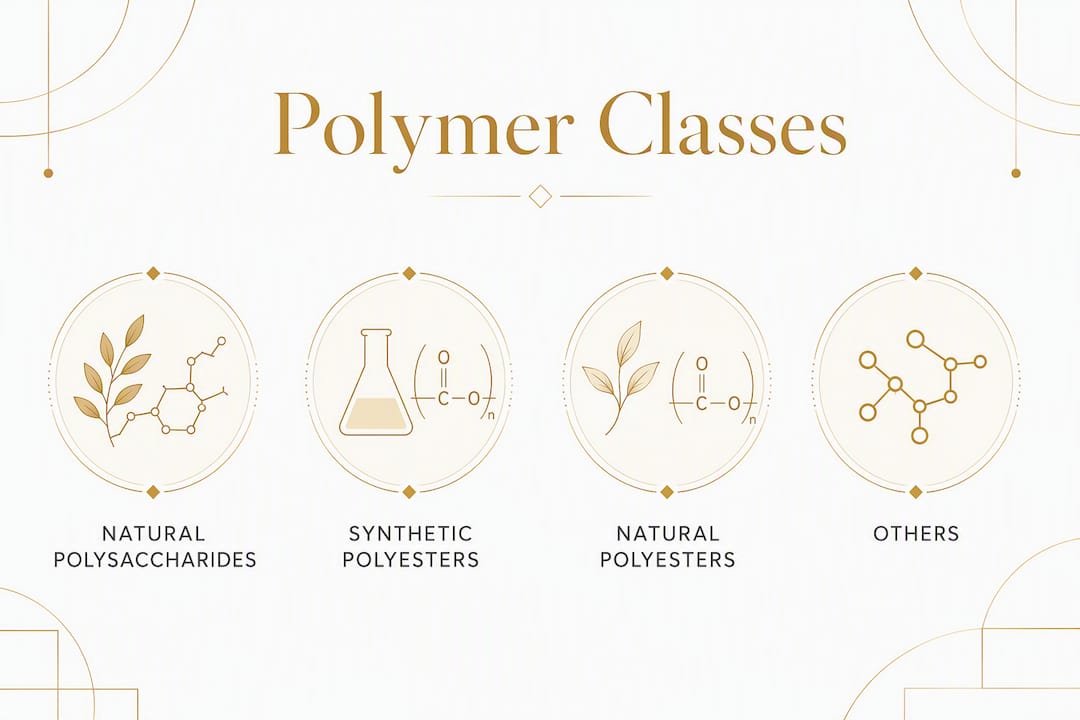
Biodegradable polymers fall into four broad categories:
One distinction worth locking in early: “bioplastic” and “biodegradable polymer” are not the same thing. A material’s biodegradability depends on its chemical design, not on whether its raw material came from a corn field or an oil refinery. Bio-based polyethylene, for example, is chemically identical to fossil-fuel polyethylene and resists biodegradation just as stubbornly.
Pro Tip: Group the major classes by their backbone: natural polysaccharides (cellulose, starch), synthetic polyesters (PLA, PHAs, PCL, PBS, PBAT), and the water-soluble outlier (PVA). Three groups cover nearly every exam question.
| Polymer | Source | Typical uses | Biodegradation conditions | Order-of-magnitude time | Key advantage / limitation |
|---|---|---|---|---|---|
| PLA | Bio-based (corn/sugarcane starch) | Food packaging, cups, films | Industrial composting | Months (industrial); years in soil/sea | Widely available; needs high-temp composting |
| PHB | Bio-based (microbial fermentation) | Medical devices, packaging | Soil, marine, industrial | Months to ~1 year | Fully microbial origin; brittle |
| PHBV | Bio-based (microbial fermentation) | Packaging, medical | Soil, industrial | Months to ~1 year | Less brittle than PHB; higher cost |
| PCL | Petroleum-derived | Sutures, drug delivery, mulch | Soil, industrial | 2–4 years | Very flexible; slow degradation |
| PBS | Petroleum-derived | Bags, mulch films, packaging | Soil, industrial | Months to ~2 years | Good mechanical properties; moderate cost |
| PBAT | Petroleum-derived | Compostable bags, mulch films | Industrial composting | Months (industrial) | Excellent flexibility; petroleum-derived |
| PVA | Petroleum-derived | Laundry pods, films, adhesives | Aquatic/aerobic soil | Weeks to months | Water-soluble; limited structural use |
| Starch blends | Bio-based (corn, potato, tapioca) | Bags, trays, loose-fill packaging | Soil, industrial | Weeks to months | Low cost; moisture-sensitive |
| Cellulose-based | Bio-based (wood pulp, cotton) | Films, coatings, textiles | Soil, industrial | Weeks to months | Abundant; processing can be complex |
PLA is the most commercially widespread of the group. Synthesized from fermented plant starch through ring-opening polymerization of lactide, it turns up in everything from deli containers to 3D-printing filament. The catch is that PLA degrades meaningfully only under industrial composting conditions, where temperatures exceed typical industrial composting thresholds and humidity is controlled. In soil or seawater, degradation slows dramatically.
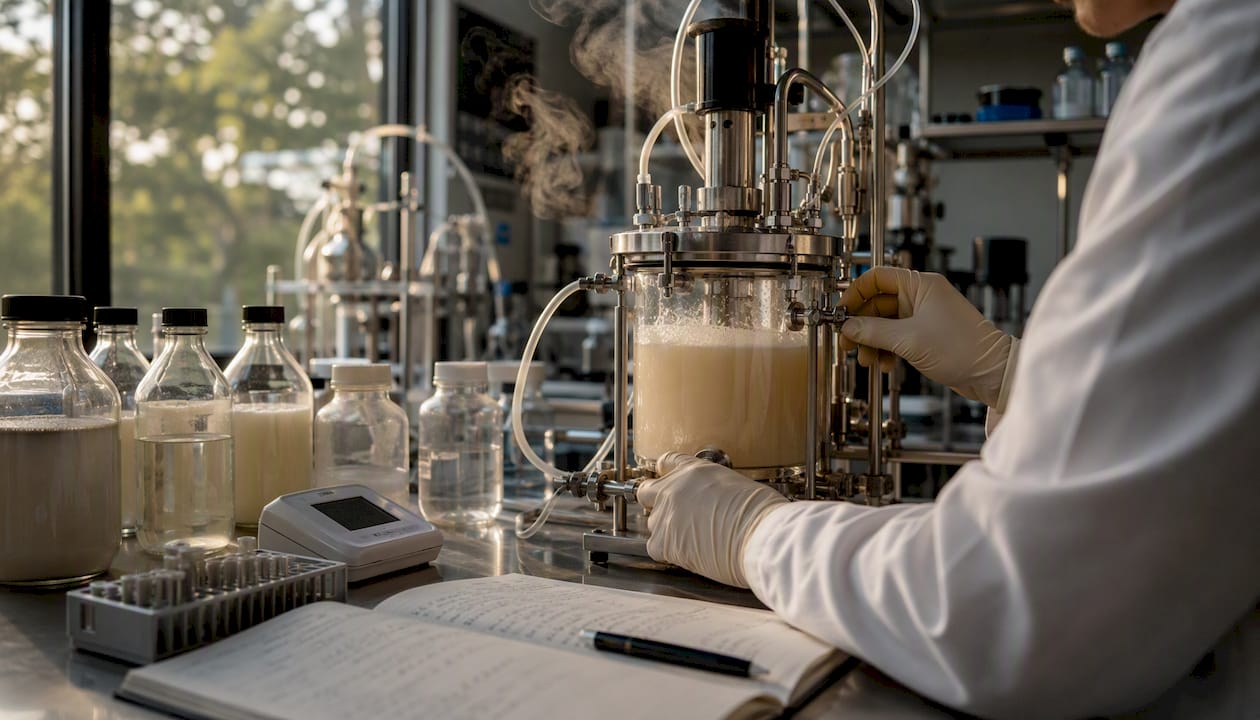
PHAs, including PHB and PHBV, are produced entirely by microbial fermentation, making them among the most genuinely bio-derived polymers on the list. They degrade in a wider range of environments than PLA, including soil and marine settings, and their breakdown products are nontoxic monomers the body can metabolize. That last property is why PHAs and PLA both appear in medical applications such as resorbable sutures and bone screws.

The process moves through five recognizable stages:
Several environmental variables control how fast this sequence runs:
The core difference is structural. Biodegradable polyesters carry ester bonds that enzymes can hydrolyze. Conventional plastics like polyethylene (PE) and polypropylene (PP) consist predominantly of carbon–carbon bonds, which microbes cannot cleave under normal environmental conditions.
Key contrasts at a glance:
When PE or PP does fragment from UV exposure and mechanical stress, it does not biodegrade. It simply becomes microplastics, particles small enough to enter waterways, food chains, and human tissue.
| Biodegradable examples | Non-biodegradable examples |
|---|---|
| PLA, PHB, PHBV, PCL, PBS, PBAT, PVA, starch blends, cellulose films | Polyethylene (PE), polypropylene (PP), polystyrene (PS), PVC |
Matching the right polymer to the right application comes down to three trade-offs: how fast it needs to degrade, what mechanical demands it faces, and what the end-of-life infrastructure actually looks like.
A compostable food service cup illustrates the full picture well. Choose PLA, certify it to ASTM D6400, collect it through a composting program, and it breaks down in months. Skip the certified composting step and send it to landfill, and it behaves almost like conventional plastic.
This is the section that tends to trip students up on exams, and it trips up consumers even more. The word “biodegradable” has no single legal definition in the United States, so claims vary widely. What actually matters is whether a product meets a recognized standard and what conditions that standard requires.
Three standards you should know:
Passing any of these standards means the material biodegrades under defined industrial conditions within specified timeframes and leaves no toxic residues. It does not mean the material degrades safely in your backyard, a river, or a landfill.
Two distinctions worth memorizing:
Pro Tip: When you see “biodegradable” on packaging, look for a certification logo (BPI Compostable, DIN CERTCO seedling) and the words “industrial composting required.” No logo and no conditions listed means the claim is unverified.
The environmental case for biodegradable polymers is not just about swapping one material for another. It is about designing materials whose end-of-life is built into their chemistry from the start.
The honest caveat is that the benefit only materializes when the right end-of-life infrastructure exists. A PLA cup in a city without industrial composting collection delivers little environmental advantage over a conventional plastic cup. Choosing biodegradable products is a meaningful step, but the system around those products matters just as much as the material itself.
Pro Tip: When writing an essay on biodegradable polymers, evaluate the full lifecycle: raw material source, processing energy, required end-of-life conditions, and toxicity of breakdown products. A polymer that scores well on all four is genuinely better; one that scores well only on the label is greenwashing.
Biodegradable polymers break down because microorganisms attack ester bonds in their backbone, converting the material to CO₂, water, and biomass under the right temperature, moisture, and microbial conditions.
| Point | Details |
|---|---|
| Core definition | Biodegradable polymers degrade via enzymatic hydrolysis of ester bonds into non-toxic products. |
| Top examples to memorize | PLA, PHAs (PHB, PHBV), PCL, PBS, PBAT, PVA, starch blends, cellulose-based polymers. |
| Conditions matter | PLA degrades in months under industrial composting but degrades far more slowly in soil or marine settings. |
| Standards to cite | ASTM D6400 and EN 13432 certify compostability under industrial conditions; ASTM D5338 defines the test method. |
| Bioplastic ≠ biodegradable | Biodegradability depends on chemical design, not whether the source material is bio-based. |
The fastest way to make biodegradation real for students is to let them watch it happen, even at a small scale.
Simple compost microcosm experiment:
A common student misconception worth addressing directly: many learners assume that if a material is labeled “biodegradable,” it will disappear quickly anywhere. The PLA result in this experiment corrects that assumption better than any lecture slide. Link the observation back to crystallinity and temperature dependence, and you have covered two exam topics in one activity.
Pro Tip: Ask students to predict outcomes before the experiment, then compare predictions to results. The gap between “I thought it would all be gone” and the actual PLA result is the most memorable lesson in the whole unit.
These are the most reliable places to continue your research, each suited to a different purpose:
For technical claims about mechanisms and molecular structure, prefer peer-reviewed articles. For certification details, go directly to the ASTM or ISO standards pages. Wikipedia and Britannica are reliable for orientation but should be supplemented with primary sources in formal academic work.
Most articles on biodegradable polymers stop at the chemistry. What they underplay is the infrastructure gap. You can design the most elegantly degradable polymer on paper, certify it to ASTM D6400, and still have it end up in a landfill because the composting collection system does not exist in that zip code. The material did everything right. The system failed.
That gap matters for students because it reframes the whole topic. Biodegradable polymers are not a solution by themselves. They are one component of a system that also requires collection infrastructure, consumer behavior, and policy. When you write an essay arguing that biodegradable plastics will solve plastic pollution, the strongest version of that argument acknowledges this dependency rather than ignoring it.
The chemistry is genuinely exciting. Ester bonds that microbes can eat, polymers grown inside bacteria, plant starch turned into packaging film — these are real achievements. But the honest measure of their value is whether the end-of-life pathway actually exists for the people using them. That is the question worth asking every time you see a compostable label.
Comments will be approved before showing up.