Your Cart is Empty


TL;DR:
- Biodegradable materials are broken down by microorganisms into natural substances, but the process depends on environmental conditions. Certifications like EN 13432 and ASTM D6400 ensure products meet verified standards, unlike vague claims or oxo-degradable plastics that cause microplastic pollution. Consumers should check certifications and disposal requirements to make truly eco-friendly choices.
Biodegradable is defined as the ability of a material to be broken down by living microorganisms, such as bacteria and fungi, into natural substances like water, carbon dioxide, and biomass. Understanding what does biodegradable mean goes far beyond reading a label on a product. The term is a scientific description, not a regulated certification, and it carries no guaranteed timeline or safety promise. If you have ever grabbed a product marked “biodegradable” and felt good about it without knowing what happens next, you are not alone. This article cuts through the confusion so you can make genuinely informed choices.
Biodegradable refers to materials broken down by microorganisms into natural substances like water, carbon dioxide, and biomass, with no specific timeframes or safety guarantees attached. The process is driven entirely by biology, not chemistry or mechanical force.
Three main groups of microorganisms do this work:
Environmental conditions control how fast biodegradation happens. Temperature, moisture, and oxygen availability are the three biggest factors. A banana peel left in a warm, moist compost bin breaks down in weeks. The same peel buried in a cold, dry landfill can persist for years.
Biodegradation differs by environment: aerobic biodegradation, which happens with oxygen present, produces carbon dioxide and biomass. Anaerobic biodegradation, which happens without oxygen, produces methane, a potent greenhouse gas if left unmanaged. That distinction matters enormously when you think about what happens to your “biodegradable” bag in a sealed landfill.

Pro Tip: Compost bins and backyard piles create aerobic conditions that speed up biodegradation. Landfills are largely anaerobic, which slows the process dramatically and can generate methane.
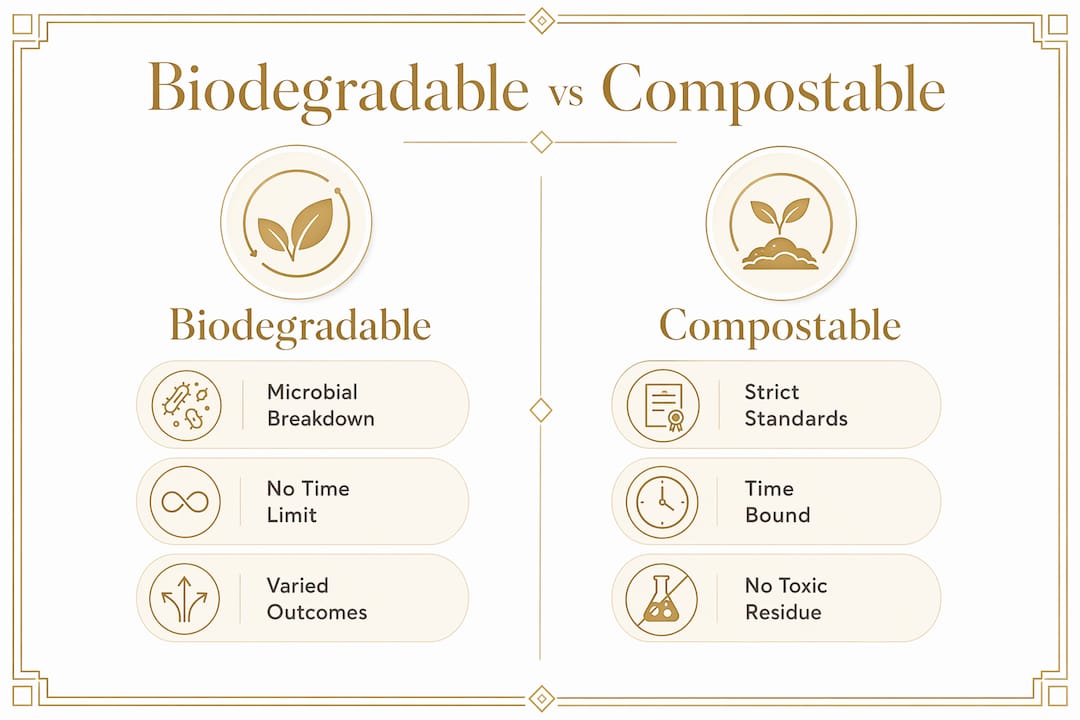
This is where most people get tripped up, and honestly, the confusion is understandable. The terms sound similar but describe very different outcomes.
| Term | Definition | Standards | Outcome |
|---|---|---|---|
| Biodegradable | Broken down by microbes into natural substances | No universal standard or timeline | Variable; depends on environment |
| Compostable | Subset of biodegradable; breaks down fully in composting conditions | EN 13432, ASTM D6400 | No toxic residue; within set timeframe |
| Degradable | Breaks apart physically or chemically | No biological requirement | May leave microplastics or harmful fragments |
| Oxo-degradable | Fragments under UV or heat exposure | Banned in EU single-use plastics rules | Microplastic pollution; not true biodegradation |
Compostable materials are a subset of biodegradable materials that must meet strict, time-bound standards without leaving toxic residues in specific composting settings. All compostable items are biodegradable, but not all biodegradable items are compostable. That one-way relationship is the most important thing to lock in.
The OECD 301 standard measures “ready biodegradability” at roughly 60% breakdown within 28 days under controlled lab conditions. European Union standards consider a material biodegradable if 90% converts into carbon dioxide, water, and minerals within 6 months under controlled conditions. These benchmarks exist in labs. Real-world disposal conditions rarely match them.
Oxo-degradable plastics are widely criticized and banned in EU single-use plastic regulations because they fragment into microplastics without achieving full biodegradation. They mislead consumers and harm ecosystems. Seeing “degradable” on a label without a recognized certification is a red flag, not a green one.
Pro Tip: Look for certifications like EN 13432 or ASTM D6400 on compostable products. These are third-party verified standards, not marketing claims. A product with one of these marks has been tested to a defined outcome.
You can explore the compostable vs biodegradable distinction in more depth if you want a side-by-side breakdown for everyday purchasing decisions.
Biodegradable sounds like a guaranteed win for the planet. The reality is more complicated, and knowing the limits protects you from making choices that feel good but deliver little.
Biodegradability is highly dependent on environmental conditions. Materials may take years to break down in landfills due to lack of heat, moisture, and microbial activity. A biodegradable cup sent to a landfill may outlast a conventional plastic cup simply because the conditions for breakdown never exist.
Three questions cut through greenwashing claims on any biodegradable product:
Biodegradable plastics may fragment into microplastics rather than fully biodegrading, causing environmental harm. Fragmentation without complete breakdown leads to persistent microplastic pollution in soil and water systems. This is the core problem with oxo-degradable products and some plant-based plastics that lack proper certification.
“Biodegradable” is not a performance claim. It is a scientific description that offers limited guidance on waste handling without specific test parameters attached to it.
Greenwashing thrives in this gap. Brands use the word “biodegradable” because it sounds responsible, even when their product will sit in a landfill for decades without breaking down. Your job as a consumer is to ask the three questions above before trusting the label.
Choosing products that actually deliver on their environmental promise takes a bit of homework, but it becomes second nature quickly. Here is a practical approach you can apply right now.
Check for recognized certifications. Look for EN 13432, ASTM D6400, or OK Compost labels. These are independently verified. A generic “biodegradable” claim with no certification behind it is marketing, not science.
Understand your local disposal system. Industrial composting facilities process materials at high temperatures that home bins cannot reach. A product certified for industrial composting will not break down in your backyard pile or curbside bin.
Avoid oxo-degradable products entirely. If a label says “oxo-degradable” or “oxo-biodegradable,” put it back. These products fragment into microplastics and do not meet biodegradability standards.
Choose certified compostable when possible. Certified compostable packaging meets defined time and residue standards. It is the most reliable subset of biodegradable materials for confident purchasing.
Dispose of products correctly. Even a certified compostable product sent to a landfill will not biodegrade as intended. Match the product to the right disposal stream: home compost, industrial compost, or general waste.
Verification and certification are the only reliable way to confirm that materials labeled “biodegradable” meet environmental safety and decomposition standards. Without them, you are taking the brand’s word for it.
Pro Tip: Natural materials like bamboo, unbleached paper, and untreated wood biodegrade reliably in most environments without needing industrial processing. When in doubt, these materials are a safe starting point for sustainable choices.
For a deeper look at how to choose biodegradable products for your home and daily routine, Cozee-bay has a practical guide worth bookmarking.
Biodegradable is a scientific description of microbial breakdown, not a regulated certification, and its real-world impact depends entirely on disposal conditions, environmental factors, and whether a product carries a verified standard like EN 13432 or ASTM D6400.
| Point | Details |
|---|---|
| Biodegradable is not certified | The term has no universal standard or timeline, unlike compostable certifications. |
| Conditions determine outcomes | Temperature, moisture, and oxygen control how fast and completely biodegradation occurs. |
| Compostable is the stronger claim | All compostable items are biodegradable, but not all biodegradable items are compostable. |
| Oxo-degradable causes harm | These products fragment into microplastics and are banned in EU single-use plastic rules. |
| Certification protects you | Look for EN 13432 or ASTM D6400 to confirm a product meets verified decomposition standards. |
After spending years looking at how eco-conscious brands communicate with customers, I have come to believe that “biodegradable” does more harm than good when it appears on a label without context. Shoppers see it and feel reassured. Brands use it and feel responsible. But neither party has asked the three questions that actually matter: where, how long, and what residue.
The uncomfortable truth is that a biodegradable product in the wrong disposal environment is no better than a conventional one. A certified compostable bag sent to a landfill achieves nothing. A bamboo product tossed in a recycling bin creates contamination. The label is only half the story.
What gives me genuine hope is that the certification systems, EN 13432, ASTM D6400, and the OECD 301 framework, exist precisely to close this gap. They are not perfect, but they give consumers a foothold. When you see one of those marks, you know someone ran a test. When you see only “biodegradable,” you know someone wrote copy.
My honest advice: treat “biodegradable” as a starting question, not a final answer. Ask what it means for that specific product, in your specific disposal system, in your specific climate. That habit alone puts you ahead of most consumers and most brands.
— Cozee

At Cozee-bay, every product starts with a material decision. Bamboo is one of the fastest-growing plants on earth and biodegrades reliably in natural environments without industrial processing. Whether you are outfitting a home kitchen or a commercial space like a restaurant or school, choosing bamboo products means choosing materials that work with natural systems rather than against them. Cozee-bay’s bamboo paper towel dispensers and home organization products are built for durability and designed with eco-conscious materials at their core. Free shipping within the contiguous U.S. and a money-back guarantee make it easy to start making smarter, greener choices today.
Biodegradable means a material can be broken down by microorganisms like bacteria and fungi into natural substances such as water, carbon dioxide, and biomass. It is a biological process, not a regulated certification with a guaranteed timeline.
No. Compostable is a subset of biodegradable that meets strict time-bound standards and leaves no toxic residue in specific composting conditions. All compostable items are biodegradable, but not all biodegradable items are compostable.
Not automatically. Biodegradable products require the right disposal environment to break down effectively. Products sent to landfills may persist for years, and some fragment into microplastics rather than fully biodegrading.
Look for EN 13432 or ASTM D6400 for compostable products, and OECD 301 compliance for biodegradability testing. These are independently verified standards that confirm a product meets defined decomposition benchmarks.
Oxo-degradable plastics fragment into microplastics under UV light or heat without achieving true biodegradation. They are banned under EU single-use plastic regulations because they cause persistent environmental pollution rather than breaking down safely.
Comments will be approved before showing up.