Your Cart is Empty


TL;DR:
- Biodegradable products can break down into water, carbon dioxide, and organic matter within a measurable time. The EU standard requires 90% material conversion within six months in biological conditions. Labels claiming “biodegradable” often lack legal standards, making certification essential to verify environmental correctness.
A biodegradable product is defined as any item that microorganisms, specifically bacteria and fungi, can break down into water, carbon dioxide, and organic matter within a measurable timeframe. The EU sets a widely referenced benchmark: at least 90% material conversion to CO2, water, and minerals within 6 months under biological processes. That standard separates genuinely biodegradable items from materials that simply fragment into smaller, persistent pieces. If you’ve been scanning product labels and wondering what “biodegradable” actually promises, this guide cuts through the noise and gives you the full picture.
Biodegradability is not a simple yes-or-no property. It is a spectrum, and the speed and completeness of breakdown depend on the material, the microorganisms present, and the surrounding environment. Some plastics reach 60% biodegradation within 28 days under controlled industrial conditions, while others take centuries in a landfill.
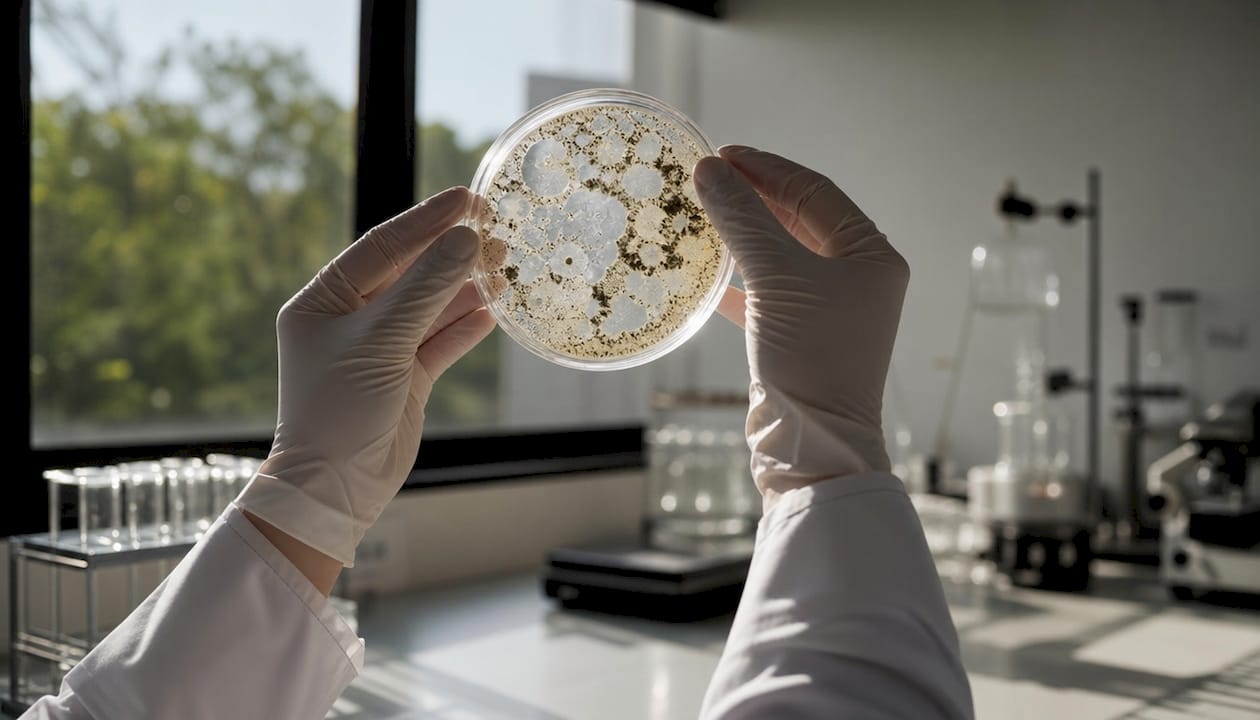
The core process works like this: microorganisms consume the material as a food source, producing CO2, water, and biomass as byproducts. Natural materials like cotton, paper, and food scraps feed this process easily. Biodegradable plastics degrade via microbial attack but differ widely in the conditions they require. Knowing that difference is what separates a genuinely green purchase from a marketing claim.
These four terms appear on labels constantly, and they do not mean the same thing. Mixing them up leads to poor purchasing decisions and real contamination problems at waste facilities.
| Term | What it means | Key limitation |
|---|---|---|
| Biodegradable | Broken down by microorganisms into natural substances | No universal legal standard; conditions vary widely |
| Compostable | Biodegrades within a specific timeframe under controlled conditions | Often requires industrial composting facilities |
| Bio-based | Made from biological sources (plants, crops) | Origin only; says nothing about end-of-life breakdown |
| Degradable | Breaks into smaller pieces over time | Pieces may be microplastics, not natural substances |
Bio-based describes where a material comes from, not what happens to it after use. A bio-based plastic bottle can still persist in the environment for decades. Consumers often confuse “bio-based” with “biodegradable,” and manufacturers sometimes encourage that confusion through vague label design.
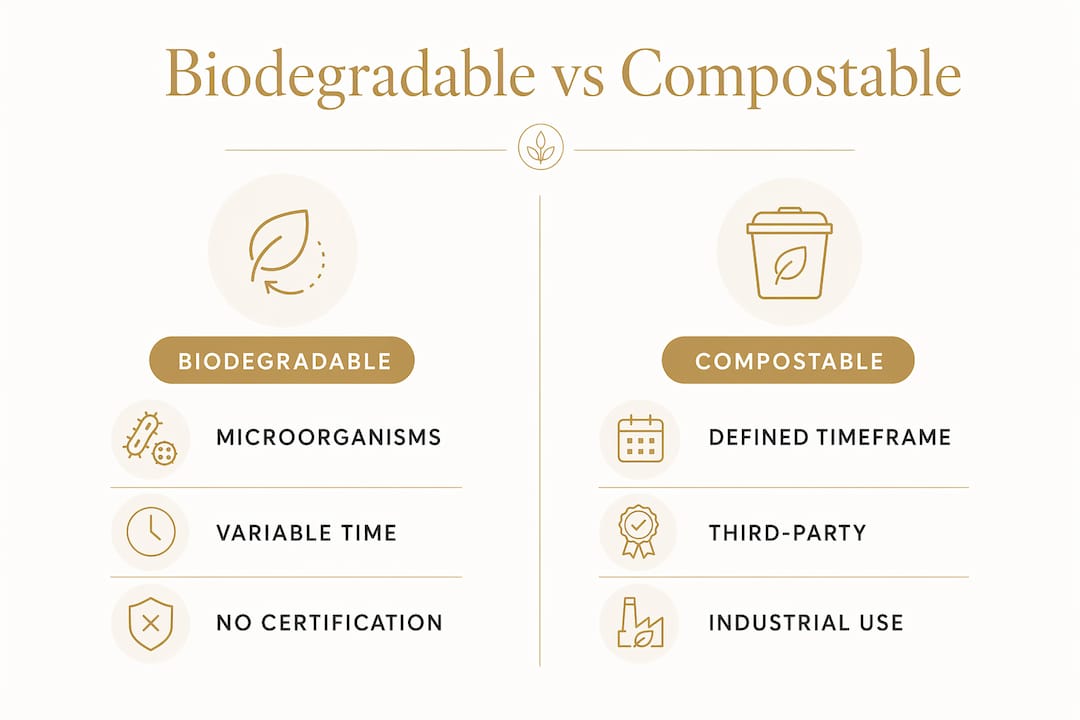
Compostable is the most specific and reliable of these terms. It means the product biodegrades within a defined timeframe under particular conditions, typically in an industrial composting facility. For a deeper look at how these two terms compare in practice, the compostable vs. biodegradable breakdown on the Cozee-bay blog is worth reading.
Degradable and oxo-degradable are the most misleading. These materials break apart physically but do not fully convert to natural substances. The result is microplastic contamination, not clean decomposition.
Biodegradable items fall into two broad groups: naturally derived materials and engineered bioplastics. Both can biodegrade, but they behave very differently in real-world disposal scenarios.
Naturally derived biodegradable materials include:
Engineered bioplastics, particularly polylactic acid (PLA), represent a newer category. PLA biodegrades in industrial composting conditions above 60°C with adequate moisture, within a short timeframe. That sounds promising, but PLA does not break down in a backyard compost pile or a landfill at any meaningful rate.
One area where mislabeling is especially common is biodegradable homeware. Many products marketed as bamboo or natural fiber items are actually composites. Bamboo-labeled homeware often contains melamine resin that is not biodegradable, despite the green marketing. Solid bamboo products, like the handcrafted items Cozee-bay makes, are a different story. Cozee-bay uses genuine bamboo wood without synthetic binders, which is why their products hold up to scrutiny that composite “bamboo” items do not.
Where you throw something away matters as much as what it is made of. A product that biodegrades quickly in an industrial composting facility may sit inert in a landfill for decades.
Four environmental factors drive biodegradation: oxygen, heat, moisture, and microbial activity. Industrial composting facilities control all four. They maintain temperatures above 60°C, regulate moisture, and turn material regularly to introduce oxygen. That is why certified compostable products are tested specifically for those conditions.
Landfills, by contrast, are oxygen-poor and dry. Biodegradability depends heavily on context, and industrial composting conditions are simply not replicated in landfills or oceans. A certified compostable bag buried in a landfill will not biodegrade on schedule. The ocean presents yet another set of variables: salt water, UV exposure, and different microbial communities all change the breakdown timeline unpredictably.
Backyard compost bins cannot effectively decompose many biodegradable plastics that require industrial-level heat. Home compost works well for food scraps, paper, and natural fibers. It does not work for PLA cups or certified compostable packaging unless your pile consistently reaches high temperatures, which most home setups do not.
Pro Tip: Before buying a product labeled “biodegradable,” check whether it carries a third-party certification like the Seedling logo (TÜV Austria) or BPI certification. These marks confirm the product meets industrial compostability standards, not just a manufacturer’s claim.
The biggest problem with “biodegradable” as a label is that no universal legal definition exists for the term. Any manufacturer can print it on packaging without rigorous evidence. That gap creates fertile ground for greenwashing.
Here is what to watch for when you shop:
Biodegradability claims frequently cause contamination at compost facilities when products that do not meet standards are mixed in with genuinely compostable material. That contamination can ruin entire batches of compost and force facilities to reject organic waste loads.
The practical fix is straightforward. Prioritize certified compostable products over products that only claim to be biodegradable. Look for the disposal method on the label. If a product requires industrial composting, find out whether your municipality offers that service before you buy. For guidance on selecting genuinely eco-friendly products for your home or business, Cozee-bay’s selection guide walks through the key criteria clearly.
Biodegradable products only deliver their environmental benefit when disposed of in the right conditions, which means certification and disposal method matter as much as the material itself.
| Point | Details |
|---|---|
| Biodegradable definition | Microorganisms break the material into water, CO2, and organic matter within a defined timeframe. |
| Conditions drive outcomes | Industrial composting, landfills, and oceans produce very different biodegradation results for the same product. |
| Terms are not interchangeable | Bio-based, compostable, degradable, and biodegradable each describe different properties. |
| Certification is the safest signal | Third-party marks like BPI or the Seedling logo confirm industrial compostability standards are met. |
| Composite materials mislead | Products blending natural fibers with synthetic resins are often not biodegradable despite green labeling. |
After spending years researching sustainable materials and working with genuinely eco-conscious products, I’ve come to a conclusion that surprises people: “biodegradable” is one of the least reliable green claims on a product label. “Compostable” with a certification is far more trustworthy.
The durability question also gets overlooked. A well-made bamboo paper towel dispenser that lasts a decade generates far less waste than a “biodegradable” plastic alternative you replace every year. Durability and longevity sometimes outperform biodegradability as a sustainability strategy, because reducing waste generation beats managing its end-of-life. That insight changed how I think about every purchase.
What I’ve also noticed is that consumers who understand the distinction between bio-based and biodegradable make much better choices. They stop rewarding vague green marketing and start asking the right questions: What certification does this carry? Where does it need to go when I’m done with it? Can my local waste system actually handle it? Those three questions cut through most greenwashing immediately.
My honest advice: invest in products made from genuinely natural materials with transparent sourcing, and treat “biodegradable” on a label as a starting point for questions, not a final answer.
— Cozee
At Cozee-bay, every product starts with a commitment to genuine materials and honest claims. The bamboo homeware collection uses solid, handcrafted bamboo wood, not composite blends, so you know exactly what you’re bringing into your home or business.

Whether you’re outfitting a kitchen, a restaurant, or a senior living center, Cozee-bay’s eco-friendly products are built to last and made from materials that hold up to scrutiny. Free shipping within the contiguous U.S. and a money-back guarantee mean you can shop with confidence. Read more about why biodegradable products matter for sustainable living, and explore the full Cozee-bay catalog to find pieces that fit your space and your values.
A biodegradable product is any item that bacteria, fungi, or other microorganisms can break down into water, carbon dioxide, and organic matter. The EU benchmark requires at least 90% material conversion within 6 months under biological processes.
No. Many biodegradable plastics, including PLA, require industrial composting conditions above 60°C and will not break down in a backyard compost bin. Food scraps, paper, and natural fibers are the most reliable materials for home composting.
It means the manufacturer claims the product can be broken down by microorganisms, but without a third-party certification, that claim has no legal standard behind it. Look for certifications like BPI or the Seedling logo for verified compostability.
Common biodegradable household items include food scraps, paper towels, cardboard, cotton textiles, untreated wood products, and solid bamboo items. Products made from synthetic resins or plastic composites, even when labeled “natural,” typically are not biodegradable.
Biodegradable homeware is made from materials like solid bamboo, natural fibers, or certified bioplastics that can break down through biological processes. Regular homeware often uses synthetic plastics or composite materials that persist in the environment for decades.
Comments will be approved before showing up.