Your Cart is Empty


TL;DR:
- Biodegradable waste is organic material that microorganisms can break down into water, carbon dioxide, and organic matter. Proper disposal through composting or anaerobic digestion is essential because landfills slow microbial activity, extending decomposition times significantly. Checking for trusted certifications like BPI and ASTM standards ensures that compostable items break down reliably without toxic residue.
Biodegradable waste is any material that microorganisms can break down into water, carbon dioxide, and organic matter through natural biological processes. The most common examples include food scraps (banana peels, coffee grounds, vegetable trimmings), yard waste (grass clippings, fallen leaves), paper and cardboard, untreated wood, natural-fiber textiles like cotton and wool, animal manure, and certain bioplastics such as PLA (polylactic acid). That list covers most of what you’ll encounter day to day.
One important caveat: the label “biodegradable” does not mean “safe to toss anywhere.” A banana peel buried in a landfill can sit intact for years because landfills are engineered to limit oxygen and moisture, the two things microbes need most. For reliable breakdown, organic materials need composting or anaerobic digestion. When shopping for compostable products, look for BPI certification or compliance with ASTM D6400 and ASTM D6868 standards, which are the U.S. benchmarks for verified compostability.
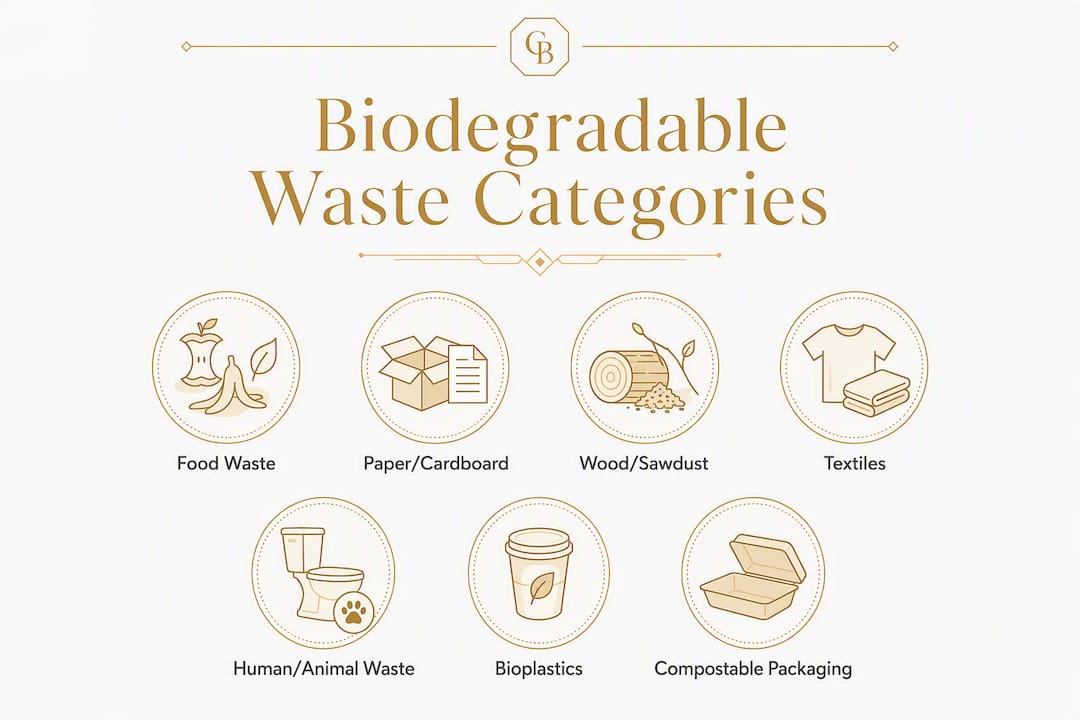
The U.S. EPA and researchers broadly group biodegradable materials into seven categories. Here is a practical breakdown of each, with notes on whether items work in a backyard pile or need an industrial facility.
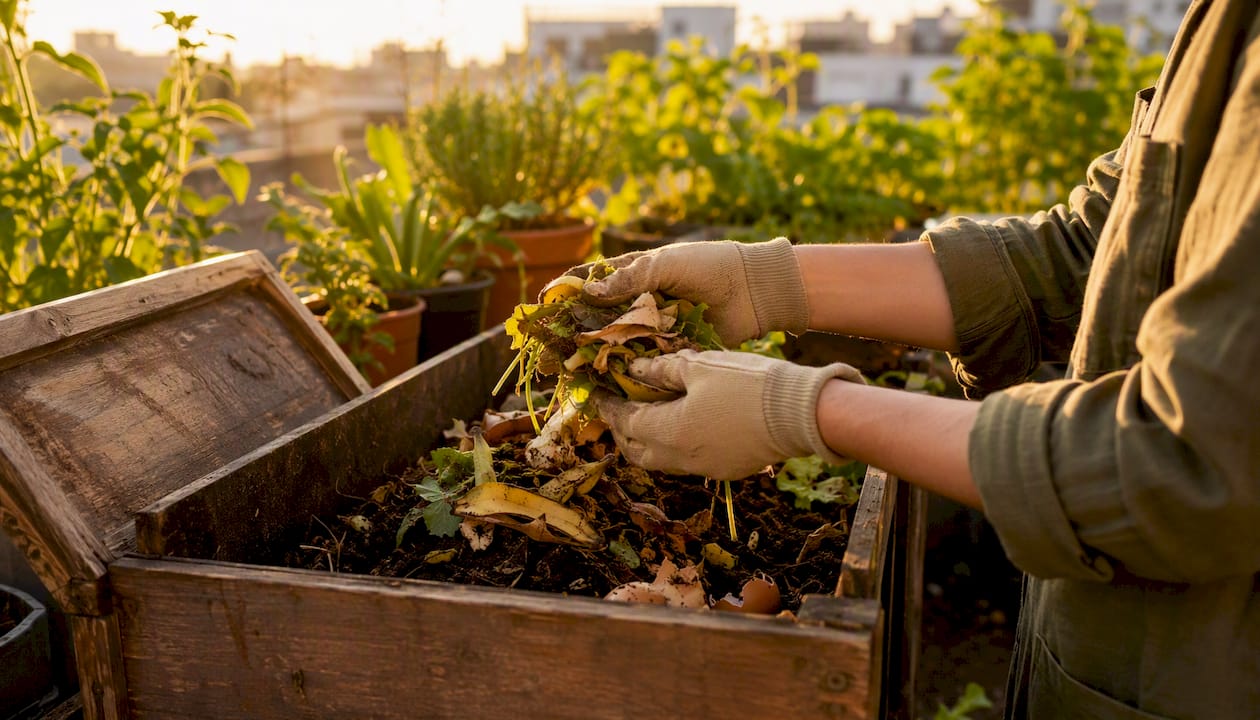
Food scraps are the most familiar type of organic waste, and nearly all of them are compostable.
Most of these are fine for a backyard pile. Cooked foods, oils, and dairy are better left out of home compost to avoid pests.
Grass clippings, fallen leaves, garden trimmings, and small branches all break down readily. Leaves and straw double as “browns” (carbon-rich materials) that balance nitrogen-heavy food scraps in a compost pile.
Uncoated paper products decompose well in both home and industrial settings.
Wax-coated or heavily printed cardboard is a contamination risk. Tear cardboard into smaller pieces to speed breakdown.
Untreated wood chips, sawdust, and small branches are excellent carbon sources for compost.
Avoid chemically treated or painted wood, which can introduce toxins into your compost.
Natural fibers biodegrade; synthetic ones do not.
Check labels carefully. A shirt labeled “cotton blend” may contain polyester that will not break down and will contaminate a compost stream.

Manure from herbivores (cows, horses, chickens, rabbits) is a classic compost amendment. Human biosolids are processed at municipal wastewater facilities and are not suitable for backyard composting. Pet waste from dogs and cats carries pathogens and should go to a dedicated pet-waste composter or the trash, not your garden pile.
PLA cups, bagasse plates, and certified compostable bags are made from plant-based polymers. Most require industrial composting conditions (sustained temperatures above 130°F) to fully break down. They will not reliably decompose in a backyard pile or a landfill. Look for BPI-certified compostable packaging before placing these items in a green bin.
Pro Tip: Before adding any item to your compost, remove stickers, rubber bands, twist ties, and plastic windows from envelopes. These small contaminants are the most common reason municipal programs reject loads.
Biodegradation is the process by which bacteria, fungi, and other microorganisms consume organic matter and convert it into simpler compounds. Under aerobic (oxygen-rich) conditions, the main outputs are carbon dioxide, water, and stable organic matter called humus. In anaerobic (oxygen-free) conditions, the same process produces methane and carbon dioxide instead.
Three terms get confused constantly, so here is the plain distinction:
ASTM D6400 covers compostability of plastics, and ASTM D6868 covers compostable coatings on paper and other substrates. Both standards require testing for biodegradation rate, physical disintegration, and ecotoxicity under controlled industrial conditions.
Pro Tip: When a product claims to be “biodegradable” with no certifier named and no timeframe given, treat that claim as marketing, not a guarantee. Certified compostable is the higher, more verifiable bar.
Decomposition timelines vary enormously depending on temperature, moisture, oxygen availability, and particle size. A banana peel in a hot, active compost pile may disappear in a few weeks. The same peel in a sealed landfill could remain recognizable for years.
| Item | Typical decomposition range | Notes |
|---|---|---|
| Fruit and vegetable scraps | 2–5 weeks | Faster in hot, turned compost |
| Paper towel | 2–4 weeks | Shredded paper breaks down faster |
| Newspaper | 2 weeks–6 months | Ink and density affect rate |
| Cardboard | 2 to 6 months | Remove tape; tear into pieces |
| Organic cotton | ~5 months | Blended fabrics take much longer |
| Sawdust | several months | Particle size matters greatly |
| Banana peel | 3–5 weeks in compost | Months to years in landfill |
| Untreated wood chips | 1–3 years | Larger pieces take longer |
| PLA bioplastic | 2 to 6 months | Requires industrial composting |
| Leather | decades | Tanning chemicals slow breakdown |
Decomposition estimates are approximate and drawn from educational sources including Ecolife; actual rates vary by environment and testing conditions.
The landfill factor deserves emphasis. Landfills are engineered to minimize leachate and gas migration, which means they also minimize the oxygen and moisture that microbes need. Organic materials that would decompose in weeks in a compost pile can persist for decades underground. When anaerobic breakdown does occur in landfills, it generates methane, a potent greenhouse gas. Diverting food scraps and yard waste to composting or anaerobic digestion programs keeps that carbon out of the atmosphere and puts it back into the soil where it belongs.
Getting organics out of the landfill is simpler than most people think. Here are the main routes available to U.S. households.
Start a backyard compost pile or bin:
Find a municipal composting or drop-off program:
Use anaerobic digestion programs:
Some municipalities route food waste to anaerobic digestion facilities that produce biogas and digestate. Check whether your hauler offers this option, especially for items like meat and cooked foods that backyard piles cannot safely handle.
What not to do:
Pro Tip: NC State Extension’s backyard composting guide recommends chopping or shredding larger items before adding them to your pile. Smaller pieces mean more surface area for microbes to work on, which noticeably speeds the whole process.
The U.S. has no single federal standard for the word “biodegradable” on product labels. That gap lets manufacturers use the term loosely, which is why you need to know which marks actually mean something.
Marks worth trusting:
Red flags to watch for:
For a deeper look at how these standards apply to retail packaging, Cozee-bay’s guide on biodegradable vs. compostable walks through the practical purchasing differences. The EcoVibe Roast breakdown of plant-based packaging is also useful for understanding how PLA and bagasse behave differently in processing.
The biggest misconception about biodegradable waste is that it disappears on its own, harmlessly, wherever it ends up. It does not. Conditions control everything.
The U.S. EPA and NC State Extension both point to the same practical habits for successful composting:
A second misconception worth correcting: “compostable” does not mean “home-compostable.” PLA cups and certified compostable bags are tested for industrial facilities running at sustained high temperatures. Drop them in a backyard pile and they may still be sitting there six months later, looking unchanged.
Biodegradable waste breaks down through microbial action, but only composting or anaerobic digestion reliably diverts organics from landfills where breakdown stalls and methane forms.
| Point | Details |
|---|---|
| Core definition | Biodegradable waste is broken down by microorganisms; compostable is a verified subset with defined conditions and no toxic residue. |
| Top categories | Food scraps, yard waste, paper, untreated wood, natural textiles, manure, and certified bioplastics like PLA are the main types. |
| Landfill caveat | Landfills limit oxygen and moisture, so organic items can persist for decades and generate methane when they do break down anaerobically. |
| Verify compostable claims | Trust BPI certification and ASTM D6400/D6868 compliance; treat unqualified “biodegradable” labels as unverified marketing. |
| Act now | Start a backyard compost pile or locate a municipal drop-off program through your city’s waste management site or the EPA’s composting resources. |
Most people who care about sustainability already know the basics: recycle, reduce, reuse. But biodegradable waste is where the details really trip people up, and the gap between good intentions and good outcomes is wider than it looks.
Tossing a compostable cup into the recycling bin contaminates the whole load. Sending food scraps to the landfill in a “biodegradable” bag still produces methane. Buying a product labeled “degradable” without checking for BPI certification may mean you’re funding greenwashing rather than genuine environmental progress.
At Cozee-bay, we think the most useful thing a brand in the sustainability space can do is give you clear, honest information so you can make decisions that actually hold up. That means pointing you toward authoritative sources like the EPA and NC State Extension, not just repeating feel-good talking points. It also means being straightforward about what our own bamboo products are and are not: bamboo is a fast-growing, renewable material, and products made from it are a meaningful step toward reducing plastic use at home, but no single product choice replaces the habit of composting, sorting correctly, and verifying claims before you buy.
The practical upshot is this: learn the categories, check the labels, and find your local composting program. Those three steps, done consistently, do more for diverting waste from landfills than any single product purchase.
These are the authoritative U.S.-focused resources behind this article. Each one is worth bookmarking if you’re researching biodegradable waste for a class, a project, or your own household decisions.
Composting At Home | U.S. EPA: The EPA’s primary consumer guide to home composting, including acceptable materials, greens vs. browns ratios, and guidance on certified compostable products. Use this for composting basics and to understand BPI and ASTM standards in a regulatory context.
Sustainable Management of Food | U.S. EPA: Covers food waste reduction, composting programs by state, and anaerobic digestion options. Useful for finding local programs and understanding the policy landscape.
Backyard Composting of Yard, Garden, and Food Discards | NC State Extension: University-level practical guidance on setting up and managing a backyard pile, including detailed item lists and troubleshooting tips. Ideal for hands-on composters.
Can I Compost It? | UF/IFAS Sarasota County: A material-by-material reference from the University of Florida’s Institute of Food and Agricultural Sciences. Helpful for quickly checking whether a specific item is compostable.
104 Items You Can Compost | University of Connecticut Soil Nutrient Analysis Laboratory: An extensive, classroom-ready list from UConn’s College of Agriculture. Good for students building a comprehensive biodegradable materials list.
Biodegradability | Britannica: A concise, authoritative definition of biodegradability and the distinction between biodegradable and compostable. Use this for academic citations and clear definitions.
Biodegradable Waste | Wikipedia: A broad overview of waste categories, landfill behavior, and municipal solid waste composition. Useful as a starting point for research, though always verify with primary sources.
Cozee-bay Blog: Biodegradable vs. Compostable: Cozee-bay’s consumer-facing guide to the practical differences between biodegradable and compostable claims, with purchasing advice for eco-conscious shoppers.
This article provides general educational information about biodegradable waste and composting. For guidance specific to your municipality’s waste program or regulatory requirements, consult your local waste management authority or the U.S. EPA directly.
Comments will be approved before showing up.