Your Cart is Empty


A bamboo toothbrush is a practical, lower-plastic swap for most eco-conscious buyers — when you pick the right materials and care for it properly. The handle is genuinely biodegradable, the packaging is often plastic-free, and cleaning performance matches a conventional plastic brush when bristle quality is good. The one caveat worth knowing upfront: most bristles, even plant-based ones, are not home-compostable and need to be removed before the handle goes to compost.
A bamboo toothbrush is a manual toothbrush with a handle made from bamboo rather than petroleum-based plastic. The head holds bristles anchored with small metal staples, just like a conventional brush. What varies across product listings is the handle finish, bristle material, and whether the head is fixed or replaceable.
Handle types you’ll see on product pages:
Bristle variants:
One thing worth checking on any product page: whether the bamboo was fumigated during international shipping. Some manufacturers use methyl bromide for shipments; buyers who want chemical-free handling should look for supplier statements about fumigation practices or sourcing from regions that avoid these treatments.
Yes, meaningfully so for the handle. Bamboo is a fast-growing grass that requires no replanting and minimal pesticides, making it a genuinely lower-impact material compared to virgin plastic. Pair that with plastic-free paper or cardboard packaging and you eliminate two of the most common single-use plastics in a bathroom routine.
Main environmental benefits:
Limitations to keep in mind:
Certifications worth trusting: FSC covers responsible forestry, USDA Certified Biobased verifies the percentage of bio-based content in materials like bristles, and vegan/BPA-free labels address animal-derived ingredients and chemical safety respectively. None of these certifications, on their own, confirm that bristles are home-compostable.
Pro Tip: Buy in multi-packs or look for subscription options. Consolidating shipments cuts per-brush transport emissions and usually lowers the per-brush price.
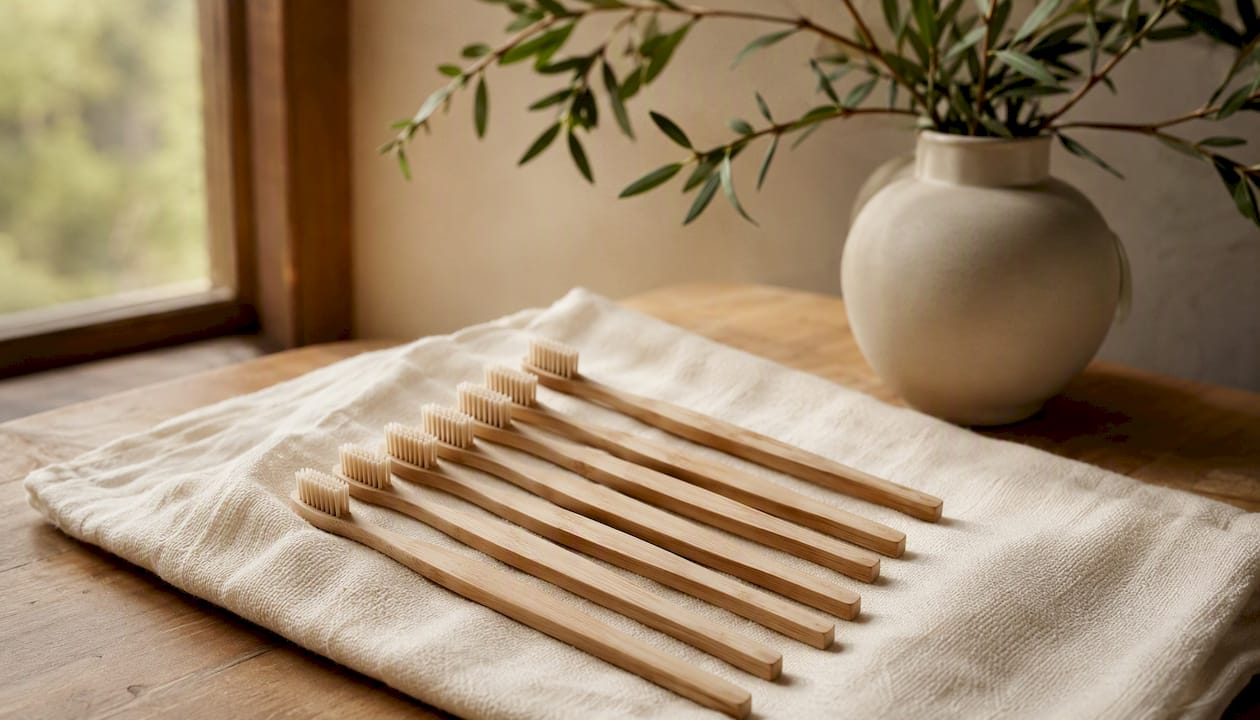
This is where most product marketing gets blurry, so it’s worth being direct. Plant-based Nylon 1010, made from castor bean oil, is bio-based, which means its carbon comes from plants rather than petroleum. That is a genuine improvement. But bio-based does not equal home-compostable. Most Nylon 1010 bristles require industrial composting conditions to break down, and even then, the timeline is long.
Steps to check bristle compostability on any product label:
At end of life:
One hygiene note: replace your brush when bristles begin to fray, regardless of the three-month schedule. Worn bristles clean less effectively and can harbor bacteria in the frayed fibers.
Choosing well comes down to reading labels critically rather than trusting marketing copy. Here is a practical checklist to run through on any product page:
Questions to ask before buying:
For travel, look for brushes that include a protective cap or travel case made from bamboo or recycled cardboard. Most standard bamboo brushes are TSA-safe. If you’re buying for a family, check whether the brand offers kids’ sizing alongside adult options.
Retail guidance and dental recommendations align here: replace your toothbrush every three months, or sooner if bristles are visibly frayed. A well-cared-for bamboo brush lasts exactly as long as a plastic one.
Daily care routine:
Monthly check:
Because bamboo is porous, it absorbs moisture more readily than plastic. A well-ventilated bathroom counter or open cup is the right storage spot. For a deeper clean, a brief soak in diluted white vinegar or a baking soda rinse works well once a month. Avoid soaking for extended periods, which accelerates moisture absorption and can weaken the handle over time.
For more practical tips on caring for bamboo items in your bathroom, Cozee-bay’s guide on wooden and bamboo bathroom care covers maintenance routines that apply directly here.

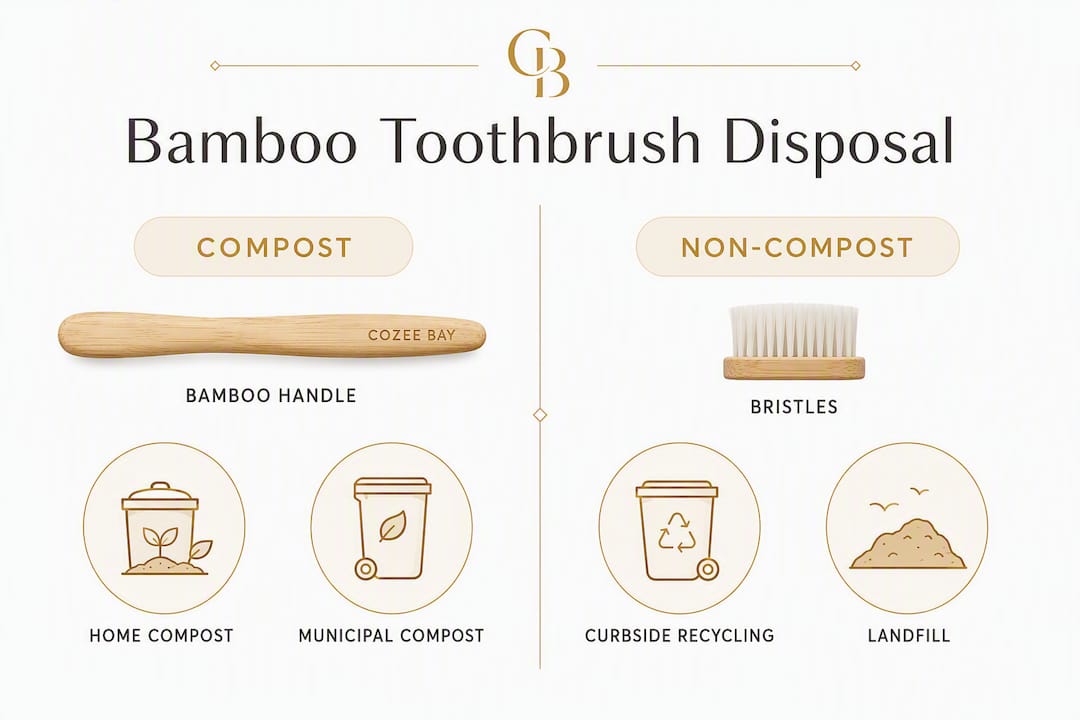
Step-by-step disposal:
| Component | Home Compost | Municipal Compost | Curbside Recycling | Landfill |
|---|---|---|---|---|
| Bamboo handle (bristles removed) | Yes, if untreated | Usually yes | No | Last resort |
| Nylon 1010 bristles | No | Check locally | No | Likely |
| Standard nylon bristles | No | No | No | Yes |
| Metal staples | No | No | Check locally | If not accepted |
| Paper/cardboard packaging | Yes | Yes | Yes | Last resort |
To find local composting rules, search your city or county name plus “composting guidelines” or check your municipal waste management website. Some U.S. cities and counties accept bamboo in green-waste bins; others require it to go to a composting facility drop-off.
Rather than a brand-by-brand rundown, the smarter move is knowing which label claims actually matter and which are marketing noise. Here is what to prioritize on any retail page:
Pack-size trade-offs: Single brushes let you try before committing; four-packs and eight-packs lower per-brush cost and reduce shipping frequency. Some sellers offer subscription models that auto-ship every three months, which aligns neatly with the replacement schedule.
Seller categories you’ll encounter:
Cozee-bay carries a range of eco-friendly bathroom accessories that pair well with a sustainable oral-care routine, from bamboo dispensers to organizational accessories for a clutter-free countertop.
The handle is not the biggest waste problem in a toothbrush. The bristle head is. When you replace only the head and reuse the handle, you eliminate the bulk of the material discarded at each replacement cycle. One source estimates that a replaceable-head design can reduce plastic waste by up to approximately 93% compared to replacing the full brush each time. That estimate assumes consistent handle reuse, which is the catch. If the handle breaks or the replacement head system is discontinued, the reuse benefit disappears. Before committing to a replaceable-head system, check that replacement heads are sold separately, widely available, and compatible with the handle long-term.
Pro Tip: When buying a replaceable-head brush, purchase at least two or three replacement heads upfront. Supply gaps are common with smaller eco brands, and running out mid-cycle defeats the purpose.
Trade-offs to weigh: replaceable heads sometimes involve more complex attachment mechanisms, which can affect how thoroughly you can clean around the joint. Check product reviews specifically for mentions of the head connection point.
Three brands come up consistently when eco-conscious shoppers in the U.S. research this category.
Brush With Bamboo is one of the most recognized names in plant-based oral care. Their adult brush uses FSC-certified bamboo handles and castor bean oil-based Nylon 1010 bristles. The brand is transparent about the fact that bristles are bio-based but not home-compostable, and they provide clear disposal instructions including the bristle-removal step. Available direct and through select natural retailers.
Zero Waste Cartel focuses on plastic-free packaging and straightforward sustainable basics. Their bamboo toothbrush comes in paper packaging and is positioned as an accessible entry point for shoppers new to zero-waste swaps. Pack sizes and pricing make it easy to stock up without a large upfront commitment.
Bite takes a different angle: their approach centers on subscription-based oral care with a focus on minimizing packaging waste across the full routine, not just the toothbrush. Their bamboo brush is part of a broader system that includes toothpaste bits and other low-waste products, which appeals to buyers who want to overhaul their entire bathroom routine at once.
All three are available in the U.S. and ship domestically. For a broader look at how bamboo products fit into a sustainable home, Cozee-bay’s bamboo bathroom accessories guide is a practical next read.
A bamboo toothbrush is a genuinely lower-impact swap when you choose FSC-certified handles, verify bristle material claims, and follow proper disposal steps to keep the handle out of landfill.
| Point | Details |
|---|---|
| Handles are compostable; bristles usually are not | Remove bristles with pliers before composting the bamboo handle. |
| FSC and USDA Biobased are the certifications that matter | Vague “eco-friendly” or “organic” claims without these labels are unverified. |
| Replace every three months | Dental guidance and product specs align on this interval; replace sooner if bristles fray. |
| Replaceable-head designs cut waste most | One estimate puts waste reduction at up to approximately 93% when the handle is reused consistently. |
| Multi-packs reduce per-brush cost and shipping impact | Buying in bulk is one of the simplest ways to lower the environmental footprint per brush. |
Here is my honest take: the bamboo toothbrush conversation gets muddled because brands lean hard on “plant-based” and “eco-friendly” without explaining what those terms actually cover. The handle story is genuinely good. Bamboo grows fast, requires little intervention, and breaks down in a compost pile once you remove the bristles. That is a real, verifiable improvement over a plastic handle that will outlast you by centuries.
The bristle story is messier. Nylon 1010 is better than petroleum nylon, but it is not the clean-conscience solution the packaging sometimes implies. Until fully home-compostable bristles become widely available and affordable, the responsible move is to remove them before composting and dispose of them separately. That extra step takes thirty seconds and makes the difference between a handle that returns to the earth and one that sits in a landfill anyway.
What I find most useful about this category is how it trains you to read labels more carefully across your whole bathroom. Once you know what FSC means, what USDA Certified Biobased actually certifies, and why “biodegradable” without a timeframe is nearly meaningless, you start making better calls on every product you bring home. A bamboo toothbrush is a small swap, but it is a good first step in building a bathroom that reflects what you actually care about.
At Cozee-bay, we think about the sustainable bathroom as a whole, not just one product at a time. If you’re ready to go further, our eco-friendly bathroom essentials guide is a practical place to keep going.
The claims in this guide draw from product specifications, certification body definitions, and oral-care guidance. Key sources used:
Comments will be approved before showing up.