Your Cart is Empty


Bamboo is quietly reshaping what sustainability looks like inside hotels, resorts, coffee shops, and senior living centers. While most hospitality professionals are still weighing recycled plastics or FSC-certified wood, bamboo is already delivering on multiple fronts at once. It regenerates in 3 to 5 years, absorbs more CO2 than most trees, and carries natural antibacterial properties that make it genuinely useful in guest-facing environments. This article walks you through why bamboo deserves a serious look, how it performs against competing materials, and exactly where it fits inside your commercial space.
| Point | Details |
|---|---|
| Bamboo grows rapidly | It regenerates in 3-5 years, making it an efficient, sustainable resource for hospitality. |
| Eco and stylish | Bamboo combines environmental responsibility with luxury appeal in hotels and wellness properties. |
| Versatile applications | Bamboo products fit architectural features, guest amenities, and dining spaces in hospitality. |
| Careful sourcing is essential | Check certifications and supply chains to ensure true sustainability and avoid greenwashed claims. |
Hospitality brands are under real pressure to back up their sustainability claims with visible, tangible choices. Guests notice. A bamboo ceiling panel, a handcrafted amenity tray, or a sleek paper towel dispenser on the counter sends a message that your brand actually follows through. That visibility matters more than ever.
Bamboo suits luxury and wellness properties particularly well because it combines genuine environmental credentials with a warm, natural aesthetic that feels premium rather than compromised. It does not look like a sacrifice. It looks intentional.
Here is what hospitality professionals are finding most compelling about bamboo right now:
“Bamboo is no longer a niche material. It has become a design-forward choice that signals both environmental responsibility and elevated taste.” — Eco hospitality design perspective
If you want to stay ahead of where hospitality design is heading, exploring future bamboo product trends gives you a clear picture of what is coming. And if you are still weighing whether bamboo is the right fit, a closer look at the advantages of bamboo wood will help you make a confident call.
This popularity hinges on impressive environmental performance that sets bamboo apart from many other materials. Let’s break down what actually makes it stand out.
Bamboo grows rapidly and absorbs more CO2 than conventional trees, requires significantly less water, and needs no pesticides or fertilizers to thrive. When a product reaches the end of its life, it biodegrades naturally. That full lifecycle story is hard to match.
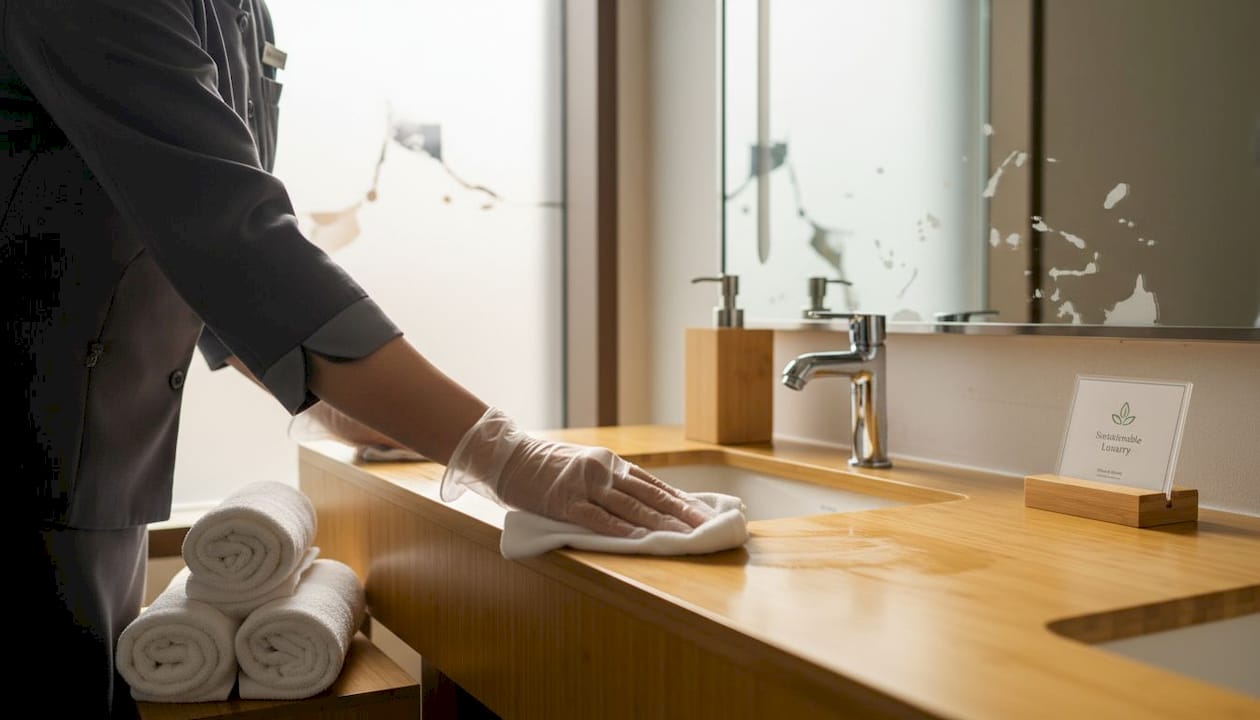
When you stack bamboo against common hospitality materials, the contrast is striking:
| Material | Regeneration time | Carbon footprint | Biodegradable | Antibacterial |
|---|---|---|---|---|
| Bamboo | 3 to 5 years | Low | Yes | Yes (natural) |
| Plastic | Never | Very high | No | No |
| Paper/cardboard | 10 to 20 years (tree) | Moderate | Yes | No |
| Cotton | Annual crop | High (water/chemicals) | Yes | No |
Bamboo carries an 80% lower carbon footprint than plastic, which makes it a clear winner in that comparison. The picture gets more nuanced when you compare it to recycled paper, where the gap narrows depending on processing methods.
Understanding bamboo’s sustainability impact in commercial spaces helps you make smarter procurement decisions. You can also dig into the eco-friendly bamboo advantages and the broader bamboo material benefits to build a stronger case internally.
Pro Tip: Not all bamboo products are created equal. Bamboo textiles, in particular, often go through heavy chemical processing that strips away the environmental benefits. Stick to solid bamboo or minimally processed bamboo wood products for the most credible sustainability story.
With eco-advantages clear, hospitality spaces are increasingly leveraging bamboo in both form and function. The range of applications is wider than most people expect.
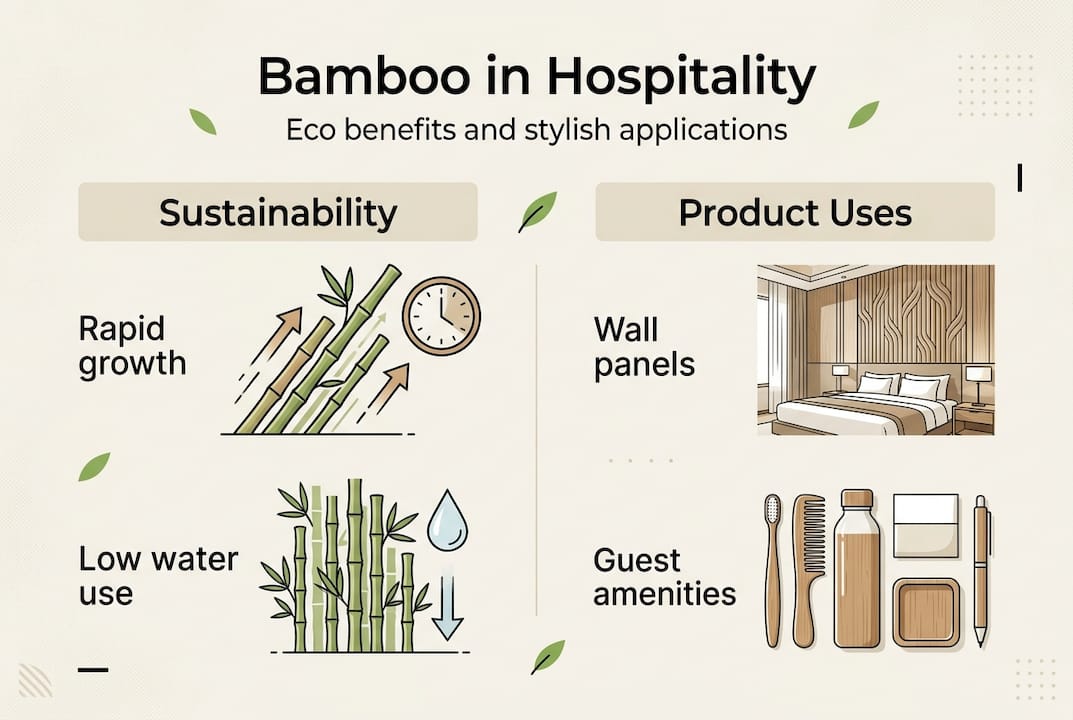
On the architectural side, bamboo has been used in hotel ceilings, screens, and partitions at properties like Woolly Bay Hotel and Bamboo Zanzibar. These structural and decorative elements create immersive environments that feel cohesive and intentional, not just accessorized.
Beyond architecture, bamboo shows up in everyday guest touchpoints:
Here is a quick look at how different bamboo product categories contribute to the guest experience:
| Product category | Application area | Guest experience impact |
|---|---|---|
| Paper towel dispensers | Restrooms, dining, kitchenettes | Clean, organized, eco-visible |
| Architectural panels | Lobbies, spa rooms, partitions | Immersive, premium aesthetic |
| Personal care amenities | Guest rooms, spa suites | Hygienic, thoughtful, sustainable |
| Furniture and fixtures | Dining, retail, common areas | Warm, durable, design-forward |
| Organizers and trays | Front desk, concierge, rooms | Tidy, functional, brand-consistent |
For a broader view of where bamboo fits across different commercial environments, the guide on bamboo product applications is worth your time. You will also find practical inspiration in these resources on bamboo interior decoration ideas and bamboo accents styling for eco-focused spaces.
Alongside functional and aesthetic rewards, hospitality leaders must navigate some practical and perceptual challenges. Bamboo is not a perfect solution in every scenario, and going in with clear eyes will save you headaches later.
Here are the main obstacles and how to address them:
For guidance on making responsible procurement decisions, the resource on ethical bamboo sourcing lays out exactly what to look for.
Pro Tip: When evaluating bamboo suppliers, ask for FSC certification or equivalent third-party verification. Transparent supply chains are a strong indicator that a brand’s sustainability claims are genuine, not just marketing language.
You now have a solid picture of what bamboo can do for your hospitality environment, from architectural statements to the small, functional details that guests notice every day. The next step is finding products that actually deliver on both style and sustainability without making you compromise on either.
At Cozee Bay, we specialize in handcrafted bamboo products built for exactly these kinds of commercial spaces. Our bamboo paper towel dispensers, organizers, and accessories have been used in restaurants, coffee shops, senior living centers, schools, and more. Every product is designed to look great, hold up in daily use, and tell a sustainability story your guests will appreciate. Explore bamboo solutions for your space, or browse our bamboo product blogs for more ideas on how to bring these materials into your environment thoughtfully and effectively.
Bamboo regenerates in 3 to 5 years versus decades for most hardwoods, making it a more sustainable choice. It also offers comparable durability for many hospitality uses, including furniture, fixtures, and accessories.
Yes. Bamboo is naturally antibacterial and biodegradable, which makes it a genuinely hygienic option for guest amenities like toothbrushes, bath accessories, and food-contact surfaces.
The biggest concerns are chemical processing in textiles, inconsistent certifications, and cost compared to conventional alternatives. Prioritizing solid bamboo wood products and verified suppliers addresses most of these issues directly.
Absolutely. Bamboo suits luxury and wellness properties by combining sustainability with a premium feel that guests notice and remember. It reinforces your brand values at every touchpoint without sacrificing style or function.
Comments will be approved before showing up.