Your Cart is Empty


TL;DR:
- Organizing your kitchen with eco-friendly bamboo tools creates a sustainable, efficient system.
- Proper zoning and regular reassessment maintain long-term order and reduce clutter.
- Bamboo organizers are durable, natural, and help promote a greener home environment.
If you have ever stood in front of a crammed kitchen drawer, shuffling through spatulas and mystery gadgets just to find a bottle opener, you already know how much clutter slows down your day. A disorganized kitchen does not just waste time; it adds real stress to cooking routines that should feel effortless. The good news is that a smarter, more sustainable setup can transform your cupboards and drawers into a system that actually works for you. This guide walks you through every step, from auditing what you own to choosing eco-friendly bamboo tools that look great and last for years.
| Point | Details |
|---|---|
| Zone strategically | Place items where you use them most for better workflow and less clutter. |
| Choose bamboo | Bamboo organizers last, resist humidity, and reduce your kitchen’s plastic footprint. |
| Declutter first | Start by removing what you don’t use before adding any organizational tools. |
| Tweak and reassess | Refine your system seasonally to keep it optimal and sustainable. |
Before you buy a single organizer, take a good hard look at what is already in your kitchen. This step alone can save you money and prevent the all-too-common mistake of filling a newly organized space right back up with clutter. Pull everything out, yes, everything, and sort it into three groups: keep, donate, and toss.
Start by removing expired pantry items, broken utensils, and gadgets you have not touched in over a year. Be honest with yourself. That avocado slicer you used twice does not deserve prime real estate in your drawer.
Once you have decluttered, make a quick list of the items you reach for every single day. These are your high-priority pieces and they need to live in the most accessible spots. Everything else can go higher up or further back.
Next, walk through your kitchen and identify the problem zones. Common culprits include:
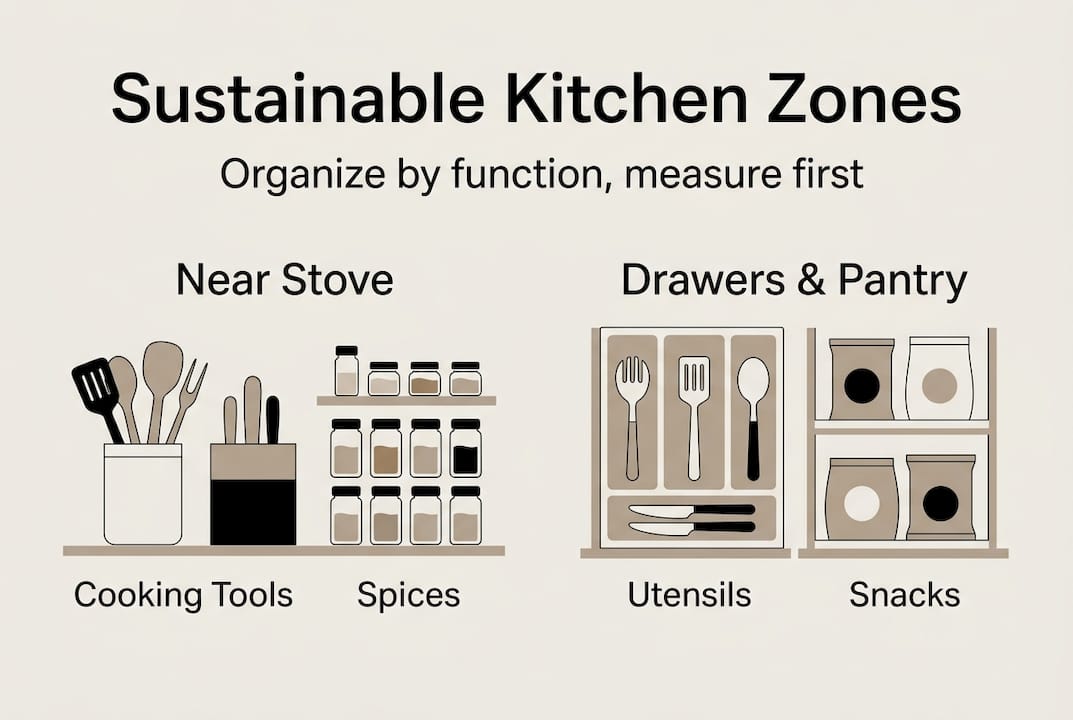
Now think about your kitchen’s layout with intention. Zone by function: dishes near the dishwasher, tools near the stove. This simple principle alone cuts down on unnecessary trips across the kitchen during meal prep.
Here is a quick reference to help you map out your zones before purchasing any organizers:
| Kitchen zone | What belongs there | Best organizer type |
|---|---|---|
| Near stove | Cooking tools, oils, spices | Drawer dividers, shelf risers |
| Near dishwasher | Plates, bowls, glasses | Cabinet shelf risers |
| Pantry or deep shelves | Dry goods, canned items | Lazy Susans, pull-out baskets |
| Junk drawer | Batteries, rubber bands, pens | Adjustable bamboo dividers |
| Upper cabinets | Rarely used appliances | Labeled bins |
Pro Tip: Before you order any organizers, measure your drawers and shelves twice. Buying a beautiful bamboo divider only to find it is two inches too wide is a frustrating and avoidable setback.
For more inspiration on how bamboo can work throughout your home, our bamboo home organization guide is a great place to start building your vision.
With your audit complete and your zones mapped out, it is time to talk tools. Not all organizers are created equal, and if you are committed to a more sustainable kitchen, the materials you choose matter just as much as the function.
Bamboo is the standout choice for eco-conscious homeowners. Unlike plastic, bamboo grows in 3 to 5 years, making it one of the most renewable materials available for home goods. It is sturdy, naturally resistant to odors, and it looks genuinely beautiful in a kitchen setting.
Another practical advantage: bamboo resists warping better than plastic in humid kitchen environments. If you have ever had a plastic drawer insert warp or crack near the stove, you will appreciate this durability.
Here is a side-by-side comparison to help you choose:
| Feature | Bamboo | Plastic | Felt or foam |
|---|---|---|---|
| Eco-friendly | Yes | No | Partially |
| Durability | High (5+ years) | Medium (2-3 years) | Low (1-2 years) |
| Humidity resistance | Excellent | Poor | Poor |
| Appearance | Warm, natural | Varies | Soft, plain |
| Cost | Moderate | Low | Low |
The most useful types of bamboo organizers for kitchens include:
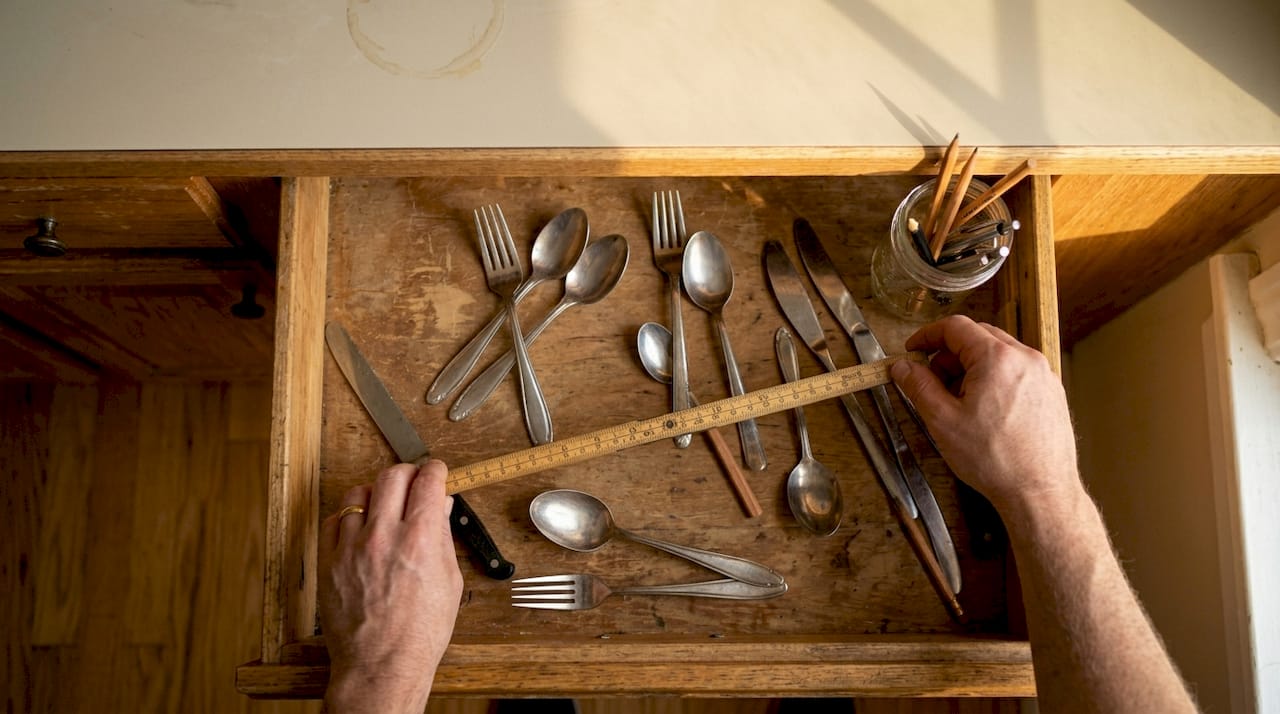
When selecting sizes, always measure the interior dimensions of your drawers and shelves first. For drawers, look for adjustable bamboo dividers that expand to fit rather than fixed-size inserts. This flexibility means you can reuse them if you ever rearrange your layout.
If you want to understand more about why bamboo for kitchen organizers is such a smart long-term investment, the material’s natural properties make it a clear winner over synthetic alternatives. Even small swaps, like replacing a plastic soap dish with a bamboo soap dish, add up to a meaningfully greener home over time.
Now comes the satisfying part. With your tools in hand and your zones identified, here is how to put it all together in a way that actually sticks.
Pro Tip: Store infrequently used appliances and seasonal items on upper shelves. Reserve eye-level and below-counter space for the things you touch every day.
For more ideas on how to build a kitchen that flows, our guides on best bamboo storage solutions and how to organize with bamboo products offer plenty of practical inspiration. Once your system is in place, you will notice how much smoother cooking feels when everything has a designated home.
Even the best-laid plans hit a snag. Here are the most common challenges homeowners face and how to handle them without abandoning your eco-friendly setup.
Deep drawers are a special case. Most people try to divide them horizontally with standard inserts, but that still leaves a lot of wasted vertical space. Deep drawers need zoning and pegboards, not just dividers. Stand cutting boards, baking sheets, and pot lids vertically using a bamboo peg or file-style divider. You will instantly double what fits.
Junk drawers are not the enemy. Every home has one, and that is perfectly fine. The mistake is trying to organize it without sorting first. Pull everything out, toss what you do not need, and only then add an adjustable bamboo divider tray. Group batteries with batteries, rubber bands with rubber bands, and so on.
Corner cupboards stump a lot of people. A bamboo lazy Susan is your best friend here. If your corner is unusually deep, consider a two-tier turntable to maximize vertical space as well.
Here are the most common mistakes to avoid:
“Sort before you store. Adding organizers to chaos just creates organized chaos.”
Caring for bamboo organizers is simple but important. Wipe them down with a dry or lightly damp cloth. Never soak bamboo in water, as prolonged moisture causes swelling and can weaken the structure over time. A quick wipe after spills keeps them looking great for years.
For ideas on extending this mindset to other areas, our guide on pantry organization for eco homes is a natural next step once your drawers and cupboards are sorted.
Here is something most organization articles will not tell you: the products are almost secondary. We have seen homeowners spend hundreds on beautiful bamboo organizers, arrange everything perfectly on day one, and then slowly watch the system collapse over the following months. Why? Because they treated organization as a one-time project rather than an ongoing habit.
Professional organizers do not just buy the right bins. They revisit their systems regularly, swap things around when life changes, and repurpose existing pieces before buying new ones. A bamboo divider that worked perfectly for utensils might serve better as a spice tray six months later when your cooking habits shift.
Sustainability in the kitchen is not just about choosing bamboo over plastic. It is about building a flexible system that adapts rather than one you abandon and replace. The most eco-friendly choice is always the one you do not have to throw away.
We encourage you to schedule a quick kitchen check-in every few months. Declutter what has crept back in, reassess your zones, and adjust your organizers as needed. Exploring a wider range of eco-friendly bamboo products can also spark fresh ideas for spaces you have not tackled yet. A truly sustainable kitchen is a living system, not a finished project.
If reading through this guide has you ready to finally tackle those cluttered cupboards, we are here to help you take that next step with confidence. At Cozee Bay, we specialize in handcrafted, eco-friendly bamboo products designed to bring lasting order and natural style to your kitchen and beyond.

From adjustable drawer organizers to shelf risers and beyond, our collection is built for real kitchens and real life. You can also explore our blog for step-by-step guides on how to use bamboo organizers to reduce plastic in your home. Every product ships free within the contiguous U.S. and is backed by our satisfaction guarantee, so you can organize with confidence.
Use adjustable bamboo dividers, zone by function, and do a quick declutter every few months. Dividers cut search time by 62%, making them one of the highest-impact changes you can make.
Yes. Bamboo grows in 3 to 5 years, making it far more renewable than the plastics used in most standard kitchen organizers, and it produces less waste over its lifespan.
Wipe them with a dry or lightly damp cloth after use. Avoid soaking bamboo in water, as prolonged moisture causes swelling and can shorten the organizer’s life.
A bamboo lazy Susan or a two-tier turntable maximizes both horizontal and vertical space in corner cupboards, giving you easy spin access to items that would otherwise get lost in the back.
Every three to four months is a good rhythm. Life changes, cooking habits shift, and a quick review keeps your system functional and clutter from quietly creeping back in.
Comments will be approved before showing up.