Your Cart is Empty


More than 1,400 bamboo species power a global shift toward eco-friendly design, and urban american spaces are embracing this change at remarkable speed. For homeowners and property managers who value sustainability and style, bamboo products offer stunning versatility from furniture to textiles. This guide reveals why bamboo stands out as a renewable alternative with minimal environmental impact and highlights the important differences that set modern bamboo solutions apart from traditional materials.
| Point | Details |
|---|---|
| Bamboo as a Sustainable Resource | Bamboo matures in 3-5 years, making it a highly renewable alternative to traditional wood, which takes decades to grow. |
| Diverse Applications | Bamboo products range from construction materials to textiles, supported by significant advances in manufacturing innovations. |
| Environmental Benefits | Bamboo offers substantial carbon sequestration capabilities and helps prevent soil erosion, enhancing its sustainability profile. |
| Market Potential | There are significant opportunities in eco-friendly products and construction materials, particularly in developing regions with abundant bamboo resources. |
Bamboo products represent a versatile and environmentally sustainable category of materials that span multiple industries and applications. Comprehensive global reports reveal bamboo’s incredible potential as a renewable resource capable of transforming traditional manufacturing and design approaches. These products encompass everything from construction materials and furniture to textiles, kitchenware, and specialized commercial accessories.
At its core, bamboo is a fast-growing grass with extraordinary properties that make it ideal for product development. Unlike traditional wood sources that require decades to mature, bamboo reaches full harvesting potential in just 3-5 years, making it an exceptionally renewable material. Its natural strength, flexibility, and resistance to moisture enable manufacturers to create durable products across numerous sectors. International bamboo research demonstrates how this remarkable plant can be transformed into complex products ranging from structural building components to delicate home decor items.
The primary categories of bamboo products include raw materials, semi-processed components, and fully engineered solutions. Raw bamboo might be used directly in crafts or construction, while processed forms involve transforming the material into textiles, paper products, or composite materials. Engineered bamboo products represent the most advanced applications, where the material is carefully treated to enhance its structural integrity and performance characteristics. These innovations allow bamboo to compete with traditional materials in sectors like architecture, furniture design, and sustainable consumer goods.
Pro tip: When selecting bamboo products, always verify the manufacturing process and sustainability certifications to ensure you’re supporting genuine eco-friendly production methods.
Here is a summary of how bamboo compares to traditional wood materials:
| Criteria | Bamboo | Traditional Wood |
|---|---|---|
| Growth Rate | 3-5 years to harvest | 20-70 years to harvest |
| Sustainability | Highly renewable, regenerates quickly | Limited, slow to renew |
| Moisture Resistance | Naturally resistant | Needs chemical treatment |
| Carbon Sequestration | Very high capacity | Moderate to high capacity |
| Product Diversity | Textiles, composites, building materials | Mainly lumber, furniture |
Bamboo encompasses an astonishingly diverse range of species and product variations that extend far beyond simple construction materials. Global research identifies over 1,400 distinct bamboo species, categorized into broad classifications that dramatically impact their potential applications. These variations span tropical and temperate zones, including woody and herbaceous varieties, each offering unique characteristics that determine their suitability for different manufacturing and design purposes.
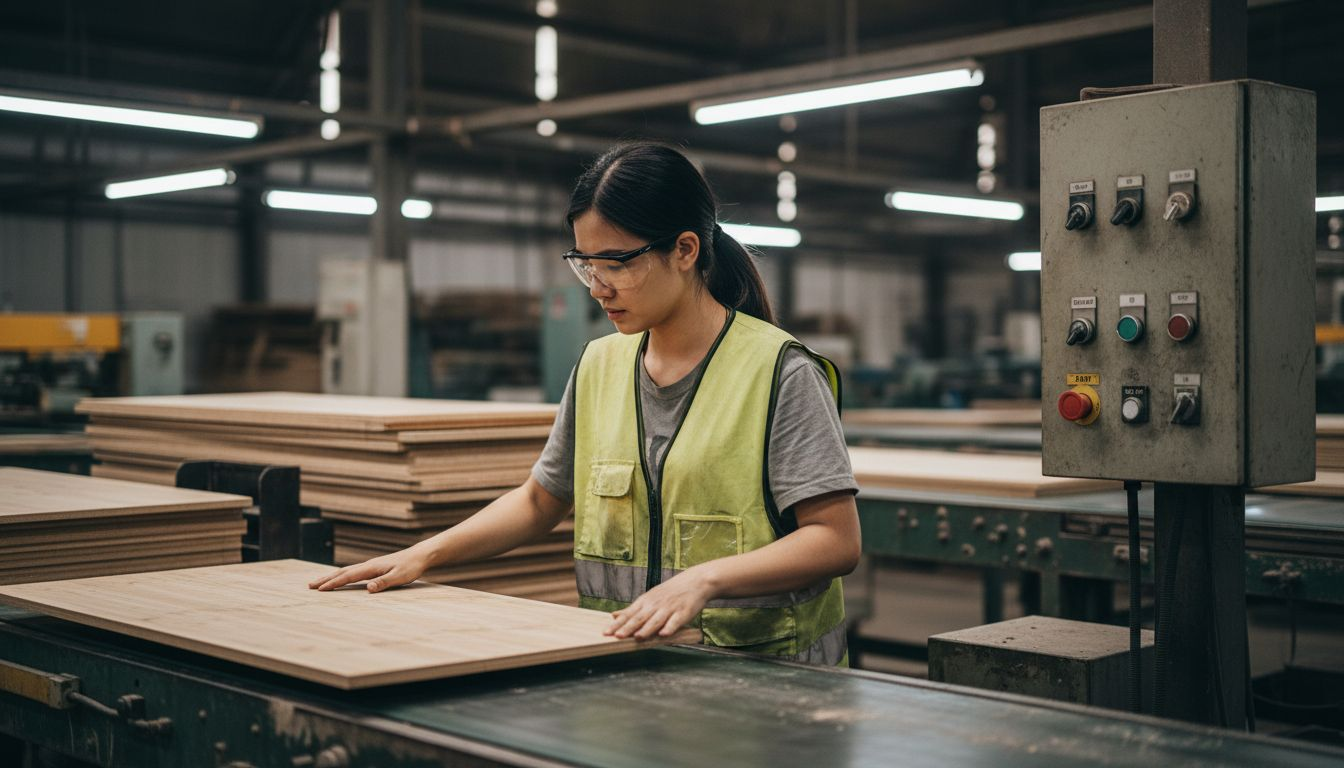
The primary categories of bamboo products can be divided into three fundamental groups: raw materials, semi-processed components, and fully engineered solutions. Raw bamboo includes direct culm (stem) usage in traditional crafts and construction, while semi-processed forms transform the material into textiles, paper products, and composite materials. Advanced material research reveals that engineered bamboo products represent the most sophisticated applications, where sophisticated treatments enhance structural integrity and performance characteristics, enabling competition with conventional materials across architecture, furniture design, and sustainable consumer goods.
Bamboo’s remarkable versatility allows manufacturers to develop products across multiple sectors. Mechanical properties vary significantly between species, influencing applications in industries ranging from textile production to structural engineering. Tropical bamboo species typically offer greater flexibility and strength, making them ideal for furniture and architectural elements, while temperate varieties might excel in more specialized manufacturing processes. The chemical composition of different bamboo types further determines their potential uses, with some species better suited to creating durable composites and others more appropriate for delicate textile production.
Pro tip: When exploring bamboo product variations, always consult specialized manufacturers who can provide detailed specifications about the specific bamboo species and processing techniques used in their products.
The bamboo industry is experiencing a technological revolution, with cutting-edge innovations transforming material development across multiple sectors. Recent breakthroughs in manufacturing techniques have expanded bamboo’s potential far beyond traditional applications, introducing advanced composite materials and sophisticated processing methods that dramatically enhance the material’s performance, durability, and aesthetic appeal. These innovations are not merely incremental improvements but represent fundamental shifts in how manufacturers conceptualize and utilize bamboo as a sustainable resource.
Key technological advancements include the development of nanocellulose extraction techniques, which enable the creation of ultra-high-performance bamboo composites with unprecedented strength and flexibility. Research in sustainable material design reveals emerging methods that allow engineers to manipulate bamboo’s molecular structure, creating products with tailored mechanical properties that can compete with or surpass traditional materials like steel, plastic, and wood. These innovations span diverse industries, from construction and architecture to consumer electronics and textile manufacturing, demonstrating bamboo’s remarkable versatility.
The most promising innovations center on three primary domains: material engineering, processing technology, and design optimization. Material engineers are developing hybrid bamboo composites that incorporate nanotechnology, creating products with enhanced thermal stability, moisture resistance, and structural integrity. Processing technologies now enable more precise treatments that reduce waste, improve material consistency, and expand the range of possible applications. Meanwhile, design innovations are reimagining bamboo’s aesthetic potential, transforming it from a purely functional material to a sophisticated, stylish medium that appeals to environmentally conscious consumers and high-end designers alike.
Pro tip: Investigate emerging bamboo technologies by following academic journals and industry conferences to stay ahead of the latest sustainable material innovations.
The following table highlights major innovations shaping the bamboo industry:
| Innovation Area | Description | Key Benefits |
|---|---|---|
| Nanocellulose Extraction | Converts bamboo into ultra-strong composites | Improved strength, flexibility |
| Hybrid Composite Engineering | Blends bamboo with other materials | Greater thermal and moisture resistance |
| Precision Processing | Advanced treatments reduce waste | Higher efficiency, product consistency |
| Design Optimization | New aesthetic and structural uses | Attracts eco-focused designers |
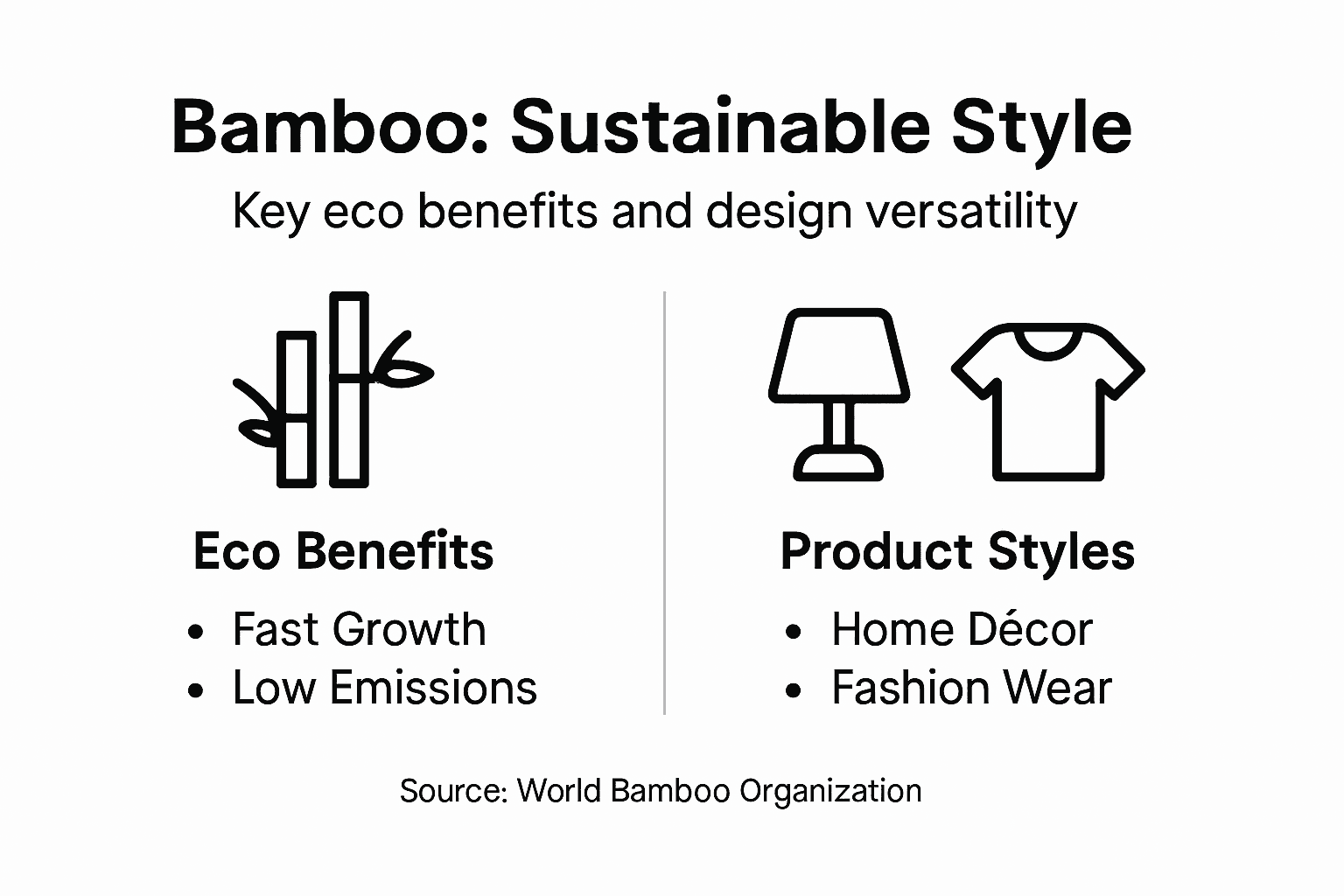
Comprehensive global research reveals bamboo as a transformative solution in sustainable material development, offering unprecedented environmental advantages over traditional resources. Unlike slow-growing timber that requires decades to mature, bamboo represents a remarkably rapid renewable resource capable of reaching full growth in just 3-5 years. This extraordinary growth rate, combined with its ability to regenerate without replanting, positions bamboo as a critical material in addressing global environmental challenges and reducing carbon emissions.
Bamboo’s environmental benefits extend far beyond its rapid growth cycle. Scientific investigations demonstrate remarkable ecological advantages, including significant carbon sequestration capabilities, soil stabilization, and minimal agricultural inputs. A single bamboo grove can capture substantially more carbon dioxide compared to equivalent forest areas, while simultaneously preventing soil erosion and supporting biodiversity. Its root system remains intact after harvesting, which means continuous ground cover and reduced land degradation—a stark contrast to traditional logging practices that often leave landscapes barren and vulnerable.
The sustainability profile of bamboo encompasses multiple dimensions beyond environmental preservation. From a circular economy perspective, bamboo products offer complete biodegradability, low processing energy requirements, and minimal waste generation. Manufacturers can transform bamboo into diverse products ranging from construction materials and textiles to consumer goods, all while maintaining a dramatically reduced environmental footprint compared to petroleum-based or traditional wood-derived alternatives. This versatility positions bamboo as a critical material in global efforts to transition toward more sustainable industrial practices and reduce reliance on non-renewable resources.
Pro tip: When selecting bamboo products, prioritize manufacturers who provide transparent sustainability certifications and can demonstrate responsible sourcing practices.
Global market research reveals the bamboo industry stands at a critical juncture, simultaneously confronting significant challenges and unprecedented opportunities. The sector faces complex obstacles including inconsistent product quality, fragmented supply chains, and limited international standardization. These barriers have historically prevented bamboo from achieving its full market potential, creating a landscape where innovative manufacturers and strategic developers can make substantial impacts.
Supply chain complexity analysis highlights critical challenges that span regulatory frameworks, manufacturing processes, and global trade dynamics. Developing nations with abundant bamboo resources often lack sophisticated processing technologies, while developed markets struggle with establishing consistent quality control mechanisms. These challenges create a unique ecosystem where technological innovation, strategic partnerships, and targeted investments can transform existing limitations into competitive advantages. Emerging opportunities include sustainable construction materials, eco-friendly consumer products, and advanced composite technologies that position bamboo as a critical resource in global sustainability efforts.
The most promising market opportunities emerge at the intersection of environmental consciousness and technological innovation. Manufacturers who can demonstrate transparent supply chains, consistent product quality, and verifiable sustainability credentials are positioned to capture growing market segments in green building, consumer goods, and industrial applications. Regions like Southeast Asia, parts of Africa, and South America possess significant bamboo resources and are increasingly developing sophisticated processing capabilities, suggesting a potential shift in global manufacturing paradigms that could elevate bamboo from a niche material to a mainstream sustainable solution.
Pro tip: Research emerging bamboo markets by connecting with international trade organizations and attending sustainable manufacturing conferences to identify investment and development opportunities.
The future of bamboo products lies in their unique blend of sustainability and style. As detailed in the article, bamboo’s rapid renewability and environmental benefits make it the ideal choice for eco-conscious consumers seeking durable, functional, and beautiful materials. However, challenges like inconsistent quality and limited access to trustworthy products can make it difficult to fully embrace this revolutionary material. That is where Cozee Bay steps in to offer premium handcrafted bamboo items designed with both aesthetic appeal and sustainability in mind.
Discover our collection of sleek and innovative Bamboo Paper Towel Dispensers crafted specifically for residential and commercial use. 
Make your commitment to the environment tangible with products that reflect bamboo’s transformative potential. Explore our full range of eco-friendly organizers and dispensers to find stylish, functional solutions for your home or business. Don’t wait to join the movement toward smarter, greener living. Visit Cozee Bay today and experience the perfect harmony of nature and design.
Enhance your bamboo experience further with essential Paper Towel Dispenser Accessories and uniquely practical Plastic Wrap Dispensers With Cutter. Your journey to sustainable style starts now.
Bamboo products are versatile and can be used in construction materials, furniture, textiles, kitchenware, and various commercial accessories.
Bamboo is highly renewable, reaching full growth in just 3-5 years, while traditional wood can take 20-70 years to mature. Additionally, bamboo regenerates naturally without replanting, making it a more sustainable choice.
Engineered bamboo products undergo sophisticated treatments to enhance their structural integrity and performance, allowing them to compete with traditional materials like wood and steel. This innovation makes them suitable for a wide range of applications, from architecture to consumer goods.
Bamboo captures significant amounts of carbon dioxide, stabilizes soil, and requires minimal agricultural inputs. Its rapid growth and ability to regenerate make it a key material in reducing carbon emissions and promoting ecological balance.
Comments will be approved before showing up.