Your Cart is Empty


More than 50 percent of American restaurant and café owners are prioritizing renewable materials that align with eco-friendly values and modern style. For businesses looking to meet this demand, bamboo wood stands out with its rapid growth, distinctive appearance, and remarkable durability. If you want your establishment to capture attention while supporting sustainable practices, understanding bamboo’s unique qualities can transform how you design and operate your space.
| Point | Details |
|---|---|
| Sustainability of Bamboo | Bamboo grows rapidly and can be harvested multiple times, making it an eco-friendly alternative to traditional timber. |
| Versatile Applications | Engineered bamboo materials cater to diverse commercial needs, offering options like laminated lumber and particleboards for various uses. |
| Health and Environmental Benefits | Bamboo’s antibacterial properties and minimal chemical treatment make it a safe choice for café environments while promoting carbon sequestration. |
| Cost-Effectiveness | Bamboo is competitively priced and requires minimal maintenance, making it a financially sensible alternative to other sustainable materials. |
Bamboo wood represents a revolutionary material that defies traditional expectations about wooden resources. Unlike conventional timber that requires decades to mature, bamboo grows incredibly fast and can reach full height in just 3-5 years, making it an exceptionally sustainable alternative for café owners seeking eco-friendly design solutions. Its unique cellular structure provides remarkable strength and flexibility that researchers have extensively documented in structural studies.
The mechanical properties of bamboo distinguish it from standard wood materials through its extraordinary strength-to-weight ratio. Bamboo fibers are densely packed, creating a natural composite material with impressive structural integrity. Scientific analysis reveals that bamboo’s mechanical characteristics can vary significantly depending on species, age, and specific treatment methods, which allows for remarkable adaptability across different design applications.
What truly sets bamboo apart is its sustainability profile. While traditional hardwood trees might take 20-80 years to reach maturity, bamboo regenerates rapidly without requiring replanting. A single bamboo plant can be harvested multiple times, with some species growing up to 3 feet per day. This rapid growth cycle means bamboo provides a renewable resource that actively supports forest conservation and reduces environmental impact.
Pro tip: When selecting bamboo wood for commercial spaces like cafés, always request certification documents verifying sustainable harvesting practices to ensure authentic environmental credentials.
Commercial spaces are increasingly turning to bamboo as a versatile material, with engineered bamboo building materials offering remarkable alternatives to traditional wood products. These innovative materials include laminated bamboo lumber, parallel strand bamboo, bamboo mat boards, and bamboo particleboards, each designed to meet specific commercial design and construction requirements.
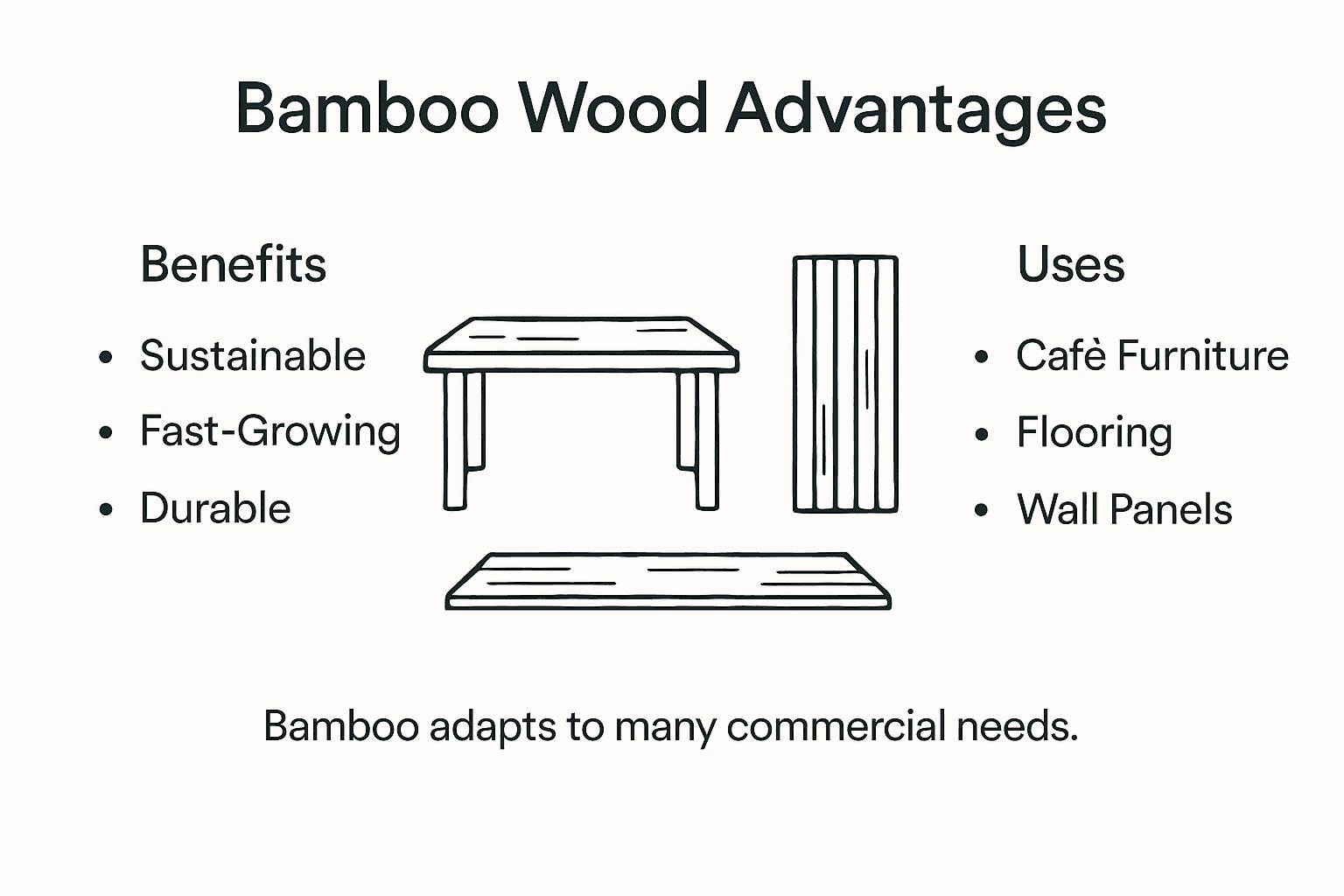
The diversity of bamboo wood types allows café owners and commercial designers to select materials tailored to their specific aesthetic and functional needs. Laminated bamboo lumber provides exceptional structural integrity, while bamboo mat boards offer lightweight yet durable surfaces perfect for countertops and furniture. Parallel strand bamboo represents a high-performance option, featuring compressed bamboo fibers aligned to maximize strength and stability.
Beyond structural applications, bamboo wood serves multiple commercial purposes. Raw bamboo materials support pulp, paper, and allied industries, demonstrating its versatility beyond traditional construction. Commercially cultivated bamboo species provide sustainable raw materials that help conserve forest resources while offering renewable alternatives to conventional wood products.
Here is a summary comparing major engineered bamboo wood types for commercial spaces:
| Bamboo Material Type | Key Properties | Common Commercial Uses | Distinct Advantage |
|---|---|---|---|
| Laminated Bamboo Lumber | High structural integrity | Flooring, beams, counters | Excellent load-bearing capacity |
| Parallel Strand Bamboo | Maximized strength, stability | Frames, columns, supports | Superior mechanical performance |
| Bamboo Mat Board | Lightweight, durable | Furniture, surfaces | Easy handling, design flexibility |
| Bamboo Particleboard | Economical, uniform texture | Wall panels, cabinetry | Cost-effective material solution |
Pro tip: When selecting bamboo wood for commercial spaces, request detailed technical specifications to ensure the material matches your specific performance and aesthetic requirements.
Bamboo stands as a powerful environmental solution, particularly in addressing climate change through its remarkable carbon sequestration capabilities. Scientific research highlights bamboo’s critical role as a nature-based solution for mitigating atmospheric carbon dioxide levels, demonstrating its potential to generate significant environmental benefits. Unlike traditional timber sources, bamboo grows rapidly and can absorb substantially more carbon, making it an exceptional alternative for environmentally conscious businesses seeking sustainable materials.

From a health perspective, bamboo offers numerous advantages that extend beyond its environmental impact. The material naturally resists bacterial growth, contains antimicrobial properties, and does not require harsh chemical treatments during processing. This makes bamboo wood an ideal choice for café environments where hygiene and natural materials are paramount. Its low toxicity and ability to be processed without extensive chemical interventions ensure a safer, more natural product for both human use and environmental preservation.
Bamboo’s sustainability goes far beyond carbon sequestration. The plant regenerates quickly, with some species growing up to three feet per day, and can be harvested multiple times without replanting. This regenerative cycle means bamboo provides a renewable resource that actively supports ecosystem health while reducing pressure on traditional forest resources. For café owners and commercial designers, choosing bamboo represents a tangible commitment to environmental stewardship and responsible material selection.
Pro tip: When evaluating bamboo products, request third-party certifications that verify sustainable harvesting practices and environmental impact metrics.
Bamboo wood’s mechanical properties represent a complex interplay of factors that determine its overall performance and longevity. Scientific research demonstrates that bamboo’s durability varies significantly based on species, age, and specific treatment processes, making it crucial for café owners to understand the nuanced characteristics of their chosen bamboo materials. Unlike traditional wood, bamboo requires strategic maintenance and protection to maximize its structural integrity and aesthetic appeal.
The key to preserving bamboo’s strength lies in proactive maintenance and environmental protection. Researchers emphasize the importance of design practices that shield bamboo from moisture, rain, and direct water exposure. This means implementing design strategies such as elevated storage, indoor placement, and appropriate surface treatments that prevent water absorption and potential rot. Commercial spaces like cafés can extend bamboo wood’s service life by creating protective environments that mitigate potential degradation factors.
Treatment processes play a critical role in enhancing bamboo’s durability and resistance to biological agents. Various natural and chemical treatments can significantly improve the wood’s performance, though each method comes with specific considerations. Some treatments may increase temperature sensitivity or require specialized application techniques. For café owners, this means consulting with bamboo wood specialists who can recommend the most appropriate treatment method for their specific commercial environment and usage requirements.
Pro tip: Invest in professional consultation to develop a customized maintenance strategy that preserves your bamboo wood’s strength, appearance, and longevity.
Bamboo construction represents a remarkably cost-effective sustainable material, offering significant economic advantages over traditional carbon-intensive building materials like steel and concrete. For café owners seeking environmentally responsible design solutions, bamboo provides an exceptional alternative that balances affordability with sustainability. Its rapid renewability and local availability make it particularly attractive for businesses looking to reduce both environmental impact and long-term material costs.
Compared to conventional sustainable materials, bamboo demonstrates remarkable economic potential across its entire lifecycle. Research indicates that bamboo’s cost efficiency extends beyond initial purchase price, encompassing factors like durability, maintenance requirements, and environmental sustainability. Long-term economic analysis reveals that bamboo construction can be substantially more cost-effective than traditional materials, particularly when considering reduced replacement and maintenance expenses over time.
The economic viability of bamboo is further enhanced by its unique characteristics. Community-based processing, local availability, and minimal transportation costs contribute to its competitive pricing. For café designers and owners, this means accessing a sustainable material that not only reduces environmental footprint but also provides a financially sensible alternative to more expensive sustainable materials like reclaimed wood, recycled metals, or specialized eco-friendly composites.
Use this quick reference to compare bamboo’s cost efficiency with other sustainable materials:
| Material | Initial Cost | Maintenance Needs | Long-Term Savings |
|---|---|---|---|
| Bamboo | Low to Medium | Minimal | High due to durability |
| Reclaimed Wood | Medium | Moderate | Moderate, variable |
| Recycled Metal | High | Low | Moderate, depends on use |
| Eco-Friendly Composites | High | Varies | Moderate to high |
Pro tip: Request detailed lifecycle cost comparisons from suppliers to accurately assess the long-term financial benefits of bamboo materials for your commercial space.
Cafés choosing bamboo wood for its sustainability and durability face challenges like selecting authentic, certified bamboo and ensuring long-lasting performance without complicated maintenance. If you value eco-friendly materials that combine exceptional strength with natural beauty and want to elevate your commercial space, Cozee Bay offers handcrafted bamboo products designed with these goals in mind. From stylish paper towel dispensers to efficient organizers, our bamboo solutions reflect the rapid renewability and antimicrobial benefits highlighted in the article, providing your café with truly sustainable, hygienic options that support environmental stewardship.
Explore our curated collection at Cozee Bay to find premium bamboo items that match your design and functionality needs. Act now to enhance your café’s eco-conscious image and enjoy free shipping nationwide with our money-back satisfaction guarantee. Embrace bamboo’s unique advantages and make a lasting impact on your customers and the planet today.
Bamboo wood offers numerous benefits for cafés, including rapid renewability, exceptional strength-to-weight ratio, and natural resistance to bacteria. Its sustainability profile allows cafés to showcase eco-friendly design solutions while ensuring a hygienic environment for patrons.
Bamboo wood is significantly more sustainable than traditional hardwoods, as it grows to maturity in just 3-5 years compared to 20-80 years for hardwood trees. Additionally, bamboo can be harvested multiple times without replanting, supporting forest conservation and reducing environmental impact.
Common bamboo wood types for cafés include laminated bamboo lumber, parallel strand bamboo, bamboo mat boards, and bamboo particleboards. Each type offers unique properties, such as high structural integrity or lightweight durability, making them ideal for various commercial applications.
To maintain bamboo wood’s durability, it’s essential to protect it from moisture and direct water exposure. Implement design strategies like indoor placement and elevated storage, and consider professional consultations for appropriate treatments that enhance its resistance to environmental factors.
Comments will be approved before showing up.