Your Cart is Empty


Many shoppers believe bamboo is automatically eco-friendly, but the truth is more complex. Not all bamboo products meet ethical standards, and some manufacturing processes harm the environment despite bamboo’s natural renewability. Understanding sustainable building practices helps you distinguish genuinely ethical bamboo from greenwashed alternatives. This guide reveals what makes bamboo truly sustainable, from harvest methods to certifications, so you can confidently choose products that align with your values for home and office spaces.
| Point | Details |
|---|---|
| Ethical harvesting | Harvest bamboo from responsibly managed plantations using selective cutting that preserves roots and biodiversity. |
| Certified accountability | Certifications such as FSC and GOTS plus OEKO TEX and BSCI and Sedex provide independent verification of sustainable practices and fair labor. |
| Transparent supply chains | Traceability from plantation to product ensures origin and processing locations are disclosed. |
| Avoid monoculture and greenwashing | Be wary of monoculture practices and greenwashing claims to ensure environmental benefits are real. |
Ethically sourced bamboo involves harvesting mature culms from responsibly managed plantations avoiding deforestation, ensuring biodiversity and fair labor. Unlike timber that takes decades to mature, bamboo reaches harvest readiness in three to five years. This rapid growth makes it renewable, but only when sourced correctly.
The harvesting method determines environmental impact. Selective cutting preserves root systems and allows continuous regrowth without replanting. Workers remove mature stalks while leaving younger growth undisturbed, maintaining the plantation’s productivity. This approach contrasts sharply with clear-cutting practices that destroy ecosystems.
Natural forest bamboo should remain untouched. Ethical suppliers cultivate dedicated plantations designed for sustainable harvest cycles. These managed environments prevent deforestation and protect wild bamboo habitats that support native wildlife. When you see bamboo products, the source matters more than the material itself.
Certifications provide verification that suppliers follow ethical standards. The Forest Stewardship Council ensures traceability from plantation to product, confirming responsible forest management. Programme for the Endorsement of Forest Certification adds another layer of accountability for sustainable sourcing.
Fair labor practices form a critical component of ethical sourcing. Certifications like Fair Trade guarantee workers receive fair wages and safe conditions. Without these protections, bamboo production can exploit vulnerable communities despite the material’s environmental benefits.
Key ethical sourcing criteria include:
Exploring bamboo interior design ideas helps you visualize how ethically sourced materials transform living spaces. The aesthetic appeal should never come at the cost of environmental or social responsibility.
Key certifications for ethical bamboo include FSC for sustainable forest management, GOTS for organic textiles and fair labor, OEKO-TEX for chemical safety, and BSCI/Sedex for labor ethics. Each certification addresses specific aspects of the supply chain, creating comprehensive accountability.
FSC certification traces bamboo from plantation through manufacturing. Auditors verify that suppliers avoid illegal logging, protect endangered species, and respect indigenous rights. This chain of custody ensures your purchase supports responsible forestry rather than destructive practices.
Global Organic Textile Standard applies when bamboo becomes fabric. GOTS requires organic inputs, prohibits harmful chemicals, and mandates fair labor throughout production. Textile manufacturers must meet strict environmental and social criteria to earn this certification.
OEKO-TEX Standard 100 tests finished products for harmful substances. This certification confirms that bamboo textiles contain no dangerous chemicals that could affect your health. It’s particularly important for items touching skin, like bedding or clothing.
Labor certifications prevent exploitation. Business Social Compliance Initiative and Sedex Members Ethical Trade Audit verify that workers receive fair treatment, reasonable hours, and safe facilities. These standards protect the people behind your bamboo products.
Processing methods dramatically affect environmental impact. Mechanical processing crushes bamboo stalks and uses natural enzymes to separate fibers. This method requires no harsh chemicals and produces minimal waste, making it the most eco-friendly option.
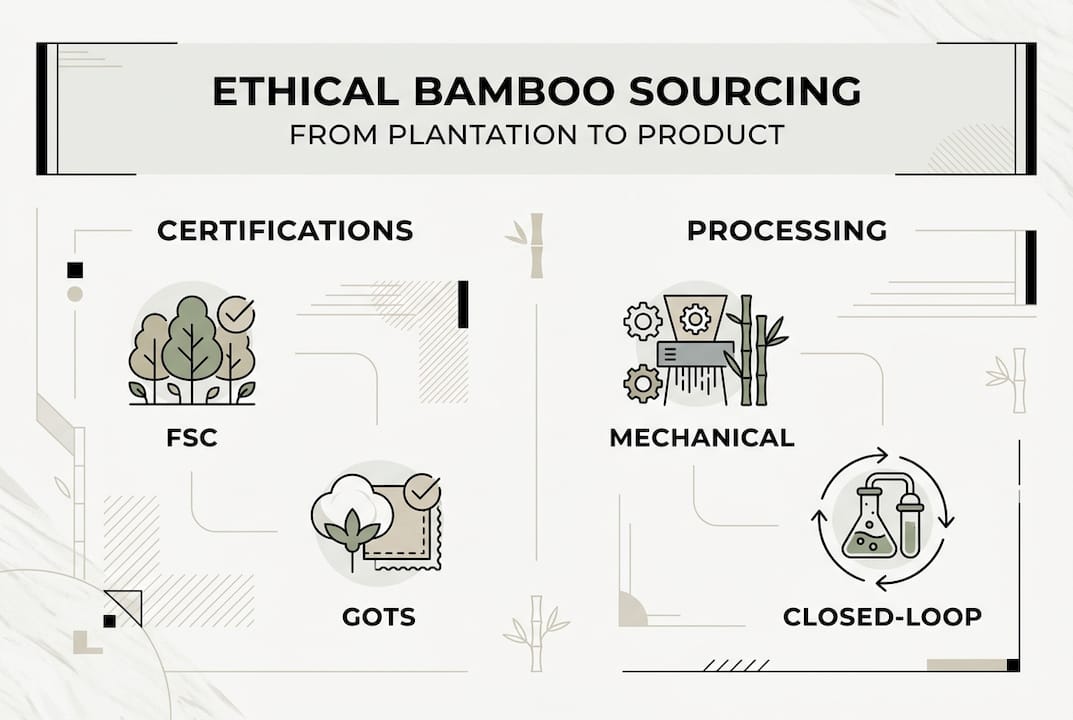
Closed-loop chemical processing recovers solvents for reuse. Modern facilities recover up to 99% of chemicals, preventing pollution while creating soft bamboo lyocell. This process balances environmental responsibility with product quality.
Open-loop viscose processing releases chemicals into the environment. Unfortunately, this method dominates bamboo textile production because it costs less than closed-loop alternatives. The environmental damage undermines bamboo’s natural sustainability advantages.
Processing standards to prioritize:
Pro Tip: Check if brands specify their processing method. Vague terms like “bamboo rayon” usually indicate open-loop viscose, while “bamboo lyocell” or “mechanically processed” signal better environmental practices.
Understanding the eco-friendly bamboo guide clarifies which certifications matter most for different product categories. Not all bamboo items need every certification, but transparency about applicable standards is essential.
Bamboo grows fast sequestering up to 70 t CO2/ha/yr but lifecycle analyses show varied footprints depending on processing location and method, including coal-powered plants in China raising emissions. This carbon sequestration capacity makes bamboo theoretically climate-friendly, but real-world impacts depend on production choices.
Lifecycle analysis reveals surprising complexity. Bamboo flooring manufactured with renewable energy can achieve net negative emissions, actually removing carbon from the atmosphere. However, the same material processed in coal-powered Chinese facilities generates substantial greenhouse gases that negate bamboo’s natural benefits.

Energy source matters enormously. Factories powered by solar, wind, or hydroelectric energy maintain bamboo’s low carbon footprint. Conversely, facilities using fossil fuels transform a sustainable material into a climate problem. Geographic location often determines energy mix and overall environmental impact.
| Production Stage | Low Impact Method | High Impact Method | CO2 Difference |
|---|---|---|---|
| Harvesting | Manual selective cutting | Mechanized clear-cutting | 40% lower |
| Transportation | Regional processing | Intercontinental shipping | 60% lower |
| Processing | Renewable energy facility | Coal-powered plant | 75% lower |
| Finishing | Water-based treatments | Solvent-based chemicals | 50% lower |
Monoculture plantations create biodiversity problems. When large areas grow only bamboo, native species lose habitat and ecosystems become fragile. 85-90% bamboo textiles are chemical-intensive viscose; monoculture plantations cause deforestation and biodiversity loss. This industrial approach prioritizes yield over ecological health.
Deforestation risks emerge when bamboo replaces natural forests. Some producers clear diverse ecosystems to plant bamboo monocultures, destroying habitats while claiming sustainability. This practice contradicts ethical sourcing principles and damages the environment bamboo production should protect.
Viscose processing dominates bamboo textiles despite environmental costs. The chemical-intensive method dissolves bamboo pulp in caustic solutions, then regenerates fibers through additional chemical baths. Without closed-loop systems, these chemicals pollute waterways and harm communities near production facilities.
Greenwashing undermines consumer trust. The Federal Trade Commission has fined companies for deceptive bamboo marketing, particularly false claims about textile production methods. Brands calling viscose “natural bamboo fabric” mislead shoppers about environmental impact.
Common sustainability challenges:
“The bamboo industry faces a credibility gap. While the raw material offers genuine sustainability potential, current production practices often fail to deliver on environmental promises. Certifications and transparency are essential to close this gap.” - Sustainable Materials Research Institute
Comparing top bamboo products reveals how manufacturing choices affect environmental performance. Products with detailed sourcing information typically demonstrate better sustainability practices than those with vague eco-claims.
Recent eco-friendly bamboo tissue studies show that processing method determines whether bamboo products truly benefit the environment. The material’s inherent sustainability means nothing without responsible manufacturing.
For eco-conscious buyers, prioritize 100% bamboo with FSC/GOTS certification, closed-loop processing or mechanical methods, and transparent brand information about origin and labor standards. This combination ensures your purchase supports genuine sustainability rather than greenwashed marketing.
Label reading requires careful attention. Products labeled “100% bamboo” should contain no synthetic blends or misleading fillers. “Rayon from bamboo” indicates chemical processing, while “bamboo lyocell” suggests closed-loop methods. “Mechanically processed bamboo” represents the most eco-friendly textile option.
Certification verification prevents fraud. Legitimate certifications include license numbers you can check on certifying organizations’ websites. FSC provides online databases showing certified suppliers and products. GOTS maintains similar verification systems for textile certifications.
Processing transparency separates ethical brands from greenwashers. Companies confident in their sustainability provide detailed information about manufacturing locations, energy sources, and chemical management. Vague claims like “eco-friendly bamboo” without supporting details should raise suspicion.
| Feature | Ethical Bamboo Product | Non-Ethical Bamboo Product |
|---|---|---|
| Certification | FSC, GOTS, or OEKO-TEX with verifiable numbers | No certifications or vague “eco” labels |
| Processing | Closed-loop lyocell or mechanical | Open-loop viscose or unspecified method |
| Sourcing | Named plantation regions with management details | “Sustainably sourced” without specifics |
| Labor | Fair Trade or BSCI verification | No labor standards mentioned |
| Transparency | Detailed supply chain information | Marketing buzzwords without substance |
Brand transparency indicates commitment to ethics. Companies publishing sustainability reports, factory locations, and third-party audit results demonstrate accountability. Those hiding production details likely have practices they prefer consumers not examine.
Steps to verify bamboo product authenticity:
Pro Tip: Genuine ethical bamboo products typically cost 20-40% more than conventional alternatives. If prices seem too good to be true, the sustainability claims probably are too.
Avoid common greenwashing tactics. Phrases like “natural bamboo,” “eco-friendly,” or “sustainable” mean nothing without certification backing. Images of forests and green color schemes create impressions of sustainability that may not reflect reality.
Exploring DIY bamboo home decor projects lets you control material sourcing directly. Purchasing certified bamboo materials for custom projects ensures ethical standards while expressing your personal style.
Implementing bamboo living room design with verified ethical products creates beautiful spaces that reflect your environmental values. The aesthetic appeal of bamboo combines with sustainability when you choose carefully.
Consumer demand drives industry change. When shoppers consistently choose certified ethical bamboo over greenwashed alternatives, manufacturers must improve practices to compete. Your purchasing decisions shape market standards and environmental outcomes.
Now that you understand ethical bamboo sourcing, you can make informed choices for your home and office. Cozee Bay specializes in handcrafted bamboo products that combine sustainability with functional design. Our curated selection emphasizes quality craftsmanship and eco-conscious materials for residential and commercial spaces.
Our bamboo paper towel dispensers, organizers, and decor items serve restaurants, offices, schools, and homes across the country. Each product reflects our commitment to sustainable materials and stylish functionality. We provide detailed product information so you can verify the ethical standards that matter to you.
Explore our bamboo interior design ideas for inspiration on incorporating sustainable materials throughout your space. Our DIY bamboo home decor guide offers creative projects that showcase bamboo’s versatility. Free shipping within the contiguous U.S. and our money-back guarantee make it easy to try eco-friendly bamboo products risk-free.
Bamboo’s environmental impact depends entirely on sourcing and processing choices. While bamboo grows rapidly and sequesters carbon naturally, unethical harvesting from natural forests, chemical-intensive viscose processing, and fossil fuel-powered manufacturing can negate these benefits. Only certified bamboo from managed plantations with responsible processing truly delivers sustainability.
Prioritize FSC certification for responsible forest management, GOTS for organic textiles with fair labor, and OEKO-TEX for chemical safety. Fair Trade, BSCI, or Sedex certifications verify ethical labor practices. Always check that certification numbers are verifiable through the certifying organization’s website to avoid fraudulent claims.
Approximately 85-90% of bamboo textiles use open-loop viscose processing, which releases harmful chemicals into the environment. This method dissolves bamboo in caustic solutions without recovering solvents for reuse. Despite bamboo’s renewable nature, chemical-intensive processing creates pollution that undermines sustainability claims unless brands use closed-loop or mechanical methods.
Greenwashed products use vague terms like “eco-friendly” or “natural bamboo” without specific certifications or processing details. Legitimate ethical bamboo includes verifiable certification numbers, named plantation regions, detailed processing methods, and transparent supply chain information. Unusually low prices compared to certified alternatives also signal potential greenwashing.
Yes, large-scale bamboo monocultures reduce biodiversity by replacing diverse ecosystems with single-species plantations. This practice destroys wildlife habitats and creates fragile agricultural systems vulnerable to pests and disease. Some producers even clear natural forests to plant bamboo monocultures, causing deforestation while claiming sustainability. Ethical bamboo comes from plantations that maintain biodiversity and avoid displacing natural ecosystems.
Comments will be approved before showing up.