Your Cart is Empty


Over 60 percent of American restaurants and cafes in major cities are exploring eco-friendly upgrades to meet growing demand for sustainable spaces. With customers prioritizing style as much as sustainability, choosing the right materials becomes essential for both brand image and guest comfort. Discover how innovative bamboo solutions can transform commercial interiors with durability, modern appeal, and environmental benefits that stand out in crowded urban markets.
| Point | Details |
|---|---|
| Bamboo as a Sustainable Material | Bamboo’s rapid growth and minimal environmental impact make it a superior choice for various commercial applications, promoting ecological responsibility. |
| Versatile Product Range | Bamboo products range from structural materials to office supplies, enabling businesses to adopt eco-friendly practices across different industries. |
| Significant Environmental Benefits | Bamboo’s capabilities, such as carbon sequestration and soil stabilization, contribute positively to environmental sustainability. |
| Implementing Best Practices | Successful integration of bamboo requires careful species selection and treatment methods to ensure long-term performance and compliance with safety standards. |
Bamboo represents a revolutionary sustainable material transforming commercial environments through its remarkable ecological and functional properties. Beyond traditional perceptions, bamboo has emerged as a sophisticated solution for businesses seeking environmentally responsible alternatives across multiple industries. Innovative commercial applications are rapidly expanding, demonstrating bamboo’s versatility in modern professional spaces.
In commercial settings, bamboo functions as a high-performance material characterized by exceptional strength, rapid growth, and minimal environmental impact. Its unique characteristics make it particularly attractive for industries ranging from construction and interior design to hospitality and office environments. Bamboo possesses extraordinary tensile strength comparable to steel, extraordinary flexibility, and remarkable regenerative capabilities that distinguish it from traditional building materials.
Key attributes of bamboo in commercial contexts include:
Pro tip: When considering bamboo for commercial applications, prioritize certified sustainable sources to maximize both environmental and performance benefits.
Businesses across multiple industries are discovering the transformative potential of bamboo products, leveraging its versatility and sustainability. Innovative commercial bamboo solutions have expanded dramatically, offering organizations unprecedented opportunities to integrate eco-friendly materials into their operational infrastructure. From construction and design to office supplies and hospitality environments, bamboo products are redefining sustainable business practices.
The range of bamboo products for commercial use is remarkably diverse, encompassing structural materials, furniture, textiles, and specialized engineering components. Engineered bamboo composites have become particularly attractive, providing robust alternatives to traditional materials with superior environmental credentials. Commercial applications now include bamboo flooring, wall panels, furniture, decorative elements, packaging solutions, and even advanced bio-based materials that support circular economy principles.
Key bamboo product categories for businesses include:
Pro tip: When selecting bamboo products for your business, prioritize certified sustainable manufacturers and request detailed performance specifications to ensure optimal material quality and environmental compliance.
Bamboo has emerged as a critical solution for businesses seeking meaningful environmental impact reduction, offering unprecedented sustainability advantages across multiple domains. Ecosystem services of bamboo have transformed how organizations approach environmental responsibility, providing a multifaceted approach to sustainable development. The material’s unique characteristics make it an extraordinary alternative to traditional resource-intensive materials.
The environmental benefits of bamboo extend far beyond simple carbon sequestration. Its rapid growth cycle allows for quick regeneration, with some species growing up to 3 feet per day, creating a renewable resource that actively contributes to ecological restoration. Bamboo plays a crucial role in soil stabilization, preventing erosion, and supporting biodiversity by creating complex micro-ecosystems that support multiple species of plants and wildlife.
Key sustainability advantages of bamboo include:
Pro tip: Conduct a comprehensive lifecycle assessment of bamboo products to accurately quantify their environmental benefits and identify specific sustainability improvements for your business.
Commercial environments are increasingly embracing bamboo as a versatile and sustainable design solution, transforming traditional workplace and hospitality spaces. Bamboo commercial interior applications have revolutionized how businesses approach environmental design, offering aesthetic and functional alternatives to conventional materials. From restaurant dining areas to corporate office spaces, bamboo provides an innovative approach to sustainable interior design.

The practical applications of bamboo span multiple commercial settings, offering unique solutions for different business needs. In restaurants and cafes, bamboo can be integrated as elegant furniture, decorative wall panels, menu holders, and even kitchen accessories. Office environments benefit from bamboo’s versatility through conference room furniture, desk accessories, partition walls, flooring, and decorative elements that create a modern, eco-conscious workspace.
Key commercial applications of bamboo include:
Pro tip: Consult with sustainable design professionals to develop a comprehensive bamboo integration strategy that maximizes both aesthetic appeal and environmental benefits for your specific commercial space.
Bamboo represents a transformative alternative to traditional construction and design materials, offering unprecedented sustainability and performance advantages. Construction material comparisons reveal bamboo’s remarkable potential to outperform conventional materials like timber, steel, and concrete across multiple critical dimensions. Its unique combination of strength, renewability, and environmental benefits positions bamboo as a superior choice for forward-thinking commercial applications.
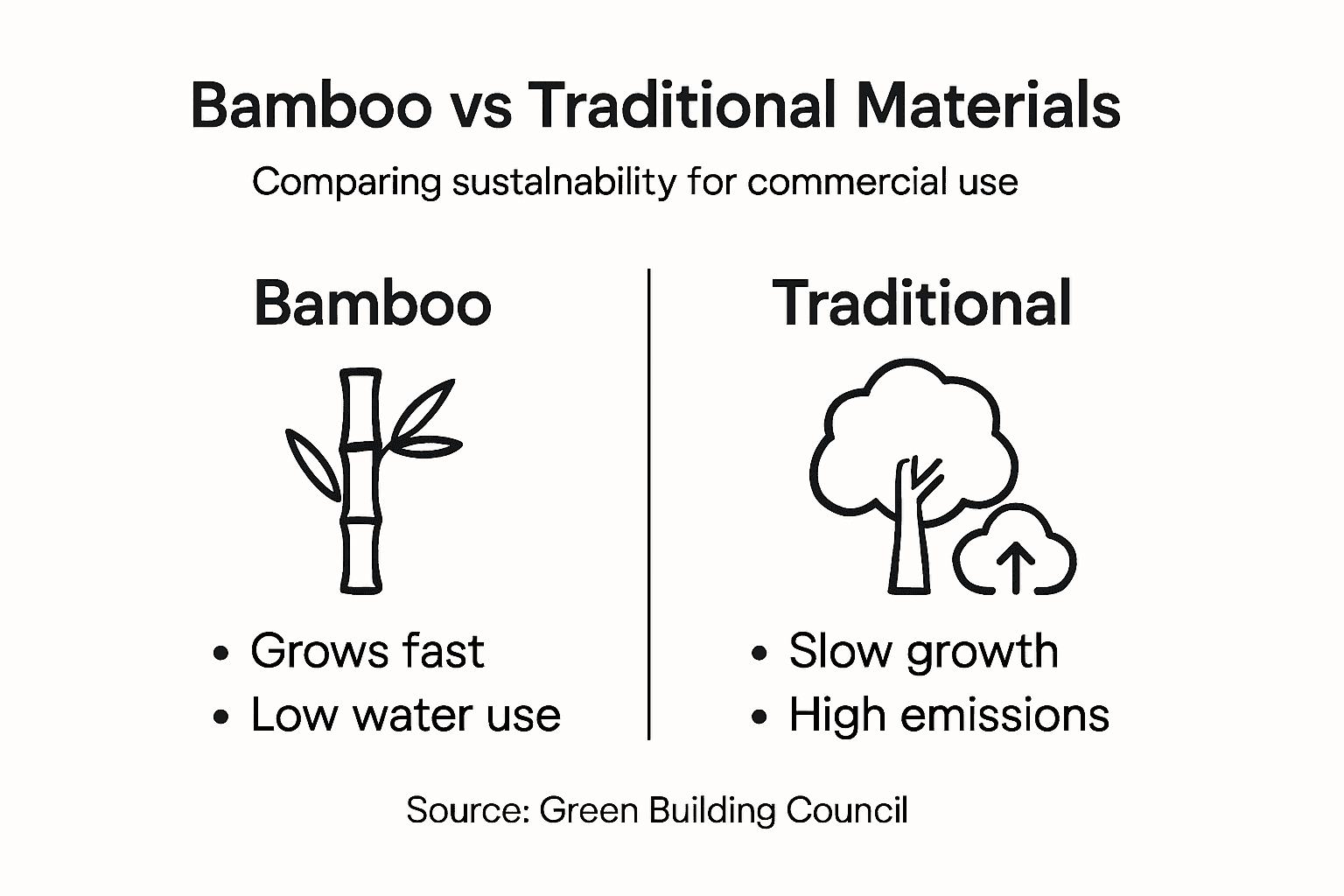
When directly compared to traditional materials, bamboo demonstrates significant advantages. Timber requires decades to mature, whereas bamboo reaches full growth potential in just 3-5 years. Steel and concrete have substantial carbon footprints, consuming immense energy during production, while bamboo actively sequesters carbon and requires minimal processing. The material’s strength-to-weight ratio often exceeds traditional wood, providing exceptional structural integrity with substantially lower environmental impact.
Key comparative advantages of bamboo include:
Here’s a side-by-side look at how bamboo compares to other common commercial materials:
| Material | Environmental Impact | Strength-to-Weight Ratio | End-of-Life Disposal |
|---|---|---|---|
| Bamboo | Low impact, carbon negative | Exceptionally high | Biodegradable and compostable |
| Timber | Moderate deforestation risk | Moderate | Biodegradable, slow decay |
| Steel | High energy use, emissions | Very high | Recyclable but energy-intensive |
| Concrete | Very high emissions | High compressive, low tensile | Landfill or crushed for fill |
Pro tip: Conduct a comprehensive lifecycle assessment when selecting materials to fully understand the true environmental and economic implications of your commercial design choices.
Navigating the implementation of bamboo in commercial settings requires strategic planning and comprehensive understanding of material characteristics and performance requirements. Bamboo utilization best practices emphasize the critical importance of selecting appropriate species, understanding treatment methods, and developing specialized handling techniques to maximize bamboo’s potential in professional environments.
Successful bamboo integration involves multiple critical considerations. Businesses must evaluate species selection based on intended application, understanding each variety’s unique strength, flexibility, and durability properties. Proper harvesting techniques, treatment processes to enhance resistance against moisture and pests, and compliance with emerging engineering standards are essential for creating high-performance bamboo solutions. Technical considerations such as fire resistance, structural integrity, and long-term maintenance requirements must be carefully assessed during the design and implementation phases.
Key practical considerations for bamboo implementation include:
The following table summarizes practical steps for integrating bamboo materials in commercial spaces:
| Step | Business Benefit | Key Consideration |
|---|---|---|
| Species selection | Ensures optimal performance | Match properties to use case |
| Material treatment | Extends lifespan, increases safety | Moisture and pest resistance |
| Compliance checks | Meets legal and safety standards | Regional building codes |
| Professional installation | Reduces risk, ensures durability | Experienced contractors needed |
Pro tip: Collaborate with specialized bamboo engineering consultants to develop a tailored implementation strategy that addresses your specific commercial space requirements and performance expectations.
The article highlights the growing role of bamboo in commercial spaces focusing on sustainability impact, rapid renewability, and eco-friendly design. Businesses looking to reduce environmental footprint while enhancing aesthetic appeal need durable and natural materials that align with these goals. Bamboo’s unique strength, low carbon footprint, and natural antimicrobial properties make it an ideal choice for various commercial settings including restaurants, offices, and cafes.
Cozee Bay offers a premium range of eco-friendly bamboo products designed specifically for commercial use. Our Commercial Paper Towel Dispensers | Cozee Bay® combine sustainability with sleek design, making them perfect for eco-conscious businesses seeking both function and style. These handcrafted dispensers not only support your green initiatives but also provide practical solutions proven effective in environments like senior living centers, coffee shops, and schools.
Elevate your commercial space today with sustainable bamboo solutions crafted to last. Explore our curated selection of Bamboo Paper Towel Dispenser- A Sleek Look Home or Office products and take the next step toward a cleaner, greener workplace. Visit Cozee Bay now to start your eco-friendly journey and enjoy free shipping within the contiguous U.S.
Bamboo offers exceptional carbon sequestration capabilities, a rapid renewable growth cycle, minimal water consumption compared to traditional timber, and natural soil erosion prevention, making it an eco-friendly alternative.
Bamboo is exceptionally strong with a higher tensile strength than steel, requires far less time to grow, has a lower environmental impact, and is biodegradable, unlike steel and concrete which have substantial carbon footprints.
Bamboo products suitable for commercial use include structural building materials, office furniture, sustainable packaging solutions, textiles, and decorative accessories, among others.
Businesses should consider species selection, treatment processes for moisture and pest resistance, compliance with building codes, and the importance of professional installation for optimal performance and longevity.
Comments will be approved before showing up.