Your Cart is Empty


Many eco-conscious homeowners believe compostable kitchen organizers will break down quickly in their backyard compost bins. The reality is that most certified compostable products require industrial composting facilities to fully biodegrade. This guide covers choosing, using, and maintaining certified compostable kitchen organizers that reduce plastic waste while enhancing your kitchen’s functionality and style. You’ll learn how to select durable, eco-friendly options that align with sustainable living goals.
| Point | Details |
|---|---|
| Certified compostable materials reduce kitchen plastic waste by up to 70% when properly implemented | Choose products with BPI or ASTM D6400 certification to ensure authentic compostability standards |
| Bamboo organizers offer 3-5 year lifespans with natural antimicrobial properties that rival plastic alternatives | Proper maintenance extends durability while maintaining hygiene and aesthetic appeal |
| Industrial composting facilities are required for most certified compostable kitchen products to fully biodegrade | Home composting may not provide sufficient heat and microbial activity for complete decomposition |
| Clear labeling and user education prevent contamination in composting streams and maximize waste diversion | Implement visual cues and training to ensure proper disposal practices |
| Balance durability, aesthetics, and compostability when selecting kitchen organizers for residential or commercial use | Evaluate material properties against specific kitchen organizing needs and sustainability goals |
Compostable materials suitable for kitchen organizers include bamboo, paper-based products, and natural fiber composites that break down into organic matter under specific conditions. Unlike biodegradable plastics that fragment into microplastics, certified compostable materials decompose completely without leaving harmful residues. Understanding bamboo for kitchen organizers reveals why this material stands out among sustainable options.
Bamboo organizers offer exceptional durability and hygiene benefits. Bamboo organizers biodegrade in 3-6 months when processed in industrial composting facilities and possess natural antimicrobial properties that inhibit bacterial growth. This makes bamboo ideal for kitchen environments where food safety and cleanliness matter most.
Common natural fiber alternatives include:
Choosing compostable materials over conventional plastics reduces petroleum dependency and prevents microplastic contamination in soil and water systems. Every compostable organizer diverts plastic waste from landfills where it would persist for centuries. The production of bamboo and natural fiber products typically requires less energy and generates fewer greenhouse gas emissions compared to plastic manufacturing.
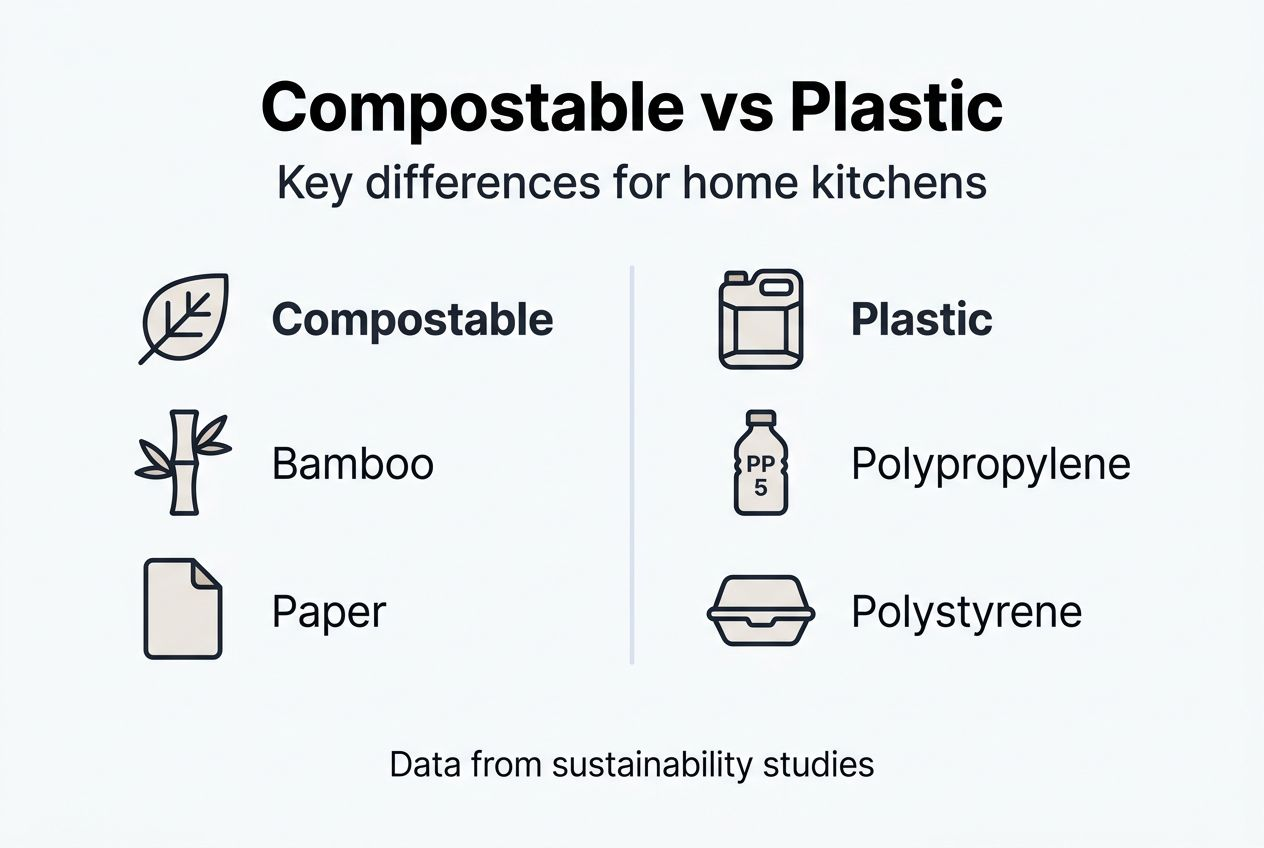
Certifications provide third-party verification that products meet specific compostability standards rather than marketing claims alone. The Biodegradable Products Institute (BPI) certification ensures commercial compostability of kitchen organizers made from certified compostable materials such as bamboo and natural fibers. This certification guarantees products will break down in industrial composting facilities within 180 days.
ASTM International establishes technical standards that define compostability requirements:
The distinction between industrial and home composting matters significantly for product performance. Industrial facilities maintain temperatures between 130-160°F with controlled moisture and microbial activity that accelerate decomposition. Home compost bins rarely achieve these conditions consistently. A product certified for industrial composting may take years to break down in backyard conditions or may not decompose completely.
Choosing certified products protects you from greenwashing claims that mislead consumers about environmental benefits. Labels like “biodegradable” or “eco-friendly” without third-party certification often lack substance. Maintaining bamboo organizers properly extends their useful life before composting becomes necessary, maximizing the sustainability value of certified products.
Switching from plastic to compostable kitchen organizers reduces household plastic waste by up to 70% annually. A typical American household uses approximately 15-20 plastic organizers in kitchen spaces that eventually end up in landfills. Replacing these with certified compostable alternatives prevents roughly 12 pounds of plastic waste per household each year.
Greenhouse gas emissions decrease significantly when households adopt compostable materials. Bamboo cultivation absorbs more carbon dioxide than trees during growth and requires no pesticides or fertilizers. Manufacturing bamboo organizers generates 40% fewer carbon emissions compared to equivalent plastic products.
| Material | Average Lifespan | Landfill Impact | End-of-Life Options | Carbon Footprint |
|---|---|---|---|---|
| Bamboo (compostable) | 3-5 years | Biodegrades in 3-6 months industrially | Industrial composting, limited home composting | Low (40% less than plastic) |
| Paper-based compostable | 1-2 years | Biodegrades in 2-4 months industrially | Industrial composting, home composting possible | Low to moderate |
| Plastic | 10+ years | Persists 500+ years | Recycling (low rates), landfill | High |
| Metal | 15+ years | Recyclable but energy-intensive | Recycling (moderate rates), landfill | Moderate to high |
The lifecycle analysis reveals compostable organizers contribute to circular economy models where materials return to soil as nutrients. Bamboo vs plastic organizers demonstrates how material choices impact long-term environmental outcomes beyond immediate product performance.
Waste diversion rates improve substantially in communities with access to industrial composting infrastructure. Households using certified compostable organizers combined with municipal composting programs divert an additional 25-30 pounds of organic material from landfills annually. This reduces methane emissions from landfills while creating nutrient-rich compost for agriculture and landscaping.
The belief that all compostable products break down in home compost bins represents the most widespread misconception. Most certified compostable kitchen organizers require industrial composting conditions with sustained high temperatures and specific microbial populations. Your backyard compost pile typically operates at cooler temperatures and may lack the diversity of microorganisms needed for complete decomposition.
Another common confusion involves assuming all bamboo or natural fiber products carry compostability certifications. Many bamboo organizers include synthetic adhesives, coatings, or composite materials that prevent full biodegradation. Always verify BPI or ASTM certification labels rather than assuming natural materials automatically qualify as compostable.
Key misconceptions to avoid:
The durability myth stems from early compostable products that sacrificed performance for environmental benefits. Modern certified compostable organizers match or exceed plastic alternatives in strength and longevity. Maintaining bamboo organizers with simple cleaning routines preserves their structural integrity throughout their useful life.
Pro Tip: Check certification details on product packaging or manufacturer websites. BPI certification numbers should be verifiable through the BPI database to confirm authenticity and avoid products making false compostability claims.
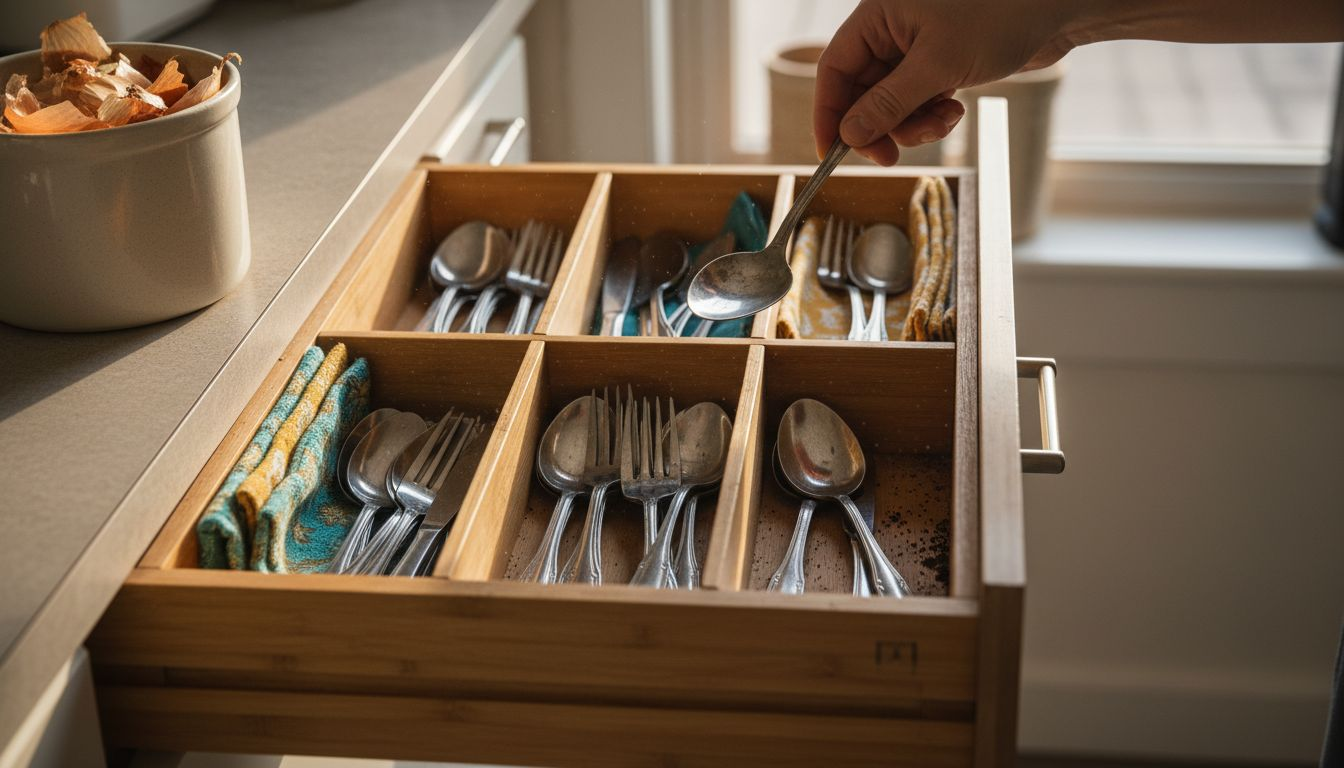
Selecting appropriate compostable organizers requires balancing durability needs with sustainability goals and aesthetic preferences. Bamboo offers the longest lifespan among compostable options, typically lasting 3-5 years in daily kitchen use. Paper-based organizers work well for lighter-duty applications like pantry shelf dividers but may require replacement every 1-2 years.
| Feature | Bamboo | Paper-Based | Plastic | Metal |
|---|---|---|---|---|
| Durability rating | High (3-5 years) | Moderate (1-2 years) | Very high (10+ years) | Very high (15+ years) |
| Moisture resistance | Excellent with proper sealing | Poor to moderate | Excellent | Excellent |
| Aesthetic versatility | Natural, warm tones | Limited, utilitarian | Wide color range | Modern, industrial |
| Maintenance requirements | Periodic oiling recommended | Minimal, replace when worn | Easy cleaning | Easy cleaning |
| Compostability certification | BPI certified options available | Widely BPI certified | Not compostable | Not compostable |
| Initial cost | Moderate | Low | Low | Moderate to high |
Functionality considerations depend on your specific kitchen organizing needs. Drawer dividers benefit from bamboo’s rigid structure that maintains shape under weight. Pantry shelf organizers can utilize lighter paper-based options for items like spice jars or canned goods. Wet environments near sinks demand bamboo’s superior moisture resistance.
Bamboo organizers require minimal maintenance and can last 3-5 years with natural antimicrobial properties that enhance kitchen hygiene. Periodic cleaning with mild soap and occasional mineral oil application preserves the wood’s appearance and water resistance. This simple care routine maximizes product longevity before composting becomes necessary.
Recommendations for different scenarios:
Style preferences should complement your kitchen’s existing design elements. Bamboo’s natural grain patterns and warm honey tones blend seamlessly with both modern and traditional aesthetics. The material’s versatility allows it to pair with stainless steel appliances, white cabinetry, or rustic wood finishes. Bamboo vs plastic organizers and related bamboo maintenance guides provide additional insights for making informed material choices.
Successful implementation starts with clear labeling systems that prevent compostable organizers from entering traditional recycling or trash streams. Use permanent markers or labels to mark products with “Industrial Composting Only” if your municipality offers collection services. This simple step reduces contamination and ensures materials reach appropriate facilities.
Follow these steps for effective integration:
Styling compostable organizers enhances kitchen aesthetics while supporting eco-conscious design:
Maintenance routines extend product lifespan significantly. Wipe bamboo organizers weekly with a damp cloth and mild dish soap to remove food residue and prevent buildup. Dry thoroughly after cleaning to prevent water damage. Apply food-safe mineral oil every 3-4 months to maintain moisture resistance and prevent cracking.
Pro Tip: Create a disposal plan before purchasing compostable organizers. Identify the nearest industrial composting facility and confirm they accept certified compostable products. Some facilities have restrictions on size or require organizers to be broken down before acceptance.
Proper disposal maximizes environmental benefits:
Organizing your kitchen sustainably involves more than product selection. Implementing efficient storage systems reduces food waste, which complements the waste reduction achieved through compostable organizers. Step-by-step stylish pantry organization and strategies to organize kitchen drawers for faster access create comprehensive sustainable kitchen systems.
Small businesses adopting compostable kitchen organizers demonstrate measurable sustainability improvements and enhanced customer perception. A Seattle coffee shop replaced all plastic drawer organizers and storage bins with certified bamboo alternatives in early 2025. Customer surveys revealed 62% of regular patrons noticed the change and rated the business as more environmentally responsible. The switch reduced the shop’s plastic waste by 55% annually.
Residential implementation shows similar success patterns. A Portland family of four transitioned to compostable organizers throughout their kitchen over six months. They reported:
A San Francisco restaurant chain implemented bamboo organizers across five locations in 2024. The initiative achieved:
Lessons learned from early adopters emphasize several best practices:
These real-world examples demonstrate that compostable kitchen organizers deliver practical benefits beyond environmental impact. Improved aesthetics, enhanced durability, and positive brand perception create value that extends past waste reduction alone.
Ready to transform your kitchen with sustainable organizing solutions? Explore Cozee Bay’s collection of handcrafted bamboo organizers designed for eco-conscious homes and businesses. Our certified compostable products combine durability with natural beauty, reducing plastic waste without compromising functionality or style.

Our bamboo kitchen organizers offer the antimicrobial properties and longevity your kitchen demands. Each piece reflects our commitment to quality craftsmanship and environmental responsibility. Whether you’re organizing drawers, pantries, or commercial kitchen spaces, our sustainable solutions align with your values. Visit our guide to sustainable kitchen organization and learn more about why bamboo transforms kitchen storage to make informed choices for your space.
Certified compostable means the product meets BPI or ASTM D6400 standards for biodegradation in industrial composting facilities within 180 days. The certification guarantees the organizer breaks down into organic matter without leaving toxic residues or microplastics. This differs from “biodegradable” claims that lack third-party verification and specific timeframes.
Most bamboo organizers require industrial composting conditions to fully biodegrade within certified timeframes. Home compost bins typically don’t reach the sustained high temperatures (130-160°F) needed for complete decomposition. While bamboo will eventually break down in home compost, the process may take several years rather than months.
Bamboo organizers last 3-5 years with proper maintenance, while paper-based options typically require replacement after 1-2 years. Lifespan depends on usage intensity, moisture exposure, and care routines. Regular cleaning and periodic oiling extend bamboo organizer durability significantly.
Bamboo organizers often exceed plastic’s hygienic performance due to natural antimicrobial properties that inhibit bacterial growth. Studies show bamboo surfaces resist microbial colonization better than plastic alternatives. Regular cleaning with soap and water maintains optimal hygiene for both material types.
Verify BPI or ASTM certification labels on product packaging or manufacturer websites to ensure authentic compostability. Check that adhesives and finishes are also compostable rather than synthetic. Consider durability ratings, maintenance requirements, and whether your local area has industrial composting facilities that accept certified products.
Comments will be approved before showing up.