Your Cart is Empty


Finding bathroom products that deliver both stunning design and genuine sustainability feels impossible when greenwashing runs rampant. You deserve essentials that reduce your environmental footprint without sacrificing the modern aesthetic you love. This guide empowers you with a clear framework to evaluate materials, certifications, and design trade-offs, then introduces curated eco-friendly options that transform your bathroom into a sustainable sanctuary.
| Point | Details |
|---|---|
| Material sustainability is crucial | Prioritize renewable options like bamboo and organic cotton over virgin plastics for lower environmental impact. |
| Durability and antimicrobial properties reduce waste | Longer-lasting products with natural hygiene features minimize replacements and landfill contributions. |
| Style and certifications validate eco-friendliness | Choose designs that complement your decor while verifying claims through FSC or Organic labels. |
| Budget and household needs guide choices | Match product features to your family size, usage patterns, and spending capacity for practical sustainability. |
Selecting sustainable bathroom products requires evaluating multiple factors beyond marketing buzzwords. Start by examining materials: bamboo, organic cotton, and glass outperform conventional plastics in renewability and biodegradability. Consumers prioritize eco-friendliness and product design almost equally when choosing bathroom essentials, proving style matters just as much as sustainability.
Durability determines long-term value. Products with antimicrobial properties extend lifespan in high-humidity environments while reducing bacterial growth. Check for certifications like FSC for wood products or USDA Organic for textiles to confirm authentic eco-friendly sourcing rather than greenwashed claims.
Style compatibility ensures your sustainable choices enhance rather than clash with existing decor. Modern bamboo dispensers and sleek glass soap containers integrate seamlessly into contemporary bathrooms. Price and U.S. availability matter too: budget-conscious buyers can start with recycled plastic organizers before upgrading to premium bamboo or organic options.
Pro Tip: Create a bathroom sustainability checklist rating products on material renewability, certification status, durability, and design appeal to streamline your decision-making process.
Explore comprehensive guidance on sustainable materials and learn strategies for selecting dispensers wisely to maximize your eco-friendly bathroom transformation.
Bamboo dispensers represent the gold standard in sustainable bathroom accessories. Bamboo’s fast growth rate and renewability make it a superior eco-friendly choice, with some species growing up to three feet daily and reaching harvest maturity in just three to five years compared to hardwood trees requiring decades.
Natural antimicrobial properties give bamboo a hygiene advantage in moisture-rich bathroom environments. This inherent resistance to bacterial growth keeps dispensers cleaner between washes while extending product lifespan. Consumers report higher perceived quality and aesthetic appeal for bamboo dispensers versus plastic alternatives in residential settings.
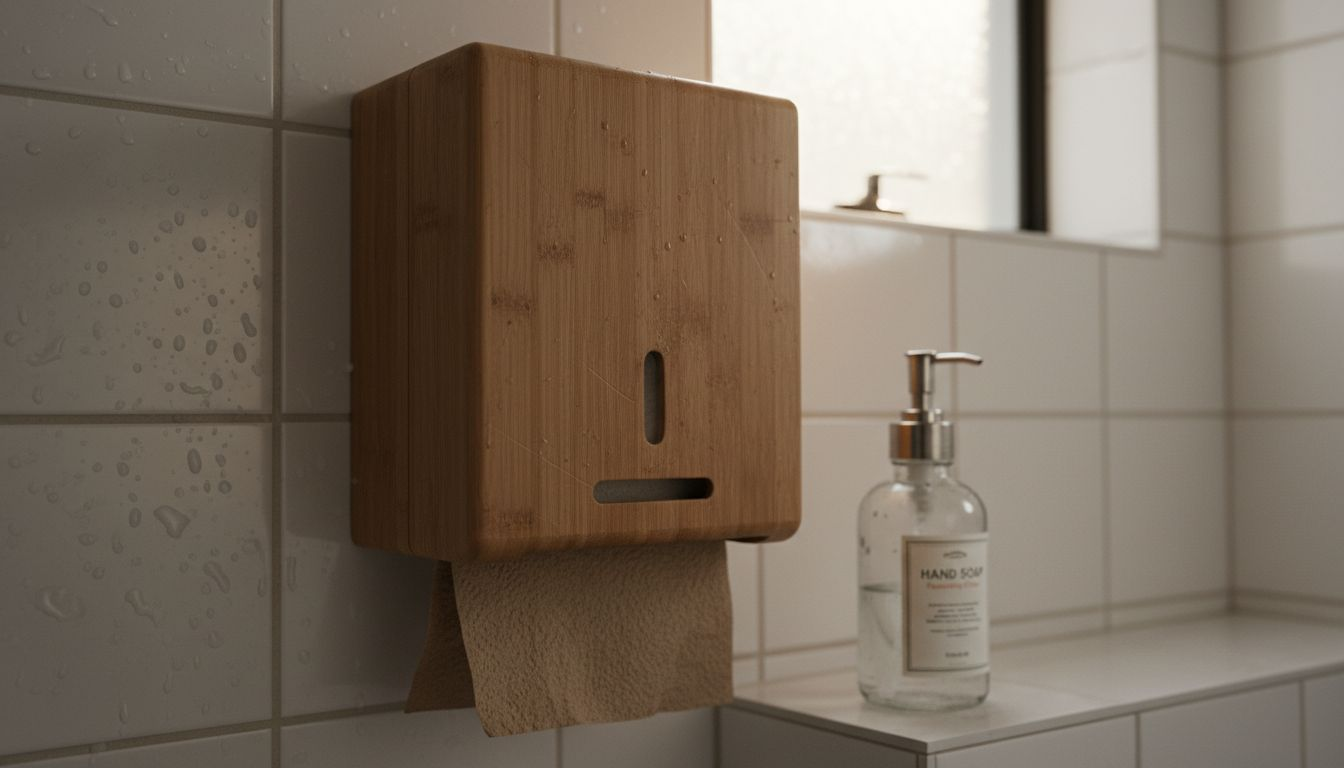
The premium aesthetic transforms functional bathroom storage into decorative statements. Warm wood tones and smooth grain patterns complement minimalist, modern, and even traditional bathroom styles. Durability handles both residential daily use and light commercial settings like office bathrooms or boutique hotel powder rooms.
Key bamboo dispenser benefits include:
Discover detailed bamboo durability insights and verify FSC certified bamboo sourcing to ensure your purchase supports responsible forestry practices.
Organic cotton bath linens deliver exceptional comfort while drastically reducing agricultural chemical use. Organic cotton farming reduces pesticide use by 91% compared to conventional cotton production, protecting waterways and farmworker health while producing softer fibers.
The absence of chemical residues makes organic cotton ideal for sensitive skin and allergy sufferers. Conventional cotton processing often leaves trace pesticides and synthetic dyes that irritate delicate skin, whereas certified organic textiles undergo stringent testing to ensure purity. This gentleness extends product appeal to families with young children or individuals managing eczema and dermatitis.
Certified organic labels provide authentic eco-friendly verification. USDA Organic and GOTS (Global Organic Textile Standard) certifications confirm cotton was grown without prohibited substances and processed according to strict environmental and social criteria. This transparency combats greenwashing by holding brands accountable to third-party audits.
Organic cotton excels in personal bath linens where direct skin contact and repeated washing demand both comfort and durability. The fibers become softer with each wash cycle while maintaining structural integrity far longer than synthetic alternatives.
Key organic cotton advantages:
Learn more about organic cotton properties to understand why this material leads sustainable textile choices.
Recycled plastic organizers offer an accessible entry point for budget-conscious households beginning their sustainability journey. Recycled plastics reduce environmental impact by 30 to 50% versus virgin plastics by diverting waste from landfills and reducing petroleum extraction, though they remain less renewable than bamboo alternatives.
The competitive pricing makes sustainable choices financially feasible for families prioritizing affordability. Drawer dividers, countertop caddies, and shower organizers made from post-consumer recycled content typically cost 20 to 40% less than bamboo equivalents while still delivering functional bathroom storage solutions.
Durability varies by product quality, but reputable brands produce recycled plastic organizers lasting five to seven years under normal bathroom conditions. The material resists moisture damage better than some natural alternatives, making it practical for humid environments like shower caddies or under-sink storage.
Trade-offs include slower biodegradation and non-renewable sourcing compared to bamboo or organic materials. Recycled plastic still takes centuries to break down in landfills, though choosing recycled content over virgin plastic represents meaningful harm reduction.
Pro Tip: Use recycled plastic organizers as stepping stones toward fully sustainable bathrooms by replacing one conventional plastic item monthly with eco-friendly alternatives, building habits gradually without financial strain.
Key recycled plastic considerations:
Compare recycled plastic versus bamboo options to determine which material aligns with your current priorities and budget constraints.
Glass and stainless steel dispensers eliminate single-use plastic soap bottles while adding sophisticated style to bathroom countertops. The zero-waste design allows indefinite refilling with bulk liquid soap, reducing packaging waste by up to 90% annually for average households.
Material longevity surpasses plastic alternatives by decades. Quality glass dispensers withstand daily use for ten to fifteen years, while stainless steel versions often last twenty-plus years with minimal maintenance. Both materials resist corrosion in humid bathroom environments and clean easily to maintain pristine appearance.
Stylish designs elevate bathroom aesthetics through clean lines and premium finishes. Frosted glass, amber glass, and brushed stainless steel options coordinate with modern, industrial, and transitional decor schemes. The visual upgrade transforms mundane soap dispensing into an intentional design element.
Environmental benefits extend beyond use phase: both materials are infinitely recyclable at end of life without quality degradation. This circular lifecycle contrasts sharply with plastic downcycling, where recycled plastic degrades with each processing cycle until it becomes unusable.
Key glass and steel dispenser benefits:
Explore comprehensive glass and steel dispenser options to find styles matching your bathroom’s unique character.
Understanding relative sustainability helps you prioritize purchases aligned with your environmental goals and budget. Bamboo offers rapid renewability and biodegradability while organic cotton reduces pesticide use, making both superior choices for minimizing ecological footprint compared to conventional materials.
Renewability spans a wide spectrum across product types. Bamboo regenerates in three to five years, organic cotton grows annually, glass and steel derive from abundant minerals, while recycled plastics depend on finite petroleum sources despite waste diversion benefits. Biodegradability follows similar patterns: bamboo and organic cotton decompose within months to years, whereas plastics and metals persist indefinitely without recycling.
Durability and antimicrobial properties directly impact replacement frequency. Bamboo dispensers last eight to twelve years with natural bacterial resistance. Organic cotton towels endure five to eight years of regular laundering. Recycled plastic organizers function for five to seven years. Glass and steel dispensers often exceed fifteen to twenty years, offering the longest lifespan despite higher upfront costs.
Price ranges reflect material processing and market maturity:
Design appeal varies by personal taste, but bamboo and glass/steel generally receive highest aesthetic ratings for their premium appearance and versatility across decor styles.
| Product Type | Renewability | Biodegradability | Lifespan | Price Range |
|---|---|---|---|---|
| Bamboo dispensers | High (3 to 5 years) | Excellent | 8 to 12 years | $25 to $55 |
| Organic cotton | Moderate (annual) | Excellent | 5 to 8 years | $15 to $40 |
| Recycled plastic | Low | Poor | 5 to 7 years | $8 to $25 |
| Glass/steel | Moderate | Recyclable | 15 to 20+ years | $18 to $45 |
Review detailed bamboo versus plastic comparisons and verify certification importance to make informed trade-off decisions matching your values.
Matching products to your household’s specific needs maximizes satisfaction and environmental impact. Follow these targeted recommendations:
High-use family bathrooms benefit most from durable bamboo dispensers with antimicrobial properties, handling heavy traffic while maintaining hygiene standards through natural bacterial resistance.
Sensitive skin households should prioritize organic cotton towels and washcloths, eliminating chemical irritants while providing superior softness for daily comfort.
Budget-conscious buyers starting their sustainability journey gain immediate impact through recycled plastic organizers, reducing virgin plastic demand at accessible price points before upgrading to premium materials.
Design-focused homeowners achieve both aesthetic and environmental goals with bamboo dispensers and glass or steel soap containers, creating cohesive eco-friendly bathroom statements.
Always verify sustainability claims by checking for FSC certification on bamboo products, USDA Organic or GOTS labels on textiles, and transparent recycled content percentages on plastic items to avoid greenwashing.
Consider multi-product starter kits combining complementary items like bamboo dispensers with organic cotton hand towels, often available at bundled discounts that improve cost-effectiveness.
Find additional guidance on selecting green home essentials to extend sustainable choices beyond the bathroom into your entire living space.
This consolidated reference simplifies decision-making by presenting all critical factors in one accessible view:
| Product | Material | Sustainability Rating | Durability | Antimicrobial | Price | Best For | U.S. Availability |
|---|---|---|---|---|---|---|---|
| Bamboo dispenser | Bamboo wood | Excellent | 8 to 12 years | Yes | $25 to $55 | High-use bathrooms, style-conscious buyers | Widely available |
| Organic cotton towels | Organic cotton | Very Good | 5 to 8 years | No | $15 to $40 | Sensitive skin, daily comfort | Widely available |
| Recycled plastic organizer | Recycled plastic | Good | 5 to 7 years | No | $8 to $25 | Budget entries, storage needs | Widely available |
| Glass soap dispenser | Soda-lime glass | Very Good | 10 to 15 years | No | $18 to $35 | Zero-waste goals, modern decor | Widely available |
| Steel soap dispenser | Stainless steel | Excellent | 15 to 20+ years | Yes | $22 to $45 | Maximum longevity, commercial use | Widely available |
Use this table to quickly identify which products align with your priorities, whether you value maximum sustainability, lowest cost, longest lifespan, or specific functional features like antimicrobial protection.
Ready to transform knowledge into action? Cozee Bay curates premium bamboo bathroom products combining authentic sustainability with modern design sophistication. Our FSC-certified bamboo dispensers serve residential bathrooms and commercial spaces like coffee shops and senior living centers, delivering durability you can trust.

Every product features detailed specifications, customer reviews, and transparent certification information to support confident purchasing decisions. Enjoy free shipping throughout the contiguous U.S. backed by our money-back satisfaction guarantee. Discover top bamboo products for home and learn why bamboo products deliver unmatched value. Start selecting green home essentials today and build the sustainable sanctuary your family deserves.
Bamboo leads for renewability and natural antimicrobial properties, ideal for dispensers and storage. Organic cotton excels in towels and washcloths due to pesticide reduction and skin-friendliness. Glass and stainless steel offer maximum durability for soap dispensers, while recycled plastics provide budget-conscious harm reduction. Choose based on your priorities: renewability favors bamboo and cotton, durability favors glass and steel, and sensitive skin benefits most from organic textiles.
Look for FSC certification on bamboo products confirming responsible forestry, USDA Organic or GOTS labels on cotton textiles ensuring chemical-free growing, and specific recycled content percentages on plastic items. Research brand transparency through their website’s sustainability pages and third-party reviews. Beware of vague claims like “eco-friendly” or “natural” without supporting certifications, as these often indicate greenwashing rather than verified environmental standards.
Yes, quality bamboo products withstand eight to twelve years of daily residential use and perform well in light commercial settings. Natural antimicrobial properties resist bacterial growth in humid bathrooms, reducing cleaning frequency while extending lifespan. Users consistently rate bamboo dispensers highly for both functionality and aesthetic appeal. Choose FSC-certified bamboo from reputable brands to ensure proper processing and finishing that maximizes durability and moisture resistance.
Begin with recycled plastic organizers at $8 to $25 to replace conventional plastic items affordably while reducing virgin plastic demand. Next, upgrade high-use items like paper towel dispensers to bamboo for maximum daily impact. Gradually replace disposable soap bottles with reusable glass or steel dispensers as budget allows. Purchase organic cotton towels during sales to reduce upfront costs. This phased approach spreads expenses over months while building sustainable habits that stick long-term.
Comments will be approved before showing up.