Your Cart is Empty


The global bamboo market is not just growing, it is accelerating at a pace that surprises even seasoned sustainability advocates. The bamboo products market was valued at roughly USD 68.8 to 79.5 billion in 2024 and 2025, and that number is only heading in one direction. Yet plenty of consumers and business owners still wonder whether bamboo is genuinely eco-friendly or simply the latest green marketing trend. This article cuts through the noise, walking you through the real market drivers, the honest sustainability story, and the practical product choices that make bamboo worth your attention right now.
| Point | Details |
|---|---|
| Bamboo’s booming market | Demand for eco-friendly styles drove bamboo’s global value to over $70B in 2025. |
| Sustainability is nuanced | Not all bamboo is equally green; sourcing and processing are crucial. |
| Trending applications | Bamboo flooring, organizers, and furniture lead both home and business design trends. |
| Smart shopping matters | Choose products certified for sustainability and best suited for your needs. |
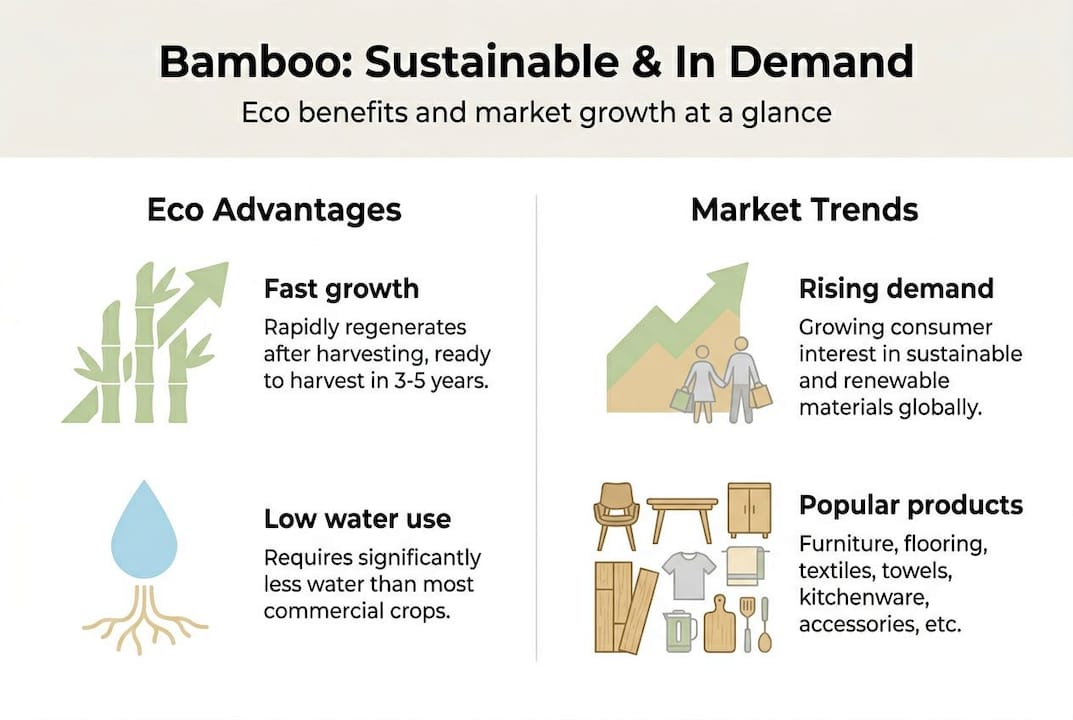
With the market’s explosive growth in mind, let’s break down why bamboo has caught fire now and who is driving the trend. The numbers tell a compelling story. The bamboo products market is projected to grow from its current size to between USD 98 and 129 billion by 2033 to 2035, at a compound annual growth rate of 4.5 to 6%. That is not a niche movement. That is a structural shift in how people think about materials.
| Market | 2024 Value | Projected Value | CAGR |
|---|---|---|---|
| Global bamboo products | USD 68.8B | USD 98 to 129B (by 2033 to 2035) | 4.5 to 6% |
| U.S. bamboo market | USD 3.6B | USD 5.6B by 2035 | Steady growth |
The U.S. market alone sat at USD 3.6 billion in 2024 and is on track to reach USD 5.6 billion by 2035. Two sectors are leading the charge domestically: infrastructure and interior design. Homeowners renovating kitchens and living spaces are choosing bamboo for its clean, modern aesthetic. Businesses updating commercial interiors are drawn to its durability and the story it tells about their values.
2025 marked a genuine inflection point. Consumer awareness around single-use plastics and deforestation reached a tipping point, and bamboo stepped in as a credible, stylish alternative. If you want a deeper look at what is shaping the category right now, the bamboo product trends 2025 breakdown is worth your time. The short version: bamboo is no longer a compromise. It is a first choice.
While market momentum is clear, true sustainability is nuanced, so let’s examine what really sets bamboo apart from other materials. The basics are genuinely impressive. Bamboo is one of the fastest-growing plants on earth, with some species adding several feet per day. It requires no pesticides, minimal water, and regenerates from its own root system after harvesting, meaning the soil stays intact and the plant keeps growing.
Here are the core sustainability factors that matter most:
“Sustainability depends on sourcing and energy, not just the raw material itself.” The full sustainability picture includes how a product is processed, finished, and transported, not just what it is made from.
Pro Tip: When shopping for bamboo products, look beyond the label. A bamboo item that has been heavily chemically processed or shipped halfway around the world with no transparency about its supply chain may not deliver the environmental benefit you expect.
This is especially true for bamboo textiles and paper products, where the conversion process can be energy-intensive. Solid bamboo goods, like furniture, flooring, and kitchen organizers, tend to have a more straightforward sustainability story. For a practical breakdown of what to look for, the eco-friendly bamboo guide and the bamboo sustainability explained resource both offer clear, no-fluff guidance. If you are making decisions for a business, the bamboo sustainability US business article is particularly relevant.
With a clearer understanding of what makes bamboo green, let’s look at which products and applications are actually winning over U.S. consumers and businesses. The range is wider than most people realize, and the design quality has improved dramatically over the past few years.
38% of U.S. flooring companies now integrate bamboo into their offerings, and residential use holds a 55% market share across bamboo product categories. Textured and wide-plank bamboo flooring has become a style leader, offering the warmth of hardwood with better durability in many cases. Strand-woven bamboo, in particular, is harder than most oak varieties, making it a smart pick for high-traffic areas.

| Product category | Key benefit | Best setting |
|---|---|---|
| Wide-plank bamboo flooring | Hardness, warmth, style | Residential, boutique commercial |
| Bamboo furniture | Lightweight, durable, modern | Homes, offices, cafes |
| Kitchen organizers and dispensers | Functional, eco-friendly, attractive | Kitchens, break rooms, restaurants |
| Bamboo textiles | Soft, renewable | Bedrooms, hospitality |
| Reusable kitchenware | Reduces plastic waste | Homes, food service |
Top trending bamboo products right now include:
For commercial spaces, bamboo hits a sweet spot. Restaurants, coffee shops, senior living centers, and schools are all adopting bamboo products because they look polished, hold up well under daily use, and communicate a genuine commitment to sustainability to customers and guests. You can explore more bamboo flooring benefits if flooring is on your radar. And for a broader view of what is available, the sustainable bamboo products roundup is a great starting point.
You have seen the trends. Now here is how to make bamboo a meaningful part of your space with confidence, without falling for greenwashing or ending up with a product that disappoints.
The U.S. bamboo toilet paper market has more than doubled since 2019 and is now growing at over 10% per year, and residential flooring continues to lead global bamboo sales. That kind of momentum means more products are available than ever, but quality varies widely. Here is a four-step approach to shopping smart:
Pro Tip: Bamboo makes the most practical sense in categories where durability and aesthetics both matter: flooring, furniture, kitchen organizers, and storage solutions. These are the areas where bamboo genuinely outperforms plastic and often rivals or beats wood on both looks and longevity.
Who should seriously consider bamboo? Eco-minded homeowners updating kitchens or living spaces, restaurant and cafe owners looking to refresh their interiors, schools and senior living facilities seeking durable and attractive storage solutions, and anyone tired of replacing cheap plastic organizers every year. The why choose bamboo products article makes the case clearly, and if kitchen organization is your focus, the bamboo kitchen organizers comparison is genuinely useful. For flooring decisions, bamboo flooring research provides solid data to back up your choice.
Avoid these common pitfalls: products marketed as bamboo that are mostly composite filler, finishes that contain harmful chemicals, and brands that make vague sustainability claims without any sourcing information. If a product cannot tell you where the bamboo came from or how it was processed, that is a red flag worth taking seriously.
Armed with knowledge and inspiration, you are ready to shop smarter, and the easiest way to start is by exploring a collection built around exactly what you have been reading about.
At Cozee Bay, every bamboo product is handcrafted with a focus on sustainable materials, real functionality, and the kind of clean, modern style that works in a home kitchen just as well as it does in a restaurant or school. From paper towel dispensers to food bag organizers, wrap and foil dispensers, drawer organizers, and more, the collection is designed for people who want their spaces to look great and reflect their values. Free shipping within the contiguous U.S. and a money-back guarantee mean there is no risk in trying. Browse the full collection and find the pieces that fit your space.
Bamboo’s popularity surged because consumers and businesses began prioritizing sustainable, stylish alternatives to plastic and hardwood, and the U.S. bamboo market responded with rapid growth from USD 3.6 billion in 2024 onward. The combination of eco-consciousness and improved product design made bamboo a first choice rather than a compromise.
Bamboo is genuinely more renewable than hardwood and far less polluting than plastic, but sourcing and processing matter enormously. Solid bamboo goods with transparent supply chains deliver the strongest environmental benefit.
Strand-woven bamboo flooring, kitchen organizers, paper towel dispensers, and modern bamboo furniture are leading the trend, with residential applications holding a 55% market share across bamboo product categories.
Look for third-party certifications, clear sourcing information, and responsible manufacturing practices. Brands that are transparent about sourcing and energy use across the product lifecycle are the ones worth buying from.
Comments will be approved before showing up.