Your Cart is Empty


TL;DR:
- Compostable materials fully break down into water, CO2, and biomass within specific timeframes under proper conditions.
- Certification from recognized organizations ensures products meet strict standards for compostability and safety.
- Real-world composting often takes longer and may leave microplastics, so proper sourcing and disposal are essential.
Most people use “compostable” and “biodegradable” like they mean the same thing. They do not. Grabbing a product labeled “biodegradable” and tossing it into your compost bin might feel responsible, but without the right certifications and conditions, that material could sit there for years without fully breaking down. Compostable materials break down into water, carbon dioxide, and organic matter under specific composting conditions within defined timeframes. That distinction matters more than most people realize. This guide walks you through exactly what compostable means, how certifications work, which materials qualify, and what real-world composting actually looks like so you can make genuinely informed choices.
| Point | Details |
|---|---|
| Compostable defined clearly | Compostable materials must break down into harmless outputs under specific, certified composting conditions. |
| Certification is crucial | Look for standards like BPI and OK Compost to ensure products will actually decompose as claimed. |
| Not all compostables work at home | Many items require higher temperatures only found in industrial composting facilities. |
| Microplastics are a concern | Even certified compostables can leave microplastics unless managed and labeled carefully. |
| Smart choices matter | Selecting the right certified products and composting them properly boosts positive environmental impact. |
Let’s clear this up once and for all. A material is truly compostable when it converts into water, CO2, and biomass within a set timeframe under industrial or home composting conditions. That sounds straightforward, but the science behind it is more specific than most product labels suggest.
Compostable materials rely on microbial activity to break down. Bacteria, fungi, and other microorganisms consume the material and produce heat, water, and carbon-rich biomass as byproducts. The end result should be stable, nutrient-rich compost that actually benefits soil. No toxic residue, no lasting fragments.
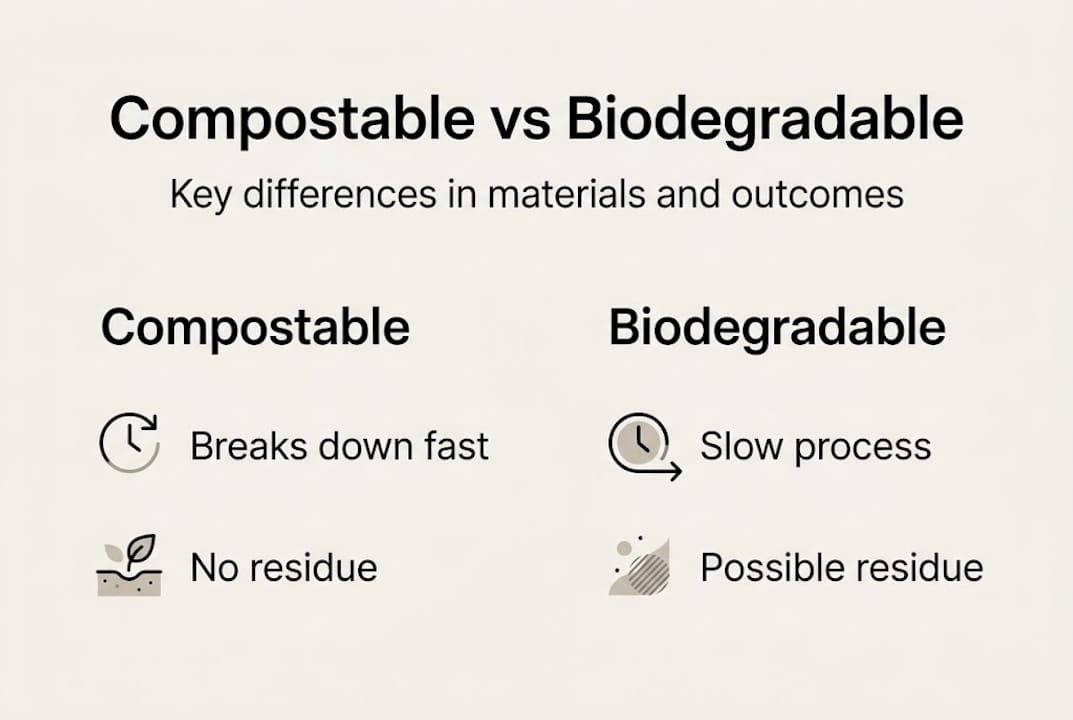
Biodegradable, on the other hand, simply means something can break down biologically. That could take decades. It might leave behind harmful residues. There is no required timeframe and no standard for what the end products look like. As research confirms, compostable and biodegradable are not interchangeable because compostable materials must meet specific outcomes, time requirements, and safety criteria that biodegradable claims simply do not require.
This is exactly where greenwashing becomes a real problem. A brand can slap “biodegradable” on almost anything and technically not be lying. Compostable claims, however, are backed by third-party certification when done correctly.
| Feature | Compostable | Biodegradable |
|---|---|---|
| Defined timeframe | Yes (typically 90-180 days) | No |
| End product quality | Nutrient-rich biomass | Variable, often unknown |
| Third-party certification | Required for credible claims | Rarely required |
| Toxicity standards | Must meet safety thresholds | No standard |
| Conditions required | Specific (industrial or home) | Unspecified |
When you see a product claiming to be compostable, the most important thing to check is whether it carries a recognized certification. Look for labels from BPI (Biodegradable Products Institute), TUV Austria, or OK Compost. These organizations test products against established standards and verify that claims are real, not just marketing language. You can also explore the compostable vs biodegradable breakdown on our blog for a deeper side-by-side comparison.
Pro Tip: When shopping for compostable products, flip the package over and look for a certification logo, not just the word “compostable” in green font. BPI and OK Compost logos are your clearest signal that the product has actually been tested.
So how does a product actually earn a compostable certification? It is not as simple as submitting a sample and waiting for approval. The process is rigorous, and for good reason.
The two most widely recognized standards are ASTM D6400 (for plastic materials) and ASTM D6868 (for products with coatings or laminates). In Europe, EN 13432 serves a similar role. All three set strict requirements for how quickly and completely a material must break down, and what the resulting compost must look like.
Key requirement: ASTM and EN standards require at least 90% biodegradation in 180 days, minimal solid residue, and no toxic effects on plant growth, verified by certifiers like BPI and TUV Austria.
Here is how the certification process typically works:
You can review the full breakdown of compostability standards and certifications from the Bioplastics Guide for a detailed technical reference. Understanding these steps helps you recognize why certified products cost more and why that cost is often worth it.
For businesses, especially those in food service, understanding these standards is not optional. Restaurants and commercial kitchens that want to make a real environmental impact should look at sustainable packaging for restaurants to see how certification connects to real purchasing decisions. You can also explore how biodegradable packaging impact plays out across the supply chain.
Not every green-looking product is compostable. Knowing which materials actually qualify helps you shop smarter and compost with confidence.
The most common compostable material types fall into a few main categories: bioplastics like PLA (polylactic acid), PBAT (polybutylene adipate terephthalate), and PHA (polyhydroxyalkanoates), as well as cellulosic fibers derived from wood pulp, sugarcane, or bamboo.
Here is a practical breakdown of what you will commonly find:
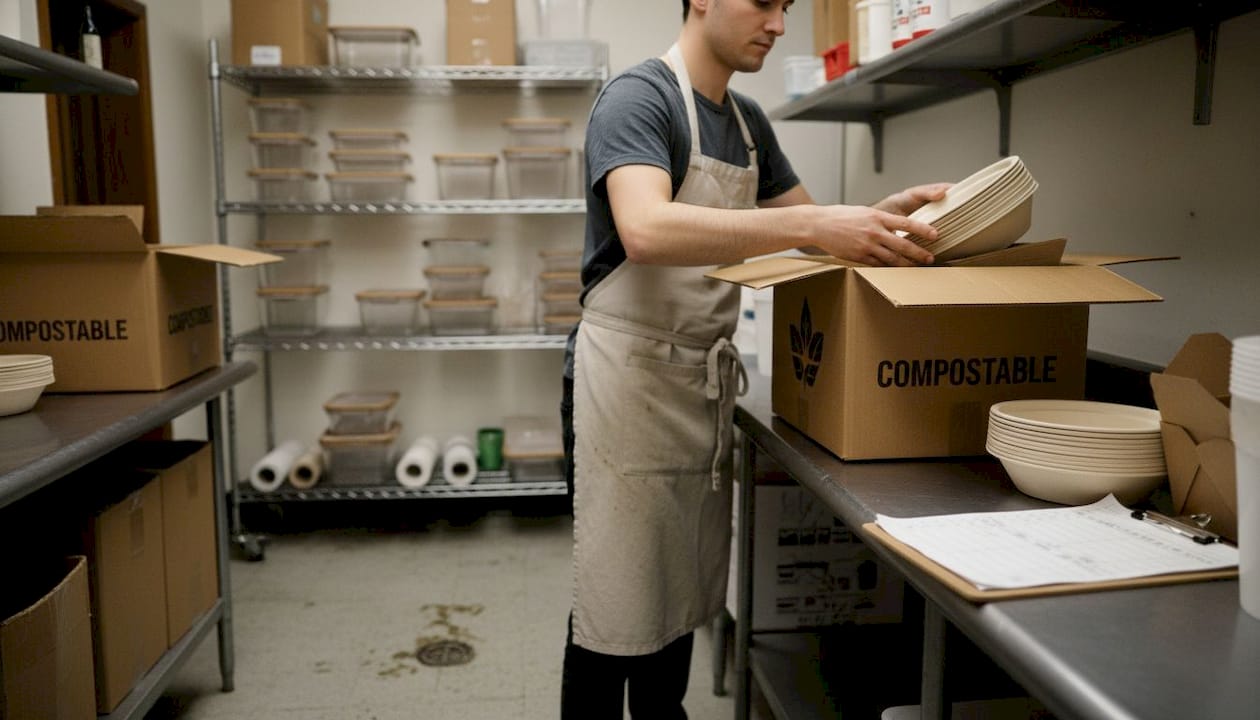
Real-world examples you might already use include compostable trash bags, bamboo-fiber plates, sugarcane takeout containers, and certified compostable coffee pods. Many of these are now available for both home and commercial use. Check out our guide to compostable household products for specific product picks, and if you are organizing your kitchen sustainably, bamboo food bag organizers are worth a look too.
Pro Tip: “Plant-based” does not automatically mean compostable. A product made from plants can still be designed to last for years without breaking down. Always check for a certification logo before assuming a green-looking product belongs in your compost bin.
Here is where a lot of well-meaning composters run into trouble. You buy a certified compostable bag, toss it in your backyard pile, and six months later it is still sitting there, mostly intact. What went wrong?
The answer usually comes down to temperature and time. Industrial composting operates at temperatures above 55 degrees Celsius, which accelerates microbial activity and breaks down even tough bioplastics within weeks. Home composting runs cooler, typically between 20 and 45 degrees Celsius, and full decomposition can take 6 to 12 months for certified home-compostable materials.
The critical distinction: industrial-certified materials like standard PLA will not fully break down in a home compost setup. Home-certified materials must meet stricter criteria but require longer time to decompose. In short, not all certified compostable products belong in your backyard bin.
Here is how to handle compostable materials responsibly at home:
A well-maintained home compost pile with the right materials can produce finished, usable compost in as little as three months, but only if you stick to home-certified products and manage conditions consistently.
For a full walkthrough of setting up a sustainable kitchen composting routine, our compostable kitchen organizing guide has practical steps you can follow right away.
Pro Tip: Call your local waste management provider before buying compostable products in bulk. Some areas do not accept any compostable packaging in curbside bins, and knowing that upfront saves you from a frustrating and wasteful mistake.
This part of the conversation is uncomfortable, but it is necessary. Compostable materials are not a perfect solution. Even certified products come with real limitations that you should know about before assuming they are automatically better than conventional options.
One of the most pressing concerns is microplastics. Research shows that certified compostables disintegrate 75 to 100% in controlled lab settings, but in real-world field composting, they can leave behind up to 1,201 microplastic particles per kilogram of finished compost. That is a significant finding, and it challenges the idea that certified automatically means problem-free.
The gap between lab results and field outcomes comes down to variability. Real composting facilities deal with inconsistent temperatures, contamination from non-compostable materials, and processing times that do not always match ideal conditions. Home composting faces even more variability.
Here is what you can do to minimize these issues:
For a broader view of how these choices fit into everyday life, our guide on choosing biodegradable products offers practical perspective.
Pro Tip: Prefer products certified for the specific composting system you actually use. A home-compost-certified bag in a proper home pile will almost always outperform an industrially certified product tossed into an inconsistent facility.
After spending real time with the science and the field data, here is what we genuinely believe: compostable materials are a meaningful step forward, but they are being oversold to consumers who deserve more honesty.
Certification matters enormously. Without it, “compostable” is just a color on a label. But even with certification, real-world outcomes depend on infrastructure, user behavior, and local composting capabilities that most people never think to check. The role of biodegradable materials in a sustainable system is real, but it is conditional.
The wisest approach right now is this: check your label, know what your local composting system can actually handle, and expect imperfection. Compostable products used correctly in the right systems do reduce environmental impact. Used carelessly, they can create a false sense of doing good while contributing to the very problems they were meant to solve. The goal is not to feel sustainable. It is to actually be sustainable, and that requires a little more effort than grabbing the green-labeled bag off the shelf.
Now that you understand what compostable really means and what to look for, the next step is putting that knowledge to work. Whether you are outfitting a home kitchen or sourcing materials for a restaurant, school, or office, choosing products from trusted sources with recognized certifications makes all the difference.

At Cozee Bay, we believe sustainable choices should be practical and well-informed. Browse our selection of trusted compostable products designed for real home and commercial use, and explore our detailed compostable household products guide to find the right fit for your space. Free shipping within the contiguous U.S. and a money-back guarantee mean you can shop with confidence.
Look for certification logos from BPI or OK Compost on the packaging, since these confirm the product meets recognized compostability standards rather than relying on unverified marketing claims.
No. Many items, especially PLA-based products, require high industrial temperatures not found in backyard piles, so always check whether an item carries a home-compost certification before adding it to your bin.
Typical compostable products include bags, cutlery, and cups made from bioplastics like PLA or from natural cellulose fibers such as sugarcane pulp and bamboo.
Not always. Even certified compostable plastics can leave microplastics behind in real-world composting conditions, which is why proper certification, correct disposal, and well-managed composting facilities all matter.
Comments will be approved before showing up.