Your Cart is Empty


Finding commercial products that balance durability, design, and environmental responsibility is often a challenge for property managers who want every detail to reflect true sustainability. Bamboo product trends in 2025 reset expectations for what eco-friendly solutions can deliver, moving far beyond decorative accents to engineered materials that handle daily commercial wear. As businesses strive to meet stricter global environmental standards, engineered bamboo solutions now offer verified performance and cohesive style, letting you build a credible green reputation while enhancing every area of your urban property.
| Point | Details |
|---|---|
| Durability is Essential | Bamboo products in 2025 prioritize engineered materials that offer high performance and sustainability, suitable for high-traffic commercial environments. |
| Material Transparency Matters | Tenants and visitors expect clear information about the sourcing and environmental impact of bamboo products, which builds trust and supports sustainability initiatives. |
| Adaptability Across Applications | Bamboo’s versatility allows it to be used in various types of products, promoting a cohesive design language that emphasizes environmental commitment. |
| Consider Total Cost of Ownership | While bamboo may have higher upfront costs, its longevity and reduced replacement needs can lead to lower lifecycle costs, making it a cost-effective choice over time. |
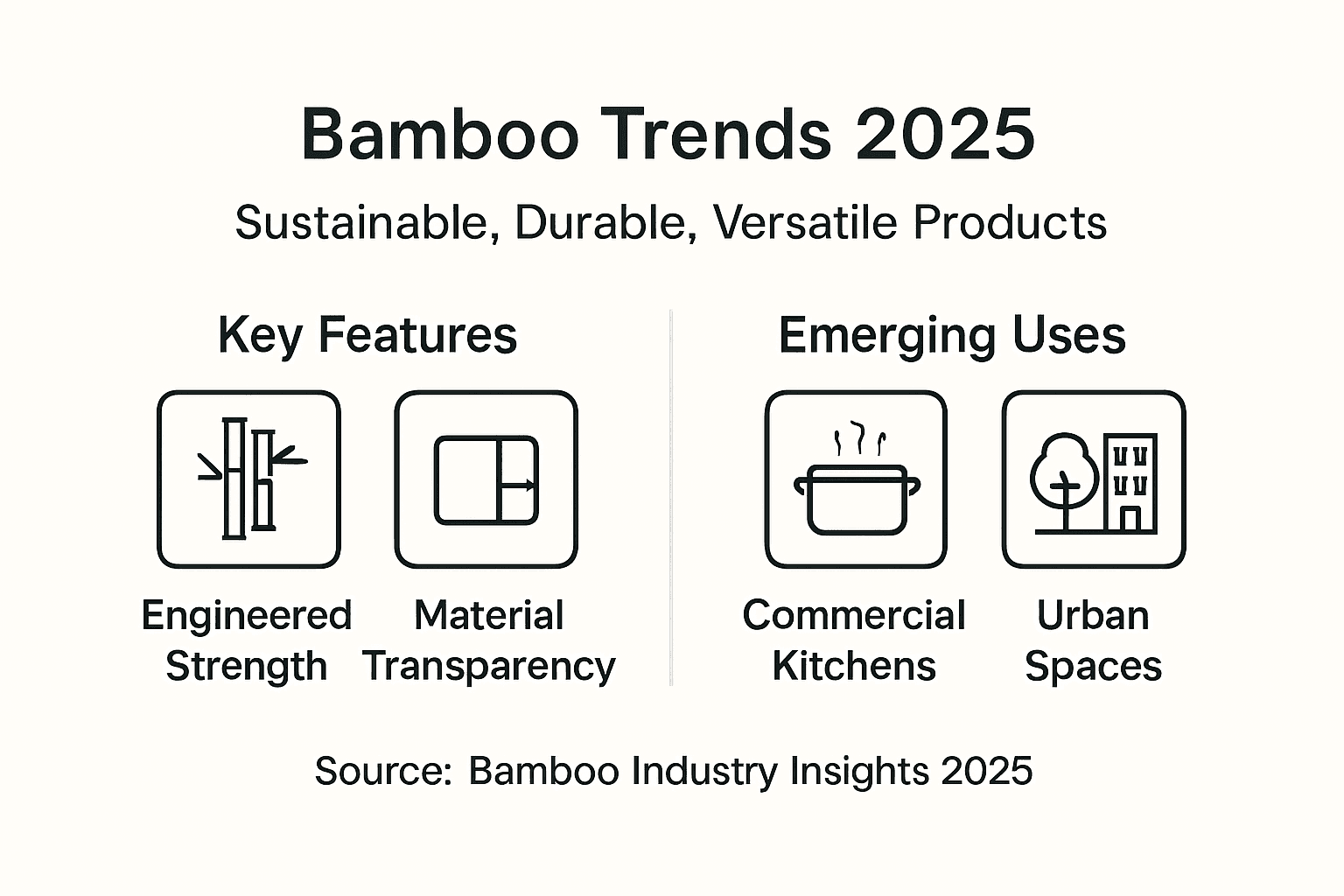
Bamboo product trends in 2025 are fundamentally shaped by a shift from decoration to durability. This isn’t about adding a trendy accent to your office lobby anymore. The defining characteristic of this year’s bamboo movement centers on engineered materials that deliver real performance. Bamboo has evolved into a legitimate structural material used across construction, textiles, and packaging industries, backed by advanced processing technologies and rigorous lifecycle data. For commercial property managers, this means the bamboo paper towel dispensers, drawer organizers, and wrap organizers you’re considering aren’t just sustainable choices—they’re engineered solutions built to withstand the demands of high-traffic commercial environments like restaurants, offices, and healthcare facilities.
The second defining trend involves material transparency and circular economy integration. Your tenants and visitors increasingly expect to understand where products come from and where they go. The market expansion is driven by consumer preference for renewable materials and stricter environmental policies globally, with particular emphasis on durability, biodegradability, and reduced carbon footprint. Bamboo products that address these factors are winning market share. When you select bamboo solutions for your commercial spaces, you’re responding to genuine demand for materials that document their environmental impact. This transparency builds trust with eco-conscious occupants and aligns your property with evolving corporate sustainability standards.
Third, adaptability across applications now defines trend leadership. Bamboo isn’t confined to one category anymore. The same processing innovations enabling bamboo flooring and wall panels also improve the functionality of organizational products like food storage organizers and trash bag organizers designed for commercial kitchens and break rooms. This breadth means you have consistent material choices across your entire property’s sustainable product ecosystem, creating a cohesive design language that signals intentional environmental commitment rather than scattered eco-friendly additions.
Pro tip: When evaluating bamboo products for your commercial space, request documentation on processing methods and end-of-life biodegradability—these specifics separate genuine 2025 bamboo innovations from products simply labeled “sustainable” without engineering substance.
When you’re evaluating bamboo products for your commercial spaces, understanding the material types matters more than you might think. The bamboo market breaks down into three primary categories: herbaceous bamboos, tropical woody bamboos, and temperate woody bamboos. Moso bamboo and Bambusa vulgaris stand out as the leading species driving innovation. Here’s what separates them for your purposes: herbaceous varieties grow quickly and work well for textiles and lighter applications, while woody bamboos provide the structural density you need for dispensers, organizers, and high-traffic fixtures. When you’re sourcing paper towel dispensers or drawer organizers for commercial kitchens and office environments, you’re almost certainly looking at engineered woody bamboo that combines strength with the aesthetic appeal your tenants expect.
The real game-shifter in 2025 involves how manufacturers are transforming bamboo at a material level. High-performance composites and engineered materials now integrate bamboo’s natural properties with advanced manufacturing techniques, expanding what bamboo can do. Instead of just using solid bamboo, companies are creating composites that blend bamboo fibers with other sustainable materials, resulting in products that last longer and perform better under stress. Engineered bamboo composites, textiles, and bio-refinery applications have widened industrial use across construction, packaging, and fashion sectors. For commercial property managers, this means the organizational products you select now have improved durability, better resistance to moisture and temperature fluctuations, and longer lifespans. A Cozee Bay bamboo wrap and foil dispenser, for example, benefits from these innovations by maintaining structural integrity through years of daily commercial use.
Three emerging innovation categories are reshaping the market right now:
These innovations directly address commercial property managers’ challenges: you need products that look intentional and designed, perform reliably under constant use, and demonstrate genuine environmental credentials to occupants and stakeholders.
Pro tip: When comparing bamboo products, ask manufacturers about their composite formulations and testing data—products engineered for performance will have documentation proving durability under commercial-grade use conditions.
When you’re selecting bamboo products for your commercial property, two factors drive every decision: can this material actually reduce environmental impact, and will it look intentional in our spaces? These aren’t separate considerations in 2025. Sustainability and design have merged into a single expectation. Bamboo’s rapid renewability, carbon sequestration, and low environmental impact in production form the foundation. But here’s where it gets practical for you: a paper towel dispenser that absorbs moisture over time and fails in two years isn’t sustainable, no matter how renewable the material. The essential features you need combine durability with minimal environmental footprint. Products engineered from bamboo deliver both because the material’s density supports longevity while its rapid growth cycle means production carries a lower carbon cost than alternatives like plastic or metal-based organizers.
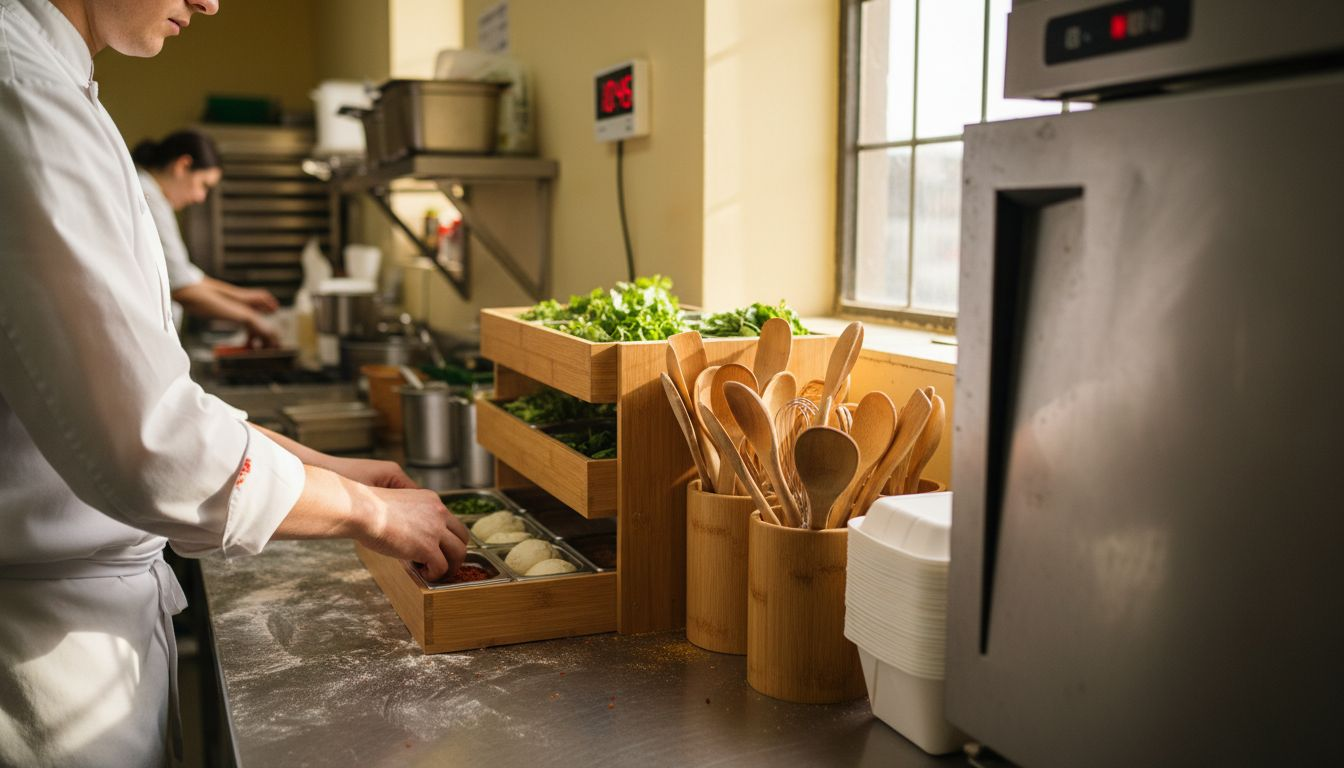
Design in 2025 means something specific for commercial spaces. The aesthetic trend favors minimalist and natural styles that communicate eco-consciousness without trying too hard. Designers are leveraging bamboo’s versatility to create stylish, modern, and sustainable spaces while minimizing environmental impact through responsible sourcing and lifecycle management. For your property, this translates to products that feel curated rather than cobbled together. A set of matching bamboo drawer organizers, food bag organizers, and trash bag organizers creates visual coherence across your commercial kitchen or office while signaling that sustainability choices are built into your operational design. Your tenants notice this. It communicates that eco-friendliness isn’t an afterthought but foundational to how you manage the space.
Three essential features define 2025 bamboo products:
These features work together. A food storage organizer with transparent sourcing documentation and a 10 year durability warranty represents genuine sustainability commitment, not marketing language.
Pro tip: Request sustainability certifications and durability testing reports from manufacturers—products with third-party verification (like FSC certification) and documented lifespan data give you concrete proof of environmental credentials beyond branded messaging.
Urban commercial property managers are discovering that bamboo extends far beyond aesthetic touches. In densely populated city centers where every square foot counts and sustainability credentials matter to tenants, bamboo serves concrete operational functions. Bamboo applications in urban commercial properties include structural materials, furniture, and interior finishes that align with green building certifications like LEED. This isn’t theoretical. A mid-rise office building in a major metropolitan area can reduce its environmental impact significantly by selecting bamboo paper towel dispensers, drawer organizers, and wrap organizers across all 40 floors. When multiplied across dozens of properties, these choices create measurable carbon reductions while improving tenant satisfaction scores related to sustainability.
The practical use cases break down into three main categories for your properties. First, high-traffic break rooms and kitchens benefit most from bamboo’s durability under constant use. Food bag organizers and trash bag organizers engineered from bamboo withstand daily moisture exposure, frequent handling, and temperature variations better than alternatives. Second, office spaces and reception areas leverage bamboo’s visual appeal to communicate sustainability values to visiting clients. The natural aesthetic signals that your organization takes environmental responsibility seriously. Third, hospitality and service-oriented properties like restaurants, coffee shops, and senior living centers integrate bamboo solutions into guest-facing areas where appearance and functionality matter equally. Your restaurants already know this: Cozee Bay’s bamboo paper towel dispensers have proven effective across restaurants, churches, schools, coffee shops, and senior living centers because they combine reliable performance with visual coherence.
Urban developers’ goals for sustainable, low-impact environments drive adoption of bamboo for construction components such as flooring, paneling, and structural systems due to the material’s strength and sustainability credentials. But beyond major structural decisions, smaller organizational products create the conditions for broader sustainability. Consider this workflow: your property management team installs matching bamboo drawer organizers in administrative offices and matching bamboo wrap and foil dispensers in commercial kitchens. This visible consistency demonstrates that sustainability isn’t confined to one department or floor but embedded throughout operations. Tenants notice. It influences lease renewal decisions and attracts new occupants explicitly seeking eco-conscious buildings.
Key use case advantages include:
Pro tip: When planning property upgrades, start with high-visibility areas like break rooms and reception spaces where bamboo products immediately demonstrate sustainability commitment, then expand to less visible organizational solutions once your tenants recognize the material standards.
Let’s be direct: bamboo isn’t a perfect solution, and pretending otherwise would be misleading. When you’re evaluating bamboo products for your commercial properties, you need to understand the real constraints. Initial investment costs matter. Processing infrastructure, raw material variability, and supply chain sustainability challenges can create friction when scaling bamboo procurement across multiple properties. A single paper towel dispenser costs more upfront than plastic alternatives. Multiply that by 50 units across your portfolio, and the budget conversation changes. Additionally, production expenses, limited local processing facilities, and pest susceptibility affect material consistency and performance. This means you can’t always guarantee that a bamboo drawer organizer purchased this quarter will perform identically to one purchased six months ago. Quality variability requires vendor relationships and testing protocols you might not currently have in place.
Cost factors break down into three categories you should understand. First, material costs run 25 to 40 percent higher than plastic or recycled alternatives initially. Second, supply chain premiums exist because processing facilities remain concentrated in specific regions, creating transportation costs and lead time delays. Third, lifecycle costs actually favor bamboo, but only if you commit to the initial investment. A bamboo wrap and foil dispenser costs more than a plastic equivalent but lasts three times longer in commercial environments. When you calculate total cost of ownership across five years, bamboo wins. The problem: budgets allocated for replacement purchasing often don’t account for this extended lifespan, forcing artificial comparisons between first-year costs.
Alternative materials offer legitimate competitive advantages depending on your priorities. Recycled wood, cork, and bio-composites provide eco-friendly options without bamboo’s upfront costs. Engineered wood offers durability and local sourcing in many regions. Recycled plastics provide durability and lower material costs. However, each alternative carries trade-offs. Cork lacks bamboo’s structural strength. Recycled materials depend on collection infrastructure that varies by region. Bio-composites remain emerging technologies without the processing efficiency that would reduce costs. The critical insight: no single material optimizes all factors simultaneously. Your material choice depends on which constraints matter most for your specific properties.
Material comparison framework:
Here is a comparison of leading sustainable materials for commercial organizational products:
| Material | Upfront Cost | Durability (Years) | Typical Applications |
|---|---|---|---|
| Bamboo | Higher | 7-10 | Dispensers, organizers, panels |
| Recycled Wood | Moderate | 3-6 | Shelving, basic organizers |
| Cork | Lower | 2-4 | Lightweight boards, decorations |
| Recycled Plastics | Lowest | 4-7 | Bins, dispensers, trays |
Mitigation strategies exist for bamboo’s cost concerns. Strategic investment in fewer, high-visibility products like paper towel dispensers and food organizers creates maximum tenant impact while managing budget constraints. Establishing long-term vendor relationships improves supply consistency and potentially reduces per-unit costs through volume agreements. Pairing bamboo products with lower-cost alternatives in less visible applications balances sustainability commitment with fiscal responsibility.
Pro tip: Calculate total cost of ownership across five years when comparing bamboo to alternatives, accounting for replacement frequency and labor costs, then make your decision based on full-cycle economics rather than initial purchase price alone.
This table summarizes core risks and best mitigation strategies when selecting bamboo products:
| Key Risk | Business Impact | Mitigation Strategy |
|---|---|---|
| Quality inconsistency | Product failures, tenant complaints | Vet suppliers, require durability data |
| Incomplete disposal options | Loss of sustainability credibility | Confirm local composting acceptance |
| Upfront budget constraints | Limited adoption, missed certifications | Prioritize high-traffic, visible deployments |
| Material misuse | Shortened product lifespan | Staff training, pilot testing |
Most commercial property managers who struggle with bamboo products fail not because the material is flawed but because they misunderstand how to use it. The most dangerous pitfall is treating bamboo like a drop-in replacement for whatever you were using before. A lack of understanding regarding proper engineering and structural applications leads to material misuse, causing products to fail prematurely and damaging confidence in the entire category. You can’t install a bamboo drawer organizer in a constantly wet environment without understanding moisture resistance specifications. You can’t spec a bamboo paper towel dispenser for a high-temperature commercial kitchen without confirming thermal stability data. These aren’t minor details. They’re the difference between a three-year lifespan and a nine-year lifespan. When a product fails, decision-makers blame bamboo, not their own implementation choices.
The second major pitfall involves vendor selection without quality verification. Inadequate raw material quality control, inconsistent processing methods, and insufficient evaluation of environmental impacts result in structural failures. Not all bamboo suppliers operate with identical standards. Some manufacturers prioritize cost reduction over durability engineering. You might purchase from a vendor with excellent initial pricing only to discover their processing methods cut corners that affect long-term performance. This creates inconsistency across your portfolio. A food bag organizer from one supplier performs reliably while an identical-looking product from another fails within months. Your facility team loses confidence and stops recommending bamboo solutions. The damage compounds because your tenants see inconsistency instead of intentional sustainability. This is why establishing relationships with manufacturers who document their processing protocols and quality assurance procedures matters more than negotiating the lowest per-unit price.
A third pitfall stems from insufficient lifecycle planning. Many property managers select bamboo products without considering end-of-life options. What happens when a bamboo trash bag organizer reaches the end of its lifespan? Does your local waste management system accept it for composting? Will it sit in a landfill indefinitely despite being labeled biodegradable? Bamboo’s sustainability advantage evaporates if you lack disposal infrastructure. Before committing to large-scale bamboo implementation, verify that your region supports the end-of-life processes you’re counting on. This requires conversations with your waste management vendors and sometimes with municipal sustainability departments.
Common implementation mistakes to avoid:
Pro tip: Before launching full-scale bamboo implementation, pilot three to five products from your chosen vendor in high-traffic areas for 90 days, document performance metrics, and gather feedback from facility staff before committing to portfolio-wide purchases.
The article highlights the growing demand for engineered bamboo products that combine durability, sustainability, and sophisticated design for commercial use. If you manage commercial properties seeking to meet evolving tenant expectations and environmental standards, choosing bamboo organizational products that deliver lasting performance is essential. Challenges like moisture exposure, high traffic, and lifecycle transparency require products made with proven quality and environmental commitment.
Discover how Bamboo Paper Towel Dispenser- A Sleek Look Home or Office and other bamboo organizers from Cozee Bay can solve these challenges while enhancing the aesthetic cohesion of your workspaces.
Explore our carefully crafted bamboo paper towel dispensers, wrap and foil dispensers, and food bag organizers designed with durability and eco-consciousness in mind. Act now to create an intentional, sustainable environment that tenants notice and appreciate. Visit Cozee Bay today to view our full collection and take the first step toward upgrading your commercial property with premium bamboo products. For accessories and replacement parts, check out Paper Towel Dispensers - Accessories | Cozee Bay® and maintain your products’ long-lasting appeal.
The key trends in bamboo products for 2025 include a focus on engineered materials for durability, material transparency and integration into a circular economy, and adaptability across diverse applications. These trends reflect a shift towards essential, high-performance bamboo products designed for commercial environments.
Engineered bamboo products, which combine bamboo fibers with advanced manufacturing techniques, offer enhanced performance and durability compared to traditional bamboo. These products are designed to withstand the demands of commercial use, making them suitable for high-traffic environments.
When selecting bamboo products, look for verified sourcing practices, lifecycle transparency that provides durability and disposal options, and functional minimalism that maximizes performance while minimizing unnecessary materials.
Common pitfalls include assuming bamboo works in all environments without checking specifications, prioritizing low cost over quality verification, neglecting end-of-life disposal planning, not training staff on proper maintenance, and failing to document baseline performance for future comparisons.
Comments will be approved before showing up.