Your Cart is Empty


The home furnishing industry generates 12.1 million tons of waste every single year. That number is hard to ignore when you’re standing in a furniture store, admiring a sleek new coffee table or a set of decorative shelves. Most of us never think about where those pieces came from or where they’ll end up. But if you care about the space you live in and the world outside your front door, it’s worth pausing to ask better questions. This article walks you through the real environmental cost of conventional decor, what makes a product genuinely eco-friendly, why bamboo stands out, and how to shop with confidence.
| Point | Details |
|---|---|
| Reduces environmental waste | Eco-friendly home decor can greatly decrease the 12.1 million tons of annual waste from traditional furnishings. |
| Healthier indoor air | Sustainable materials like bamboo emit fewer harmful chemicals, improving your home’s air quality. |
| Long-term savings | Despite higher initial costs, eco-friendly decor lasts longer and cuts energy expenses. |
| Choose certified products | FSC, GOTS, and GREENGUARD labels help you avoid greenwashing and buy genuinely sustainable decor. |
Most traditional home decor is made from materials that carry a heavy environmental price tag long before they ever reach your living room. Synthetic finishes, particle board, and petroleum-based fabrics all require energy-intensive manufacturing processes that release greenhouse gases and deplete natural resources. And once those pieces wear out, they rarely get recycled.
The numbers tell a sobering story. The home furnishing industry generates 12.1 million tons of waste annually, much of it ending up in landfills. Research into furniture lifecycle assessments shows that the pre-production stage contributes a staggering 76% of a product’s total environmental impact, meaning the materials you choose matter more than almost anything else.
“The biggest lever you have as a homeowner isn’t recycling your old sofa. It’s choosing better materials before you buy.”
Switching to sustainable home decor isn’t just a feel-good move. It’s one of the most practical ways to reduce your household’s footprint without sacrificing style or comfort. Heavier, denser items made from virgin materials carry the highest lifecycle impact, while lighter, renewable alternatives like bamboo shift that equation significantly.
| Material type | Lifecycle impact | Renewability |
|---|---|---|
| Particle board | High (off-gassing, landfill) | Low |
| Solid hardwood | Moderate to high | Slow (decades) |
| Bamboo | Low to carbon-negative | Very high (3-5 years) |
| Synthetic fabrics | High (petroleum-based) | None |
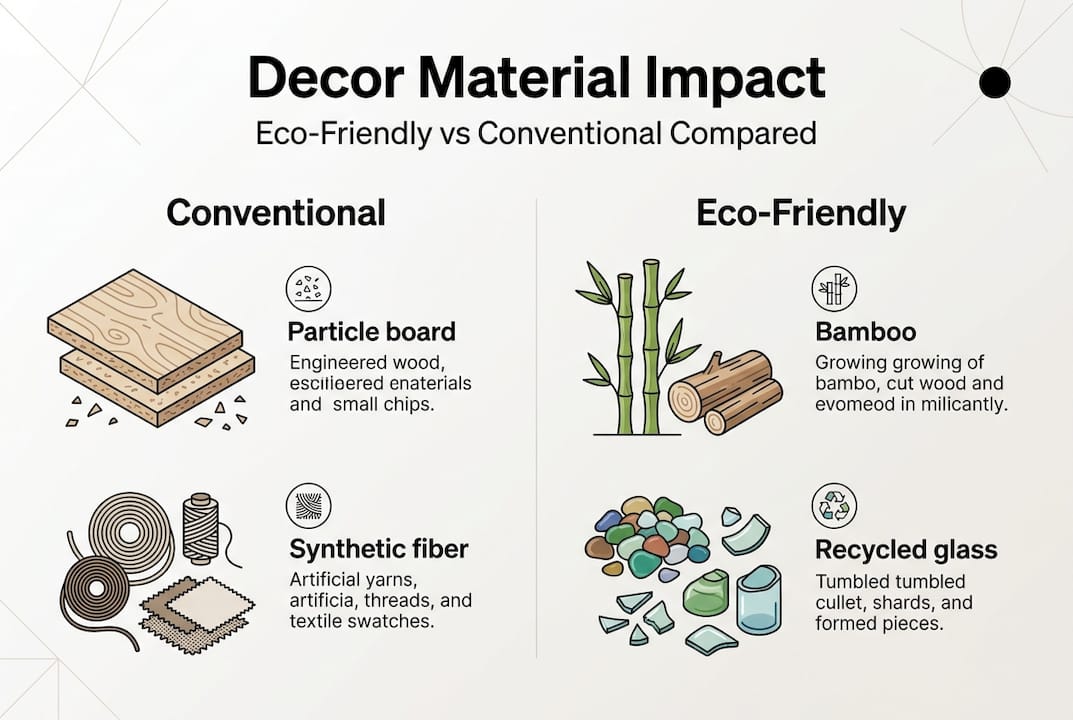
Eco-friendly home decor refers to products made from renewable, recycled, or responsibly sourced materials that minimize harm across their entire lifecycle, from raw material extraction to end-of-life disposal. It’s not just about using natural materials. It’s about the full picture: how something is made, how long it lasts, and what happens when you’re done with it.
Consumer interest in this space is growing fast. The sustainable home decor market is projected to grow from $388.7 billion in 2024 to $663.9 billion by 2034, driven by a 5.5% annual growth rate. And it’s not just a niche trend: 65% of consumers now say they prefer eco-friendly products when given the choice.
So what makes a product genuinely eco-friendly? Here are the key markers to look for:
Understanding why eco-friendly products are worth choosing goes beyond environmental guilt. It’s about building a home that’s healthier, more durable, and more aligned with your values. And the eco impact of sustainable decor is measurable, not just theoretical.
Bamboo isn’t just a trendy material. It’s one of the most genuinely sustainable options available for home decor, and the data backs that up. Bamboo grows to harvestable size in three to five years, compared to decades for most hardwoods. It regenerates from its own root system without replanting, and it sequesters carbon throughout its growth cycle.
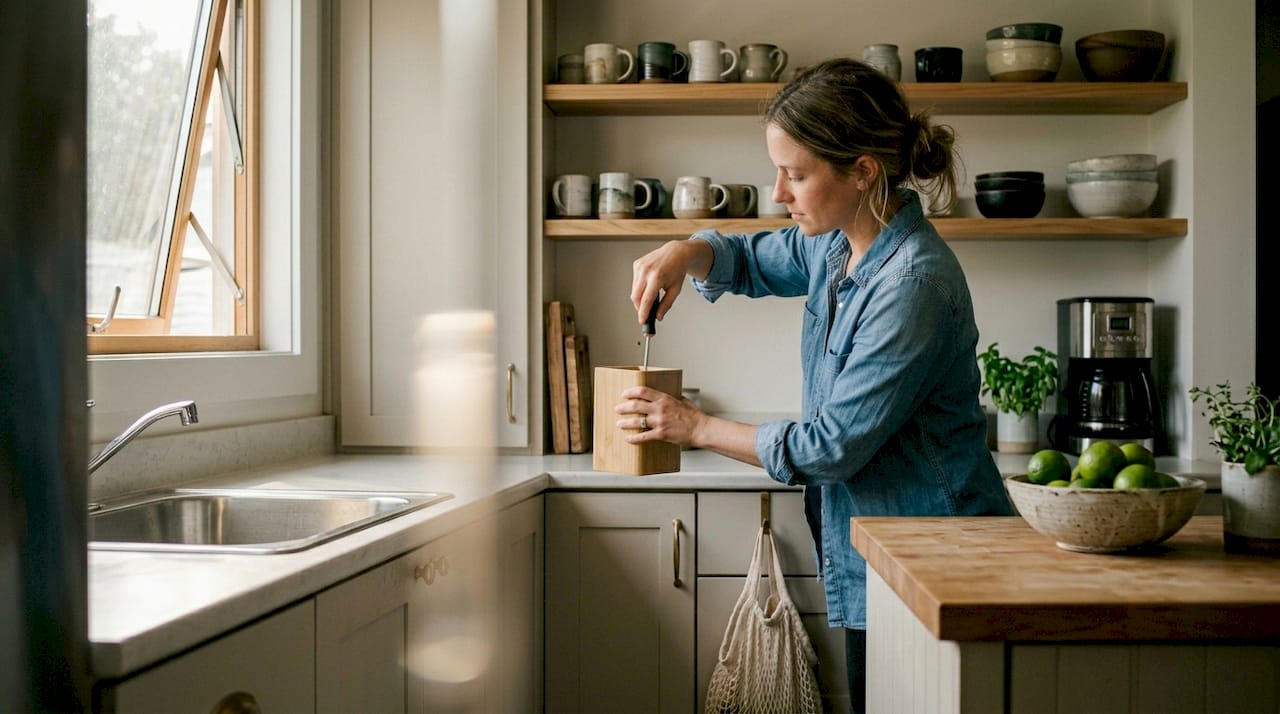
Perhaps most impressively, engineered bamboo products can be carbon-negative, meaning they store more carbon than was emitted during their production. That puts bamboo decking, for example, well ahead of tropical hardwood or PVC alternatives in lifecycle assessments.
Bamboo also supports a healthier indoor environment. Sustainable materials like bamboo improve indoor air quality by reducing VOC emissions that are common in traditional furnishings made with synthetic adhesives and finishes.
Here’s how bamboo stacks up against common alternatives:
| Feature | Bamboo | Hardwood | Synthetic/PVC |
|---|---|---|---|
| Carbon footprint | Low to negative | Moderate to high | High |
| Renewability | 3-5 years | 30-100 years | Non-renewable |
| VOC emissions | Very low | Low to moderate | Often high |
| Durability | High | High | Moderate |
Bamboo works beautifully across a wide range of home applications, including:
Pro Tip: When shopping for bamboo products, look for items made from solid or strand-woven bamboo rather than bamboo composite boards, which may use formaldehyde-based adhesives. Check for sustainable building product certifications to confirm what you’re actually getting.
Once you know how bamboo reduces your home’s footprint, it’s worth looking at the other reasons to make the switch. The benefits extend well beyond the planet.
1. Cleaner indoor air. Bamboo and other sustainable materials reduce VOC emissions inside your home, which is especially important in tightly insulated modern houses where air circulation is limited. Fewer VOCs means fewer headaches, less respiratory irritation, and a genuinely healthier living space.
2. Long-term cost savings. Eco-friendly decor tends to outlast its conventional counterparts by a wide margin. Natural fiber rugs last 20 or more years compared to just five to seven years for synthetic options. LED lighting uses 90% less energy and lasts 25 times longer than traditional bulbs. The upfront cost may be higher, but the math works out in your favor over time.
3. Timeless style. Natural materials age gracefully. A bamboo organizer or reclaimed wood shelf doesn’t go out of style the way a trendy synthetic piece does. You’re investing in a look that stays fresh and relevant for years.
4. Reduced replacement cycles. When your decor lasts longer, you buy less often. That’s good for your wallet and good for the planet.
Pro Tip: Use our eco-friendly home product checklist to audit your current decor and identify the highest-impact swaps first. Starting with frequently replaced items like kitchen accessories gives you the fastest return. You can also explore these eco-friendly home tips for a broader look at greener living.
Here’s the frustrating truth: not everything labeled “eco-friendly” actually is. Greenwashing, where brands use vague environmental language without any real substance behind it, is widespread in the home decor market. Knowing how to spot the difference protects both your money and your values.
Start with certifications. Key certifications to look for include FSC for wood and bamboo products, GOTS and OEKO-TEX for textiles, and GREENGUARD for low VOC emissions. These are third-party verified standards, not self-reported claims.
Watch for red flags. Vague terms like “natural,” “green,” or “earth-friendly” without any certification to back them up are warning signs. So are products with no information about where or how they were made.
Consider the full lifecycle. A product made from bamboo but processed with toxic chemicals and shipped halfway around the world in non-recyclable packaging isn’t as sustainable as it sounds. Bamboo processing can be energy-intensive if not optimized, and some bamboo composites use adhesives that undermine the material’s natural benefits.
Here’s a quick checklist to guide your buying decisions:
“A truly sustainable product doesn’t just tell you it’s green. It shows you, with verifiable proof.”
For more guidance, check out how to select green home essentials and choose eco-friendly home accessories with confidence. You can also browse this eco-friendly products guide for a broader framework. And if you want to explore the wider world of bamboo crafts and decor, this bamboo crafts home decor guide is a solid starting point.
Bamboo decor isn’t just practical. It’s genuinely beautiful, and it works in almost any room. The key is knowing which products make the biggest visual and functional impact.
Certified bamboo products offer the dual benefit of sequestering carbon and avoiding VOCs, making them a smart choice for both health and style. Here are some of the most effective ways to bring bamboo into your home:
Pairing bamboo with other sustainable elements, like linen textiles, recycled glass vases, or reclaimed wood shelving, creates a cohesive look that feels curated rather than random. The natural tones complement each other without clashing. For more ideas on how real homeowners are making it work, explore these upcycled home product examples for practical eco-living inspiration.
You don’t have to overhaul your entire home overnight. The most effective approach is to start with the items you replace most often, like kitchen accessories, bathroom organizers, and everyday storage solutions, and swap them out for bamboo alternatives as they wear out. Small changes add up faster than you’d think.
At Cozee Bay, we make that transition easy. Our handcrafted bamboo products, from paper towel dispensers to drawer organizers and wrap and foil dispensers, are designed to look great, last long, and sit lightly on the planet. Every piece is built with the same commitment to quality and sustainability that you’ve been reading about. Ready to get started? Shop sustainable decor and find pieces that fit your home and your values. And if you want a guided approach, our resource on selecting green essentials walks you through the process step by step.
Eco-friendly decor uses natural materials like bamboo and low-VOC finishes that reduce harmful emissions inside your home, making the air cleaner and healthier to breathe every day.
Yes. Bamboo grows to harvestable size in three to five years and engineered bamboo can be carbon-negative, giving it a clear advantage over slow-growing hardwoods in lifecycle assessments.
Look for verified third-party certifications like FSC, GOTS, or GREENGUARD, and be skeptical of any product that uses vague eco-friendly labels without documented proof to back them up.
It often costs more upfront, but superior durability means you replace items far less often, and lower energy use from products like LED lighting adds up to real savings over time.
Home design blogs, eco-living guides, and specialized retailers like Cozee Bay offer plenty of real-world bamboo inspiration to help you visualize what sustainable style actually looks like in a finished room.
Comments will be approved before showing up.